

Search results
Search for "ion pairs" in Full Text gives 49 result(s) in Beilstein Journal of Organic Chemistry.
Silanediol versus chlorosilanol: hydrolyses and hydrogen-bonding catalyses with fenchole-based silanes
- Falco Fox,
- Jörg M. Neudörfl and
- Bernd Goldfuss
Beilstein J. Org. Chem. 2019, 15, 167–186, doi:10.3762/bjoc.15.17
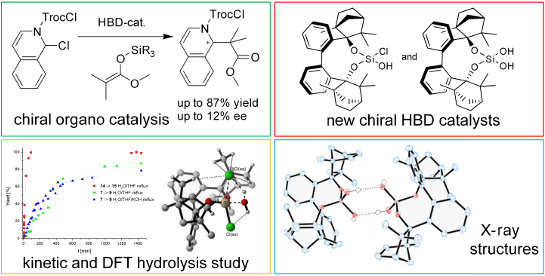
- % ee), reaction of 1-chloroisochroman (18) and silyl ketene acetals 11 (up to 85% yield and 5% ee), reaction of chromen-4-one (20) and silyl ketene acetals 11 (up to 98% yield and 4% ee). Keywords: hydrogen bonds; hydrolysis; ion pairs; organocatalysis; silanediol; Introduction Silanediols are

Graphical Abstract

Figure 1: Hydrogen-bonding silanediols, i.e., di(1-naphthyl)silanediol (1) [39], silanediols 2 [41-43], binaphthylsilane...

Scheme 1: Hydrogen-bond-catalyzed N-acyl Mannich reaction of in situ-generated isoquinolin derivative 10 with...

Scheme 2: Synthesis of BIFOXSiCl2, starting with BIFOL (5) [52,54] yielding dichlorosilane 7.
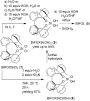
Scheme 3: Hydrolysis of BIFOXSiCl2 (7) yielding the corresponding silanediol 9 and controlled hydrolysis of B...

Scheme 4: Hydrolysis of dichlorosilanes 13 and 14 to their corresponding silanediols 1 and 15 [51,60].

Figure 2: Hydrolyses of dichlorosilane 7 and 14 to BIFOXSi(OH)2 (9, green circle) and bis(2,4,6-tri-tert-buty...

Figure 3: Hydrolyses of BIFOXSiCl2 (7) to BIFOXSi(OH)2 (9, green circle), bis(2,4,6-tri-tert-butylphenoxy)dic...

Scheme 5: Two investigated pathways for the hydrolysis of the dichlorosilanes. Front attack mechanism (front)...

Figure 4: Three transition structures each, for the hydrolysis of BIFOXSiCl2 (7) and BIFOXSiCl(OH) (8) consid...

Figure 5: Computed hydrolyses of BIFOXSiCl2 (7) to BIFOXSiCl(OH) 8ax and BIFOXSiCl(OH) 8eq and subsequent com...

Figure 6: Transition state leading to 8eq following front1 attack (Ea = 32.6 kcal mol−1, Figure 5, Table 3, entry 1). Breaki...

Figure 7: Transition state leading to 8ax following front2 attack (Ea = 33.2 kcal mol−1, Figure 5, Table 3, entry 2). Breaki...

Figure 8: Transition state leading to 8eq following side attack (Ea = 37.4 kcal mol−1, Figure 5, Table 3, entry 3). Breaking...

Figure 9: Transition state leading to 9 following side attack (Ea = 31.4 kcal mol−1, Figure 5, Table 3, entry 6). Breaking a...

Figure 10: Transition state leading to 9 following front1 attack (Ea = 33.4 kcal mol−1, Figure 5, Table 3, entry 4). Breaking...

Figure 11: Transition state leading to 9 following front2 attack (Ea = 40.2 kcal mol−1, Figure 5, Table 3, entry 5). Breaking...
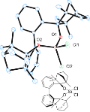
Figure 12: X-ray crystal structure of BIFOXSiCl2 (7). H atoms on the chiral backbone are omitted for clarity i...
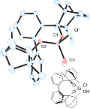
Figure 13: X-ray crystal structure of BIFOXSiCl(OH) (8). H atoms on the chiral backbone are omitted for clarit...

Figure 14: X-ray crystal structure ofrac-BIFOXSi(OH)2 (9) forming dimers. H atoms on the chiral backbone are o...

Figure 15: X-ray crystal structure of BIFOXSi(OH)2 (9) forming a tetramer. H atoms on the chiral backbone are ...

Figure 16: X-ray crystal structure of BIFOXSi(OH)2 (9) forming a dimeric structure with two bridged acetone mo...
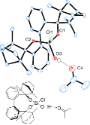
Figure 17: X-ray crystal structure of BIFOXSiCl(OH) (8), binding an acetone molecule. H atoms on the chiral ba...
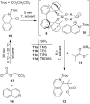
Scheme 6: Hydrogen-bond-catalyzed N-acyl Mannich reaction of in situ-generated 10 with different silyl ketene...

Scheme 7: Hydrogen-bond-catalyzed nucleophilic substitution of 18 with BIFOXSi(OH)2 (9) and nucleophile silyl...

Scheme 8: Nucleophilic substitution of 20 with BIFOXSi(OH)2 (9) and nucleophile silyl ketene acetals 11, 20 a...
One hundred years of benzotropone chemistry
- Arif Dastan,
- Haydar Kilic and
- Nurullah Saracoglu
Beilstein J. Org. Chem. 2018, 14, 1120–1180, doi:10.3762/bjoc.14.98

Graphical Abstract

Scheme 1: Tropone (1), tropolone (2) and their resonance structures.

Figure 1: Natural products containing a tropone nucleus.

Figure 2: Possible isomers 11–13 of benzotropone.

Scheme 2: Synthesis of benzotropones 11 and 12.

Scheme 3: Oxidation products of benzotropylium fluoroborate (16).

Scheme 4: Oxidation of 7-bromo-5H-benzo[7]annulene (22).

Scheme 5: Synthesis of 4,5-benzotropone (11) using o-phthalaldehyde (27).

Scheme 6: Synthesis of 4,5-benzotropone (11) starting from oxobenzonorbornadiene 31.

Scheme 7: Acid-catalyzed cleavage of oxo-bridge of 34.

Scheme 8: Synthesis of 4,5-benzotropone (11) from o-xylylene dibromide (38).

Scheme 9: Synthesis of 4,5-benzotropone (11) via the carbene adduct 41.

Scheme 10: Heck coupling strategy for the synthesis of 11.

Scheme 11: Synthesis of benzofulvalenes via carbonyl group of 4,5-benzotropone (11).

Figure 3: Some cycloheptatrienylium cations.

Scheme 12: Synthesis of condensation product 63 and its subsequent oxidative cyclization products.

Figure 4: A novel series of benzo[7]annulenes prepared from 4,5-benzotropone (11).

Scheme 13: Preparation of substituted benzo[7]annulene 72 using the Mukaiyama-Michael reaction.

Figure 5: Possible benzo[7]annulenylidenes 73–75.

Scheme 14: Thermal and photochemical decomposition of 7-diazo-7H-benzo[7]annulene (76) and the trapping of int...

Scheme 15: Synthesis of benzoheptafulvalene 86.

Scheme 16: Synthesis of 7-(diphenylmethylene)-7H-benzo[7]annulene (89).

Scheme 17: Reaction of 4,5-benzotropone (11) with dimethyl diazomethane.

Scheme 18: Synthesis of dihydrobenzomethoxyazocine 103.

Scheme 19: Synthesis and reducibility of benzo-homo-2-methoxyazocines.

Scheme 20: Synthesis of 4,5-benzohomotropones 104 and 115 from 4,5-benzotropones 11 and 113.

Scheme 21: A catalytic deuterogenation of 4,5-benzotropone (11) and synthesis of 5-monosubstituted benzo[7]ann...

Scheme 22: Synthesis of methyl benzo[7]annulenes 131 and 132.

Scheme 23: Ambident reactivity of halobenzo[7]annulenylium cations 133a/b.

Scheme 24: Preparation of benzo[7]annulenylidene–iron complexes 147.

Scheme 25: Synthesis of 1-ethynylbenzotropone (150) and the etheric compound 152 from 4,5-benzotropone (11) wi...

Scheme 26: Thermal decomposition of 4,5-benzotropone (11).

Scheme 27: Reaction of 4,5-benzotropone (11) with 1,2-ethanediol and 1,2-ethanedithiol.

Scheme 28: Conversions of 1-benzosuberone (162) to 2,3-benzotropone (12).

Scheme 29: Synthesis strategies for 2,3-bezotropone (12) using 1-benzosuberones.

Scheme 30: Oxidation-based synthesis of 2,3-benzotropone (12) via 1-benzosuberone (162).

Scheme 31: Synthesis of 2,3-benzotropone (12) from α-tetralone (171) via ring-expansion.

Scheme 32: Preparation of 2,3-benzotropone (12) by using of benzotropolone 174.

Figure 6: Benzoheptafulvenes as condensation products of 2,3-benzotropone (12).

Scheme 33: Conversion of 2,3-benzotropone (12) to tosylhydrazone salt 182 and gem-dichloride 187.

Figure 7: Benzohomoazocines 191–193 and benzoazocines 194–197.

Scheme 34: From 2,3-benzotropone (12) to carbonium ions 198–201.

Scheme 35: Cycloaddition reactions of 2,3-benzotropone (12).
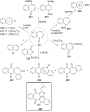
Scheme 36: Reaction of 2,3-benzotropone (12) with various reagents and compounds.

Figure 8: 3,4-Benzotropone (13) and its resonance structure.

Scheme 37: Synthesis of 6,7-benzobicyclo[3.2.0]hepta-3,6-dien-2-one (230).

Figure 9: Photolysis and thermolysis products of 230.

Figure 10: Benzotropolones and their tautomeric structures.

Scheme 38: Synthesis strategies of 4,5-benzotropolone (238).

Scheme 39: Synthesis protocol for 2-hydroxy-4,5-benzotropone (238) using oxazole-benzo[7]annulene 247.

Figure 11: Some quinoxaline and pyrazine derivatives 254–256 prepared from 4,5-benzotropolone (238).

Scheme 40: Nitration product of 4,5-benzotropolone (238) and its isomerization to 1-nitro-naphthoic acid (259)....

Scheme 41: Synthesis protocol for 6-hydroxy-2,3-benzotropone (239) from benzosuberone (162).
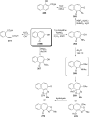
Scheme 42: Various reactions via 6-hydroxy-2,3-benzotropone (239).

Scheme 43: Photoreaction of 6-hydroxy-2,3-benzotropone (239).

Scheme 44: Synthesis of 7-hydroxy-2,3-benzotropone (241) from benzosuberone (162).

Scheme 45: Synthesis strategy for 7-hydroxy-2,3-benzotropone (241) from ketone 276.

Scheme 46: Synthesis of 7-hydroxy-2,3-benzotropone (241) from β-naphthoquinone (280).

Scheme 47: Synthesis of 7-hydroxy-2,3-benzotropone (241) from bicyclic endoperoxide 213.

Scheme 48: Synthesis of 7-hydroxy-2,3-benzotropone (241) by ring-closing metathesis.

Figure 12: Various monosubstitution products 289–291 of 7-hydroxy-2,3-benzotropone (241).

Scheme 49: Reaction of 7-hydroxy-2,3-benzotropone (241) with various reagents.

Scheme 50: Synthesis of 4-hydroxy-2,3-benzotropones 174 and 304 from diketones 300/301.

Scheme 51: Catalytic hydrogenation of diketones 300 and 174.

Scheme 52: Synthesis of halo-benzotropones from alkoxy-naphthalenes 306, 307 and 310.

Figure 13: Unexpected byproducts 313–315 during synthesis of chlorobenzotropone 309.

Figure 14: Some halobenzotropones and their cycloadducts.

Scheme 53: Multisep synthesis of 2-chlorobenzotropone 309.

Scheme 54: A multistep synthesis of 2-bromo-benzotropone 26.

Scheme 55: A multistep synthesis of bromo-2,3-benzotropones 311 and 316.

Scheme 56: Oxidation reactions of 8-bromo-5H-benzo[7]annulene (329) with some oxidants.

Scheme 57: Synthesis of 2-bromo-4,5-benzotropone (26).

Scheme 58: Synthesis of 6-chloro-2,3-benzotropone (335) using LiCl and proposed intermediate 336.

Scheme 59: Reaction of 7-bromo-2,3-benzotropone (316) with methylamine.

Scheme 60: Reactions of bromo-2,3-benzotropones 26 and 311 with dimethylamine.

Scheme 61: Reactions of bromobenzotropones 311 and 26 with NaOMe.

Scheme 62: Reactions of bromobenzotropones 26 and 312 with t-BuOK in the presence of DPIBF.

Scheme 63: Cobalt-catalyzed reductive cross-couplings of 7-bromo-2,3-benzotropone (316) with cyclic α-bromo en...

Figure 15: Cycloadduct 357 and its di-π-methane rearrangement product 358.

Scheme 64: Catalytic hydrogenation of 2-chloro-4,5-benzotropone (311).

Scheme 65: Synthesis of dibromo-benzotropones from benzotropones.

Scheme 66: Bromination/dehydrobromination of benzosuberone (162).

Scheme 67: Some transformations of isomeric dibromo-benzotropones 261A/B.

Scheme 68: Transformations of benzotropolone 239B to halobenzotropolones 369–371.

Figure 16: Bromobenzotropolones 372–376 and 290 prepared via bromination/dehydrobromination strategy.

Scheme 69: Synthesis of some halobenzotropolones 289, 377 and 378.

Figure 17: Bromo-chloro-derivatives 379–381 prepared via chlorination.

Scheme 70: Synthesis of 7-iodo-3,4-benzotropolone (382).

Scheme 71: Hydrogenation of bromobenzotropolones 369 and 370.

Scheme 72: Debromination reactions of mono- and dibromides 290 and 375.

Figure 18: Nitratation and oxidation products of some halobenzotropolenes.
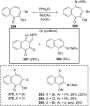
Scheme 73: Azo-coupling reactions of some halobenzotropolones 294, 375 and 378.

Figure 19: Four possible isomers of dibenzotropones 396–399.

Figure 20: Resonance structures of tribenzotropone (400).

Scheme 74: Two synthetic pathways for tribenzotropone (400).

Scheme 75: Synthesis of tribenzotropone (400) from dibenzotropone 399.

Scheme 76: Synthesis of tribenzotropone (400) from 9,10-phenanthraquinone (406).

Scheme 77: Synthesis of tribenzotropone (400) from trifluoromethyl-substituted arene 411.

Figure 21: Dibenzosuberone (414).

Figure 22: Reduction products 415 and 416 of tribenzotropone (400).

Figure 23: Structures of tribenzotropone dimethyl ketal 417 and 4-phenylfluorenone (412) and proposed intermed...

Figure 24: Structures of benzylidene- and methylene-9H-tribenzo[a,c,e][7]annulenes 419 and 420 and chiral phos...

Figure 25: Structures of tetracyclic alcohol 422, p-quinone methide 423 and cation 424.

Figure 26: Structures of host molecules 425–427.

Scheme 78: Synthesis of non-helical overcrowded derivatives syn/anti-431.

Figure 27: Hexabenzooctalene 432.

Figure 28: Structures of possible eight isomers 433–440 of naphthotropone.

Scheme 79: Synthesis of naphthotropone 437 starting from 1-phenylcycloheptene (441).

Scheme 80: Synthesis of 10-hydroxy-11H-cyclohepta[a]naphthalen-11-one (448) from diester 445.

Scheme 81: Synthesis of naphthotropone 433.

Scheme 82: Synthesis of naphthotropones 433 and 434 via cycloaddition reaction.

Scheme 83: Synthesis of naphthotropone 434 starting from 452.

Figure 29: Structures of tricarbonyl(tropone)irons 458, and possible cycloadducts 459.

Scheme 84: Synthesis of naphthotropone 436.

Scheme 85: Synthesis of precursor 465 for naphthotropone 435.

Scheme 86: Generation of naphthotropone 435 from 465.

Figure 30: Structures of tropylium cations 469 and 470.

Figure 31: Structures of tropylium ions 471+.BF4−, 472+.BF4−, and 473+.BF4−.

Scheme 87: Synthesis of tropylium ions 471+.BF4− and 479+.ClO4−.

Scheme 88: Synthesis of 1- and 2-methylanthracene (481 and 482) via carbene–carbene rearrangement.

Figure 32: Trapping products 488–490.

Scheme 89: Generation and chemistry of a naphthoannelated cycloheptatrienylidene-cycloheptatetraene intermedia...

Scheme 90: Proposed intermediates and reaction pathways for adduct 498.

Scheme 91: Exited-state intramolecular proton transfer of 505.

Figure 33: Benzoditropones 506 and 507.

Scheme 92: Synthesis of benzoditropone 506e.

Scheme 93: Synthetic approaches for dibenzotropone 507 via tropone (1).

Scheme 94: Formation mechanisms of benzoditropone 507 and 516 via 515.

Scheme 95: Synthesis of benzoditropones 525 and 526 from pyromellitic dianhydride (527).

Figure 34: Possible three benzocyclobutatropones 534–536.

Scheme 96: Synthesis of benzocyclobutatropones 534 and 539.

Scheme 97: Synthesis attempts for benzocyclobutatropone 545.

Scheme 98: Generation and trapping of symmetric benzocyclobutatropone 536.

Scheme 99: Synthesis of chloro-benzocyclobutatropone 552 and proposed mechanism of fluorenone derivatives.

Scheme 100: Synthesis of tropolone analogue 559.

Scheme 101: Synthesis of tropolones 561 and 562.

Figure 35: o/p-Tropoquinone rings (563 and 564) and benzotropoquinones (565–567).

Scheme 102: Synthesis of benzotropoquinone 566.

Scheme 103: Synthesis of benzotropoquinone 567 via a Diels–Alder reaction.

Figure 36: Products 575–577 through 1,2,3-benzotropoquinone hydrate 569.

Scheme 104: Structures 578–582 prepared from tropoquinone 567.

Figure 37: Two possible structures 583 and 584 for dibenzotropoquinone, and precursor compound 585 for 583.
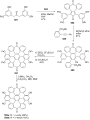
Scheme 105: Synthesis of saddle-shaped ketone 592 using dibenzotropoquinone 584.
An overview of recent advances in duplex DNA recognition by small molecules
- Sayantan Bhaduri,
- Nihar Ranjan and
- Dev P. Arya
Beilstein J. Org. Chem. 2018, 14, 1051–1086, doi:10.3762/bjoc.14.93
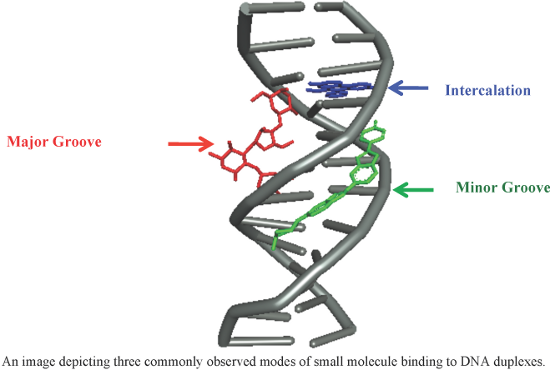
- Dervan hairpin polyamide was synthesized. The resulting conjugate 25 binds A·T-rich DNA duplexes with comparable affinity to that of the parent polyamide and breaks one strand of double-stranded plasmid DNA by interacting with anionic phosphodiesters in a fast transphosphorylation step as contact ion
- pairs at micromolar to high nanomolar concentration range [91]. Richert et al. designed a novel set of three-pronged probes (TPPs) comprising of cap, β-alanines and oligopyrrolamides in order to bind A·T-rich target strands from three sides (Watson–Crick face, terminus, and minor groove) resulting in

Graphical Abstract

Figure 1: A figure showing the hydrogen bonding patterns observed in (a) duplex (b) triplex and (c) quadruple...
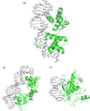
Figure 2: (a) Portions of MATα1–MATα2 are shown contacting the minor groove of the DNA substrate. Key arginin...

Figure 3: Chemical structures of naturally occurring and synthetic hybrid minor groove binders.
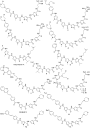
Figure 4: Synthetic structural analogs of distamycin A by replacing one or more pyrrole rings with other hete...

Figure 5: Pictorial representation of the binding model of pyrrole–imidazole (Py/Im) polyamides based on the ...

Figure 6: Chemical structures of synthetic “hairpin” pyrrole–imidazole (Py/Im) conjugates.

Figure 7: (a) Minor groove complex formation between DNA duplex and 8-ring cyclic Py/Im polyamide (conjugate ...

Figure 8: Telomere-targeting tandem hairpin Py/Im polyamides 23 and 24 capable of recognizing >10 base pairs; ...

Figure 9: Representative examples of recently developed DNA minor groove binders.

Figure 10: Chemical structures of bisbenzamidazoles Hoechst 33258 and 33342 and their synthetic structural ana...

Figure 11: Chemical structures of bisamidines such as diminazene, DAPI, pentamidine and their synthetic struct...

Figure 12: Representative examples of recently developed bisamidine derivatives.

Figure 13: Chemical structures of chromomycin, mithramycin and their synthetic structural analogs 91 and 92.

Figure 14: Chemical structures of well-known naturally occurring DNA binding intercalators.

Figure 15: Naturally occurring indolocarbazole rebeccamycin and its synthetic analogs.

Figure 16: Representative examples of naturally occurring and synthetic derivatives of DNA intercalating agent...

Figure 17: Several recent synthetic varieties of DNA intercalators.

Figure 18: Aminoglycoside (neomycin)–Hoechst 33258/intercalator conjugates.

Figure 19: Chemical structures of triazole linked neomycin dimers and neomycin–bisbenzimidazole conjugates.
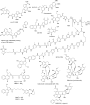
Figure 20: Representative examples of naturally occurring and synthetic analogs of DNA binding alkylating agen...

Figure 21: Chemical structures of naturally occurring and synthetic analogs of pyrrolobenzodiazepines.
Liquid-assisted grinding and ion pairing regulates percentage conversion and diastereoselectivity of the Wittig reaction under mechanochemical conditions
- Kendra Leahy Denlinger,
- Lianna Ortiz-Trankina,
- Preston Carr,
- Kingsley Benson,
- Daniel C. Waddell and
- James Mack
Beilstein J. Org. Chem. 2018, 14, 688–696, doi:10.3762/bjoc.14.57
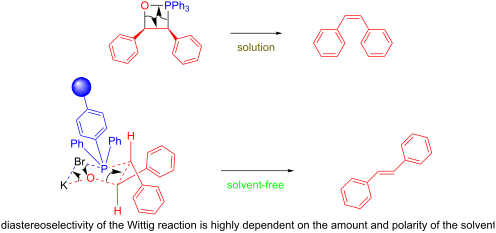
- the same rationale could be used in the case of our solvent-free conditions. In solution, ions are separated and stabilized by solvent molecules. Mechanistically we envision ions to start out as contact ion pairs, then solvent separated ion pairs (i.e., loose ion pairs) followed by free ion pairs
- . Conclusion Both a high dielectric constant of the solvent used in liquid-assisted grinding (LAG) and proper ion pairing were found to increase the percent conversion to stilbenes under mechanochemical conditions. Choosing appropriate ion pairs when LAG is utilized in the system also allowed tuning the

Graphical Abstract

Figure 1: Solution-based Wittig reaction mechanism.
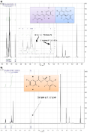
Figure 2: 1H NMR spectra of stilbene mixture (a) and benzyl benzoate (b).

Scheme 1: Possible mechanism of benzyl benzoate formation.

Scheme 2: A possible mechanistic explanation for the E selectivity.

Scheme 3: Ball-milled Wittig reaction using excess benzaldehyde.

Figure 3: Comparison of solution based Wittig reaction (a) with polymer-supported mechanochemical Wittig reac...

Scheme 4: Stepwise ball-milled Wittig reaction with ethanol as the LAG solvent.

Scheme 5: Stepwise ball-milled Wittig reaction with ethanol evaporation between the steps.
Synthesis of a sucrose-based macrocycle with unsymmetrical monosaccharides "arms"
- Karolina Tiara,
- Mykhaylo A. Potopnyk and
- Sławomir Jarosz
Beilstein J. Org. Chem. 2018, 14, 634–641, doi:10.3762/bjoc.14.50
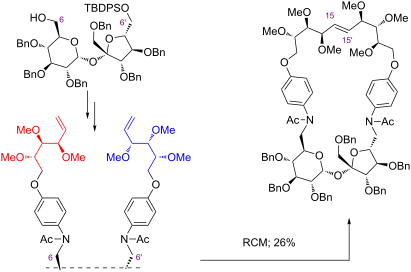
- ; Introduction Chiral macrocyclic compounds play an important role in supramolecular and biological systems [1][2]. Many of them serve as convenient receptors for cations [3], anions [4], ion pairs [5], neutral molecules [6] etc. Binaphthols [7][8][9], amino acids [10], chiral diamines [11][12], carbohydrates

Graphical Abstract

Scheme 1: Synthesis of macrocyclic derivative 4.

Figure 1: Possible route to sucrose cryptands 6.

Figure 2: Possible route to dienes of type 9.

Scheme 2: Unsuccessful attempts to amines 12a and 13b.

Scheme 3: Syntheses of "elongated" amines 17 and 18.
Scheme 4: Synthesis of macrocycle 25.
Stereochemical outcomes of C–F activation reactions of benzyl fluoride
- Neil S. Keddie,
- Pier Alexandre Champagne,
- Justine Desroches,
- Jean-François Paquin and
- David O'Hagan
Beilstein J. Org. Chem. 2018, 14, 106–113, doi:10.3762/bjoc.14.6
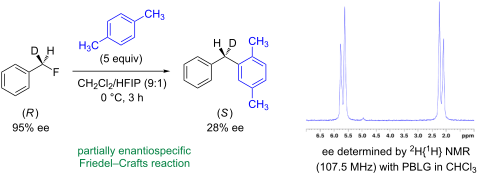
- (C) ion pairs. The partial racemization observed in Table 3 suggests that the solvent-separated ion-pair intermediate (C) is most likely the reactive species, as it would naturally lead to a partial racemization of the substrate stereocenter. When the activator was changed from HFIP to a mixed system

Graphical Abstract

Figure 1: C–F activation of benzylic fluorides to generate benzylamine or diarylmethane products.

Figure 2: 7-[2H1]-(R)-Benzyl fluoride ((R)-1).

Scheme 1: Synthesis of enantioenriched 7-[2H1]-(R)-benzyl fluoride ((R)-1) from benzaldehyde (2).

Figure 3: Partial 2H{1H} NMR (107.5 MHz) with PBLG in CHCl3 (13% w/w). (A) racemic sample of 6 (from Table 1, entry ...

Scheme 2: Synthesis of enantioenriched (S)-diarylmethane 10 from diaryl ketone 11 and confirmation of configu...

Figure 4: Possible reactive intermediates for C–F activation of benzyl fluoride 1 with strong hydrogen bond d...
Chiral phase-transfer catalysis in the asymmetric α-heterofunctionalization of prochiral nucleophiles
- Johannes Schörgenhumer,
- Maximilian Tiffner and
- Mario Waser
Beilstein J. Org. Chem. 2017, 13, 1753–1769, doi:10.3762/bjoc.13.170
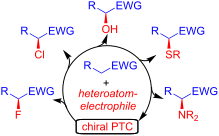
- major advantages of all these chiral cation-based phase-transfer catalysts (Q+ X−) is their unique potential to control the reactivity of a broad variety of different prochiral nucleophiles (i.e., enolates) via formation of chiral ion pairs, which can then undergo stereoselective α-functionalization

Graphical Abstract

Scheme 1: Generally accepted ion-pairing mechanism between the chiral cation Q+ of a PTC and an enolate and s...

Scheme 2: Reported asymmetric α-fluorination of β-ketoesters 1 using different chiral PTCs.

Scheme 3: Asymmetric α-fluorination of benzofuranones 4 with phosphonium salt PTC F1.

Scheme 4: Asymmetric α-fluorination of 1 with chiral phosphate-based catalysts.

Scheme 5: Anionic PTC-catalysed α-fluorination of enamines 7 and ketones 10.

Scheme 6: PTC-catalysed α-chlorination reactions of β-ketoesters 1.

Scheme 7: Shioiri’s seminal report of the asymmetric α-hydroxylation of 15 with chiral ammonium salt PTCs.

Scheme 8: Asymmetric ammonium salt-catalysed α-hydroxylation using oxygen together with a P(III)-based reduct...

Scheme 9: Asymmetric ammonium salt-catalysed α-photooxygenations.

Scheme 10: Asymmetric ammonium salt-catalysed α-hydroxylations using organic oxygen-transfer reagents.

Scheme 11: Asymmetric triazolium salt-catalysed α-hydroxylation with in situ generated peroxy imidic acid 24.

Scheme 12: Phase-transfer-catalysed dearomatization of phenols and naphthols.

Scheme 13: Ishihara’s ammonium salt-catalysed oxidative cycloetherification.

Scheme 14: Chiral phase-transfer-catalysed α-sulfanylation reactions.

Scheme 15: Chiral phase-transfer-catalysed α-trifluoromethylthiolation of β-ketoesters 1.

Scheme 16: Chiral phase-transfer-catalysed α-amination of β-ketoesters 1 using diazocarboxylates 38.

Scheme 17: Asymmetric α-fluorination of benzofuranones 4 using diazocarboxylates 38 in the presence of phospho...

Scheme 18: Anionic phase-transfer-catalysed α-amination of β-ketoesters 1 with aryldiazonium salts 41.

Scheme 19: Triazolium salt L-catalysed α-amination of different prochiral nucleophiles with in situ activated ...

Scheme 20: Phase-transfer-catalysed Neber rearrangement.
Block copolymers from ionic liquids for the preparation of thin carbonaceous shells
- Sadaf Hanif,
- Bernd Oschmann,
- Dmitri Spetter,
- Muhammad Nawaz Tahir,
- Wolfgang Tremel and
- Rudolf Zentel
Beilstein J. Org. Chem. 2017, 13, 1693–1701, doi:10.3762/bjoc.13.163
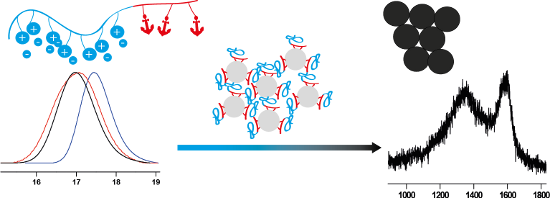
- ; ionic liquid; polymeric ionic liquid; RAFT polymerization; Introduction Ionic liquids (ILs) are organic salts. Most of them have a melting point below 100 °C [1][2]. These organic salts do not have the same structure like inorganic salts. This is due to the structure of the ion pairs. They are built of

Graphical Abstract

Figure 1: (a) Schematic illustration of the synthesis route of carbon coated TiO2 nanoparticles. (Left) in si...

Figure 2: a) Size-exclusion chromatography of P1A (blue), P2A (black) and P3A (red) and b) size-exclusion chr...

Figure 3: 1H NMR spectrum of P1, P2 and P3, all measured in DMSO-d6. In blue the spectrum of the PIL block is...

Figure 4: a) TGA measurement of the particles coated with block copolymer and particles coated with carbon, m...

Figure 5: PXRD pattern of carbon-coated TiO2 particles.

Figure 6: TEM images of the carbon coated TiO2 nanoparticles.
Substitution of fluorine in M[C6F5BF3] with organolithium compounds: distinctions between O- and N-nucleophiles
- Anton Yu. Shabalin,
- Nicolay Yu. Adonin and
- Vadim V. Bardin
Beilstein J. Org. Chem. 2017, 13, 703–713, doi:10.3762/bjoc.13.69
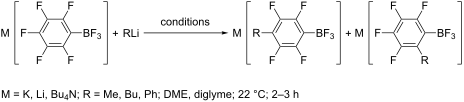
- solvent molecules to form contact ion pair [37]. The opposite situation is in 1-N where the bulky tetrabutylammonium cation (“soft”) interacts with those fluorine atom(s) weaker than Li+ either in DME and diglyme and this salt forms solvent-separated ion pairs. Potassium pentafluorophenyltrifluoroborate
- is the intermediate position. The 11B and 19F NMR chemical shifts of BF3 group in 1-K in DME are closely related to the shifts of 1-Li in the same solvents and reflect the formation of contact ion pairs. In acetonitrile the salts 1-Li and 1-N form solvent-separated ion pairs (11B and 19F NMR). These
- observations eludicate the effect of counteractions on the isomer compositions of M[RC6F4BF3]. In DME both salts, 1-Li and 1-K, exist as the contact ion pairs and thus the molar ratios of [4-BuC6F4BF3]−/[2-BuC6F4BF3]− should be similar. Indeed, the ratio of these products derived from 1-Li and 1-K are 1:0.15

Graphical Abstract

Scheme 1: Preparation of polyfluoroorganotrifluoroborates.

Scheme 2: Interaction of K[C6F5BF3] (1-K) with methyllithium (byproducts of hydrodeboration are not depicted)....

Scheme 3: Interaction of M[C6F5BF3] (1-M) with butyllithium (byproducts of hydrodeboration are not depicted).

Scheme 4: Interaction of K[C6F5BF3] (1-K) with phenyllithium (byproducts of hydrodeboration are not depicted)....

Scheme 5: Hydrodeboration of 6-K, 7-K, 8-K and 9-K in MeOH.

Scheme 6: Hydrodeboration of 1-K, 10-K and 11-K in methyl cellosolve.

Scheme 7: Hydrodeboration of 10-K, 11-K, 12-K and 13-K in MeOH.

Scheme 8: Preparation of 1-Li and 1-N.

Scheme 9: Formation of 2-R-tetrafluorophenyltrifluoroborates.

Scheme 10: Interaction between C6F5BF3− and PhLi.

Scheme 11: Interaction of 1-K with MeONa.

Scheme 12: Interaction of M[RC6F5BF3] with lithium halides.

Scheme 13: Assumed role of lithium halides.
New approaches to organocatalysis based on C–H and C–X bonding for electrophilic substrate activation
- Pavel Nagorny and
- Zhankui Sun
Beilstein J. Org. Chem. 2016, 12, 2834–2848, doi:10.3762/bjoc.12.283
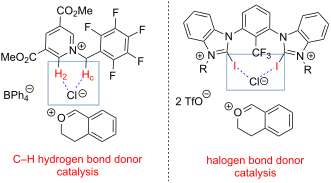
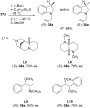
- form the corresponding salts, and these generated in situ ion pairs were treated with silyl enol ethers in the presence of chiral catalysts L2–L4 to form chiral addition products. High levels of chirality transfer were generally observed for various 6-membered nitrogen-containing heterocyclic

Graphical Abstract

Figure 1: Electrophile Activation by Hydrogen Bond Donors [1-16].

Figure 2: Early examples of C–H hydrogen bonds and their recent use in supramolecular chemistry [18,19,32-34].

Scheme 1: Design of 1,2,3-triazole-based catalysts for trityl group transfer through chloride anion binding b...

Scheme 2: Examples of chiral triazole-based catalysts for anion activation designed by Mancheno and co-worker...

Scheme 3: Application of chiral triazole-based catalysts L3 and L4 for counterion activation of pyridinium, q...
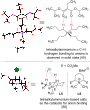
Scheme 4: Ammonium salt anion binding via C–H hydrogen bonds in solid state [40-45,50,51].
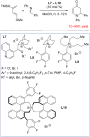
Scheme 5: Early examples of ammonium salts being used for electrophilic activation of imines in aza-Diels–Ald...
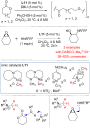
Scheme 6: Ammonium salts as hydrogen bond-donor catalysts by Bibal and co-workers [53,54].

Scheme 7: Tetraalkylammonium catalyst (L6)-catalyzed dearomatization of isoquinolinium salts [50].

Scheme 8: Tetraalkylammonium catalyst L6 complexation to halogen-containing substrates [51].

Scheme 9: Tetraalkylammonium-catalyzed aza-Diels–Alder reaction by Maruoka and co-workers [52].
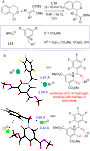
Scheme 10: (A) Alkylpyridinium catalysts L13-catalyzed reaction of 1-isochroman and silyl ketene acetals by Be...
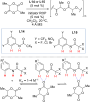
Scheme 11: Mixed N–H/C–H two hydrogen bond donors L14 and L15 as organocatalysts for ROP of lactide by Bibal a...

Scheme 12: Examples of stable complexes based on halogen bonding [68,69].

Scheme 13: Interaction between (−)-sparteine hydrobromide and (S)-1,2-dibromohexafluoropropane in the cocrysta...

Scheme 14: Iodine-catalyzed reactions that are computationally proposed to proceed through halogen bond to car...

Scheme 15: Transfer hydrogenation of phenylquinolines catalyzed by haloperfluoroalkanes by Bolm and co-workers ...
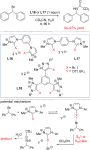
Scheme 16: Halogen bond activation of benzhydryl bromides by Huber and co-workers [82].

Scheme 17: Halogen bond-donor-catalyzed addition to oxocarbenium ions by Huber and co-workers [89].

Scheme 18: Halogen bond-donor activation of α,β-unsaturated carbonyl compounds in the [2 + 4] cycloaddition re...

Scheme 19: Halogen bond donor activation of imines in the [2 + 4] cycloaddition reaction of imine and Danishef...
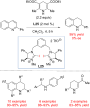
Scheme 20: Transfer hydrogenation catalyzed by a chiral halogen bond donor by Tan and co-workers [91].

Scheme 21: Allylation of benzylic alcohols by Takemoto and co-workers [92].

Scheme 22: NIS induced semipinacol rearrangement via C–X bond cleavage [93].
A chiral analog of the bicyclic guanidine TBD: synthesis, structure and Brønsted base catalysis
- Mariano Goldberg,
- Denis Sartakov,
- Jan W. Bats,
- Michael Bolte and
- Michael W. Göbel
Beilstein J. Org. Chem. 2016, 12, 1870–1876, doi:10.3762/bjoc.12.176
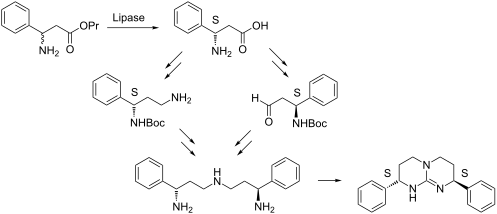
- amino acid arginine, they play an important role in biochemistry, mainly by forming ion pairs. In addition, numerous guanidine derivatives with complex cyclic structures can be found in natural products [1]. Simple guanidines such as tetramethylguanidine have been used as strong Brønsted bases in
- contains two cations, two benzoate anions and ethyl acetate as a solvate molecule. Each cation is connected by two N–H···O hydrogen bonds to benzoate ions. The rings of cation 10 adopt a conformation close to an envelope with the phenyl substituents in pseudo-axial positions. The ion pairs and the solvate
- configuration, it also forms S,S-25 preferentially. Accordingly, transition-state structures in the reactions of guanidines 8 and 10 must differ from each other. Structure of guanidines 1–10. Crystal structure of guanidine 10 as a benzoate salt. Only one of the ion pairs is shown for the sake of clarity. A

Graphical Abstract

Figure 1: Structure of guanidines 1–10.

Scheme 1: Synthesis of guanidine 10. Conditions: (a) 1 equiv HOOC-CH2-COOH, 2 equiv NH4OAc, EtOH, 78 °C, 5 h,...

Figure 2: Crystal structure of guanidine 10 as a benzoate salt. Only one of the ion pairs is shown for the sa...

Scheme 2: Reaction of anthrones and N-arylmaleimides catalyzed by guanidine 10. The guanidine deprotonates an...

Figure 3: A) Chromatogram of rac-25 after incubation with 0.1 equiv of 10 in THF at −15 °C for 64 h. The fast...
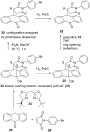
Scheme 3: Assignment of the absolute configurations by chemical correlation. The R configuration of compound ...
Creating molecular macrocycles for anion recognition
- Amar H. Flood
Beilstein J. Org. Chem. 2016, 12, 611–627, doi:10.3762/bjoc.12.60
- ion pairs (Kip). As a tribute to the four equilibria and the four species that are formed, the 1H NMR titration data for triazolophane 7 is exemplary (Figures 9b,c). Proton Ha reflects the 1:1 species by stopping its movements after 1 equiv of chloride is added. Protons Hh and Hi have inflection
- fitting of 1H NMR titration data. Both software have their limitations but their usage as tools to unravel complex equilibria is without parallel. Cooperativity of ion–pair complexation The most recent undertaking of ion pairing is to make it a feature and to examine, in glorious detail, how ion pairs can

Graphical Abstract

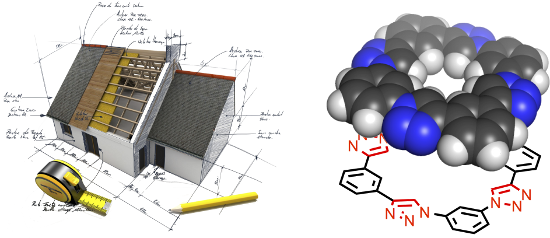
Figure 1: The design and building of a house is just as satisfying as that of a new molecule and often takes ...

Figure 2: Timeline of anion-binding macrocycles.

Figure 3: Click chemistry’s copper-catalyzed azide–alkyne cycloaddition (CuAAC) forms 1,2,3-triazoles that st...

Figure 4: These molecular compounds are the same and not the same.

Figure 5: (a, b, c) Sequence of chemical sketches leading to triazolophanes. (d) The precursor that led, by C...
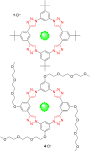
Figure 6: Variation in phenylene substituents weakens chloride affinity from 1 to 4.

Figure 7: (a) Pyridyl triazolophane and (b) its high-fidelity sandwich around iodide (crystal). Adapted with ...

Figure 8: Testing the (a) macrocyclic effect, and (b) effect of rigidity against (c) the parent triazolophane....

Figure 9: (a) Representations of the four equilibria that dominate in dichloromethane for which the (b) propy...

Figure 10: Representations of (a) aryl–triazole–ether macrocycle 12 and (b) the ion-pair crystal structure of ...

Figure 11: Chloride is used as a comparator for (a) cyanide and (b) biflouride. (c) Computer-aided receptor de...

Figure 12: (a) One-pot synthesis of cyanostars. (b) Volcano plot of anion affinities (40:60 methanol/dichlorom...

Figure 13: (a) Representation and (b) crystal structure of cyanostar-based [3]rotaxane.

Figure 14: Crystal structures of cyanostar sandwich around (a) perchlorate and (b) diglyme (molecules shown wi...

Figure 15: (a) Star-extended cyanostar and an (b) STM image cropped from a 2D lamellar lattice. Part (b) adapt...

Figure 16: (a) Synthesis and one-pot macrocyclization of the tricarb macrocycle. (b) Volcano plot of anion aff...
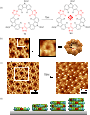
Figure 17: (a) Tricarb binds iodide. (b) Tricarb’s single-molecule STM image resembles a donut. (c) Honeycomb ...

Figure 18: Timeline of crescent-shaped anion receptors.

Figure 19: Timeline of anion-binding foldamers.

Figure 20: Family portrait of 3D-printed molecular receptors.
Smart molecules for imaging, sensing and health (SMITH)
- Bradley D. Smith
Beilstein J. Org. Chem. 2015, 11, 2540–2548, doi:10.3762/bjoc.11.274
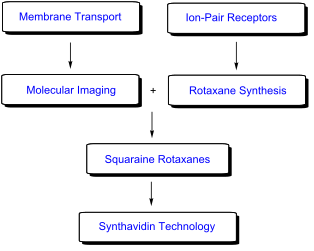
- awareness of the need for transport carrier molecules that could simultaneously complex both the anion and the cation [24][25]. Starting in 2000 we prepared a number of relatively simple macrobicyclic receptors that could bind salts as either contact ion-pairs or as solvent separated ion-pairs [26][27][28
- author as director of the Notre Dame Integrated Imaging Facility. Chronological progression of Smith group research projects. Molecular transporters promote translocation of ions or hydrophilic biomolecules across a synthetic or biological membrane. Macrocyclic receptor that binds solvent separated ion
- -pairs. Trapping a macrocyclic receptor containing a reactive ion-pair produces an interlocked [2]rotaxane. (top) Basis of Synthavidin technology. A fluorescent squaraine dye that is flanked by PEG chains can rapidly thread a tetralactam macrocycle in water to produce a highly stable complex. (bottom

Graphical Abstract

Figure 1: The author as a teenager in his school uniform, but on the nearby Myrtleford golf course.

Scheme 1: Chronological progression of Smith group research projects.

Scheme 2: Molecular transporters promote translocation of ions or hydrophilic biomolecules across a synthetic...

Figure 2: (left) Association of ZnDPA probe with phosphatidylserine head group. (middle) False colored fluore...

Scheme 3: Macrocyclic receptor that binds solvent separated ion-pairs.

Scheme 4: Trapping a macrocyclic receptor containing a reactive ion-pair produces an interlocked [2]rotaxane.

Figure 3: (left) General structure of a squaraine rotaxane dye. (right) Fluorescence image of a living mouse ...

Scheme 5: (top) Basis of Synthavidin technology. A fluorescent squaraine dye that is flanked by PEG chains ca...

Figure 4: The author as director of the Notre Dame Integrated Imaging Facility.
Bis(vinylenedithio)tetrathiafulvalene analogues of BEDT-TTF
- Erdal Ertas,
- İlknur Demirtas and
- Turan Ozturk
Beilstein J. Org. Chem. 2015, 11, 403–415, doi:10.3762/bjoc.11.46
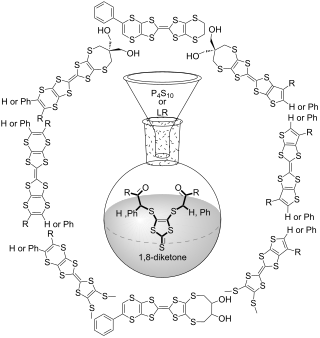
- thickness of the film was obtained. The film was annealed at 25, 55, 85, 115 and finally at 145 °C for 30 min. Electronic transitions of the complex 54, i.e. n–π* and π–π* transitions, led to the formation of radical ion pairs 55. The refractive index dispersion and optical constant of the annealed film

Graphical Abstract

Figure 1: Chemical structure of the TTF analogues and TCNQ.

Figure 2: Oxidation states of TTF.

Figure 3: 1,4-Dithiin and thiophene fused TTF analogues from 1,8-diketone.

Scheme 1: Reaction mechanism of fused 1,4-dithiin and thiophene ring systems.

Scheme 2: Reaction conditions (i) LR, toluene, reflux, overnight; (ii) P4S10, toluene, reflux, 3 h.

Scheme 3: Proposed mechanism for side products.

Scheme 4: Reaction conditions (i) Hg(OAc)2, AcOH/CHCl3, rt, 1h; (ii) (EtO)3P, N2, 3 h, 110 °C.

Scheme 5: Reaction conditions (i) iPr2NEt, MEMCl, THF, rt, 12 h; (ii) LiAlH4, dry ether, rt, 24 h; (iii) tosy...

Scheme 6: Reagents and conditions (i) P4S10, toluene, reflux, dark, 3 h; (ii) P4S10, toluene, reflux, 3 h; (i...

Scheme 7: Reagents and conditions (i) Hg(OAc)2–AcOH, CHCl3, 3 h, rt; (ii) (EtO)3P, 110 °C, N2, 2 h.

Scheme 8: Charge transfer complex of 5,5',6,6'-tetraphenyl-2,2'-bi([1,3]dithiolo[4,5-b][1,4]dithiinylidene) 52...

Scheme 9: Reaction conditions (i) (EtO)3P, 110 °C, N2, 2 h.

Scheme 10: Reaction conditions (i) EtOH, reflux, overnight; (ii) diisopropylethylamine in CH2Cl2, room tempera...

Scheme 11: Reaction and conditions (i) P4S10, NaHCO3, toluene, reflux, 3 h; (ii) P4S10, p-TSA, toluene, reflux...
Microsolvation and sp2-stereoinversion of monomeric α-(2,6-di-tert-butylphenyl)vinyllithium as measured by NMR
- Rudolf Knorr,
- Monika Knittl and
- Eva C. Rossmann
Beilstein J. Org. Chem. 2014, 10, 2521–2530, doi:10.3762/bjoc.10.263
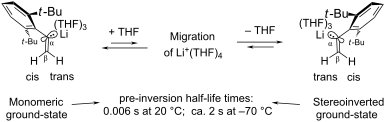
- trans) through a “diastereotopomerization” [23] that interconverts the ground-state contact-ion pairs (CIP) 11 and 11' in Scheme 3. Increasing rates of this interchange will cause at first an increasing line broadening of the AB system and then a “coalescence” of all four lines into a singlet at the

Graphical Abstract

Scheme 1: The sterically congested model systems.

Scheme 2: Preparation and derivatives of the α-arylvinyllithium 4, where Don = ½TMEDA and d = 2 for the purif...
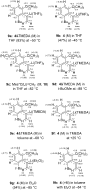
Figure 1: 13C and (in parentheses) 1H NMR lithiation shifts Δδ = δ(R–Li) − δ(R–H) [ppm] of the monomers (“M”) ...

Scheme 3: THF-catalyzed ionization of ground-state 11 (CIP) generates the solvent-separated ion pair 12 (SSIP...

Figure 2: Arrhenius diagram of the natural logarithms of pseudo-first-order rate constants kψ [s−1] of sp2-st...
Macrocyclic bis(ureas) as ligands for anion complexation
- Claudia Kretschmer,
- Gertrud Dittmann and
- Johannes Beck
Beilstein J. Org. Chem. 2014, 10, 1834–1839, doi:10.3762/bjoc.10.193
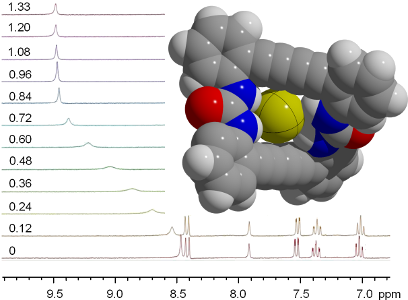
- DMSO itself is bound to the urea functional groups (Figure 1). If an excess of NEt4Br is added to a solution of 2 in DMSO, on slow evaporation yellow crystals of NEt4[Br·2] are separated. The crystal structure consists of ion pairs, tetraethylammonium cations and bromide anions, which are located in

Graphical Abstract

Scheme 1: Synthesis of the macrocyclic bis(ureas) 1 and 2.

Scheme 2: Formation of dihydroindoloquinolinone 3 from 1 by vacuum sublimation.
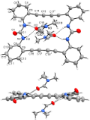
Figure 1: The molecular structure of 2·2DMF in two different views, on top perpendicular to the plane, on bot...
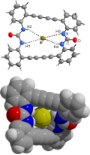
Figure 2: Molecular structure of the anionic complex in NEt4[Br·2]. Two different representations are given, ...
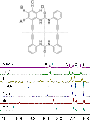
Figure 3: 1H NMR spectra of 2 in THF-d8 after addition of several different tetrabutylammonium salts. The N−H...

Figure 4: 1H NMR spectra of 2 in THF-d8 after addition of increasing molar equivalents of tetrabutylammonium ...
A study on electrospray mass spectrometry of fullerenol C60(OH)24
- Mihaela Silion,
- Andrei Dascalu,
- Mariana Pinteala,
- Bogdan C. Simionescu and
- Cezar Ungurenasu
Beilstein J. Org. Chem. 2013, 9, 1285–1295, doi:10.3762/bjoc.9.145
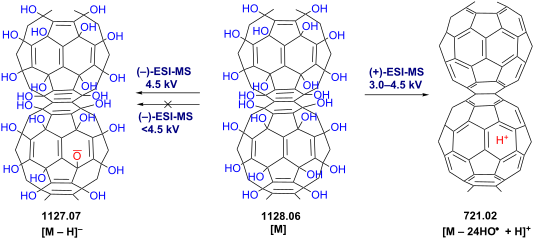
- + H]+ and deprotonated [M − H]− molecules, and distonic deprotonated molecules for those identified from a deprotonated molecule plus loss of HO• and/or H• radicals [M − HO• − H• − H]−. However, while only radical-ion pairs have been identified by ESI-MS as distonic ions, the distonic deprotonated

Graphical Abstract

Scheme 1: Proposed mechanisms for the formation of fullerenol anions and distonic radical anions observed by ...

Figure 1: Negative-ion mass spectra for a 0.5 × 10⁻⁵ M solution of C60(OH)24 in ultrapure water: (a) full sca...

Scheme 2: Examples of proposed structures for the main deprotonated molecules and final distonic molecular io...
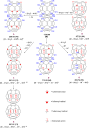
Scheme 3: Proposed (−)ESI-MS ionization mechanisms for fullerenol C60(OH)24 in pure water.

Figure 2: Negative-ion mass spectra of a 0.5 × 10⁻⁵ M aqueous solution of C60(OH)24 in ammonia solution: (a) ...

Figure 3: Positive ionization ESI mass spectrum of C60(OH)24 in (a) 3 × 10⁻¹ M (b) 2 × 10⁻² M aqueous ammonia...

Scheme 4: Proposed (+)ESI-MS ionization mechanisms for fullerenol C60(OH)24 in ammonia solution.
Synthesis of guanidinium–sulfonimide ion pairs: towards novel ionic liquid crystals
- Martin Butschies,
- Manuel M. Neidhardt,
- Markus Mansueto,
- Sabine Laschat and
- Stefan Tussetschläger
Beilstein J. Org. Chem. 2013, 9, 1093–1101, doi:10.3762/bjoc.9.121
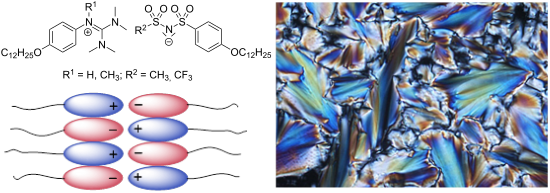
- complementary ion pairs, consisting of both, mesogenic cation and anion, was extended from guanidinium sulfonates to guanidinium sulfonimides. In this preliminary study, the synthesis and mesomorphic properties of selected derivatives were described, which provide the first example of an ILC with the
- sulfonimide anion directly attached to the mesogenic unit. Keywords: anion exchange; ionic liquid crystals; ion pairs; mesophases; sulfonimides; Introduction While ionic liquids, i.e., molten salts composed of either organic cation or anion (or both) with melting points far below 100 °C, are extensively
- ][18][19]. By using an elongated perfluoroalkyl chain at the bistriflimide anion in combination with short chain-substituted pyrrolidinium cations MacFarlane was able to induce plastic crystal phases and liquid-crystalline phases at room temperature [20]. Ion pairs consisting of perfluorosulfonylimide

Graphical Abstract

Scheme 1: Complementary guanidinium sulfonate 1 and guanidinium–sulfonimide ion pairs 2 and 3.

Scheme 2: Synthesis of the potassium sulfonimides 6a and 6b.
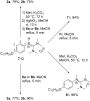
Scheme 3: Synthesis of guanidinium sulfonimides 2a,b, 3a,b and iodides 7∙I, 8∙I.

Figure 1: DSC traces of compound 3b (heating/cooling rate 10 K min−1).

Figure 2: Compound 3b under crossed polarizers upon cooling from the isotropic melt (200-fold magnification)....

Figure 3: (a) WAXS diffraction pattern of 3b at 59.5 °C (vertical magnetic field director); (b) temperature-d...
Electron and hydrogen self-exchange of free radicals of sterically hindered tertiary aliphatic amines investigated by photo-CIDNP
- Martin Goez,
- Isabell Frisch and
- Ingo Sartorius
Beilstein J. Org. Chem. 2013, 9, 437–446, doi:10.3762/bjoc.9.46
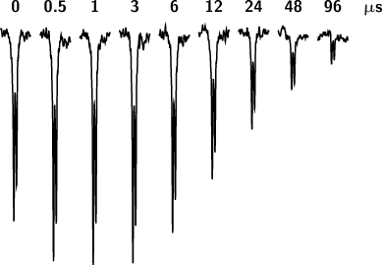
- reaction occurs through successive radical pairs. With AQ, the polarizations stem from the initially formed radical-ion pairs, and escaping DH•+ then undergoes electron self-exchange with DH. In the reaction sensitized with XA (or BP), the polarizations arise in a secondary pair of neutral radicals that is
- polarizations. When escape predominates, all polarizations originate from the radical-ion pairs, when the in-cage deprotonation prevails, from the pairs of neutral radicals. Because the rate of in-cage deprotonation depends on the free energy of that reaction ∆Gdep, a threshold behaviour is observed: For
- representatives that yield CIDNP from the radical-ion pairs and from the pairs of neutral radicals, respectively. Owing to competing side-reactions, kinetic studies were not feasible with triethylamine, but for the two amines of this work, they are. As we will show, depending on the sensitizer, different spin

Graphical Abstract

Scheme 1: Mechanism explaining the CIDNP effects in sensitized hydrogen abstractions from tertiary aliphatic ...

Figure 1: Time-resolved CIDNP in sensitized (sensitizers xanthone (XA), benzophenone (BP), or anthraquinone (...

Figure 2: Influence of the laser intensity E on the observed exchange-rate constant kex (DABCO) (main plot) a...

Scheme 2: Pathways from the free radicals to the product.

Figure 3: Time-resolved CIDNP signals of the 18 equivalent β protons (d, 0.98 ppm) of triisopropylamine (TIPA...

Figure 4: Eyring plots for the self-exchange rate constants kex (TIPA) of triisopropylamine (TIPA) sensitized...
Inter- and intramolecular enantioselective carbolithiation reactions
- Asier Gómez-SanJuan,
- Nuria Sotomayor and
- Esther Lete
Beilstein J. Org. Chem. 2013, 9, 313–322, doi:10.3762/bjoc.9.36

- using DMPU as an additive to accelerate the aryl migration [17], probably by favoring the formation of solvated ion pairs [18]. Thus, this tandem enantioselective carbolithiation–rearrangement of vinylic ureas bearing an N-aryl group leads to the formation of two new carbon–carbon bonds with control of

Graphical Abstract

Scheme 1: Intermolecular carbolithiation.

Scheme 2: Carbolithiation of cinnamyl and dienyl derivatives.

Scheme 3: Carbolithiation of cinnamyl alcohol.

Scheme 4: Carbolithiation of styrene derivatives.

Scheme 5: Carbolithiation of α-aryl O-alkenyl carbamates.

Scheme 6: Carbolithiation-rearrangement of N-alkenyl-N-arylureas.

Scheme 7: Carbolithiation of N,N-dimethylaminofulvene.

Scheme 8: Carbolithiation of enynes.

Scheme 9: Intramolecular carbolithiation.

Scheme 10: Carbolithiation of 5-alkenylcarbamates.

Scheme 11: Carbolithiation of cinnamylpiperidines.

Scheme 12: Carbolithiation of alkenylpyrrolidines.

Scheme 13: Enantioselective carbolithiation of N-allyl-2-bromoanilines.
Scheme 14: Effect of the ligand in the carbolithiation reaction.

Scheme 15: Effect of the alkene substitution in the carbolithiation reaction.
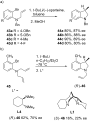
Scheme 16: Effect of the ring substitution in the carbolithiation reaction.

Scheme 17: Enantioselective carbolithiation of allyl aryl ethers.

Scheme 18: Formation of six-membered rings: pyrroloisoquinolines.

Scheme 19: Formation of six-membered rings: tetrahydroquinolines.
Aromatic and heterocyclic perfluoroalkyl sulfides. Methods of preparation
- Vladimir N. Boiko
Beilstein J. Org. Chem. 2010, 6, 880–921, doi:10.3762/bjoc.6.88
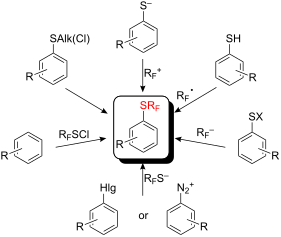
- groups to stabilize the mercapto-radicals in the radical ion pairs [•O2NArS + RF−] and [•O=CArS + RF−]. As a result, these radicals are less reactive, although at higher temperatures an increase in their activity is observed. The participation of radicals is supported by the fact that the addition of

Graphical Abstract

Figure 1: Examples of industrial fluorine-containing bio-active molecules.

Figure 2: CF3(S)- and CF3(O)-containing pharmacologically active compounds.

Figure 3: Hypotensive candidates with SRF and SO2RF groups – analogues of Losartan and Nifedipin.

Figure 4: The variety of the pharmacological activity of RFS-substituted compounds.

Figure 5: Recent examples of compounds containing RFS(O)n-groups [12-18].

Scheme 1: Fluorination of ArSCCl3 to corresponding ArSCF3 derivatives. For references see: a[38-43]; b[41,42]; c[43]; d[44]; e[38-43,45-47]; f[38-43,48,49]; g...

Scheme 2: Preparation of aryl pentafluoroethyl sulfides.

Scheme 3: Mild fluorination of the aryl SCF2Br derivatives.

Scheme 4: HF fluorinations of aryl α,α,β-trichloroisobutyl sulfide at various conditions.

Scheme 5: Monofluorination of α,α-dichloromethylene group.

Scheme 6: Electrophilic substitution of phenols with CF3SCl [69].

Scheme 7: Introduction of SCF3 groups into activated phenols [71-74].

Scheme 8: Preparation of tetrakis(SCF3)-4-methoxyphenol [72].

Scheme 9: The interactions of resorcinol and phloroglucinol derivatives with RFSCl.

Scheme 10: Reactions of anilines with CF3SCl.

Scheme 11: Trifluoromethylsulfanylation of anilines with electron-donating groups in the meta position [74].

Scheme 12: Reaction of benzene with CF3SCl/CF3SO3H [77].

Scheme 13: Reactions of trifluoromethyl sulfenyl chloride with aryl magnesium and -mercury substrates.

Scheme 14: Reactions of pyrroles with CF3SCl.

Scheme 15: Trifluoromethylsulfanylation of indole and indolizines.

Scheme 16: Reactions of N-methylpyrrole with CF3SCl [80,82].

Scheme 17: Reactions of furan, thiophene and selenophene with CF3SCl.

Scheme 18: Trifluoromethylsulfanylation of imidazole and thiazole derivatives [83].

Scheme 19: Trifluoromethylsulfanylation of pyridine requires initial hydride reduction.

Scheme 20: Introduction of additional RFS-groups into heterocyclic compounds in the presence of CF3SO3H.

Scheme 21: Introduction of additional RFS-groups into pyrroles [82,87].

Scheme 22: By-products in reactions of pyrroles with CF3SCl [82].

Scheme 23: Reaction of aromatic iodides with CuSCF3 [93,95].

Scheme 24: Reaction of aromatic iodides with RFZCu (Z = S, Se), RF = CF3, C6F5 [93,95,96].

Scheme 25: Side reactions during trifluoromethylsulfanylation of aromatic iodides with CF3SCu [98].

Scheme 26: Reactions with in situ generated CuSCF3.

Scheme 27: Perfluoroalkylthiolation of aryl iodides with bulky RFSCu [105].

Scheme 28: In situ formation and reaction of RFZCu with aryl iodides.

Figure 6: Examples of compounds obtained using in situ generated RFZCu methodology [94].

Scheme 29: Introduction of SCF3 group into aromatics via difluorocarbene.

Scheme 30: Tetrakis(dimethylamino)ethylene dication trifluoromethyl thiolate as a stable reagent for substitut...

Scheme 31: The use of CF2=S/CsF or (CF3S)2C=S/CsF for the introduction of CF3S groups into fluorinated heteroc...

Scheme 32: One-pot synthesis of ArSCF3 from ArX, CCl2=S and KF.

Scheme 33: Reaction of aromatics with CF3S− Kat+ [115].

Scheme 34: Reactions of activated aromatic chlorides with AgSCF3/KI.

Scheme 35: Comparative CuSCF3/KI and Hg(SCF3)2/KI reactions.

Scheme 36: Me3SnTeCF3 – a reagent for the introduction of the TeCF3 group.

Scheme 37: Sandmeyer reactions with CuSCF3.

Scheme 38: Reactions of perfluoroalkyl iodides with alkali and organolithium reagents.

Scheme 39: Perfluoroalkylation with preliminary breaking of the disulfide bond.

Scheme 40: Preparation of RFS-substituted anilines from dinitrodiphenyl disulfides.

Scheme 41: Photochemical trifluoromethylation of 2,4,6-trimercaptochlorobenzene [163].

Scheme 42: Putative process for the formation of B, C and D.

Scheme 43: Trifluoromethylation of 2-mercapto-4-hydroxy-6-trifluoromethylyrimidine [145].

Scheme 44: Deactivation of 2-mercapto-4-hydroxypyrimidines S-centered radicals.

Scheme 45: Perfluoroalkylation of thiolates with CF3Br under UV irradiation.

Scheme 46: Catalytic effect of methylviologen for RF• generation.

Scheme 47: SO2−• catalyzed trifluoromethylation.

Scheme 48: Electrochemical reduction of CF3Br in the presence of SO2 [199,200].

Scheme 49: Participation of SO2 in the oxidation of ArSCF3−•.

Scheme 50: Electron transfer cascade involving SO2 and MV.

Scheme 51: Four stages of the SRN1 mechanism for thiol perfluoroalkylation.

Scheme 52: A double role of MV in the catalysis of RFI reactions with aryl thiols.

Scheme 53: Photochemical reaction of pentafluoroiodobenzene with trifluoromethyl disulfide.

Scheme 54: N- Trifluoromethyl-N-nitrosobenzene sulfonamide – a source of CF3• radicals [212,213].

Scheme 55: Radical trifluoromethylation of organic disulfides with ArSO2N=NCF3.

Scheme 56: Barton’s S-perfluoroalkylation reactions [216].

Scheme 57: Decarboxylation of thiohydroxamic esters in the presence of C6F13I.

Scheme 58: Reactions of thioesters of trifluoroacetic and trifluoromethanesulfonic acids in the presence of ar...

Scheme 59: Perfluoroalkylation of polychloropyridine thiols with xenon perfluorocarboxylates or XeF2 [222,223].

Scheme 60: Interaction of Xe(OCORF)2 with nitroaryl disulfide [227].

Scheme 61: Bi(CF3)3/Cu(OCOCH3)2 trifluoromethylation of thiophenolate [230].

Scheme 62: Reaction of fluorinated carbanions with aryl sulfenyl chlorides.

Scheme 63: Reaction of methyl perfluoromethacrylate with PhSCl in the presence of fluoride.

Scheme 64: Reactions of ArSCN with potassium and magnesium perfluorocarbanions [237].

Scheme 65: Reactions of RFI with TDAE and organic disulfides [239,240].

Scheme 66: Decarboxylation of perfluorocarboxylates in the presence of disulfides [245].

Scheme 67: Organization of a stable form of “CF3−” anion in the DMF.

Scheme 68: Silylated amines in the presence of fluoride can deprotonate fluoroform for reaction with disulfide...

Figure 7: Other examples of aminomethanols [264].

Scheme 69: Trifluoromethylation of diphenyl disulfide with PhSO2CF3/t-BuOK.

Scheme 70: Amides of trifluoromethane sulfinic acid are sources of CF3− anion.

Scheme 71: Trifluoromethylation of various thiols using “hyper-valent” iodine (III) reagent [279].

Scheme 72: Trifluoromethylation of p-nitrothiophenolate with diaryl CF3 sulfonium salts [280].

Scheme 73: Trifluoromethyl transfer from dibenzo (CF3)S-, (CF3)Se- and (CF3)Te-phenium salts to thiolates [283].

Scheme 74: Multi-stage paths for synthesis of dibenzo-CF3-thiophenium salts [61].
Molecular recognition of organic ammonium ions in solution using synthetic receptors
- Andreas Späth and
- Burkhard König
Beilstein J. Org. Chem. 2010, 6, No. 32, doi:10.3762/bjoc.6.32
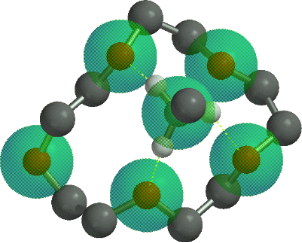
- energies are between 42 and 92 kJ/mol in the gas phase. The cation–π-bond is an important motif for the recognition of quaternary ammonium ions. A relevant example is the binding of acetylcholine (3) in biological systems [13]. 3) Ion pairs and salt bridges Coulombic interaction attracts cations and anions

Graphical Abstract

Figure 1: Biologically important amines and quaternary ammonium salts: histamine (1), dopamine (2) and acetyl...

Figure 2: Crown ether 18-crown-6.

Figure 3: Conformations of 18-crown-6 (4) in solvents of different polarity.

Figure 4: Binding topologies of the ammonium ion depending on the crown ring size.
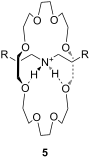
Figure 5: A “pseudorotaxane” structure consisting of 24-crown-8 and a secondary ammonium ion (5); R = Ph.

Figure 6: Typical examples of azacrown ethers, cryptands and related aza macrocycles.

Figure 7: Binding of ammonium to azacrown ethers and cryptands [111-113].

Figure 8: A 19-crown-6-ether with decalino blocking groups (11) and a thiazole-dibenzo-18-crown-6-ether (12).

Figure 9: 1,3-Bis(6-oxopyridazin-1-yl)propane derivatives 13 and 14 by Campayo et al.

Figure 10: Fluorescent azacrown-PET-sensors based on coumarin.

Figure 11: Two different pyridino-cryptands (17 and 18) compared to a pyridino-crown (19); chiral ammonium ion...

Figure 12: Pyridino-18-crown-6 ligand (21), a similar acridino-18-crown-6 ligand (22) and a structurally relat...

Figure 13: Ciral pyridine-azacrown ether receptors 24.

Figure 14: Chiral 15-crown-5 receptors 26 and an analogue 18-crown-6 ligand 27 derived from amino alcohols.

Figure 15: C2-symmetric chiral 18-crown-6 amino alcohol derivatives 28 and related macrocycles.

Figure 16: Macrocycles with diamide-diester groups (30).

Figure 17: C2-symmetric chiral aza-18-crown-6 ethers (31) with phenethylamine residues.

Figure 18: Chiral C-pivot p-methoxy-phenoxy-lariat ethers.

Figure 19: Chiral lariat crown ether 34.

Figure 20: Sucrose-based chiral crown ether receptors 36.
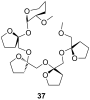
Figure 21: Permethylated fructooligosaccharide 37 showing induced-fit chiral recognition.

Figure 22: Biphenanthryl-18-crown-6 derivative 38.

Figure 23: Chiral lariat crown ethers derived from binol by Fuji et al.

Figure 24: Chiral phenolic crown ether 41 with “aryl chiral barriers” and guest amines.
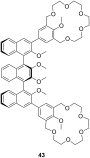
Figure 25: Chiral bis-crown receptor 43 with a meso-ternaphthalene backbone.

Figure 26: Chromogenic pH-dependent bis-crown chemosensor 44 for diamines.

Figure 27: Triamine guests for binding to receptor 44.

Figure 28: Chiral bis-crown phenolphthalein chemosensors 46.

Figure 29: Crown ether amino acid 47.

Figure 30: Luminescent receptor 48 for bis-alkylammonium guests.

Figure 31: Luminescent CEAA (49a), a bis-CEAA receptor for amino acids (49b) and the structure of lysine bindi...

Figure 32: Luminescent CEAA tripeptide for binding small peptides.

Figure 33: Bis crown ether 51a self assembles co-operatively with C60-ammonium ion 51b.

Figure 34: Triptycene-based macrotricyclic dibenzo-[24]-crown-8 ether host 52 and guests.

Figure 35: Copper imido diacetic acid azacrown receptor 53a and the suggested His-Lys binding motif; a copper ...

Figure 36: Urea (54) and thiourea (55) benzo crown receptor for transport and extraction of amino acids.

Figure 37: Crown pyryliums ion receptors 56 for amino acids.

Figure 38: Ditopic sulfonamide bridged crown ether receptor 57.

Figure 39: Luminescent peptide receptor 58.

Figure 40: Luminescent receptor 59 for the detection of D-glucosamine hydrochloride in water/ethanol and lumin...

Figure 41: Guanidinium azacrown receptor 61 for simple amino acids and ditopic receptor 62 with crown ether an...

Figure 42: Chiral bicyclic guanidinium azacrown receptor 63 and similar receptor 64 for the enantioselective t...

Figure 43: Receptors for zwitterionic species based on luminescent CEAAs.

Figure 44: 1,10-Azacrown ethers with sugar podand arms and the anticancer agent busulfan.

Figure 45: Benzo-18-crown-6 modified β-cyclodextrin 69 and β-cyclodextrin functionalized with diaza-18-crown-6...

Figure 46: Receptors for colorimetric detection of primary and secondary ammonium ions.

Figure 47: Porphyrine-crown-receptors 72.

Figure 48: Porphyrin-crown ether conjugate 73 and fullerene-ammonium ion guest 74.

Figure 49: Calix[4]arene (75a), homooxocalix[4]arene (75b) and resorcin[4]arene (75c) compared (R = H, alkyl c...

Figure 50: Calix[4]arene and ammonium ion guest (R = H, alkyl, OAcyl etc.), possible binding sites; A: co-ordi...

Figure 51: Typical guests for studies with calixarenes and related molecules.
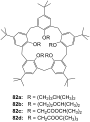
Figure 52: Lower rim modified p-tert-butylcalix[5]arenes 82.

Figure 53: The first example of a water soluble calixarene.

Figure 54: Sulfonated water soluble calix[n]arenes that bind ammonium ions.
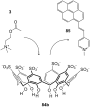
Figure 55: Displacement assay for acetylcholine (3) with a sulfonato-calix[6]arene (84b).

Figure 56: Amino acid inclusion in p-sulfonatocalix[4]arene (84a).

Figure 57: Calixarene receptor family 86 with upper and lower rim functionalization.

Figure 58: Calix[6]arenes 87 with one carboxylic acid functionality.
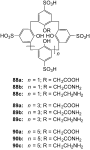
Figure 59: Sulfonated calix[n]arenes with mono-substitution at the lower rim systematically studied on their r...

Figure 60: Cyclotetrachromotropylene host (91) and its binding to lysine (81c).

Figure 61: Calixarenes 92 and 93 with phosphonic acids groups.

Figure 62: Calix[4]arene tetraphosphonic acid (94a) and a double bridged analogue (94b).
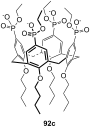
Figure 63: Calix[4]arene tetraphosphonic acid ester (92c) for surface recognition experiments.

Figure 64: Calixarene receptors 95 with α-aminophosphonate groups.

Figure 65: A bridged homocalix[3]arene 95 and a distally bridged homocalix[4]crown 96.

Figure 66: Homocalix[3]arene ammonium ion receptor 97a and the Reichardt’s dye (97b) for colorimetric assays.

Figure 67: Chromogenic diazo-bridged calix[4]arene 98.

Figure 68: Calixarene receptor 99 by Huang et al.
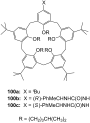
Figure 69: Calixarenes 100 reported by Parisi et al.

Figure 70: Guest molecules for inclusion in calixarenes 100: DAP × 2 HCl (101a), APA (101b) and Lys-OMe × 2 HC...

Figure 71: Different N-linked peptido-calixarenes open and with glycol chain bridges.

Figure 72: (S)-1,1′-Bi-2-naphthol calixarene derivative 104 published by Kubo et al.

Figure 73: A chiral ammonium-ion receptor 105 based on the calix[4]arene skeleton.

Figure 74: R-/S-phenylalaninol functionalized calix[6]arenes 106a and 106b.

Figure 75: Capped homocalix[3]arene ammonium ion receptor 107.

Figure 76: Two C3 symmetric capped calix[6]arenes 108 and 109.

Figure 77: Phosphorous-containing rigidified calix[6]arene 110.

Figure 78: Calix[6]azacryptand 111.

Figure 79: Further substituted calix[6]azacryptands 112.

Figure 80: Resorcin[4]arene (75c) and the cavitands (113).

Figure 81: Tetrasulfonatomethylcalix[4]resorcinarene (114).
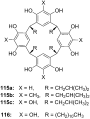
Figure 82: Resorcin[4]arenes (115a/b) and pyrogallo[4]arenes (115c, 116).
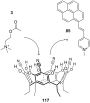
Figure 83: Displacement assay for acetylcholine (3) with tetracyanoresorcin[4]arene (117).

Figure 84: Tetramethoxy resorcinarene mono-crown-5 (118).

Figure 85: Components of a resorcinarene based displacement assay for ammonium ions.

Figure 86: Chiral basket resorcin[4]arenas 121.

Figure 87: Resorcinarenes with deeper cavitand structure (122).

Figure 88: Resorcinarene with partially open deeper cavitand structure (123).
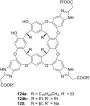
Figure 89: Water-stabilized deep cavitands with partially structure (124, 125).
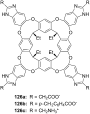
Figure 90: Charged cavitands 126 for tetralkylammonium ions.

Figure 91: Ditopic calix[4]arene receptor 127 capped with glycol chains.

Figure 92: A calix[5]arene dimer for diammonium salt recognition.

Figure 93: Calixarene parts 92c and 129 for the formation molecular capsules.
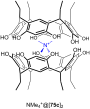
Figure 94: Encapsulation of a quaternary ammonium cation by two resorcin[4]arene molecules (NMe4+@[75c]2 × Cl−...

Figure 95: Encapsulation of a quaternary ammonium cation by six resorcin[4]arene molecules (NMe3D+@[130]6 × Cl−...

Figure 96: Structure and schematic of cucurbit[6]uril (CB[6], 131a).
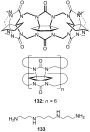
Figure 97: Cyclohexanocucurbit[6]uril (CB′[6], 132) and the guest molecule spermine (133).

Figure 98: α,α,δ,δ-Tetramethylcucurbit[6]uril (134).

Figure 99: Structure of the cucurbituril-phthalhydrazide analogue 135.

Figure 100: Organic cavities for the displacement assay for amine differentiation.

Figure 101: Displacement assay methodology for diammonium- and related guests involving cucurbiturils and some ...

Figure 102: Nor-seco-Cucurbituril (±)-bis-ns-CB[6] (140) and guest molecules.

Figure 103: The cucurbit[6]uril based complexes 141 for chiral discrimination.
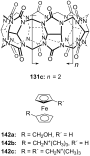
Figure 104: Cucurbit[7]uril (131c) and its ferrocene guests (142) opposed.

Figure 105: Cucurbit[7]uril (131c) guest inclusion and representative guests.

Figure 106: Cucurbit[7]uril (131c) binding to succinylcholine (145) and different bis-ammonium and bis-phosphon...

Figure 107: Paraquat-cucurbit[8]uril complex 149.
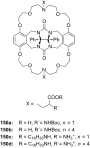
Figure 108: Gluconuril-based ammonium receptors 150.
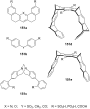
Figure 109: Examples of clefts (151a), tweezers (151b, 151c, 151d) and clips (151e).

Figure 110: Kemp’s triacid (152a), on example of Rebek’s receptors (152b) and guests.

Figure 111: Amino acid receptor (154) by Rebek et al.

Figure 112: Hexagonal lattice designed hosts by Bell et al.

Figure 113: Bell’s amidinium receptor (156) and the amidinium ion (157).
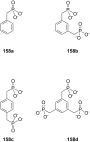
Figure 114: Aromatic phosphonic acids.

Figure 115: Xylene phosphonates 159 and 160a/b for recognition of amines and amino alcohols.
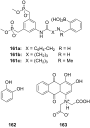
Figure 116: Bisphosphonate recognition motif 161 for a colorimetric assay with alizarin complexone (163) for ca...

Figure 117: Bisphosphonate/phosphate clip 164 and bisphosphonate cleft 165.

Figure 118: N-Methylpyrazine 166a, N-methylnicotinamide iodide (166b) and NAD+ (166c).

Figure 119: Bisphosphate cavitands.
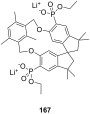
Figure 120: Bisphosphonate 167 of Schrader and Finocchiaro.
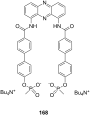
Figure 121: Tweezer 168 for noradrenaline (80b).

Figure 122: Different tripods and heparin (170).
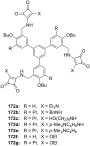
Figure 123: Squaramide based receptors 172.
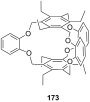
Figure 124: Cage like NH4+ receptor 173 of Kim et al.

Figure 125: Ammonium receptors 174 of Chin et al.

Figure 126: 2-Oxazolin-based ammonium receptors 175a–d and 176 by Ahn et al.

Figure 127: Racemic guest molecules 177.

Figure 128: Tripods based on a imidazole containing macrocycle (178) and the guest molecules employed in the st...

Figure 129: Ammonium ion receptor 180.

Figure 130: Tetraoxa[3.3.3.3]paracyclophanes 181 and a cyclophanic tetraester (182).

Figure 131: Peptidic bridged paraquat-cyclophane.
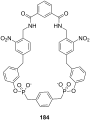
Figure 132: Shape-selective noradrenaline host.

Figure 133: Receptor 185 for binding of noradrenaline on surface layers from Schrader et al.

Figure 134: Tetraphosphonate receptor for binding of noradrenaline.

Figure 135: Tetraphosphonate 187 of Schrader and Finocchiaro.

Figure 136: Zinc-Porphyrin ammonium-ion receptors 188 and 189 of Mizutani et al.
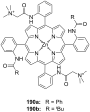
Figure 137: Zinc porphyrin receptor 190.

Figure 138: Zinc porphyrin receptors 191 capable of amino acid binding.

Figure 139: Zinc-porphyrins with amino acid side chains for stereoinduction.

Figure 140: Bis-zinc-bis-porphyrin based on Tröger’s base 193.

Figure 141: BINAP-zinc-prophyrin derivative 194 and it’s guests.

Figure 142: Bisaryl-linked-zinc-porphyrin receptors.
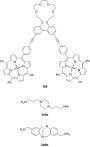
Figure 143: Bis-zinc-porphyrin 199 for diamine recognition and guests.

Figure 144: Bis-zinc-porphyrin crown ether 201.

Figure 145: Bis-zinc-porphyrin 202 for stereodiscrimination (L = large substituent; S = small substituent).

Figure 146: Bis-zinc-porphyrin[3]rotaxane and its copper complex and guests.

Figure 147: Dien-bipyridyl ligand 206 for co-ordination of two metal atoms.

Figure 148: The ligand and corresponding tetradentate co-complex 207 serving as enantioselective receptor for a...

Figure 149: Bis(oxazoline)–copper(II) complex 208 for the recognition of amino acids in aqueous solution.

Figure 150: Zinc-salen-complexes 209 for the recognition tertiary amines.

Figure 151: Bis(oxazoline)–copper(II) 211 for the recognition of amino acids in aqueous solution.

Figure 152: Zn(II)-complex of a C2 terpyridine crown ether.

Figure 153: Displacement assay and receptor for aspartate over glutamate.

Figure 154: Chiral complex 214 for a colorimetric displacement assay for amino acids.

Figure 155: Metal complex receptor 215 with tripeptide side arms.

Figure 156: A sandwich complex 216 and its displaceable dye 217.

Figure 157: Lanthanide complexes 218–220 for amino acid recognition.
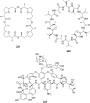
Figure 158: Nonactin (221), valinomycin (222) and vancomycin (223).

Figure 159: Monesin (224a) and a chiral analogue for enantiodiscrimination of ammonium guests (224b).

Figure 160: Chiral podands (226) compared to pentaglyme-dimethylether (225) and 18-crown-6 (4).

Figure 161: Lasalocid A (228).

Figure 162: Lasalocid derivatives (230) of Sessler et al.

Figure 163: The Coporphyrin I tetraanion (231).

Figure 164: Linear and cyclic peptides for ammonium ion recognition.

Figure 165: Cyclic and bicyclic depsipeptides for ammonium ion recognition.
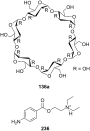
Figure 166: α-Cyclodextrin (136a) and novocaine (236).
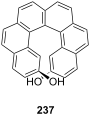
Figure 167: Helical diol receptor 237 by Reetz and Sostmann.

Figure 168: Ammonium binding spherand by Cram et al. (238a) and the cyclic[6]metaphenylacetylene 238b in compar...

Figure 169: Receptor for peptide backbone and ammonium binding (239).

Figure 170: Anion sensor principle with 3-hydroxy-2-naphthanilide of Jiang et al.

Figure 171: 7-bromo-3-hydroxy-N-(2-hydroxyphenyl)naphthalene 2-carboxamide (241) and its amine binding.

Figure 172: Naturally occurring catechins with affinity to quaternary ammonium ions.

Figure 173: Spiropyran (244) and merocyanine form (244a) of the amino acid receptors of Fuji et al.

Figure 174: Coumarin aldehyde (245) and its iminium species with amino acid bound (245a) by Glass et al.
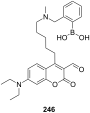
Figure 175: Coumarin aldehyde appended with boronic acid.

Figure 176: Quinolone aldehyde dimers by Glass et al.

Figure 177: Chromogenic ammonium ion receptors with trifluoroacetophenone recognition motifs.

Figure 178: Chromogenic ammonium ion receptor with trifluoroacetophenone recognition motif bound on different m...
Self-association of an indole based guanidinium-carboxylate-zwitterion: formation of stable dimers in solution and the solid state
- Carolin Rether,
- Wilhelm Sicking,
- Roland Boese and
- Carsten Schmuck
Beilstein J. Org. Chem. 2010, 6, No. 3, doi:10.3762/bjoc.6.3
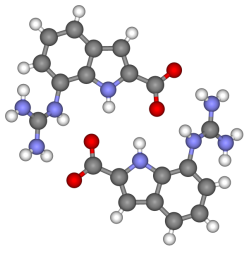
- , 45141 Essen, Germany 10.3762/bjoc.6.3 Abstract The indole based zwitterion 2 forms stable dimers held together by H-bond assisted ion pairs. Dimerisation was confirmed in the solid state and studied in solution using dilution NMR experiments. Even though zwitterion 2 forms very stable dimers even in
- due to the −M effect of the carbonyl group or the aromatic ring, respectively, thus facilitating the formation of H-bond assisted ion pairs [18][19]. Apart from the increased acidity of the NHs in 1 and 2, also the geometric shape of 2 is very similar to 1 at least based on the inspection of simple
- geometry of the H-bonded ion pairs and reflects the importance of planarity in zwitterion 1 for an effective dimerisation. Due to the twisted guanidinium groups in 2 the two monomers in dimer 2·2 are not in-plane, which leads to less efficient interactions. Also as mentioned above, the guanidinium group in

Graphical Abstract

Figure 1: Self-assembly of zwitterion 1 to give dimer 1·1 and self-assembly of zwitterion 2 to give dimer 2·2...
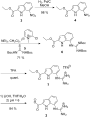
Scheme 1: Synthesis of zwitterion 2.

Scheme 2: Synthesis of compound 2·H+.

Figure 2: 1H NMR spectra of zwitterion 2 (bottom) and its protonated form 2·H+ (top).

Figure 3: Part of the 1H NMR spectrum of 2 in [D6]DMSO showing the complexation-induced shifts of the indole ...

Figure 4: Representative binding isotherm of the aromatic proton d (left) and the indole NH proton (right).

Figure 5: Binding isotherm of the guanidinium NH2 protons.

Figure 6: Crystal structure of dimer 2·2 with hydrogen bond distances (Å) and dihedral angles.

Figure 7: Side view of dimer 2·2 in the solid state.

Figure 8: Part of the crystal lattice of zwitterion 2.

Scheme 3: An attractive H-bond in 1 (left) is replaced by a repulsive steric interaction in 2 (right).

Figure 9: Energy-minimized structure for dimer 2·2 with hydrogen bond distances (Å) and dihedral angles.
Synthesis and redox behavior of new ferrocene- π-extended- dithiafulvalenes: An approach for anticipated organic conductors
- Abdelwareth A. O. Sarhan,
- Omar F. Mohammed and
- Taeko Izumi
Beilstein J. Org. Chem. 2009, 5, No. 6, doi:10.3762/bjoc.5.6
- , respectively. From this study we can estimate the timescales of the charge separation and recombination of the produced radical ion pairs. Such laser spectroscopic studies will have a big impact in future, leading not only new synthetic applications, but also to the discovery of new photophysical properties of

Graphical Abstract

Figure 1: Donors and acceptor compounds.

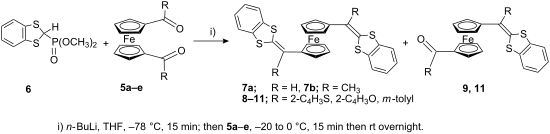
Scheme 1: Synthesis of π-extended dithiafulvalenes 7a and 7b. i) n-BuLi/THF, −78 °C, 15 min, then rt, overnig...

Scheme 2: Synthesis of π-extended dithiafulvalenes 8 and 9. i) 6, n-BuLi, THF, −78 °C, 15 min; then, 5c, −78 ...

Scheme 3: Synthesis of π-extended dithiafulvalenes 10. i) 6, n-BuLi, THF, −78 °C, 15 min; then 5d, −20 to 0 °...

Scheme 4: Synthesis of π-extended dithiafulvalenes 11 and dithiafulvalene 12. i) 6, n-BuLi, THF, −78 °C, 15 m...

Figure 2: Cyclic voltammetry (CV) of compounds 8, 10 and 11 in CH2Cl2 at scan rate 100 mV.