

Search results
Search for "diversity" in Full Text gives 586 result(s) in Beilstein Journal of Organic Chemistry. Showing first 200.
Pentacyclic aromatic heterocycles from Pd-catalyzed annulation of 1,5-diaryl-1,2,3-triazoles
Beilstein J. Org. Chem. 2025, 21, 2524–2534, doi:10.3762/bjoc.21.194
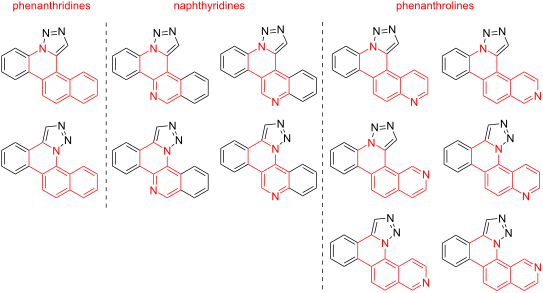
- compounds. The utility of click chemistry [11][12] for achieving chemoselective conjugation in a diversity of chemical environments has established the 1,2,3-triazole ring as a ubiquitous heterocycle in many research areas such as therapeutics [13][14][15][16], chemosensors [17][18][19], bioconjugation [20


Assembly strategy for thieno[3,2-b]thiophenes via a disulfide intermediate derived from 3-nitrothiophene-2,5-dicarboxylate
Beilstein J. Org. Chem. 2025, 21, 2489–2497, doi:10.3762/bjoc.21.191
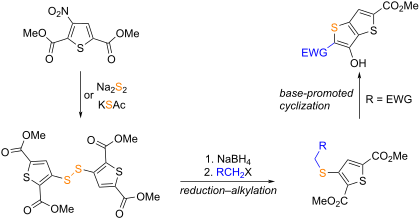
- cyclization to furnish the TT framework [2][23][24]. Despite the wide structural diversity of TT derivatives, 3-hydroxy-substituted analogues remain rare, with only a few synthetic strategies described for their preparation, as illustrated in Scheme 1. One such route involves sulfur insertion into a thiophen



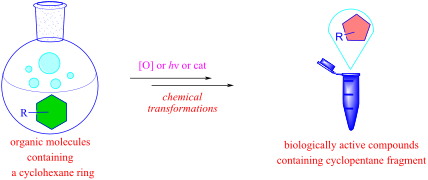
Transformation of the cyclohexane ring to the cyclopentane fragment of biologically active compounds
Beilstein J. Org. Chem. 2025, 21, 2416–2446, doi:10.3762/bjoc.21.185
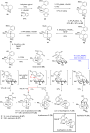
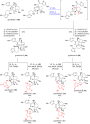
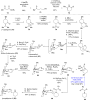
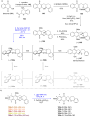
- explained to some extent by their structural diversity. Figure 1 shows the general formula of iridoids. The authors [16] have established regiocontrol of the effect of the 1,6-anhydro bridge on the Dieckmann condensation of dicarboxylic acid diester 16, obtained in four steps from 13, the Diels–Alder adduct
- acid (DMOA), are a large series of hybrid natural products with a huge structural diversity and impressive biological activity [50]. Attempts by the authors to use acidic (TiCl4, TMSI, SnCl4), basic (NaOMe, t-BuONa, Et3N, DBU, DMAP) and thermal conditions (PhMe, 110 °C) failed to give the desired


Conformational effects on iodide binding: a comparative study of flexible and rigid carbazole macrocyclic analogs
Beilstein J. Org. Chem. 2025, 21, 2369–2375, doi:10.3762/bjoc.21.181
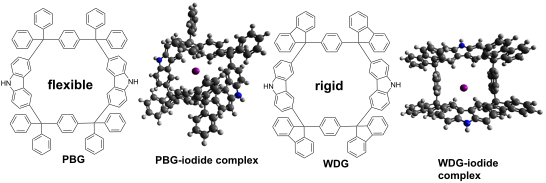
- conformations of WDG constitute a subset of PBG's conformations. Consequently, PBG exhibits greater conformational diversity and enhanced flexibility compared to WDG, which explained its higher binding capacity. The conformational dynamics of flexible PBGs allow them to adapt to I− through the induced-fit



Adaptive experimentation and optimization in organic chemistry
Beilstein J. Org. Chem. 2025, 21, 2367–2368, doi:10.3762/bjoc.21.180

- limitations and outline future opportunities for this emerging field. Fralish and Reker demonstrate how active learning on molecular pairs can improve the identification of potent drug candidates [9]. Their ”ActiveDelta” method outperforms standard approaches while maintaining chemical diversity. Schmid et al
Comparative analysis of complanadine A total syntheses
Beilstein J. Org. Chem. 2025, 21, 2334–2344, doi:10.3762/bjoc.21.178
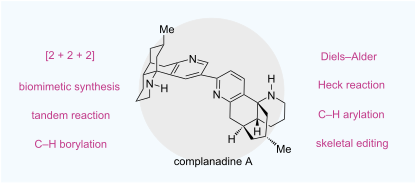
- ; Introduction Natural products, owing to their structural complexity, diversity, and therapeutic potential, have continued to serve as inspirations for the development of novel synthetic methodologies and strategies. In turn, these methodological and strategic advancements have significantly improved the



Recent advances in Norrish–Yang cyclization and dicarbonyl photoredox reactions for natural product synthesis
Beilstein J. Org. Chem. 2025, 21, 2315–2333, doi:10.3762/bjoc.21.177
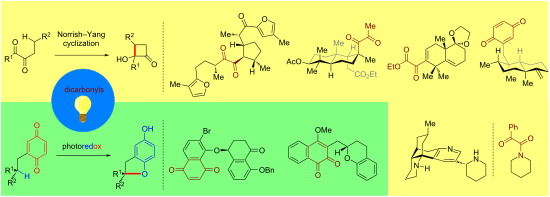
- as powerful tools for constructing complex molecular architectures. Centered on the structural diversity and synthetic relevance of target natural products, this review is divided into three main sections: terpenoids, alkaloids, and antibiotics. Each section highlights the recent application of
- dysideanone B (35) was completed from 46 via oxidative ethoxylation. The diversity of the key photoreaction stems from three factors: (1) the ability of the excited quinone moiety in 44 to abstract hydrogen atoms from distinct positions; (2) delocalization of the semiquinone radical; (3) the involvement of a
- reactivity modes and expand the structural diversity of accessible natural product scaffolds. Additionally, the highly reactive strained four-membered rings generated from these reactions present exciting opportunities for further functionalization. Studying their downstream transformations – particularly







Pathway economy in cyclization of 1,n-enynes
Beilstein J. Org. Chem. 2025, 21, 2260–2282, doi:10.3762/bjoc.21.173
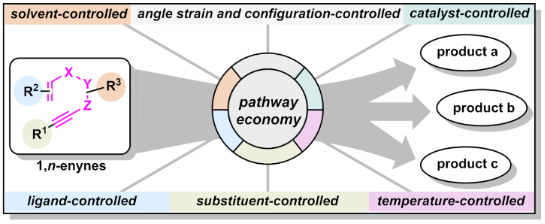
- , this strategy has demonstrated remarkable potential in pharmaceutical synthesis, where the rapid generation of molecular diversity from simple precursors is paramount. Looking forward, the fusion of pathway economy with machine learning algorithms and high-throughput experimentation holds promise for


C2 to C6 biobased carbonyl platforms for fine chemistry
Beilstein J. Org. Chem. 2025, 21, 2103–2172, doi:10.3762/bjoc.21.165


Discovery of cytotoxic indolo[1,2-c]quinazoline derivatives through scaffold-based design
Beilstein J. Org. Chem. 2025, 21, 2062–2071, doi:10.3762/bjoc.21.161
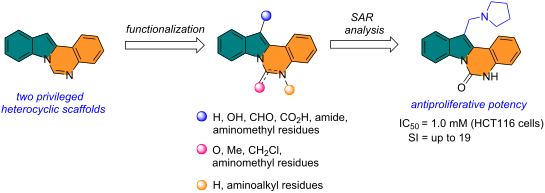
- substitution of the terminal chloride in 11 with various cyclic amines, including pyrrolidine, piperidine, and mono-tert-butoxycarbonyl (Boc)-protected piperazine, provided a set of aminoalkyl derivatives 12а–с (Scheme 4). This strategy enables the expansion of structural diversity within this scaffold and


Solar thermal fuels: azobenzene as a cyclic photon–heat transduction platform
Beilstein J. Org. Chem. 2025, 21, 2036–2047, doi:10.3762/bjoc.21.159
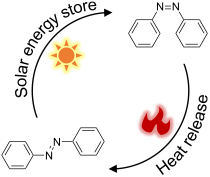
- temperature and the Tm of the isomerized cis-azobenzene is below room temperature, while others require solvent-assisted charging mechanisms [70][71]. This structural and functional diversity makes them particularly valuable for solar thermal storage applications. Feng et al. incorporated fluorinated





Switchable pathways of multicomponent heterocyclizations of 5-amino-1,2,4-triazoles with salicylaldehydes and pyruvic acid
Beilstein J. Org. Chem. 2025, 21, 2030–2035, doi:10.3762/bjoc.21.158
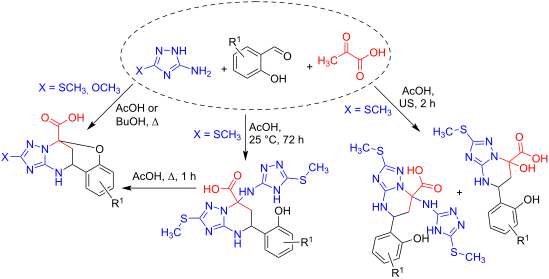
- formation of heterocyclic systems in a minimal number of steps and offer several ways to vary substituents and they are widely used in drug discovery and development, as well as in diversity-oriented synthesis [1][2][3][4]. In addition, the application of condition-based divergence strategy [5] and the
- are shown at 50% probability level. Diversity of heterocyclization products from reaction of aminoazoles with salicylaldehydes, and pyruvic acids. MCRs of 3-amino-5-methylthio-1,2,4-triazole (1a) and 3-amino-5-methoxy-1,2,4-triazole (1b) with salicylaldehydes 2a–f, and pyruvic acid (3). MCRs of 3


Rhodium-catalysed connective synthesis of diverse reactive probes bearing S(VI) electrophilic warheads
Beilstein J. Org. Chem. 2025, 21, 1924–1931, doi:10.3762/bjoc.21.150
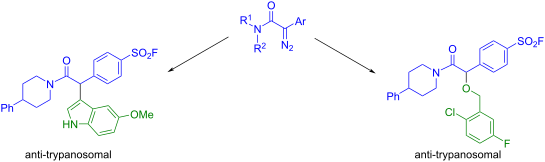
- diverse co-substrates. A high-throughput approach was used to identify promising substrate/co-substrate/catalyst combinations which were then prioritised for purification by mass-directed HPLC to yield a total of thirty reactive probes. The structural diversity of the probe set was increased by the
- the discovery of small molecule modifiers for investigating and engineering proteins. Keywords: covalent probes; molecular diversity; rhodium carbenoids; Introduction Diverse sets of reactive probes can facilitate the discovery of chemical tools and drugs that chemically modify protein targets [1][2
- amino acids [8][9][10]. Sets of reactive probes are generally prepared using robust reactions, most usually amide formation, chosen from the toolkit that currently dominates medicinal chemistry [11] which may, in turn, limit probe structural diversity. We have developed a unified connective approach for


Synthesis, biological and electrochemical evaluation of glycidyl esters of phosphorus acids as potential anticancer drugs
Beilstein J. Org. Chem. 2025, 21, 1909–1916, doi:10.3762/bjoc.21.148
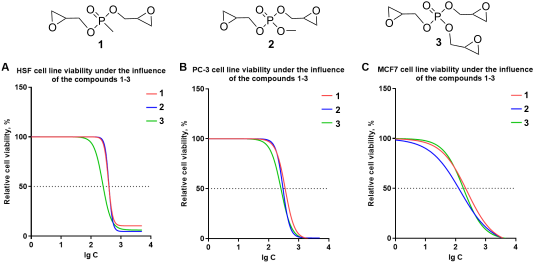
- compounds have garnered considerable attention from both pharmaceutical companies and researchers, reflecting their significance in drug development and therapeutic innovation [5][6][7]. The structural diversity of phosphorus-containing molecules, which includes phosphotriesters, phosphonates, phosphinates


Chiral phosphoric acid-catalyzed asymmetric synthesis of helically chiral, planarly chiral and inherently chiral molecules
Beilstein J. Org. Chem. 2025, 21, 1864–1889, doi:10.3762/bjoc.21.145
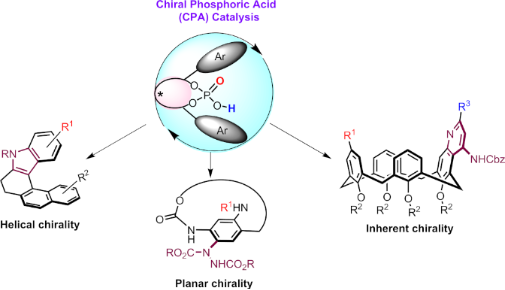
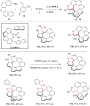
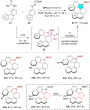
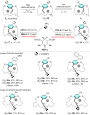
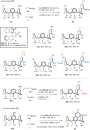
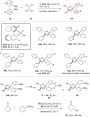
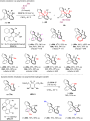
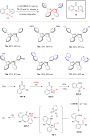
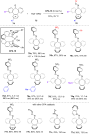
- potential in the CPA-catalyzed asymmetric synthesis of these unique chiral molecules, some current limitations and challenges still need to be addressed, particularly enhancing the efficiency of the methods and expanding the structural diversity of the products. Firstly, the chiral products generated











Research progress on calixarene/pillararene-based controlled drug release systems
Beilstein J. Org. Chem. 2025, 21, 1757–1785, doi:10.3762/bjoc.21.139
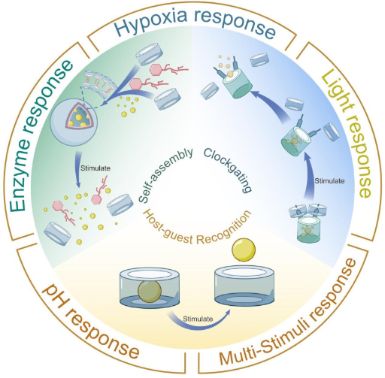
- vesicles, micelles and nanoparticles, overcoming the difficulties in modifying cyclodextrin and cucurbituril. These features make CAs and PAs promising candidates for stimulus responsive drug release systems [46]. Their structural diversity and functional designability offer broad prospects for targeted
- accessibility, structural adaptability, and responsiveness to external stimuli (pH, light, enzyme, hypoxia) facilitate sustained drug release, side effect mitigation, and therapeutic efficacy, making them increasingly prominent in drug carrier research. In recent years, the diversity of supramolecular






Catalytic asymmetric reactions of isocyanides for constructing non-central chirality
Beilstein J. Org. Chem. 2025, 21, 1648–1660, doi:10.3762/bjoc.21.129
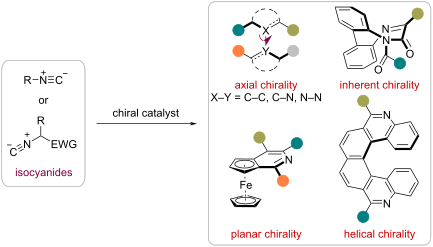
- attention due to its broad applications in various fields, including but not limited to drug discovery, asymmetric catalysis, and materials science (Figure 1b). Consequently, the development of efficient and stereoselective methods for assembling such scaffolds with respect to structural diversity has
- functionality in 63 allowed for versatile derivatizations, such as reduction, reductive amination, condensation, and olefination, which further expanded the structural diversity of the resulting products. Summary and Outlook The past few years have witnessed exciting progress in developing catalytic asymmetric
- catalysis, particularly with palladium and silver, has proven to be highly effective, expanding the scope as well as the activation mode of chiral catalysts could greatly enrich reaction types and accessible structural diversity. Third, further investigation into the potential applications of the resulting





Copper catalysis: a constantly evolving field
Beilstein J. Org. Chem. 2025, 21, 1477–1479, doi:10.3762/bjoc.21.109
- papers (three Full Research Papers and two Letters) contributed by scientists from Asia and Europe. The breadth of topics and the geographical diversity of the authors reflect the global interest in copper catalysis today. The Review article by Yang and Fang focuses on copper-catalyzed yne–allylic
Advances in nitrogen-containing helicenes: synthesis, chiroptical properties, and optoelectronic applications
Beilstein J. Org. Chem. 2025, 21, 1422–1453, doi:10.3762/bjoc.21.106
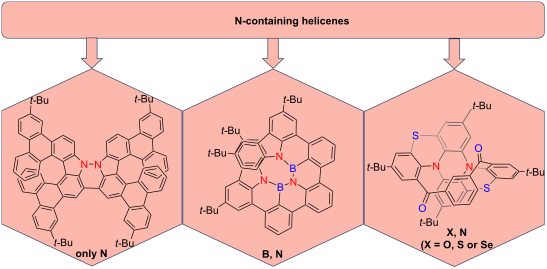
- structures, enhance solubility, and expand functional diversity [6]. Substituting carbon atoms with electron-deficient nitrogen atoms introduces new opportunities to fine-tune redox potentials, charge-transport behavior, and intermolecular interactions [7]. These modifications have proven especially valuable
- applications in chiral optoelectronics. Several comprehensive reviews have examined specific classes of these molecules. Crassous and co-workers provided a detailed overview of heterohelicenes up to 2019, focusing on their structural diversity and functional applications [11]. Nowak-Król and colleagues
- underscore the synthetic versatility and functional diversity of helicene-based systems, spanning electrochromism, thermally activated delayed fluorescence, and circularly polarized luminescence. Such structural innovations provide valuable frameworks for the development of next-generation chiral

Reactions of acryl thioamides with iminoiodinanes as a one-step synthesis of N-sulfonyl-2,3-dihydro-1,2-thiazoles
Beilstein J. Org. Chem. 2025, 21, 1397–1403, doi:10.3762/bjoc.21.104
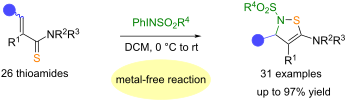
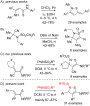
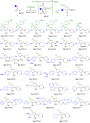
- analogy with an aza-Michael reaction first with the addition of iminoiodinane accompanied with reorganization of double bonds including attack of the negatively charged sulfur atom on nitrogen with subsequent elimination of iodobenzene as good leaving group. The diversity of the structure of the target



N-Salicyl-amino acid derivatives with antiparasitic activity from Pseudomonas sp. UIAU-6B
Beilstein J. Org. Chem. 2025, 21, 1388–1396, doi:10.3762/bjoc.21.103
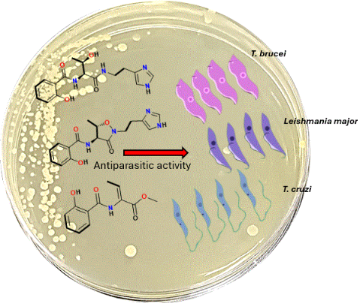
- Pseudomonas are huge producers of bioactive natural products with a vast array of structural and functional molecular diversity. This reflects in the bacteria’s genome which ranges in size from 4.6 to 7.1 megabases with 4237 to 6396 predicted genes [1]. Natural products play a major role in the live of these


Selective monoformylation of naphthalene-fused propellanes for methylene-alternating copolymers
Beilstein J. Org. Chem. 2025, 21, 1183–1191, doi:10.3762/bjoc.21.95
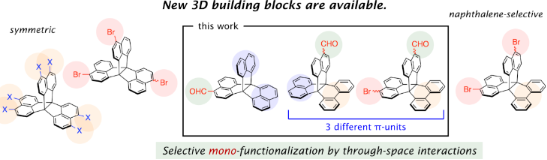
- , Kanazawa, 920-1192, Japan 10.3762/bjoc.21.95 Abstract Development of three-dimensional (3D) building blocks is a key to change tight molecular assemblies of rigid π-conjugated planes into organic functional materials endowed with molecular-size cavities. To increase the diversity of available 3D building


Enhancing chemical synthesis planning: automated quantum mechanics-based regioselectivity prediction for C–H activation with directing groups
Beilstein J. Org. Chem. 2025, 21, 1171–1182, doi:10.3762/bjoc.21.94
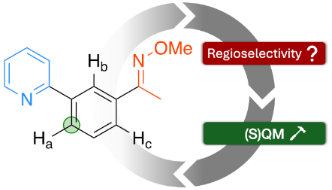
- molecular architectures in pharmaceuticals, polymers, and agrochemicals. Despite advancements in directing group (DG) methodologies and computational approaches, predicting accurate regioselectivity in C–H activation poses significant difficulties due to the diversity and complexity of organic compounds


Silver(I) triflate-catalyzed post-Ugi synthesis of pyrazolodiazepines
Beilstein J. Org. Chem. 2025, 21, 915–925, doi:10.3762/bjoc.21.74
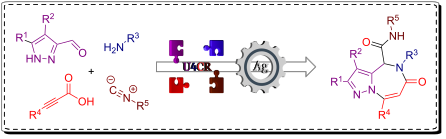
- procedures and harsh reaction conditions, resulting in limited substituent and scaffold diversity [18][19]. In this regard, multicomponent reactions (MCRs) have gained increasing attention for their operational simplicity, efficiency, robustness, atom economy, and potential for diversity-oriented synthesis
- ][44] and hydroalkoxylations [45]. In 2013, Van der Eycken and co-workers described an intramolecular cationic gold-catalyzed post-Ugi heteroannulation of imidazoles with activated alkynes for the diversity-oriented synthesis of imidazo[1,4]diazepines 13 from Ugi-derived propargylamides 12 (Scheme 1c
- operational simplicity, the accessibility of starting materials, and a diversity-oriented approach. Results and Discussion First, we prepared a series of acyclic pyrazole-tethered propargylamide precursors 15 via the Ugi four-component reaction (U4CR) of 1H-pyrazole-3-carbaldehydes 14a–d, primary amines 2a–l




Substituent effects in N-acetylated phenylazopyrazole photoswitches
Beilstein J. Org. Chem. 2025, 21, 830–838, doi:10.3762/bjoc.21.66
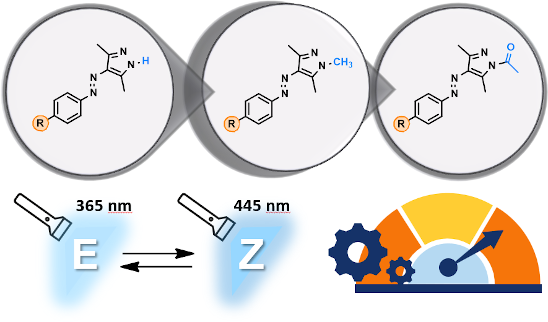
- medicine. Despite their potential, their structural diversity is still limited and a larger pool of substitution patterns remains to be systematically investigated. This is paramount as electronic effects play a crucial role in the behavior of photoswitches and a deeper understanding enables their