

Search results
Search for "deuteration" in Full Text gives 48 result(s) in Beilstein Journal of Organic Chemistry.
[3 + 2]-Cycloaddition reaction of sydnones with alkynes
- Veronika Hladíková,
- Jiří Váňa and
- Jiří Hanusek
Beilstein J. Org. Chem. 2018, 14, 1317–1348, doi:10.3762/bjoc.14.113
- formation followed by Cu–N dissociation and C–N bond formation. Experiments performed in t-BuOD/D2O [119] also showed almost exclusive (>98:2) deuteration of position 3 in the final pyrazole ring. This finding supports the idea of Cu(I)-acetylide addition to give 3-metalated pyrazole (Cu-pyrazolide) that is

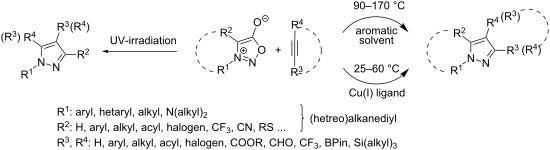
Graphical Abstract

Scheme 1: Thermal reaction of sydnones with symmetrical alkynes.

Scheme 2: Reaction of sydnones with strained cycloalkynes.

Scheme 3: Reaction of sydnones with didehydrobenzenes.

Scheme 4: Formation of isomeric pyrazole dicarboxylates.

Scheme 5: Mechanism of thermal cycloaddition between sydnones and alkynes.

Scheme 6: Mechanism of photochemical reaction of sydnones with symmetrical alkynes.

Scheme 7: HOMO–LUMO diagram for thermal [3 + 2]-cycloaddition of sydnones with alkynes.

Scheme 8: Synthetic strategy leading to 1,2-disubstituted pyrazoles.

Scheme 9: Unsuccessful reaction with phenylpropiolic acid.

Scheme 10: Synthetic strategy leading to 1,4,5-trisubstituted pyrazoles.

Scheme 11: Reaction of sydnones carrying in position 4- six-membered 2-N-heterocyclic ring.

Scheme 12: Strain-promoted sydnone alkyne cycloaddition (SPSAC).

Scheme 13: Synthesis of a key intermediate of niraparib.

Scheme 14: Reaction of sydnones with 1,3-/1,4-benzdiyne equivalents.

Scheme 15: Reaction of sydnones with heterocyclic strained cycloalkynes.

Scheme 16: Mono-copper catalyzed cycloaddition reaction.

Scheme 17: Di-copper catalyzed cycloaddition reaction.
One hundred years of benzotropone chemistry
- Arif Dastan,
- Haydar Kilic and
- Nurullah Saracoglu
Beilstein J. Org. Chem. 2018, 14, 1120–1180, doi:10.3762/bjoc.14.98
- ) and monosubstituted tetrahydro-7H-benzo[7]annulenone, St-Jacques' group benefited extensively from the use of dynamic nuclear magnetic resonance (DNMR) techniques [126][127]. A catalytic deuterogenation of 4,5-benzotropone (11) followed by deuteration led to deuterated 5,6,8,9-tetrahydro-7H-benzo[7

Graphical Abstract

Scheme 1: Tropone (1), tropolone (2) and their resonance structures.

Figure 1: Natural products containing a tropone nucleus.

Figure 2: Possible isomers 11–13 of benzotropone.

Scheme 2: Synthesis of benzotropones 11 and 12.

Scheme 3: Oxidation products of benzotropylium fluoroborate (16).

Scheme 4: Oxidation of 7-bromo-5H-benzo[7]annulene (22).

Scheme 5: Synthesis of 4,5-benzotropone (11) using o-phthalaldehyde (27).

Scheme 6: Synthesis of 4,5-benzotropone (11) starting from oxobenzonorbornadiene 31.

Scheme 7: Acid-catalyzed cleavage of oxo-bridge of 34.

Scheme 8: Synthesis of 4,5-benzotropone (11) from o-xylylene dibromide (38).

Scheme 9: Synthesis of 4,5-benzotropone (11) via the carbene adduct 41.

Scheme 10: Heck coupling strategy for the synthesis of 11.

Scheme 11: Synthesis of benzofulvalenes via carbonyl group of 4,5-benzotropone (11).

Figure 3: Some cycloheptatrienylium cations.

Scheme 12: Synthesis of condensation product 63 and its subsequent oxidative cyclization products.

Figure 4: A novel series of benzo[7]annulenes prepared from 4,5-benzotropone (11).

Scheme 13: Preparation of substituted benzo[7]annulene 72 using the Mukaiyama-Michael reaction.

Figure 5: Possible benzo[7]annulenylidenes 73–75.

Scheme 14: Thermal and photochemical decomposition of 7-diazo-7H-benzo[7]annulene (76) and the trapping of int...

Scheme 15: Synthesis of benzoheptafulvalene 86.

Scheme 16: Synthesis of 7-(diphenylmethylene)-7H-benzo[7]annulene (89).

Scheme 17: Reaction of 4,5-benzotropone (11) with dimethyl diazomethane.

Scheme 18: Synthesis of dihydrobenzomethoxyazocine 103.

Scheme 19: Synthesis and reducibility of benzo-homo-2-methoxyazocines.

Scheme 20: Synthesis of 4,5-benzohomotropones 104 and 115 from 4,5-benzotropones 11 and 113.

Scheme 21: A catalytic deuterogenation of 4,5-benzotropone (11) and synthesis of 5-monosubstituted benzo[7]ann...

Scheme 22: Synthesis of methyl benzo[7]annulenes 131 and 132.

Scheme 23: Ambident reactivity of halobenzo[7]annulenylium cations 133a/b.

Scheme 24: Preparation of benzo[7]annulenylidene–iron complexes 147.

Scheme 25: Synthesis of 1-ethynylbenzotropone (150) and the etheric compound 152 from 4,5-benzotropone (11) wi...

Scheme 26: Thermal decomposition of 4,5-benzotropone (11).

Scheme 27: Reaction of 4,5-benzotropone (11) with 1,2-ethanediol and 1,2-ethanedithiol.

Scheme 28: Conversions of 1-benzosuberone (162) to 2,3-benzotropone (12).

Scheme 29: Synthesis strategies for 2,3-bezotropone (12) using 1-benzosuberones.

Scheme 30: Oxidation-based synthesis of 2,3-benzotropone (12) via 1-benzosuberone (162).

Scheme 31: Synthesis of 2,3-benzotropone (12) from α-tetralone (171) via ring-expansion.

Scheme 32: Preparation of 2,3-benzotropone (12) by using of benzotropolone 174.

Figure 6: Benzoheptafulvenes as condensation products of 2,3-benzotropone (12).

Scheme 33: Conversion of 2,3-benzotropone (12) to tosylhydrazone salt 182 and gem-dichloride 187.

Figure 7: Benzohomoazocines 191–193 and benzoazocines 194–197.

Scheme 34: From 2,3-benzotropone (12) to carbonium ions 198–201.

Scheme 35: Cycloaddition reactions of 2,3-benzotropone (12).
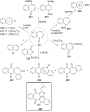
Scheme 36: Reaction of 2,3-benzotropone (12) with various reagents and compounds.

Figure 8: 3,4-Benzotropone (13) and its resonance structure.

Scheme 37: Synthesis of 6,7-benzobicyclo[3.2.0]hepta-3,6-dien-2-one (230).

Figure 9: Photolysis and thermolysis products of 230.

Figure 10: Benzotropolones and their tautomeric structures.

Scheme 38: Synthesis strategies of 4,5-benzotropolone (238).

Scheme 39: Synthesis protocol for 2-hydroxy-4,5-benzotropone (238) using oxazole-benzo[7]annulene 247.

Figure 11: Some quinoxaline and pyrazine derivatives 254–256 prepared from 4,5-benzotropolone (238).

Scheme 40: Nitration product of 4,5-benzotropolone (238) and its isomerization to 1-nitro-naphthoic acid (259)....

Scheme 41: Synthesis protocol for 6-hydroxy-2,3-benzotropone (239) from benzosuberone (162).
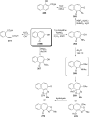
Scheme 42: Various reactions via 6-hydroxy-2,3-benzotropone (239).

Scheme 43: Photoreaction of 6-hydroxy-2,3-benzotropone (239).

Scheme 44: Synthesis of 7-hydroxy-2,3-benzotropone (241) from benzosuberone (162).

Scheme 45: Synthesis strategy for 7-hydroxy-2,3-benzotropone (241) from ketone 276.

Scheme 46: Synthesis of 7-hydroxy-2,3-benzotropone (241) from β-naphthoquinone (280).

Scheme 47: Synthesis of 7-hydroxy-2,3-benzotropone (241) from bicyclic endoperoxide 213.

Scheme 48: Synthesis of 7-hydroxy-2,3-benzotropone (241) by ring-closing metathesis.

Figure 12: Various monosubstitution products 289–291 of 7-hydroxy-2,3-benzotropone (241).

Scheme 49: Reaction of 7-hydroxy-2,3-benzotropone (241) with various reagents.

Scheme 50: Synthesis of 4-hydroxy-2,3-benzotropones 174 and 304 from diketones 300/301.

Scheme 51: Catalytic hydrogenation of diketones 300 and 174.

Scheme 52: Synthesis of halo-benzotropones from alkoxy-naphthalenes 306, 307 and 310.

Figure 13: Unexpected byproducts 313–315 during synthesis of chlorobenzotropone 309.

Figure 14: Some halobenzotropones and their cycloadducts.

Scheme 53: Multisep synthesis of 2-chlorobenzotropone 309.

Scheme 54: A multistep synthesis of 2-bromo-benzotropone 26.

Scheme 55: A multistep synthesis of bromo-2,3-benzotropones 311 and 316.

Scheme 56: Oxidation reactions of 8-bromo-5H-benzo[7]annulene (329) with some oxidants.

Scheme 57: Synthesis of 2-bromo-4,5-benzotropone (26).

Scheme 58: Synthesis of 6-chloro-2,3-benzotropone (335) using LiCl and proposed intermediate 336.

Scheme 59: Reaction of 7-bromo-2,3-benzotropone (316) with methylamine.

Scheme 60: Reactions of bromo-2,3-benzotropones 26 and 311 with dimethylamine.

Scheme 61: Reactions of bromobenzotropones 311 and 26 with NaOMe.

Scheme 62: Reactions of bromobenzotropones 26 and 312 with t-BuOK in the presence of DPIBF.

Scheme 63: Cobalt-catalyzed reductive cross-couplings of 7-bromo-2,3-benzotropone (316) with cyclic α-bromo en...

Figure 15: Cycloadduct 357 and its di-π-methane rearrangement product 358.

Scheme 64: Catalytic hydrogenation of 2-chloro-4,5-benzotropone (311).

Scheme 65: Synthesis of dibromo-benzotropones from benzotropones.

Scheme 66: Bromination/dehydrobromination of benzosuberone (162).

Scheme 67: Some transformations of isomeric dibromo-benzotropones 261A/B.

Scheme 68: Transformations of benzotropolone 239B to halobenzotropolones 369–371.

Figure 16: Bromobenzotropolones 372–376 and 290 prepared via bromination/dehydrobromination strategy.

Scheme 69: Synthesis of some halobenzotropolones 289, 377 and 378.

Figure 17: Bromo-chloro-derivatives 379–381 prepared via chlorination.

Scheme 70: Synthesis of 7-iodo-3,4-benzotropolone (382).

Scheme 71: Hydrogenation of bromobenzotropolones 369 and 370.

Scheme 72: Debromination reactions of mono- and dibromides 290 and 375.

Figure 18: Nitratation and oxidation products of some halobenzotropolenes.
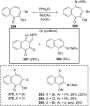
Scheme 73: Azo-coupling reactions of some halobenzotropolones 294, 375 and 378.

Figure 19: Four possible isomers of dibenzotropones 396–399.

Figure 20: Resonance structures of tribenzotropone (400).

Scheme 74: Two synthetic pathways for tribenzotropone (400).

Scheme 75: Synthesis of tribenzotropone (400) from dibenzotropone 399.

Scheme 76: Synthesis of tribenzotropone (400) from 9,10-phenanthraquinone (406).

Scheme 77: Synthesis of tribenzotropone (400) from trifluoromethyl-substituted arene 411.

Figure 21: Dibenzosuberone (414).

Figure 22: Reduction products 415 and 416 of tribenzotropone (400).

Figure 23: Structures of tribenzotropone dimethyl ketal 417 and 4-phenylfluorenone (412) and proposed intermed...

Figure 24: Structures of benzylidene- and methylene-9H-tribenzo[a,c,e][7]annulenes 419 and 420 and chiral phos...

Figure 25: Structures of tetracyclic alcohol 422, p-quinone methide 423 and cation 424.

Figure 26: Structures of host molecules 425–427.

Scheme 78: Synthesis of non-helical overcrowded derivatives syn/anti-431.

Figure 27: Hexabenzooctalene 432.

Figure 28: Structures of possible eight isomers 433–440 of naphthotropone.

Scheme 79: Synthesis of naphthotropone 437 starting from 1-phenylcycloheptene (441).

Scheme 80: Synthesis of 10-hydroxy-11H-cyclohepta[a]naphthalen-11-one (448) from diester 445.

Scheme 81: Synthesis of naphthotropone 433.

Scheme 82: Synthesis of naphthotropones 433 and 434 via cycloaddition reaction.

Scheme 83: Synthesis of naphthotropone 434 starting from 452.

Figure 29: Structures of tricarbonyl(tropone)irons 458, and possible cycloadducts 459.

Scheme 84: Synthesis of naphthotropone 436.

Scheme 85: Synthesis of precursor 465 for naphthotropone 435.

Scheme 86: Generation of naphthotropone 435 from 465.

Figure 30: Structures of tropylium cations 469 and 470.

Figure 31: Structures of tropylium ions 471+.BF4−, 472+.BF4−, and 473+.BF4−.

Scheme 87: Synthesis of tropylium ions 471+.BF4− and 479+.ClO4−.

Scheme 88: Synthesis of 1- and 2-methylanthracene (481 and 482) via carbene–carbene rearrangement.

Figure 32: Trapping products 488–490.

Scheme 89: Generation and chemistry of a naphthoannelated cycloheptatrienylidene-cycloheptatetraene intermedia...

Scheme 90: Proposed intermediates and reaction pathways for adduct 498.

Scheme 91: Exited-state intramolecular proton transfer of 505.

Figure 33: Benzoditropones 506 and 507.

Scheme 92: Synthesis of benzoditropone 506e.

Scheme 93: Synthetic approaches for dibenzotropone 507 via tropone (1).

Scheme 94: Formation mechanisms of benzoditropone 507 and 516 via 515.

Scheme 95: Synthesis of benzoditropones 525 and 526 from pyromellitic dianhydride (527).

Figure 34: Possible three benzocyclobutatropones 534–536.

Scheme 96: Synthesis of benzocyclobutatropones 534 and 539.

Scheme 97: Synthesis attempts for benzocyclobutatropone 545.

Scheme 98: Generation and trapping of symmetric benzocyclobutatropone 536.

Scheme 99: Synthesis of chloro-benzocyclobutatropone 552 and proposed mechanism of fluorenone derivatives.

Scheme 100: Synthesis of tropolone analogue 559.

Scheme 101: Synthesis of tropolones 561 and 562.

Figure 35: o/p-Tropoquinone rings (563 and 564) and benzotropoquinones (565–567).

Scheme 102: Synthesis of benzotropoquinone 566.

Scheme 103: Synthesis of benzotropoquinone 567 via a Diels–Alder reaction.

Figure 36: Products 575–577 through 1,2,3-benzotropoquinone hydrate 569.

Scheme 104: Structures 578–582 prepared from tropoquinone 567.

Figure 37: Two possible structures 583 and 584 for dibenzotropoquinone, and precursor compound 585 for 583.
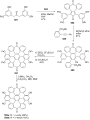
Scheme 105: Synthesis of saddle-shaped ketone 592 using dibenzotropoquinone 584.
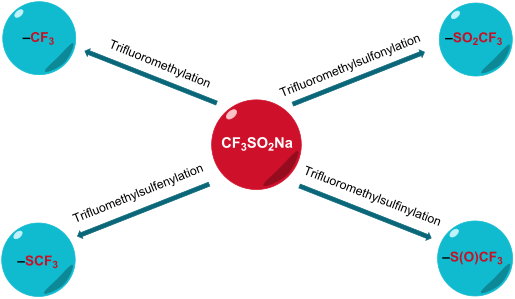
CF3SO2X (X = Na, Cl) as reagents for trifluoromethylation, trifluoromethylsulfenyl-, -sulfinyl- and -sulfonylation. Part 1: Use of CF3SO2Na
- Hélène Guyon,
- Hélène Chachignon and
- Dominique Cahard
Beilstein J. Org. Chem. 2017, 13, 2764–2799, doi:10.3762/bjoc.13.272
- were compatible with the reaction conditions. A series of control experiments that included the inhibition of the reaction in the presence of TEMPO, deuteration and isotope effect experiments were carried out and led the authors to propose the single-electron transfer mechanism presented in Scheme 44

Graphical Abstract

Scheme 1: Trifluoromethylation of enol acetates by Langlois.

Scheme 2: Trifluoromethylation of (het)aryl enol acetates.

Scheme 3: Mechanism for the trifluoromethylation of enol acetates.

Scheme 4: Oxidative trifluoromethylation of unactivated olefins and mechanistic pathway.
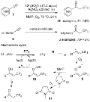
Scheme 5: Oxidative trifluoromethylation of acetylenic substrates.

Scheme 6: Metal free trifluoromethylation of styrenes.

Scheme 7: Synthesis of α-trifluoromethylated ketones by oxytrifluoromethylation of heteroatom-functionalised ...
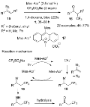
Scheme 8: Catalysed photoredox trifluoromethylation of vinyl azides.

Scheme 9: Oxidative difunctionalisation of alkenyl MIDA boronates.

Scheme 10: Synthesis of β-trifluoromethyl ketones from cyclopropanols.

Scheme 11: Aryltrifluoromethylation of allylic alcohols.

Scheme 12: Cascade multicomponent synthesis of nitrogen heterocycles via azotrifluoromethylation of alkenes.

Scheme 13: Photocatalytic azotrifluoromethylation of alkenes with aryldiazonium salts and CF3SO2Na.

Scheme 14: Copper-promoted intramolecular aminotrifluoromethylation of alkenes with CF3SO2Na.

Scheme 15: Oxytrifluoromethylation of alkenes with CF3SO2Na and hydroxamic acid.

Scheme 16: Manganese-catalysed oxytrifluoromethylation of styrene derivatives.

Scheme 17: Oxytrifluoromethylation of alkenes with NMP/O2 and CF3SO2Na.

Scheme 18: Intramolecular oxytrifluoromethylation of alkenes.

Scheme 19: Hydrotrifluoromethylation of styrenyl alkenes and unactivated aliphatic alkenes.

Scheme 20: Hydrotrifluoromethylation of electron-deficient alkenes.

Scheme 21: Hydrotrifluoromethylation of alkenes by iridium photoredox catalysis.

Scheme 22: Iodo- and bromotrifluoromethylation of alkenes by CF3SO2Na/I2O5 or CF3SO2Na / NaBrO3.

Scheme 23: N-methyl-9-mesityl acridinium and visible-light-induced chloro-, bromo- and SCF3 trifluoromethylati...

Scheme 24: Carbotrifluoromethylation of N-arylacrylamides with CF3SO2Na / TBHP by Lipshutz.

Scheme 25: Carbotrifluoromethylation of N-arylacrylamides with CF3SO2Na/TBHP reported by Lei.

Scheme 26: Carbotrifluoromethylation of N-arylacrylamides with CF3SO2Na/(NH4)2S2O8.

Scheme 27: Metal-free carbotrifluoromethylation of N-arylacrylamides with CF3SO2Na/K2S2O8 reported by Wang.

Scheme 28: Metal-free carbotrifluoromethylation of N-arylacrylamides with CF3SO2Na/PIDA reported by Fu.

Scheme 29: Metal-free cascade trifluoromethylation/cyclisation of N-arylmethacrylamides (a) and enynes (b) wit...

Scheme 30: Trifluoromethylation/cyclisation of N-arylcinnamamides: Synthesis of 3,4-disubstituted dihydroquino...

Scheme 31: Trifluoromethylation/cyclisation of aromatic-containing unsaturated ketones.

Scheme 32: Chemo- and regioselective cascade trifluoromethylation/heteroaryl ipso-migration of unactivated alk...

Scheme 33: Copper-mediated 1,2-bis(trifluoromethylation) of alkenes.

Scheme 34: Trifluoromethylation of aromatics with CF3SO2Na reported by Langlois.

Scheme 35: Baran’s oxidative C–H trifluoromethylation of heterocycles.

Scheme 36: Trifluoromethylation of acetanilides and anilines.

Scheme 37: Trifluoromethylation of heterocycles in water.

Scheme 38: Trifluoromethylation of coumarins in a continuous-flow reactor.

Scheme 39: Oxidative trifluoromethylation of coumarins, quinolines and pyrimidinones.

Scheme 40: Oxidative trifluoromethylation of pyrimidinones and pyridinones.

Scheme 41: Phosphovanadomolybdic acid-catalysed direct C−H trifluoromethylation.
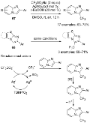
Scheme 42: Oxidative trifluoromethylation of imidazopyridines and imidazoheterocycles.

Scheme 43: Oxidative trifluoromethylation of imidazoheterocycles and imidazoles in ionic liquid/water.
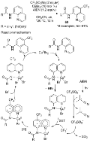
Scheme 44: Oxidative trifluoromethylation of 8-aminoquinolines.

Scheme 45: Oxidative trifluoromethylation of various 8-aminoquinolines using the supported catalyst CS@Cu(OAc)2...

Scheme 46: Oxidative trifluoromethylation of the naphthylamide 70.

Scheme 47: Oxidative trifluoromethylation of various arenes in the presence of CF3SO2Na and sodium persulfate.
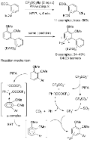
Scheme 48: Trifluoromethylation of electron-rich arenes and unsymmetrical biaryls with CF3SO2Na in the presenc...

Figure 1: Trifluoromethylated coumarin and flavone.

Scheme 49: Metal-free trifluoromethylation catalysed by a photoredox organocatalyst.
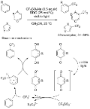
Scheme 50: Quinone-mediated trifluoromethylation of arenes and heteroarenes.
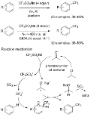
Scheme 51: Metal- and oxidant-free photochemical trifluoromethylation of arenes.

Scheme 52: Copper-mediated trifluoromethylation of arenediazonium tetrafluoroborates.

Scheme 53: Oxidative trifluoromethylation of aryl- and heteroarylboronic acids.
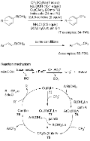
Scheme 54: Oxidative trifluoromethylation of aryl- and vinylboronic acids.

Scheme 55: Oxidative trifluoromethylation of unsaturated potassium organotrifluoroborates.

Scheme 56: Oxidative trifluoromethylation of (hetero)aryl- and vinyltrifluoroborates.

Scheme 57: Copper−catalysed decarboxylative trifluoromethylation of cinnamic acids.

Scheme 58: Iron-mediated decarboxylative trifluoromethylation of α,β-unsaturated carboxylic acids.

Scheme 59: Cu/Ag-catalysed decarboxylative trifluoromethylation of cinnamic acids.

Scheme 60: I2O5-Promoted decarboxylative trifluoromethylation of cinnamic acids.

Scheme 61: Silver(I)-catalysed denitrative trifluoromethylation of β-nitrostyrenes.
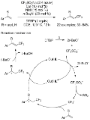
Scheme 62: Copper-catalysed direct trifluoromethylation of styrene derivatives.
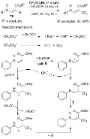
Scheme 63: Transition-metal-free synthesis of β-trifluoromethylated enamines.

Scheme 64: I2O5-mediated iodotrifluoromethylation of alkynes.

Scheme 65: Silver-catalysed tandem trifluoromethylation/cyclisation of aryl isonitriles.

Scheme 66: Photoredox trifluoromethylation of 2-isocyanobiphenyls.

Scheme 67: Trifluoromethylation of potassium alkynyltrifluoroborates with CF3SO2Na.
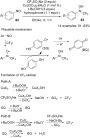
Scheme 68: N-trifluoromethylation of nitrosoarenes with CF3SO2Na (SQ: semiquinone).

Scheme 69: Trifluoromethylation of disulfides with CF3SO2Na.

Scheme 70: Trifluoromethylation of thiols with CF3SO2Na/I2O5.
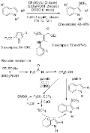
Scheme 71: Electrophilic trifluoromethylsulfenylation by means of CF3SO2Na/(EtO)2P(O)H/CuCl/DMSO.

Scheme 72: Electrophilic trifluoromethylsulfenylation by means of CF3SO2Na/(EtO)2P(O)H/TMSCl.
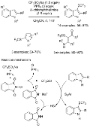
Scheme 73: Electrophilic trifluoromethylsulfenylation by means of CF3SO2Na/PPh3/N-chlorophthalimide.

Scheme 74: Electrophilic trifluoromethylsulfenylation by means of CF3SO2Na/PCl3.

Scheme 75: Electrophilic trifluoromethylsulfenylation by means of CF3SO2Na/PCl3.

Scheme 76: Trifluoromethylsulfenylation of aryl iodides with in situ generated CuSCF3 (DMI: 1,3-dimethyl-2-imi...

Scheme 77: Pioneering trifluoromethylsulfinylation of N, O, and C-nucleophiles.

Scheme 78: Trifluoromethylsulfinylation of (1R,2S)-ephedrine (Im: imidazole; DIEA: N,N-diisopropylethylamine).

Scheme 79: Trifluoromethylsulfinylation of substituted benzenes with CF3SO2Na/CF3SO3H.

Scheme 80: Trifluoromethylsulfinylation of indoles with CF3SO2Na/P(O)Cl3.

Scheme 81: Trifluoromethylsulfinylation of indoles with CF3SO2Na/PCl3.

Scheme 82: Formation of triflones from benzyl bromides (DMA: dimethylacetamide).

Scheme 83: Formation of α-trifluoromethylsulfonyl ketones, esters, and amides.

Scheme 84: Allylic trifluoromethanesulfonylation of aromatic allylic alcohols.

Scheme 85: Copper-catalysed couplings of aryl iodonium salts with CF3SO2Na.

Scheme 86: Palladium-catalysed trifluoromethanesulfonylation of aryl triflates and chlorides with CF3SO2Na.

Scheme 87: Copper-catalysed coupling of arenediazonium tetrafluoroborates with CF3SO2Na.

Scheme 88: Synthesis of phenyltriflone via coupling of benzyne with CF3SO2Na.

Scheme 89: Synthesis of 1-trifluoromethanesulfonylcyclopentenes from 1-alkynyl-λ3-bromanes and CF3SO2Na.

Scheme 90: One-pot synthesis of functionalised vinyl triflones.

Scheme 91: Regioselective synthesis of vinyltriflones from styrenes.

Scheme 92: Trifluoromethanesulfonylation of alkynyl(phenyl) iodonium tosylates by CF3SO2Na.

Scheme 93: Synthesis of thio- and selenotrifluoromethanesulfonates.
Glycoscience@Synchrotron: Synchrotron radiation applied to structural glycoscience
- Serge Pérez and
- Daniele de Sanctis
Beilstein J. Org. Chem. 2017, 13, 1145–1167, doi:10.3762/bjoc.13.114
- allomorphism, the elucidation of the structure of cellulose I, awaited the mature developments of large scale facilities of synchroton and neutron sources, and the mastering of deuteration methods of the intra-crystalline regions of the native cellulose samples without altering the overall structural integrity

Graphical Abstract

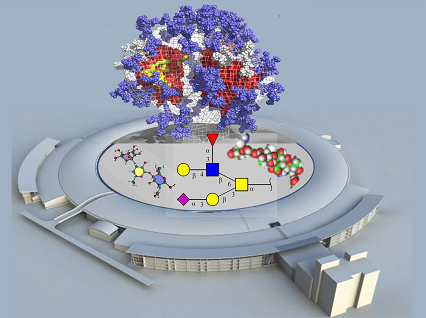
Figure 1: Complementarity of synchrotron radiation and neutron sources to investigate the structure of matter....

Figure 2: A representation of a synchrotron storage ring, including linear accelerator, booster and two beaml...

Figure 3: Schematic representation of a sector of a storage ring. Bending magnets and insertion devices are a...

Figure 4: Structural features of the resin glycoside tricolorin A. (a) Extracted from the Mexican variety of ...

Figure 5: Powder diffractogram measured on a synthetic pentasaccharide from heparin, at ESRF beamline ID31, λ...

Figure 6: Three dimensional ribbon representation of a heavily N-glycosylated Aspergilllus sp. Family GH3 β-D...

Figure 7: Histogram of the number of deposited crystal structures of glycan-binding proteins deposited over t...

Figure 8: Ribbon diagram representations of prototypical members of the GT-A and GT-B super-family fold, resp...

Figure 9: Representation of the FUT1 structure determined in complex with the acceptor (carbon atoms in green...
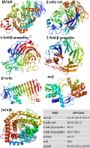
Figure 10: Representation of the seven folds most commonly found in glycoside hydrolases. From the classificat...

Figure 11: The multivalent carbohydrate binding features of lectins from X-ray structures. (a) Monovalent. E-s...

Figure 12: Three-dimensional depiction of the ternary complex formed by a heparin mimetic in interaction with ...

Figure 13: 3D representation of different sugar transporter structures: (left to right, top to down) lactose p...
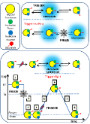
Figure 14: Kinetic crystallography. Protein crystals are soaked with the cage compound (Step 1) followed by fl...

Figure 15: Reconstruction of the full three-dimensional structure of the soluble lectin (BC2L-C) from the oppo...

Figure 16: Characterization by synchrotron X-ray reflectometry of the transverse structures of a model membran...

Figure 17: Complementary use of X-ray synchrotron and neutron fiber diffraction to unravel the three-dimension...

Figure 18: Scanning electron micrograph of high-quality micrometer-sized A-amylose microcrystals grown from sh...

Figure 19: Cartography of distribution and orientation of cellulose in wood using a 3 µm X-ray beam. The scann...

Figure 20: Structural micro-diffraction scanning of a starch granule from Phajus grandifolius with dimensions ...
Aggregation behaviour of a single-chain, phenylene-modified bolalipid and its miscibility with classical phospholipids
- Simon Drescher,
- Vasil M. Garamus,
- Christopher J. Garvey,
- Annette Meister and
- Alfred Blume
Beilstein J. Org. Chem. 2017, 13, 995–1007, doi:10.3762/bjoc.13.99
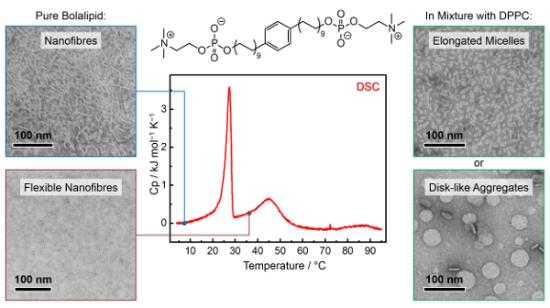
- ) was followed. The deuteration of alkyl chains in phospholipids usually causes a shift of the main transition by about 5 K to lower temperatures, as shown by Petersen et al. [57]. At T = 10.9 °C, the frequency of νs(CH2) is at 2850.8 cm−1, which is comparable to the frequency of νs(CH2) of the pure PC

Graphical Abstract

Figure 1: Chemical structure of PC-C18pPhC18-PC.

Scheme 1: Synthesis of PC-C18pPhC18-PC; TBAF: tetra-n-butylammonium fluoride, TEA: triethylamine, rt: room te...

Figure 2: DSC curves for PC-C18pPhC18-PC (c = 1 mg mL−1 in H2O, solid lines, heating: red, cooling: blue). FT...

Figure 3: TEM image of an aqueous suspension (c = 0.05 mg mL−1) of PC-C18pPhC18-PC. The samples were prepared...

Figure 4: SANS data of a suspension of PC-C18pPhC18-PC (c = 1 mg mL−1 in D2O, scattered data) with IFT analys...
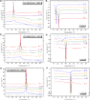
Figure 5: DSC heating (left-hand column) and cooling (right-hand column) scans of different PC-C18pPhC18-PC:p...
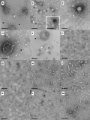
Figure 6: TEM images of aqueous suspensions (c = 60 µM or c = 30 µM for C) of PC-C18pPhC18-PC/phospholipid mi...

Figure 7: FTIR spectroscopic data (symmetric CH2 stretching vibration: red squares, right axis; symmetric CD2...
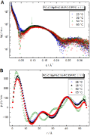
Figure 8: (A) SAXS diffractograms of an equimolar mixture of PC-C18pPhC18-PC/DPPC (c = 10 mg mL−1, scattered ...
New approach toward the synthesis of deuterated pyrazolo[1,5-a]pyridines and 1,2,4-triazolo[1,5-a]pyridines
- Aleksey Yu. Vorob’ev,
- Vyacheslav I. Supranovich,
- Gennady I. Borodkin and
- Vyacheslav G. Shubin
Beilstein J. Org. Chem. 2017, 13, 800–805, doi:10.3762/bjoc.13.80
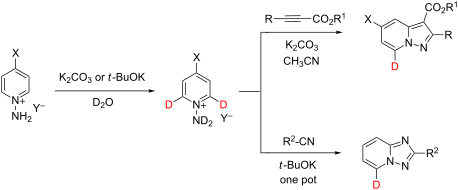
- and a high degree of deuterium incorporation were achieved. The procedure was applied for several 4-R-1-aminopyridinium cations (R = H, Me, OMe). Keywords: deuteration; 1,3-dipolar cycloaddition; pyrazolo[1,5-a]pyridine; 1,2,4-triazolo[1,5-a]pyridine; Introduction Isotopically labeled compounds find
- years deuteration became also an efficient tool in drug design [6]. Pyrazolo[1,5-a]pyridine and 1,2,4-triazolo[1,5-a]pyridine scaffolds attracted significant attention to the medicinal chemistry community during the past decade. For example, pyrazolo[1,5-a]pyridine derivatives were used in the design of
- dimethyl acetylenedicarboxylate (2a, DMAD) in MeCN D-labeled pyrazolo[1,5-a]pyridine 3 was obtained in 70% yield (Table 1). The deuteration at room temperature even for 24 h led to a significantly lower degree of deuteration (DD, 20%). Salt 1b gave the corresponding 5-CD3-7-D-pyrazolopyridine 5 along with

Graphical Abstract

Figure 1: pKa values for N-aminopyridinium cation hydrogen atoms according to DFT M06-2X 6-31+G(d,p) calculat...

Scheme 1: H/D exchange of N-aminopyridinium salts 1a–c and their reaction with acetylenes.

Scheme 2: Possible pathways for the formation of 8.

Figure 2: Relative stability of 3-CO2Et-substituted dihydropyrazolo[1,5-a]pyridines by the M06-2X 6-31+G(d,p)...

Scheme 3: Synthesis of deutero 1,2,4-triazolo[1,5-a]pyridines.
Cp2TiCl/D2O/Mn, a formidable reagent for the deuteration of organic compounds
- Antonio Rosales and
- Ignacio Rodríguez-García
Beilstein J. Org. Chem. 2016, 12, 1585–1589, doi:10.3762/bjoc.12.154
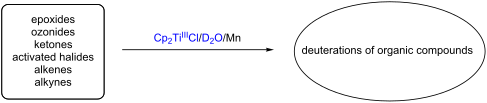
- experimental conditions and with great economic advantages. Keywords: deuteration; deuterium atom transfer; radical and/or organometallic chemistry; titanocene; Introduction Deuterium is a stable isotope of hydrogen with 0.015% natural abundance broadly used in organic chemistry, pharmacology, organometallic
- develop efficient procedures for the preparation of deuterated compounds, several methodologies of deuteration have been reported [5]. One of the first procedures reported was the acid- or base-catalyzed exchange of enolizable protons for deuterium. However, in order to achieve high isotopic purities
- for deuteration [7]. The principal disadvantage of the use of reducing agents labelled with deuterium is the high cost of these reagents and the handling of highly flammable substances. The use of palladium metal and D2O is a useful and efficient methodology for H/D exchange in aliphatic and benzylic

Graphical Abstract

Scheme 1: Formation of reaction intermediates susceptible of being reduced by Cp2TiCl/Mn/D2O.

Scheme 2: Proposed reduction of radicals via hydrolysis of an organometalic alkyl-TiIV or as DAT.

Scheme 3: Examples of deuterations of organic compounds using Cp2TiCl/D2O/Mn. aSubstoichiometric amount of Cp2...
Tandem processes promoted by a hydrogen shift in 6-arylfulvenes bearing acetalic units at ortho position: a combined experimental and computational study
- Mateo Alajarin,
- Marta Marin-Luna,
- Pilar Sanchez-Andrada and
- Angel Vidal
Beilstein J. Org. Chem. 2016, 12, 260–270, doi:10.3762/bjoc.12.28
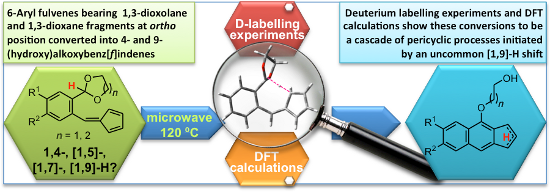
- monodeuterated acetal-fulvene 20 bearing the deuterium atom at C4. This species converted into a 2:1 mixture of the monodeuterated regioisomers 21 and 22 as the only isolated reaction products (Scheme 6). In both compounds, the deuteration percentage at their respective C4 and C9 positions was determined, by 1H

Graphical Abstract

Scheme 1: Lewis acid-catalyzed [1,4]-H transfer/1,5-electrocyclization tandem processes of benzylidenemalonat...

Scheme 2: Preparation of benz[f]indenes 5 and 6. Reagents and conditions: i) cyclopentadiene, pyrrolidine, an...

Scheme 3: Postulated reaction path for the conversion 3a → 5a + 6a initiated by a [1,4]-hydride shift.

Scheme 4: Alternative mechanistic paths for the conversion 3a → 5a + 6a initiated by [1,5]-, [1,7]- or [1,9]-...

Scheme 5: Postulated outcome of the conversion 14 → 18 + 19 initiated by a [1,4]-deuteride shift.

Scheme 6: Preparation of deuterated benz[f]indenes 18 + 19 and 21 + 22. Reagents and conditions: i) DMSO, mic...

Scheme 7: Reagents and conditions: i) triethylamine (10%), DMSO, rt, 2 h.

Scheme 8: Preparation of benz[f]indenes 25 and 26. Reagents and conditions: i) cyclopentadiene, pyrrolidine, ...

Scheme 9: Mechanistic paths for the conversion of fulvene 3a into the benz[f]indenes 5a and 6a showing the en...

Figure 1: Optimized geometry of transition structures TS1-A, TS1-B, and TS1-C computed at the B3LYP/6-31+G** ...
Pyridine-promoted dediazoniation of aryldiazonium tetrafluoroborates: Application to the synthesis of SF5-substituted phenylboronic esters and iodobenzenes
- George Iakobson,
- Junyi Du,
- Alexandra M. Z. Slawin and
- Petr Beier
Beilstein J. Org. Chem. 2015, 11, 1494–1502, doi:10.3762/bjoc.11.162
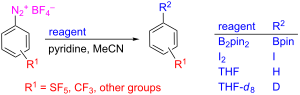
- tributyltin hydride or THF was tested and THF proved to be a more efficient hydrogen atom donor. The addition of excess pyridine to MeCN/THF solution of diazonium tetrafluoroborates 3a or 3b led to an efficient hydrodediazoniation and the formation of (pentafluorosulfanyl)benzene (6). Deuteration experiments

Graphical Abstract

Scheme 1: Borylation of aryldiazonium tetrafluoroborates 3. Reaction conditions: 3 (1 mmol), B2pin2 (1 mmol),...

Scheme 2: Proposed reaction mechanism.

Scheme 3: Reaction of diazonium salt 3i under borylation conditions.

Scheme 4: Suzuki–Miyaura reaction of boronates 2a and 2b with aryl iodides. Reaction conditions: 2 (1 mmol), ...

Scheme 5: Syntesis of boronic acid 8b and trifluoroborates 9. Reaction conditions for the synthesis of 8b: 2 ...

Scheme 6: Iodination of aryldiazonium tetrafluoroborates 3. Reaction conditions: 3 (1 mmol), I2 (1.1 mmol), p...
Why base-catalyzed isomerization of N-propargyl amides yields mostly allenamides rather than ynamides
- Armando Navarro-Vázquez
Beilstein J. Org. Chem. 2015, 11, 1441–1446, doi:10.3762/bjoc.11.156
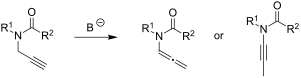
- ). Nonetheless, the above results suggest that varying the reaction conditions (perhaps solvent polarity) could eventually lead to the observation of the allenimides. NMR deuteration studies could be of help to experimentally eliminate possible kinetic effects in the observed lack of reactivity [19]. Having

Graphical Abstract

Scheme 1: Preparation of propargylamides through alkylation of secondary amides and base-catalyzed isomerizat...

Figure 1: Set of studied compounds.

Figure 2: Anti and syn conformations around the N–C=C=C bond for N-allenyl compounds 12b–14b.
Superoxide chemistry revisited: synthesis of tetrachloro-substituted methylenenortricyclenes
- Basavaraj M. Budanur and
- Faiz Ahmed Khan
Beilstein J. Org. Chem. 2014, 10, 2531–2538, doi:10.3762/bjoc.10.264
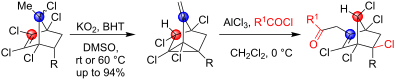
- . Absence of the peak at δ 4.26 (singlet) in 1H NMR suggest the incorporation of deuterium and a triplet at δ 71.0, arising from C–D coupling, instead of sharp peak at δ 71.3 in 13C NMR further confirmed the deuteration at the chlorine-attached carbon atom in 5n (Scheme 3). Further, in order to understand

Graphical Abstract

Scheme 1: Synthesis of Nortricyclenes from Norbornenes.

Figure 1: X-ray crystal structure of 5a with 30% thermal ellipsoids.
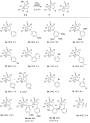
Scheme 2: KO2-mediated synthesis of tetrachloro-substituted 3-methylenenortricyclenes. Reaction conditions: A...

Scheme 3: Mechanism investigations.

Scheme 4: Plausible mechanism of the KO2-mediated reaction.

Figure 2: X-ray crystal structure of 8a with 30% thermal ellipsoids.

Scheme 5: Plausible mechanism of the acylation reaction of 3-methylenenortricyclenes.
Pyrrolidine nucleotide analogs with a tunable conformation
- Lenka Poštová Slavětínská,
- Dominik Rejman and
- Radek Pohl
Beilstein J. Org. Chem. 2014, 10, 1967–1980, doi:10.3762/bjoc.10.205
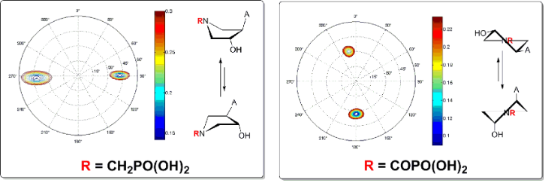
- ), exist at a very low pD value (<3) as free phosphonic acids with a deuterated pyrrolidine nitrogen atom (Figure 6). The phosphonic acid moiety goes through a two-stage deuteration/dedeuteration transition at pD ~ 3 and 5 and the pyrrolidine nitrogen atom stays deuterated until pD ~ 9. This suggests that
- the compounds exist as zwitterions with a hydrogen bond between the negatively charged phosphonate moiety and the positively charged pyrrolidine nitrogen atom in the range of pD 3–9. The pD titration experiments have also revealed the deuteration/dedeuteration of adenine and thymine nucleobases. In
- , the nucleobase and the endocyclic phase angles for the purposes of the conformational analysis. The aliphatic part (pyrrolidine protons) of the 1H NMR spectra of 9 measured in D2O at different pD values. Changes of selected 1H and 13C chemical shifts of 9 upon pD change. The deuteration equilibria of

Graphical Abstract

Figure 1: Examples of biologically active acyclic and cyclic nucleotide analogs.

Figure 2: The pyrrolidine nucleotide analogs investigated in this study.

Scheme 1: The synthesis of pyrrolidine nucleotides 7–14.

Figure 3: The numbering of the pyrrolidine ring, the nucleobase and the endocyclic phase angles for the purpo...

Figure 4: The aliphatic part (pyrrolidine protons) of the 1H NMR spectra of 9 measured in D2O at different pD...

Figure 5: Changes of selected 1H and 13C chemical shifts of 9 upon pD change.

Figure 6: The deuteration equilibria of phosphonomethyl derivatives 7–10.

Figure 7: The aliphatic part (pyrrolidine protons) of the 1H NMR spectra of 13 measured in D2O at different p...

Figure 8: Amide rotamers of phosphonoformyl derivatives 11–14.

Figure 9: The 31P NMR spectra (202.3 MHz) of 14 measured (the black curve) and simulated (the red curve) at v...

Figure 10: A part of the H,C-HSQC spectrum of derivative 13, showing the assignment of rotamers A and B.

Figure 11: The pseudorotation pathway of the pyrrolidine ring in the compounds studied. The sign B stands for ...

Figure 12: An example of the stereospecific assignment of pyrrolidine-ring protons of 14 in the H,H-ROESY spec...

Figure 13: The energy profile of the five-membered pyrrolidine ring pseudorotation for adenine derivatives 9 a...

Figure 14: The most stable conformations of adenine derivatives 9 and 13A calculated by the B3LYP/6-31++G* met...
A catalyst-free multicomponent domino sequence for the diastereoselective synthesis of (E)-3-[2-arylcarbonyl-3-(arylamino)allyl]chromen-4-ones
- Pitchaimani Prasanna,
- Pethaiah Gunasekaran,
- Subbu Perumal and
- J. Carlos Menéndez
Beilstein J. Org. Chem. 2014, 10, 459–465, doi:10.3762/bjoc.10.43
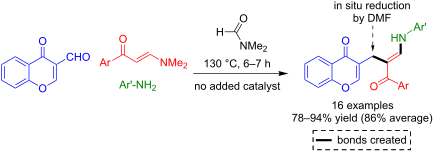
- . Synthesis of compounds 5. Initial mechanistic proposal to explain the formation of compounds 5 that was ruled out by deuteration experiments. Alternative mechanistic proposal based on a carbon monoxide-induced deoxygenation. Solvent screen and temperature optimization for the synthesis of compound 5f. Scope

Graphical Abstract

Scheme 1: Summary of the transformations involved in the synthesis of compounds 5, containing chromone and β-...

Scheme 2: Synthesis of compounds 5.

Figure 1: X-ray structure of compound 5h.

Scheme 3: Initial mechanistic proposal to explain the formation of compounds 5 that was ruled out by deuterat...

Scheme 4: Alternative mechanistic proposal based on a carbon monoxide-induced deoxygenation.
Regioselective carbon–carbon bond formation of 5,5,5-trifluoro-1-phenylpent-3-en-1-yne
- Motoki Naka,
- Tomoko Kawasaki-Takasuka and
- Takashi Yamazaki
Beilstein J. Org. Chem. 2013, 9, 2182–2188, doi:10.3762/bjoc.9.256
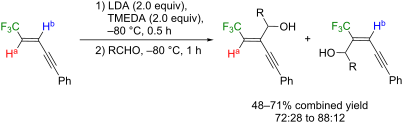
- 6a (Scheme 2). In the case of 5 and 6, electrophiles were incorporated without stereochemical contamination in all instances. For obtaining further mechanistic proofs for the present reaction, we have planned to capture the intermediary anionic species with the aid of the usual deuteration technique
- elucidated as follows: deuteration would quickly occur to afford 4-d1 and 4-d2 whose proportion would reflect the ratio of 4-Li1 and 4-Li2. On the other hand, less reactive aldehydes should be captured more slowly and the product preference of 5 to 6 would be kinetically determined by their activation energy
- was slow. This important information allowed us to reconsider our previously proposed mechanism as shown in Scheme 5. A part of 1H NMR chart of 4 and its deuterated mixture. Proposed reaction mechanism between 1 and MeLi. Furan synthesis from a mixture of 5a and 6a. Deuteration of anionic species from

Graphical Abstract

Scheme 1: Proposed reaction mechanism between 1 and MeLi.

Scheme 2: Furan synthesis from a mixture of 5a and 6a.

Scheme 3: Deuteration of anionic species from 4.

Figure 1: A part of 1H NMR chart of 4 and its deuterated mixture.

Scheme 4: Lithiation of 4 and the following electrophilic reactions.
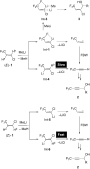
Scheme 5: Alternative reaction mechanism between 1 and MeLi.
Spin state switching in iron coordination compounds
- Philipp Gütlich,
- Ana B. Gaspar and
- Yann Garcia
Beilstein J. Org. Chem. 2013, 9, 342–391, doi:10.3762/bjoc.9.39

Graphical Abstract

Figure 1: Change of electron distribution between HS and LS states of an octahedral iron(II) coordination com...

Figure 2: Types of spin transition curves in terms of the molar fraction of HS molecules, γHS(T), as a functi...
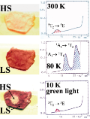
Figure 3: Single crystal UV–vis spectra of the spin crossover compound [Fe(ptz)6](BF4)2 (ptz = 1-propyltetraz...
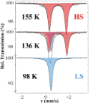
Figure 4: Thermal spin crossover in [Fe(ptz)6](BF4)2 (ptz = 1-propyltetrazole) recorded at three different te...

Figure 5: (a) Mössbauer spectra of the LS compound [Fe(phen)3]X2 recorded over the temperature range 300–5 K....

Figure 6: (left) Demonstration of light-induced spin state trapping (LIESST) in [Fe(ptz)6]BF4)2 with 57Fe Mös...

Figure 7: Schematic representation of the pressure influence (p2 > p1) on the LS and HS potential wells of an...

Figure 8: χMT versus T curves at different pressures for [Fe(phen)2(NCS)2], polymorph II. (Reproduced with pe...

Figure 9: Molecular structure (a) and γHS(T) curves at different pressures for [CrI2(depe)2] (b) (Reproduced ...

Figure 10: HS molar fraction γHS versusT at different pressures for [Fe(phy)2](BF4)2. The hysteresis loop broa...

Figure 11: Proposed structure of the polymeric [Fe(4R-1,2,4-triazole)3]2+ spin crossover cation (a) and plot o...

Figure 12: Temperature dependence of the HS fraction γHS(T), determined from Mössbauer spectra of [Fe(II)xZn1-x...
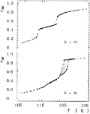
Figure 13: Influence of the noncoordinated anion on the spin transition curve γHS(T) near the transition tempe...

Figure 14: Spin transition curves γHS(T) for different solvates of the SCO complexes. [Fe(II)(2-pic)3]Cl2·Solv...
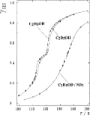
Figure 15: ST curves γHS(T) of the deuterated solvates of [Fe(II)(2-pic)3]Cl2·Solv with Solv = C2D5OH and C2H5...

Figure 16: Sketch of the two-step spin transition; [LS–LS] pair is diamagnetic, [LS–HS] is paramagnetic and th...

Figure 17: (left) Temperature dependence of χMT for {[Fe(L)(NCX)2]2bpym}(L = bpym or bt and X = S or Se). (rig...

Figure 18: Temperature dependence of χMT for [bpym, NCS−] (left) and [bpym, NCSe−] (right) at different pressu...

Figure 19: 57Fe Mössbauer spectra of [bpym, NCSe−] measured at 4.2 K at zero field (a) and at 5 T (b) (see tex...

Figure 20: Temperature dependence of χMT for [Fe2(L)3](ClO4)4·2H2O showing a complete two-step spin conversion...

Figure 21: (a) View of the dinuclear unit in the crystal structure of [Fe2(Hsaltrz)5(NCS)4]·4MeOH. (b) Tempera...

Figure 22: (left) AFM pattern recorded in tapping mode at room temperature on hexagonal single crystals of [Fe3...

Figure 23: (right) Stepwise SCO in an Fe4 [2 × 2] grid, which reveals a smooth magnetic profile under ambient ...

Figure 24: (left) View of the discrete nanoball made of Fe(II) SCO units as well as Cu(I) building blocks. (ri...

Figure 25:
(left) Linear dependency between T1/2 in the heating (Δ) and cooling (![[Graphic 1]](/bjoc/content/inline/1860-5397-9-39-i3.png?max-width=637&scale=1.18182) ) modes versus the anion volu...
) modes versus the anion volu...

Figure 26: (left) View of the linear chain structure of [Fe(1,2-bis(tetrazol-1-yl)propane)3]2+ along the a axi...

Figure 27: (left) View of the 2D layered structure of [Fe(btr)2(NCS)2]·H2O (at 293 K). The water molecules (in...

Figure 28: (left) Three interpenetrated square networks for [Fe(bpb)2(NCS)2]·MeOH. (right) χMT versus T plot s...

Figure 29: Part of the crystal structure of [Fe{N(entz)3}](BF4)2 (T = 293 K) [335,336]. (Reproduced with permission fro...

Figure 30: (left) Projection of the crystal structure of [Fe(btr)3](ClO4)2 along the c axis revealing a 3D str...

Figure 31: Size-dependent SCO properties in [Fe(pz)Pt(CN)4] (left), change of color upon spin state transition...

Figure 32: Schematic showing the epitaxial growth of polymer {Fe(pz)[Pt(CN)4]} and the spin transition propert...

Figure 33: Microcontact printing (μCP) of nanodots on Si-wafer of [Fe(ptz)6](BF4)2 after deposition of crystal...

Figure 34: (left) Projection of the two independent cations of [Fe(C6–trenH)]2+ with atom numbering scheme (15...
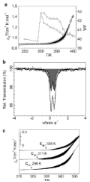
Figure 35: (a) χMT versus T for [Fe(C16-trenH)]Cl2·0.5H2O and variation of the distance d with temperature (T)...

Figure 36: Schematic illustration of the structure of compounds [Fe(Cn-tba)3]X2 adopting a columnar mesophase ...

Figure 37: Temperature dependence of the magnetic moment (M) at 1000 Oe and DSC profiles (inset; 5 °C/min) of ...

Figure 38: Porous structure of the SCO-PMOFs {Fe(pz)[M(II)(CN)4]} (left), representation of the host–guest int...

Figure 39: Porous structure of the guest-free SCO-PMOF’s {Fe(pz)[M(II)(CN)4]} (left), magnetic properties of t...

Figure 40: (left) The 3D porous structure of {Fe(pz)[Pt(CN)4]}·0.5(CS(NH2)2) (1) and {Fe(pz)[Pd(CN)4]}·1.5H2O·...
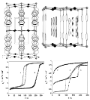
Figure 41: Top: The 3D porous structure of {Fe(dpe)[Pt(CN)4]}·phenazine in a direction close to [101] emphasiz...

Figure 42: View of the segregated stacking of [Ni(dmit)2]− and [Fe(sal2-trien)]+ in [Fe(qsal)2][Ni(dmit)2]3·CH3...

Figure 43: Thin films based on Fe(III) compounds coordinated to Terthienyl-substituted QsalH ligands [434] together...

Figure 44: Left: Temperature-dependent emission spectra for [Fe2(Hsaltrz)5(NCS)4]·4MeOH at λex = 350 nm over t...
Synthesis of a derivative of α-D-Glcp(1->2)-D-Galf suitable for further glycosylation and of α-D-Glcp(1->2)-D-Gal, a disaccharide fragment obtained from varianose
- Carla Marino,
- Carlos Lima,
- Karina Mariño and
- Rosa M. de Lederkremer
Beilstein J. Org. Chem. 2012, 8, 2142–2148, doi:10.3762/bjoc.8.241

- spectrum the H-1’ signal appeared as a doublet centered at 4.82 ppm with J1,2 = 3.9 Hz, characteristic of α-D-glucopyranosides. The multiplet centred at 4.32 ppm, assigned to H-3, showed coupling with the HO-3 (δ 4.62, J3,HO = 4.3 Hz). On deuteration this signal disappeared and the H-3 signal collapsed

Graphical Abstract

Figure 1: Repeating unit of varianose.

Scheme 1: Synthesis of key intermediate α-2-O-(2,3,4,6-tetra-O-benzyl-α-D-Glcp)-3,5,6-tri-O-benzoyl-α,β-D-Galf...

Figure 2: HPAEC-PAD analysis of disaccharide α-D-Glcp(1→2)-D-Gal (1) obtained by hydrolysis of varianose and ...
Alkenes from β-lithiooxyphosphonium ylides generated by trapping α-lithiated terminal epoxides with triphenylphosphine
- David. M. Hodgson and
- Rosanne S. D. Persaud
Beilstein J. Org. Chem. 2012, 8, 1896–1900, doi:10.3762/bjoc.8.219
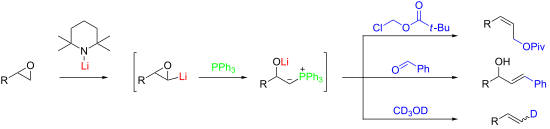
- -induced method to deoxygenate epoxides [43], which in the case of deuteration would provide a regiospecific and potentially stereoselective entry to 1-deuterated terminal alkenes [44][45]. Use of a slightly higher molecular weight epoxide, 1,2-epoxydodecane (13) to facilitate product isolation, gave

Graphical Abstract

Scheme 1: Typical generation of ylide 4 and reaction examples.

Scheme 2: Proposed ylide 4 formation from α-lithiated epoxide 10.

Scheme 3: Z-Allylic ester 6 from epoxide 11.

Scheme 4: E-allylic alcohol 7 from epoxide 11.

Scheme 5: E-allylic alcohol 7 and alkene 12 from epoxide 11 by using s-BuLi.

Scheme 6: Terminal alkene 14 from epoxide 13.
Self-assembly of Ru4 and Ru8 assemblies by coordination using organometallic Ru(II)2 precursors: Synthesis, characterization and properties
- Sankarasekaran Shanmugaraju,
- Dipak Samanta and
- Partha Sarathi Mukherjee
Beilstein J. Org. Chem. 2012, 8, 313–322, doi:10.3762/bjoc.8.34
- the reported procedure [21]. NMR spectra were recorded on a Bruker 400 MHz spectrometer. The chemical shifts (δ) in the 1H NMR spectra are reported in ppm relative to tetramethylsilane (Me4Si) as the internal standard (0.0 ppm) or the proton resonance resulting from incomplete deuteration of the NMR

Graphical Abstract

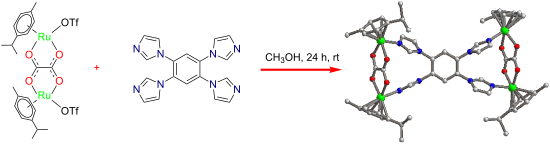
Scheme 1: Possible octanuclear prism and tetranuclear macrocycle resulting from the combination of a tetraden...

Scheme 2: Formation of the tetranuclear complexes (2a and 2b) upon the reaction of Ru(II)2 based acceptors 1a...

Figure 1: 1H (left) and 19F (right) NMR spectra of tetranuclear macrocycle 2a recorded in CD2Cl2–CD3OD with p...

Figure 2: ESIMS spectrum of the macrocycle 2a recorded in acetonitrile. Inset: Experimentally observed isotop...

Figure 3: A ball and stick representation of 2a with atom numbering. Color code: Ru = green; O = red; N = blu...

Scheme 3: Formation of an octanuclear macrocycle 2c upon reaction of Ru(II)2-based acceptors 1c with imidazol...

Figure 4: 1H (left) and 19F (right) NMR spectrum of the macrocycle 2c recorded in CD3CN with the peak assignm...

Figure 5: Side (left) and top (right) view of the energy-minimized structures of the octanuclear macrocycle 2c...

Figure 6: UV–vis absorption spectrum (left) of macrocycles (2a–2c) recorded in CH3CN at 298 K, and cyclic vol...
Use of mixed Li/K metal TMP amide (LiNK chemistry) for the synthesis of [2.2]metacyclophanes
- Marco Blangetti,
- Patricia Fleming and
- Donal F. O'Shea
Beilstein J. Org. Chem. 2011, 7, 1249–1254, doi:10.3762/bjoc.7.145
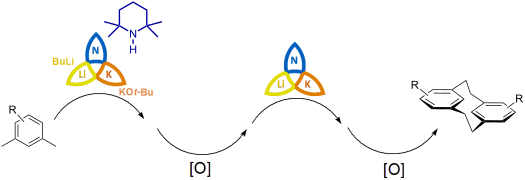
- selective site of metalation should be the more acidic 2-methyl position [26]. This was confirmed by 2H NMR, which showed that incorporated deuterium was above 90% in the 2-methyl position with less than 10% in the 4-methyl group and no detectable aryl deuteration (Figure 2). A similar experiment was
- deuteration gave the di-deuterated product D2-6f. 2H NMR analysis showed no aryl or bridging methylene deuteration, with deuterium incorporated only into the two non-equivalent benzylic methyl positions (Figure 3). With the benzylic metalation confirmed, the second step to complete the [2.2]metacyclophane

Graphical Abstract

Scheme 1: Selective benzylic metalation with LiNK conditions. DG = directing group.

Scheme 2: Iterative LiNK/oxidative coupling synthesis of [2.2]metacyclophanes.

Figure 1: Xylene substrates.

Figure 2: Metalation selectivity for 4e (arrows indicate potential metalation sites). 2H NMR spectrum in CH2Cl...

Figure 3: Di-metalation selectivity for 6f. 2H NMR spectrum in CH2Cl2. *CD2Cl2.

Figure 4: X-Ray structure of 8c with thermal ellipsoids drawn at 50% probability level.
Gelation or molecular recognition; is the bis-(α,β-dihydroxy ester)s motif an omnigelator?
- Peter C. Griffiths,
- David W. Knight,
- Ian R. Morgan,
- Amy Ford,
- James Brown,
- Ben Davies,
- Richard K. Heenan,
- Stephen M. King,
- Robert M. Dalgliesh,
- John Tomkinson,
- Stuart Prescott,
- Ralf Schweins and
- Alison Paul
Beilstein J. Org. Chem. 2010, 6, 1079–1088, doi:10.3762/bjoc.6.123
- deuteration would be expected. The nine sharp features between 150 and 800 cm−1 arising from the d-toluene in the gelled samples are of considerably more interest, indicating that the average environment of the toluene methyl groups are significantly different. This difference may have a number of origins
- , one of which may be as a result of deuteration, but it is much more likely due to unavoidable thermal histories of the two samples (cooling rates, time elapsed since the initial freezing). Further, it is not possible to normalize the spectra such that all of these nine bands overlap completely with

Graphical Abstract

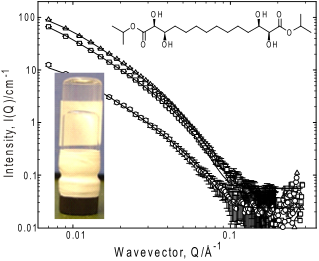
Figure 1: Schröder–van Laar analysis for the melting of toluene (open symbols) and ethanol/water (filled symb...

Figure 2: SANS from 50 mg ml−1 G6 in a range of solvents, 25 °C; d-acetone (circles), d-chloroform (triangles...

Figure 3: SANS from G6 25 °C in d-toluene as a function of G6 concentration; 5 mg ml−1 (circles), 10 mg ml−1 ...

Figure 4: SANS from a series of homologous gelators, G5 (circles), G6 (squares) and G8 (triangles) in d-tolue...

Figure 5: SANS from 50 mg ml−1 G6 in d-toluene, 25 °C; hydrogenous gelator (empty symbols) and partially deut...

Figure 6: SANS from 35 mg ml−1 G6 in 75% d-ethanol/25% D2O, 37 °C; hydrogenous gelator (empty symbols) and pa...

Figure 7: SESANS data for 50 mg ml−1 G6 in deuterated toluene, 25 °C.
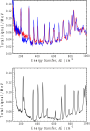
Figure 8: Inelastic neutron spectroscopy from toluene gels (upper Figure): red deuterated toluene/hydrogenous...
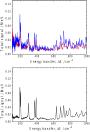
Figure 9: Inelastic neutron spectroscopy from cyclohexane gels (upper Figure): red deuterated cyclohexane/hyd...

Scheme 1: Synthesis of hydrogenous gelators.

Scheme 2: Structure of partially deuterated gelators.
α,β-Aziridinylphosphonates by lithium amide-induced phosphonyl migration from nitrogen to carbon in terminal aziridines
- David. M. Hodgson and
- Zhaoqing Xu
Beilstein J. Org. Chem. 2010, 6, 978–983, doi:10.3762/bjoc.6.110

- : lithiation-deuteration of N-diphenylphosphinylaziridine 10 gave the anticipated deuterated aziridine 11 (70%), along with the rearranged aziridine 12 (25%) [24] (Scheme 3). Results and Discussion So as to examine the migration chemistry outlined in Scheme 1, access to N-phosphonate terminal aziridines 1 was

Graphical Abstract

Scheme 1: Proposed aziridinyl anion induced N- to C-phosphonyl migration.
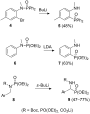
Scheme 2: Selected previously observed N- to C-phosphorous migrations [17,18,21].

Scheme 3: Partial N- to C-migration with N-diphenylphosphinylaziridine 10 [24].

Scheme 4: Synthesis and rearrangement of aziridine 1a.

Figure 1: Aziridines 1h–j.

Scheme 5: Synthesis and rearrangement of aziridine (S)-1k.

Scheme 6: Hydrogenolysis of aziridinylphosphonate (–)-3k.
Molecular recognition of organic ammonium ions in solution using synthetic receptors
- Andreas Späth and
- Burkhard König
Beilstein J. Org. Chem. 2010, 6, No. 32, doi:10.3762/bjoc.6.32
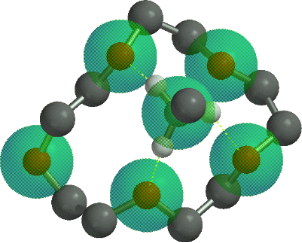

Graphical Abstract

Figure 1: Biologically important amines and quaternary ammonium salts: histamine (1), dopamine (2) and acetyl...

Figure 2: Crown ether 18-crown-6.

Figure 3: Conformations of 18-crown-6 (4) in solvents of different polarity.

Figure 4: Binding topologies of the ammonium ion depending on the crown ring size.
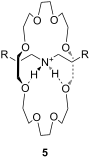
Figure 5: A “pseudorotaxane” structure consisting of 24-crown-8 and a secondary ammonium ion (5); R = Ph.

Figure 6: Typical examples of azacrown ethers, cryptands and related aza macrocycles.

Figure 7: Binding of ammonium to azacrown ethers and cryptands [111-113].

Figure 8: A 19-crown-6-ether with decalino blocking groups (11) and a thiazole-dibenzo-18-crown-6-ether (12).

Figure 9: 1,3-Bis(6-oxopyridazin-1-yl)propane derivatives 13 and 14 by Campayo et al.

Figure 10: Fluorescent azacrown-PET-sensors based on coumarin.

Figure 11: Two different pyridino-cryptands (17 and 18) compared to a pyridino-crown (19); chiral ammonium ion...

Figure 12: Pyridino-18-crown-6 ligand (21), a similar acridino-18-crown-6 ligand (22) and a structurally relat...

Figure 13: Ciral pyridine-azacrown ether receptors 24.

Figure 14: Chiral 15-crown-5 receptors 26 and an analogue 18-crown-6 ligand 27 derived from amino alcohols.

Figure 15: C2-symmetric chiral 18-crown-6 amino alcohol derivatives 28 and related macrocycles.

Figure 16: Macrocycles with diamide-diester groups (30).

Figure 17: C2-symmetric chiral aza-18-crown-6 ethers (31) with phenethylamine residues.

Figure 18: Chiral C-pivot p-methoxy-phenoxy-lariat ethers.

Figure 19: Chiral lariat crown ether 34.

Figure 20: Sucrose-based chiral crown ether receptors 36.
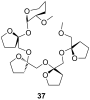
Figure 21: Permethylated fructooligosaccharide 37 showing induced-fit chiral recognition.

Figure 22: Biphenanthryl-18-crown-6 derivative 38.

Figure 23: Chiral lariat crown ethers derived from binol by Fuji et al.

Figure 24: Chiral phenolic crown ether 41 with “aryl chiral barriers” and guest amines.
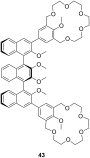
Figure 25: Chiral bis-crown receptor 43 with a meso-ternaphthalene backbone.

Figure 26: Chromogenic pH-dependent bis-crown chemosensor 44 for diamines.

Figure 27: Triamine guests for binding to receptor 44.

Figure 28: Chiral bis-crown phenolphthalein chemosensors 46.

Figure 29: Crown ether amino acid 47.

Figure 30: Luminescent receptor 48 for bis-alkylammonium guests.

Figure 31: Luminescent CEAA (49a), a bis-CEAA receptor for amino acids (49b) and the structure of lysine bindi...

Figure 32: Luminescent CEAA tripeptide for binding small peptides.

Figure 33: Bis crown ether 51a self assembles co-operatively with C60-ammonium ion 51b.

Figure 34: Triptycene-based macrotricyclic dibenzo-[24]-crown-8 ether host 52 and guests.

Figure 35: Copper imido diacetic acid azacrown receptor 53a and the suggested His-Lys binding motif; a copper ...

Figure 36: Urea (54) and thiourea (55) benzo crown receptor for transport and extraction of amino acids.

Figure 37: Crown pyryliums ion receptors 56 for amino acids.

Figure 38: Ditopic sulfonamide bridged crown ether receptor 57.

Figure 39: Luminescent peptide receptor 58.

Figure 40: Luminescent receptor 59 for the detection of D-glucosamine hydrochloride in water/ethanol and lumin...

Figure 41: Guanidinium azacrown receptor 61 for simple amino acids and ditopic receptor 62 with crown ether an...

Figure 42: Chiral bicyclic guanidinium azacrown receptor 63 and similar receptor 64 for the enantioselective t...

Figure 43: Receptors for zwitterionic species based on luminescent CEAAs.

Figure 44: 1,10-Azacrown ethers with sugar podand arms and the anticancer agent busulfan.

Figure 45: Benzo-18-crown-6 modified β-cyclodextrin 69 and β-cyclodextrin functionalized with diaza-18-crown-6...

Figure 46: Receptors for colorimetric detection of primary and secondary ammonium ions.

Figure 47: Porphyrine-crown-receptors 72.

Figure 48: Porphyrin-crown ether conjugate 73 and fullerene-ammonium ion guest 74.

Figure 49: Calix[4]arene (75a), homooxocalix[4]arene (75b) and resorcin[4]arene (75c) compared (R = H, alkyl c...

Figure 50: Calix[4]arene and ammonium ion guest (R = H, alkyl, OAcyl etc.), possible binding sites; A: co-ordi...

Figure 51: Typical guests for studies with calixarenes and related molecules.
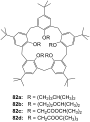
Figure 52: Lower rim modified p-tert-butylcalix[5]arenes 82.

Figure 53: The first example of a water soluble calixarene.

Figure 54: Sulfonated water soluble calix[n]arenes that bind ammonium ions.
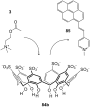
Figure 55: Displacement assay for acetylcholine (3) with a sulfonato-calix[6]arene (84b).

Figure 56: Amino acid inclusion in p-sulfonatocalix[4]arene (84a).

Figure 57: Calixarene receptor family 86 with upper and lower rim functionalization.

Figure 58: Calix[6]arenes 87 with one carboxylic acid functionality.
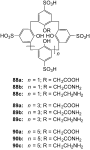
Figure 59: Sulfonated calix[n]arenes with mono-substitution at the lower rim systematically studied on their r...

Figure 60: Cyclotetrachromotropylene host (91) and its binding to lysine (81c).

Figure 61: Calixarenes 92 and 93 with phosphonic acids groups.

Figure 62: Calix[4]arene tetraphosphonic acid (94a) and a double bridged analogue (94b).
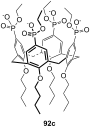
Figure 63: Calix[4]arene tetraphosphonic acid ester (92c) for surface recognition experiments.

Figure 64: Calixarene receptors 95 with α-aminophosphonate groups.

Figure 65: A bridged homocalix[3]arene 95 and a distally bridged homocalix[4]crown 96.

Figure 66: Homocalix[3]arene ammonium ion receptor 97a and the Reichardt’s dye (97b) for colorimetric assays.

Figure 67: Chromogenic diazo-bridged calix[4]arene 98.

Figure 68: Calixarene receptor 99 by Huang et al.
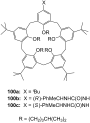
Figure 69: Calixarenes 100 reported by Parisi et al.

Figure 70: Guest molecules for inclusion in calixarenes 100: DAP × 2 HCl (101a), APA (101b) and Lys-OMe × 2 HC...

Figure 71: Different N-linked peptido-calixarenes open and with glycol chain bridges.

Figure 72: (S)-1,1′-Bi-2-naphthol calixarene derivative 104 published by Kubo et al.

Figure 73: A chiral ammonium-ion receptor 105 based on the calix[4]arene skeleton.

Figure 74: R-/S-phenylalaninol functionalized calix[6]arenes 106a and 106b.

Figure 75: Capped homocalix[3]arene ammonium ion receptor 107.

Figure 76: Two C3 symmetric capped calix[6]arenes 108 and 109.

Figure 77: Phosphorous-containing rigidified calix[6]arene 110.

Figure 78: Calix[6]azacryptand 111.

Figure 79: Further substituted calix[6]azacryptands 112.

Figure 80: Resorcin[4]arene (75c) and the cavitands (113).

Figure 81: Tetrasulfonatomethylcalix[4]resorcinarene (114).
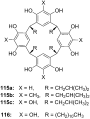
Figure 82: Resorcin[4]arenes (115a/b) and pyrogallo[4]arenes (115c, 116).
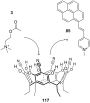
Figure 83: Displacement assay for acetylcholine (3) with tetracyanoresorcin[4]arene (117).

Figure 84: Tetramethoxy resorcinarene mono-crown-5 (118).

Figure 85: Components of a resorcinarene based displacement assay for ammonium ions.

Figure 86: Chiral basket resorcin[4]arenas 121.

Figure 87: Resorcinarenes with deeper cavitand structure (122).

Figure 88: Resorcinarene with partially open deeper cavitand structure (123).
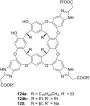
Figure 89: Water-stabilized deep cavitands with partially structure (124, 125).
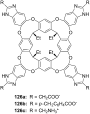
Figure 90: Charged cavitands 126 for tetralkylammonium ions.

Figure 91: Ditopic calix[4]arene receptor 127 capped with glycol chains.

Figure 92: A calix[5]arene dimer for diammonium salt recognition.

Figure 93: Calixarene parts 92c and 129 for the formation molecular capsules.
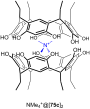
Figure 94: Encapsulation of a quaternary ammonium cation by two resorcin[4]arene molecules (NMe4+@[75c]2 × Cl−...

Figure 95: Encapsulation of a quaternary ammonium cation by six resorcin[4]arene molecules (NMe3D+@[130]6 × Cl−...

Figure 96: Structure and schematic of cucurbit[6]uril (CB[6], 131a).
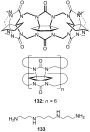
Figure 97: Cyclohexanocucurbit[6]uril (CB′[6], 132) and the guest molecule spermine (133).

Figure 98: α,α,δ,δ-Tetramethylcucurbit[6]uril (134).

Figure 99: Structure of the cucurbituril-phthalhydrazide analogue 135.

Figure 100: Organic cavities for the displacement assay for amine differentiation.

Figure 101: Displacement assay methodology for diammonium- and related guests involving cucurbiturils and some ...

Figure 102: Nor-seco-Cucurbituril (±)-bis-ns-CB[6] (140) and guest molecules.

Figure 103: The cucurbit[6]uril based complexes 141 for chiral discrimination.
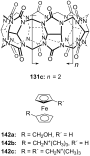
Figure 104: Cucurbit[7]uril (131c) and its ferrocene guests (142) opposed.

Figure 105: Cucurbit[7]uril (131c) guest inclusion and representative guests.

Figure 106: Cucurbit[7]uril (131c) binding to succinylcholine (145) and different bis-ammonium and bis-phosphon...

Figure 107: Paraquat-cucurbit[8]uril complex 149.
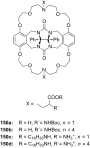
Figure 108: Gluconuril-based ammonium receptors 150.
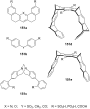
Figure 109: Examples of clefts (151a), tweezers (151b, 151c, 151d) and clips (151e).

Figure 110: Kemp’s triacid (152a), on example of Rebek’s receptors (152b) and guests.

Figure 111: Amino acid receptor (154) by Rebek et al.

Figure 112: Hexagonal lattice designed hosts by Bell et al.

Figure 113: Bell’s amidinium receptor (156) and the amidinium ion (157).
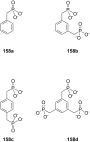
Figure 114: Aromatic phosphonic acids.

Figure 115: Xylene phosphonates 159 and 160a/b for recognition of amines and amino alcohols.
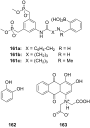
Figure 116: Bisphosphonate recognition motif 161 for a colorimetric assay with alizarin complexone (163) for ca...

Figure 117: Bisphosphonate/phosphate clip 164 and bisphosphonate cleft 165.

Figure 118: N-Methylpyrazine 166a, N-methylnicotinamide iodide (166b) and NAD+ (166c).

Figure 119: Bisphosphate cavitands.
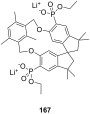
Figure 120: Bisphosphonate 167 of Schrader and Finocchiaro.
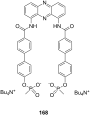
Figure 121: Tweezer 168 for noradrenaline (80b).

Figure 122: Different tripods and heparin (170).
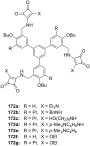
Figure 123: Squaramide based receptors 172.
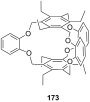
Figure 124: Cage like NH4+ receptor 173 of Kim et al.

Figure 125: Ammonium receptors 174 of Chin et al.

Figure 126: 2-Oxazolin-based ammonium receptors 175a–d and 176 by Ahn et al.

Figure 127: Racemic guest molecules 177.

Figure 128: Tripods based on a imidazole containing macrocycle (178) and the guest molecules employed in the st...

Figure 129: Ammonium ion receptor 180.

Figure 130: Tetraoxa[3.3.3.3]paracyclophanes 181 and a cyclophanic tetraester (182).

Figure 131: Peptidic bridged paraquat-cyclophane.
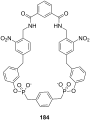
Figure 132: Shape-selective noradrenaline host.

Figure 133: Receptor 185 for binding of noradrenaline on surface layers from Schrader et al.

Figure 134: Tetraphosphonate receptor for binding of noradrenaline.

Figure 135: Tetraphosphonate 187 of Schrader and Finocchiaro.

Figure 136: Zinc-Porphyrin ammonium-ion receptors 188 and 189 of Mizutani et al.
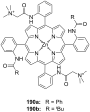
Figure 137: Zinc porphyrin receptor 190.

Figure 138: Zinc porphyrin receptors 191 capable of amino acid binding.

Figure 139: Zinc-porphyrins with amino acid side chains for stereoinduction.

Figure 140: Bis-zinc-bis-porphyrin based on Tröger’s base 193.

Figure 141: BINAP-zinc-prophyrin derivative 194 and it’s guests.

Figure 142: Bisaryl-linked-zinc-porphyrin receptors.
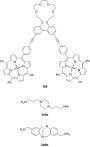
Figure 143: Bis-zinc-porphyrin 199 for diamine recognition and guests.

Figure 144: Bis-zinc-porphyrin crown ether 201.

Figure 145: Bis-zinc-porphyrin 202 for stereodiscrimination (L = large substituent; S = small substituent).

Figure 146: Bis-zinc-porphyrin[3]rotaxane and its copper complex and guests.

Figure 147: Dien-bipyridyl ligand 206 for co-ordination of two metal atoms.

Figure 148: The ligand and corresponding tetradentate co-complex 207 serving as enantioselective receptor for a...

Figure 149: Bis(oxazoline)–copper(II) complex 208 for the recognition of amino acids in aqueous solution.

Figure 150: Zinc-salen-complexes 209 for the recognition tertiary amines.

Figure 151: Bis(oxazoline)–copper(II) 211 for the recognition of amino acids in aqueous solution.

Figure 152: Zn(II)-complex of a C2 terpyridine crown ether.

Figure 153: Displacement assay and receptor for aspartate over glutamate.

Figure 154: Chiral complex 214 for a colorimetric displacement assay for amino acids.

Figure 155: Metal complex receptor 215 with tripeptide side arms.

Figure 156: A sandwich complex 216 and its displaceable dye 217.

Figure 157: Lanthanide complexes 218–220 for amino acid recognition.
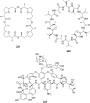
Figure 158: Nonactin (221), valinomycin (222) and vancomycin (223).

Figure 159: Monesin (224a) and a chiral analogue for enantiodiscrimination of ammonium guests (224b).

Figure 160: Chiral podands (226) compared to pentaglyme-dimethylether (225) and 18-crown-6 (4).

Figure 161: Lasalocid A (228).

Figure 162: Lasalocid derivatives (230) of Sessler et al.

Figure 163: The Coporphyrin I tetraanion (231).

Figure 164: Linear and cyclic peptides for ammonium ion recognition.

Figure 165: Cyclic and bicyclic depsipeptides for ammonium ion recognition.
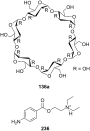
Figure 166: α-Cyclodextrin (136a) and novocaine (236).
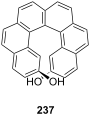
Figure 167: Helical diol receptor 237 by Reetz and Sostmann.

Figure 168: Ammonium binding spherand by Cram et al. (238a) and the cyclic[6]metaphenylacetylene 238b in compar...

Figure 169: Receptor for peptide backbone and ammonium binding (239).

Figure 170: Anion sensor principle with 3-hydroxy-2-naphthanilide of Jiang et al.

Figure 171: 7-bromo-3-hydroxy-N-(2-hydroxyphenyl)naphthalene 2-carboxamide (241) and its amine binding.

Figure 172: Naturally occurring catechins with affinity to quaternary ammonium ions.

Figure 173: Spiropyran (244) and merocyanine form (244a) of the amino acid receptors of Fuji et al.

Figure 174: Coumarin aldehyde (245) and its iminium species with amino acid bound (245a) by Glass et al.
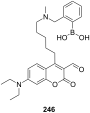
Figure 175: Coumarin aldehyde appended with boronic acid.

Figure 176: Quinolone aldehyde dimers by Glass et al.

Figure 177: Chromogenic ammonium ion receptors with trifluoroacetophenone recognition motifs.

Figure 178: Chromogenic ammonium ion receptor with trifluoroacetophenone recognition motif bound on different m...
Part 2. Mechanistic aspects of the reduction of S-alkyl- thionocarbonates in the presence of triethylborane and air
- Florent Allais,
- Jean Boivin and
- Van Tai Nguyen
Beilstein J. Org. Chem. 2007, 3, No. 46, doi:10.1186/1860-5397-3-46
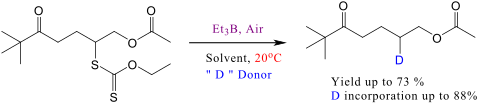
- an attempt to gain information about the mechanism, we performed deuteration experiments (Figure 1 and Table 1). Most of the results reported herein concern the reduction of xanthate 1a [see Supporting Information File 2, Supporting Information File 3, and Supporting Information File 4]. This
- conceals several subtleties. In our quest for the origin of the transferred hydrogen, we demonstrated by unambiguous deuteration experiments that three types of sources are implicated. The first one relies on hydrogen donation from an O-H group (presumably complexed to the trialkylborane). This O-H group
- reduction of compound 1a in C6H6 at 20°C. Preparation of Et3B-d15. Deuteration experiments Reduction of xanthate 1a in the presence of deuterated O-ethyl S-ethyl dithiocarbonates 3–5 in C6H6. Reduction of xanthate 1a with Et3B-d15, Et3B-d6 and Et3B-d9 in C6H6. Supporting Information Supporting Information

Graphical Abstract

Figure 1: Xanthates 1a, 2a and their corresponding alkanes.

Figure 2: Deuterated O-ethyl-S-ethyl dithiocarbonates 3–5, deuterated adduct 1d and alkane 1e.

Figure 3: Kinetics of the reduction of compound 1a in C6H6 at 20°C.

Scheme 1: Preparation of Et3B-d15.