
Search results
Search for "chiroptical" in Full Text gives 40 result(s) in Beilstein Journal of Organic Chemistry.
Polarization spectroscopy methods in the determination of interactions of small molecules with nucleic acids – tutorial
Beilstein J. Org. Chem. 2018, 14, 84–105, doi:10.3762/bjoc.14.5
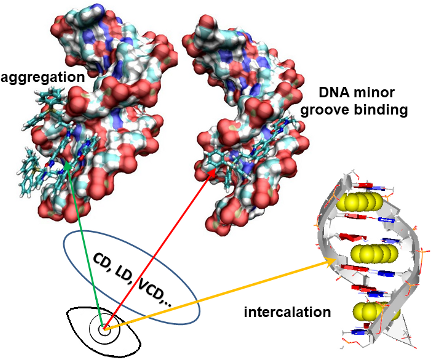
- , which is ideal for the selective study of DNA ligands that strongly change fluorescence upon binding [3]. In a sense complementary to FDCD, also circularly polarized luminescence (CPL) is a chiroptical emission technique which has been employed in the same context for the first time recently [12]. The
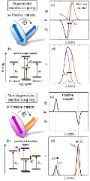
- mechanism between the various π→π* transitions of regularly arranged chromophores [14] (Figure 3, top). Chiroptical properties and ECD spectra of particular DNA or RNA sequences are therefore strongly dependent on the polynucleotide secondary structure [15], at variance to the common UV–vis spectra of the
- measured in the vis range (>360 nm), the application of disposable plastic cuvettes can solve or at least minimize the problem. However, for dyes that strongly adhere to cuvette walls the collected chiroptical spectrum does not correspond to conditions in homogeneous solution and thus cannot be interpreted






Determination of the absolute stereostructure of a cyclic azobenzene from the crystal structure of the precursor containing a heavy element
Beilstein J. Org. Chem. 2016, 12, 2211–2215, doi:10.3762/bjoc.12.212
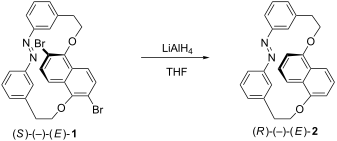
- Z-state of azobenzene, (iii) chiral in both states of the azobenzene unit. We have explored the property of planar chirality of these molecules and carried out the optical resolution to demonstrate various properties such as molecular brakes, chiroptical switches and chirality sensors for light and
- . Results and Discussion Figure 1 shows the schematic representation of experiments involved in the separation and reductive debromination of the enantiomer (E)-1B. The enantiomers of molecules (E)-1 and (E)-2 are previously reported as photocontrolled chiroptical switches for various nematic liquid
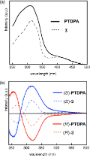
- enantiomers, respectively with the retention time of 11.9 and 13.5 min (Figure 2d). Comparing the chromatograms of the reduced product and the racemic mixture, it is clear that the reduced product is the first eluted enantiomer of (E)-2. To further confirm the formation of (E)-2A we studied the chiroptical


Unconventional application of the Mitsunobu reaction: Selective flavonolignan dehydration yielding hydnocarpins
Beilstein J. Org. Chem. 2016, 12, 662–669, doi:10.3762/bjoc.12.66
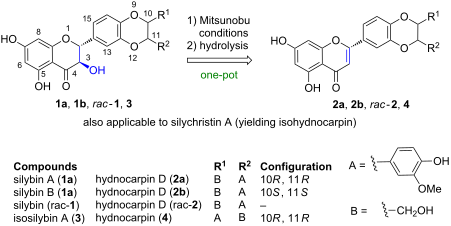
- obtained as pure and fully characterized compounds, namely by chiroptical methods. It should be mentioned that previous studies on hydnocarpin D failed to determine its absolute configuration. In 1973 Ranganathan and Seshadri isolated hydnocarpin D from H. wightiana for the first time and determined the
- , DIAD, THF, rt, 20 h; b) 2 N NaOH, rt, 1 h. Reaction conditions for optimization of dehydration. Supporting Information Supporting Information File 144: Experimental procedures, chiroptical and spectral data of compounds 2, 2a, 2b, 4, 6, 8a, 9a and 9b. Acknowledgements We wish to thank Dr. Lucie


The marine sponge Agelas citrina as a source of the new pyrrole–imidazole alkaloids citrinamines A–D and N-methylagelongine
Beilstein J. Org. Chem. 2015, 11, 2029–2037, doi:10.3762/bjoc.11.220
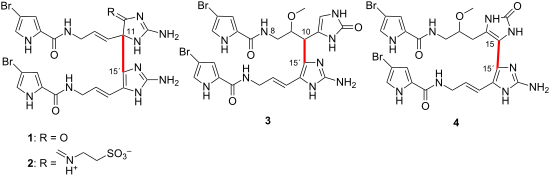
- (18). Citrinamine A (1) is the 2,2´-didebromo derivative of mauritiamine (7) and as in the original publications of 7 and 18 no chiroptical effect was observed for 1. Synthetic studies on mauritiamine (7) [14] demonstrated the formation of similar racemic products by a chemical oxidative dimerization
- double bonds of 2 were assigned to E configuration. Citrinamine B (2) is the 2,2´-didebromo derivative of nagelamide H (20). We could not observe a chiroptical effect for 2 as it was also described in the original work of 20. Our investigation on Agelas citrina yielded two additional pyrrole–imidazole


[2.2]Paracyclophane derivatives containing tetrathiafulvalene moieties
Beilstein J. Org. Chem. 2015, 11, 1917–1921, doi:10.3762/bjoc.11.207
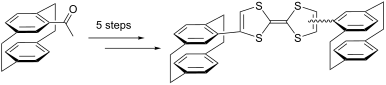
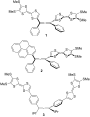
- recent report has appeared concerning the synthesis of a [2.2]paracyclophane doubly substituted by a dimeric tetrathiafulvalene in a pseudo-ortho substitution pattern [10]. This compound exhibited novel chiroptical properties. Prompted by these observations, we decided to investigate the synthesis of a
- isolation in order to investigate their structural and chiroptical properties. Conclusion The synthesis of as yet inseparable isomeric tetrathiafulvalenes has been performed by desulfurative dimerization of a [2.2]paracyclophane-substituted trithione. The latter compound was obtained from the corresponding


Selected synthetic strategies to cyclophanes
Beilstein J. Org. Chem. 2015, 11, 1274–1331, doi:10.3762/bjoc.11.142
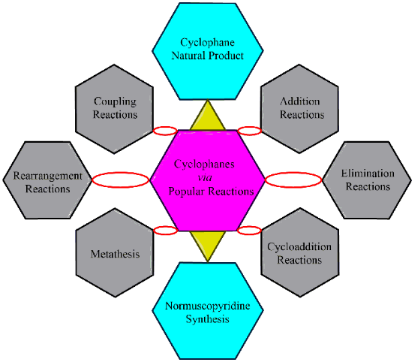
- macrocycles. These molecules show excellent chiroptical properties such as high fluorescence quantum efficiency and a large circularly polarized luminescence dissymmetry factor. Cyclophanes are carbon-rich materials containing extensive alkyne moieties with a persistent molecular architecture. Orita and co






Regioselective synthesis of chiral dimethyl-bis(ethylenedithio)tetrathiafulvalene sulfones
Beilstein J. Org. Chem. 2015, 11, 1105–1111, doi:10.3762/bjoc.11.124

- previously observed only in bismuth wires and carbon nanotubes [13]. Another interesting research area is the redox modulation of the chiroptical properties described in derivatives such as TTF-allenes [14], TTF-helicenes [15], or TTF-paracyclophanes [16]. Thus, to address the different opportunities offered


Chiroptical properties of 1,3-diphenylallene-anchored tetrathiafulvalene and its polymer synthesis
Beilstein J. Org. Chem. 2015, 11, 972–979, doi:10.3762/bjoc.11.109
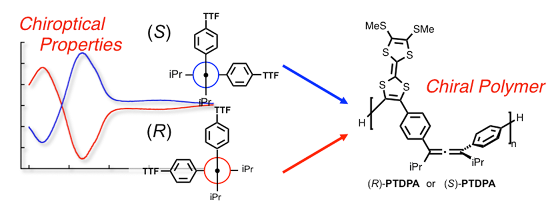
- , Chiba 275-0016, Japan 10.3762/bjoc.11.109 Abstract A novel tetrathiafulvalene dimer, bridged by a chiral 1,3-diphenylallene framework, has been prepared as an optically active compound having strong chiroptical properties. Although a chiral allene bearing strong electron-donating group(s) often
- undergoes slow photoracemization even in daylight, the present allene is totally configurationally stable under ordinary conditions. Each isomer possesses pronounced chiroptical properties in its ECD spectra reflecting the chiral allene framework. Moreover, the elongation of the chiral main chain was also
- carried out by direct C–H activation of the TTF unit, and the chiroptical properties of the resulting polymer were also investigated. Keywords: allene; axial chirality; chiroptical properties; redox; tetrathiafulvalene; Introduction Recently, there has been a growing interest in chiral π-conjugated




Homochiral BINOL-based macrocycles with π-electron-rich, electron-withdrawing or extended spacing units as receptors for C60
Beilstein J. Org. Chem. 2014, 10, 1308–1316, doi:10.3762/bjoc.10.132
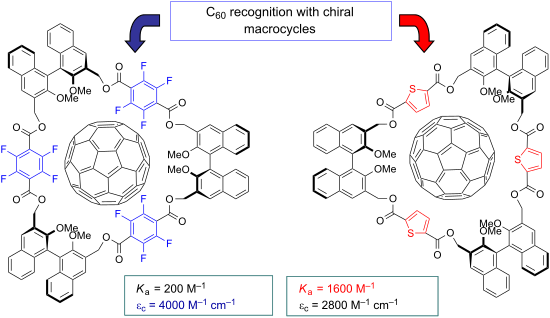
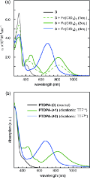
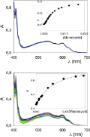
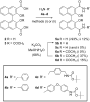
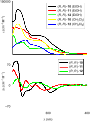
- the chiroptical sensing of organic or ionic species [26][27][28][29][30][31][32][33][34][35][36][37][38][39]. We have previously reported how some of our systems are able to sense C60 in toluene solutions, and how the recognition behavior is shape selective [28]. In the case of extended [2 + 2
- . These binaphthyl-based hosts may also be utilized as chiroptical sensors for chiral carbon-based nanomaterials in functional nanochemical environments. Experimental General experimental. All commercially available compounds were purchased from commercial sources and used as received. Compounds (R)-1 [40


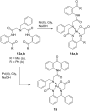
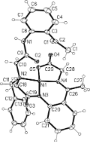
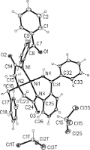
Synthesis and stereochemical assignments of diastereomeric Ni(II) complexes of glycine Schiff base with (R)-2-(N-{2-[N-alkyl-N-(1-phenylethyl)amino]acetyl}amino)benzophenone; a case of configurationally stable stereogenic nitrogen
Beilstein J. Org. Chem. 2014, 10, 442–448, doi:10.3762/bjoc.10.41
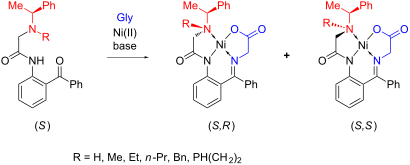
- and the Ar–H. As we have mentioned above, there is a great degree of similarity in the chiroptical properties of complexes 5b–e and 6b–e, sufficient to make the corresponding stereochemical assignments. Moreover, there is also another general trend observed in the 1H NMR spectra of compounds 5 and 6
- shifted downfield (2.5–2.9 ppm) as compared with the chemical shift of the same methyl in diastereomers 6b–e (2.2–1.75 ppm). Combining together the crystallographic, chiroptical and 1H NMR data of compounds 5 and 6, we can confidently assign the (SCRN) absolute configuration to all products 5b–e and (SCSN


Continuous flow photocyclization of stilbenes – scalable synthesis of functionalized phenanthrenes and helicenes
Beilstein J. Org. Chem. 2013, 9, 1883–1890, doi:10.3762/bjoc.9.221
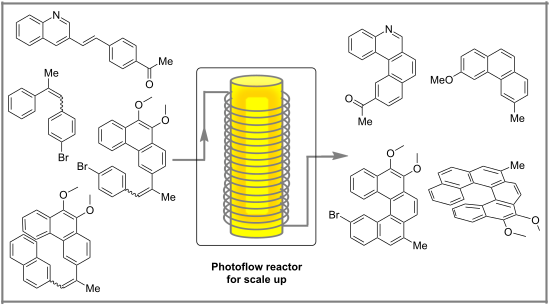
- which are relevant for materials sciences, as well as toward helicenes, an intriguing class of molecules which show remarkable chiroptical properties due to their helical pitch. The rapidly expanding field of application of helicene-like molecules in materials sciences and optics demands the development





Design and synthesis of quasi-diastereomeric molecules with unchanging central, regenerating axial and switchable helical chirality via cleavage and formation of Ni(II)–O and Ni(II)–N coordination bonds
Beilstein J. Org. Chem. 2012, 8, 1920–1928, doi:10.3762/bjoc.8.223
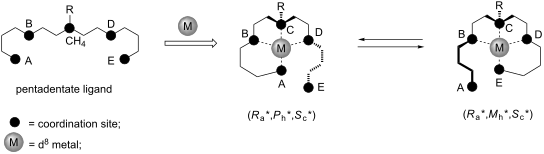
- –ligand coordination bonds, as a potentially useful and conceptually new model for the development of a new generation of organic chiroptical molecular switches [24][25]. Thus, achiral C2-symmetric pentadentate ligands 1 were able to coordinate with d8 metals [Ni(II) or Pd(II)] to form tetra-coordinated



Synthesis and anion recognition properties of shape-persistent binaphthyl-containing chiral macrocyclic amides
Beilstein J. Org. Chem. 2012, 8, 967–976, doi:10.3762/bjoc.8.109
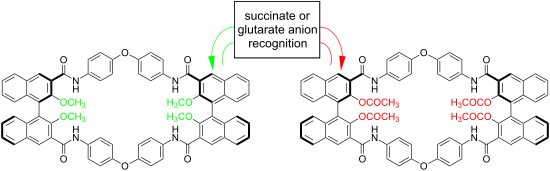
- information, not only in the field of asymmetric synthesis and catalysis, but also in materials science [19][20][21][22][23][24]. During the course of our ongoing efforts dealing with the use of binol-based synthons for the production of functional, oriented nanomaterials and chiroptical sensors [25][26][27





Diarylethene-modified nucleotides for switching optical properties in DNA
Beilstein J. Org. Chem. 2012, 8, 905–914, doi:10.3762/bjoc.8.103
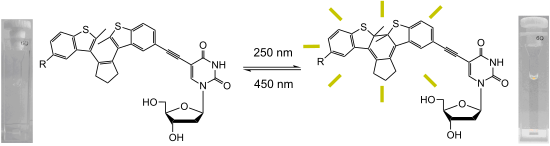
- . Diarylethenes have been applied in a noncovalent chiroptical photoswitchable DNA complex [33] and combined with 7-deazaadenosine to obtain a nucleosidic diarylethene switch [34]. Recently, we reported, very preliminarily, the preparation and optical properties of nucleoside 4 [30]. Herein, we give a full
- noncovalently bound diarylethene derivative as chiroptical switch published by Feringa and coworkers [33], the closed form is able to intercalate whereas the open form of the switch binds differently. This could potentially explain the difference in melting temperature for dsDNA2, since the intercalated closed





(Pseudo)amide-linked oligosaccharide mimetics: molecular recognition and supramolecular properties
Beilstein J. Org. Chem. 2010, 6, No. 20, doi:10.3762/bjoc.6.20
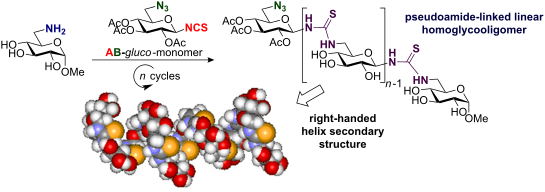
- adopt hydrogen bond stabilised conformations whereas 2,4-trans-THF-L-xylonate oligomers do not. Additionally, a number of structurally related THF aminoacid oligomers were examined by chiroptical spectroscopy to aid interpretation of their conformational preferences. The use of CD, in addition to NMR
- regular conformations in solution. Chakraborty’s group has also prepared protected and unprotected homo-oligomeric derivatives of D-manno- [42] and D-gluco-configured [43] tetrahydrofuran (THF) amino acids and studied their conformational properties by chiroptical and NMR techniques. Although both