

Search results
Search for "NMR spectra" in Full Text gives 2317 result(s) in Beilstein Journal of Organic Chemistry. Showing first 200.
Continuous-flow carbonyl hydrogenation under subatmospheric to atmospheric hydrogen pressure enabled by robust heterogeneous Pt–Fe catalysts
Beilstein J. Org. Chem. 2026, 22, 575–582, doi:10.3762/bjoc.22.43
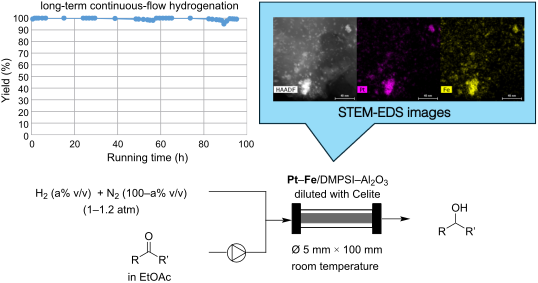
- : Additional experimental details, materials, and methods including photographs of reactor systems, STEM-EDS images and XPS spectra of heterogeneous catalysts, and copies of 1H and 13C NMR spectra for isolated compounds. Acknowledgements H. M. also thanks the Joint Usage/Research Center for Catalysis


Kinetic resolution of racemic planar-chiral vinylcymantrenes by molybdenum-catalyzed asymmetric metathesis dimerization
Beilstein J. Org. Chem. 2026, 22, 568–574, doi:10.3762/bjoc.22.42
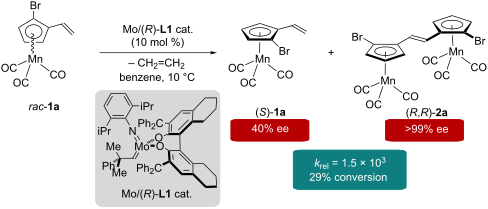
- substrates rac-1a–c. Molybdenum-catalyzed asymmetric metathesis dimerization/kinetic resolution of racemic vinylcymantrenes 1a–c.a Supporting Information Supporting Information File 19: Experimental procedures, NMR spectra (1H and 13C) for all the new compounds, and chiral HPLC chromatograms. Supporting


Experimental and DFT studies on the regioselective methanolysis of 5-azido-9-oxabicyclo[6.1.0]nonan-4-yl 4-nitrobenzoate isomers
Beilstein J. Org. Chem. 2026, 22, 547–556, doi:10.3762/bjoc.22.40
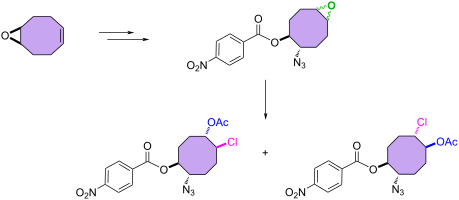
- to design pharmacological tools in the future. Experimental General information Melting points are uncorrected. Infrared spectra were obtained from solution in 0.1 mm cells or KBr pellets on an FT-IR Mattson 1000 instrument. The 1H and 13C NMR spectra were recorded on 400 (100) MHz Varian or 400 (100
- (τ, °) in the optimized transition states. Supporting Information Supporting Information File 14: Experimental, 1H and 13C NMR spectra for all new compounds, as well as selected 2D NMR spectra and crystallographic data for compound 10 are provided. Optimized geometries of the transition states with


Melifoliox B, a novel phloroglucin derivative isolated from Melicope barbigera (Rutaceae) and synthesis of new oxidation products from melifoliones A and B
Beilstein J. Org. Chem. 2026, 22, 535–546, doi:10.3762/bjoc.22.39
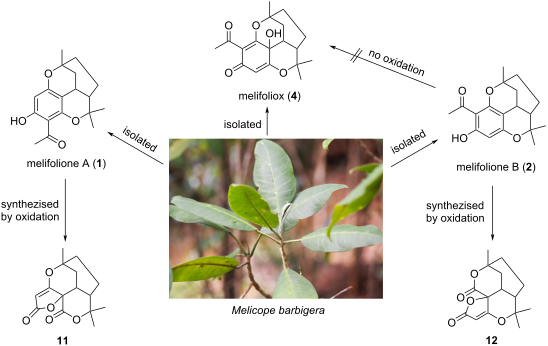
- resolution electrospray ionization mass spectrometry (HRESIMS) and NMR spectra. However, the isomeric compound 3 could not be detected in the extract (Figure 1). Since 4 could be an artefact, built by oxidation of 2 during working up of the extract, and to finally confirm the structure, the isomeric
- diacetate (EDDA). However, synthesis of 2 was difficult. Despite numerous attempts, we only were able to get mixtures of both melifoliones with minor amounts of 2. Since all attempts to separate both isomers on a preparative scale failed, we were only able to record NMR spectra from a very small quantity of
- signals detected in the 13C NMR spectrum of 4 (Table 2) could be assigned by careful analysis of the 2D-NMR spectra (HSQC and HMBC). The position of the acetyl group was confirmed by a cross peak between C-2 and the protons of the acetyl-methyl group in the HMBC spectrum and by interactions between the



Get a better glimpse on sequential photoreactions of trisnorbornadienes with 19F NMR spectroscopy
Beilstein J. Org. Chem. 2026, 22, 527–534, doi:10.3762/bjoc.22.38
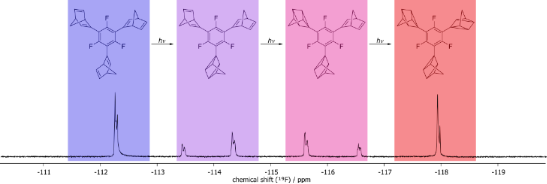
- analysis. Contrary to the 1H NMR spectra, the 19F NMR spectra show significantly fewer characteristic and sufficiently separated signals that allow the unambiguous identification of all photoproducts and, thus, their detection in the course of the photoreaction. Keywords: fluoroarenes; molecular solar
- Information File 1, Figure S16). Contrary to the 1H NMR spectra, the 19F NMR spectra showed significantly fewer signals (one or two per molecule) during the photoreaction because of the symmetry of norbornadiene 1f and its photoproducts and the less complex coupling pattern. Thus, the 19F NMR spectra of the
- circumvented by the application of in situ 19F NMR-spectroscopic measurements. Contrary to the 1H NMR spectra, the 19F NMR spectra are less complex and show characteristic and sufficiently separated signals that allow the unambiguous identification of photoproducts 2f0,3, 2f2,1, and 2f1,2 and, thus, their


Synthesis and uranyl(VI) extraction performance of a calix[4]pyrrole–tetrahydroxamic acid receptor
Beilstein J. Org. Chem. 2026, 22, 486–494, doi:10.3762/bjoc.22.36
- ester substrate. When this method was used, the 1H NMR spectra of the products revealed residual peaks corresponding to unreacted ester (Supporting Information File 1, Figure S8). This observation is consistent with the substrate-dependent behavior reported in that study, highlighting that the reaction


Structural reassignment of compound 968, an allosteric glutaminase inhibitor
Beilstein J. Org. Chem. 2026, 22, 455–460, doi:10.3762/bjoc.22.33
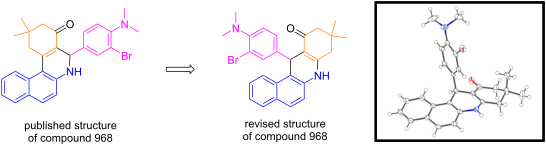
- reassigning the structure of the cycloaddition reaction product from benzo[c]phenanthridine 1 to benzo[c]acridine 2, we predicted that all three compounds are the benzo[c]acridine isomer 2. The 1H NMR spectra of all three compounds are identical, indicating that they share the same structure (Figure 3A). We
- reported to produce benzo[c]phenanthridine 1, of which the commonly accepted structure of 968 is a member. The structure of the product of this reaction was subsequently reported to be the isomeric benzo[c]acridine 2. A) 1H NMR spectra of compound 968 purchased from Sigma-Aldrich (top), the same compound


Synthesis and stereochemical analysis of dynamic planar chiral oxa[7]orthocyclophene
Beilstein J. Org. Chem. 2026, 22, 436–442, doi:10.3762/bjoc.22.30
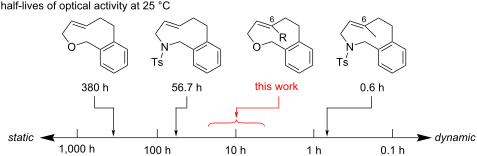
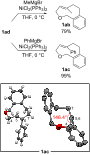
- procedures, characterization data, copies of 1H and 13C NMR spectra, and optimized geometries of DFT calculations. Supporting Information File 26: Crystallographic information file of compound 1ac. Acknowledgements We thank K. Imamura (Evaluation center of material properties, IMCE Kyushu University) for






Synthesis and anti-cancer activity of naphthalimide–organylselanyl conjugates
Beilstein J. Org. Chem. 2026, 22, 416–435, doi:10.3762/bjoc.22.29
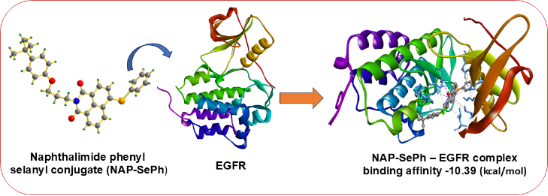
- 1.80 ppm and one triplet at 3.13 ppm were attributed to the remaining methylene protons located near the selenium atom [51]. In the 13C NMR spectra, distinct chemical shift differences were observed between compounds 7 and 8, due to the small structural differences between them. For compound 7, with
- F254). Nuclear magnetic resonance (NMR) spectra were recorded on a Bruker Avance 400 MHz FT-NMR and a Bruker Avance III 500 MHz spectrometer. 1H, 13C, and 77Se NMR spectra were acquired in CDCl3, with chemical shifts (δ) reported in ppm. Singlet (s), doublet (d), doublet of doublets (dd), triplet (t




Cone p-aminocalix[4]arenes enriched with ‘clickable’ alkyne or azide functionalities
Beilstein J. Org. Chem. 2026, 22, 399–415, doi:10.3762/bjoc.22.28
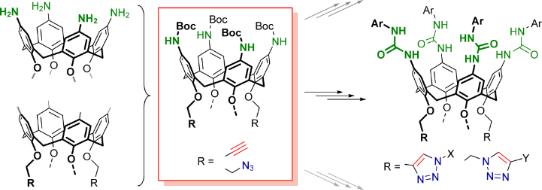
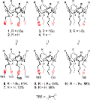
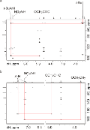
- tetraureacalix[4]arenes was obtained. Examination of the 1H NMR spectra of the tetraureas in CDCl3 showed that in most cases triazole heterocycles do not intervene the formation of homo- and heterodimeric capsules by these compounds. Thus, considering the synthetic value of CuAAC and amine transformations, p
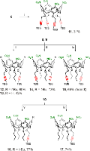
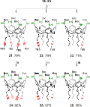
- calix[4]arene 11 having four TBS-protected propargyl groups at the narrow rim in only moderate yield of 37% [9]. In our hands, according to the NMR spectra of the reaction mixture, under the reported conditions (>30 equiv of fuming HNO3 per calixarene aromatic unit in a 1:1 dichloromethane/acetic acid
- only the reaction time increased (Scheme 2). The 1D NMR spectra for the dinitrocalix[4]arenes 12 and 13 provided no definitive data on the substitution patterns at their wide-rims except for the presence of two nitro groups in the distal aromatic units. To localize the nitro groups in the structures of






Design, synthesis and biological evaluation of 2,5-diaryloxazolo[4,5-d]pyrimidin-7-ylamines as selective cytotoxic agents against HeLa cells
Beilstein J. Org. Chem. 2026, 22, 390–398, doi:10.3762/bjoc.22.27
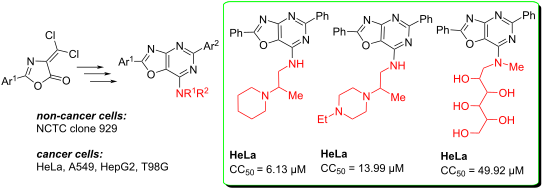
- were followed by TLC (Silica gel, aluminum sheets 60 F254, Merck). Melting points were recorded on a Fisher-Johns apparatus. 1H and 13C NMR spectra were recorded on a Varian Mercury spectrometer (400 and 101 MHz, respectively) or Bruker Avance DRX 500 spectrometer (500 MHz and 126 MHz, respectively) in


Electrosynthetic access to unsymmetrical oxaza[8]helicenes with high chiral stability and strong circularly polarized luminescence (CPL)
Beilstein J. Org. Chem. 2026, 22, 372–382, doi:10.3762/bjoc.22.25
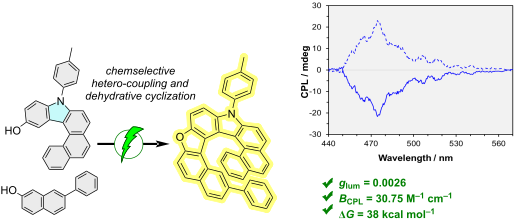
- unsymmetrical oxaza[8]helicenes 5. Chiroptical features of oxaza[8]helicenes 5 and oxaza[7]helicenes 6. Supporting Information Supporting Information File 9: Experimental procedures, synthetic details, NMR spectra, chiral HPLC chromatograms, DFT and TD-DFT calculations. Supporting Information File 10




Synthesis of tricyclic fused pyrrolidine nitroxides from 2-alkynylpyrrolidine-1-oxyls
Beilstein J. Org. Chem. 2026, 22, 344–351, doi:10.3762/bjoc.22.22

- nitroxides 2d–f, the samples of the radicals were reduced to the corresponding diamagnetic amines using a Zn/CF3COOH system in CD3OD at 63 °C, according to a literature protocol [23] and the 1H NMR spectra were recorded. The spectra showed similarity to those of previously described for radicals 2a–c [20
- sulfonate group, respectively [24]. The 1H NMR spectra of 3a,b,d–f (Zn/CF3COOH system in CD3OD) showed appearance of a singlet of methanesulfonate hydrogens in the region from 2.78 to 3.17 ppm. The NMR spectra were not recorded for 3c because of heavy resinification upon the sample preparation. The
- % yield). The IR spectra of the pyrazole derivatives 9a–c exhibit absorptions at 688–699 cm−1 and 763–770 cm−1, assigned to out-of-plane bending modes of the pyrazole ring [32]. The 1H NMR spectra of the reduction products of pyrazoles 9a–c were recorded after reduction using the Zn/CF3COOH system in




Spirobarbiturates with a pyrrolizidine moiety: synthesis, structure and biological evaluation
Beilstein J. Org. Chem. 2026, 22, 274–288, doi:10.3762/bjoc.22.20
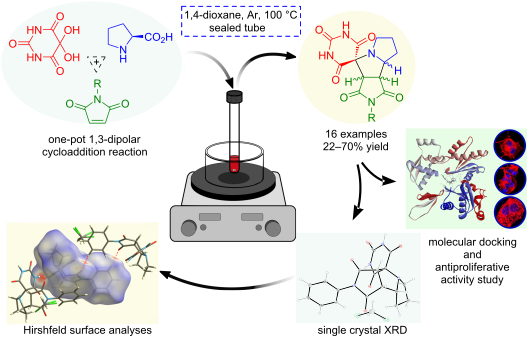
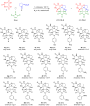
- configuration of their stereocenters, was determined using NMR spectroscopy and XRD analysis. endo-Isomers 4a–e exhibited the following characteristic signals in their 1H NMR spectra: multiplets in the range of δ 1.5–4.4 ppm were assigned to the protons of the pyrrolizidine ring system. The methyl singlets of
- : 4d shows signals at δ 7.12 and 7.30 ppm for ortho- and meta-protons respectively (J = 8.2 Hz) and 4e displays resonances at δ 7.58 and 8.41 ppm for ortho- and meta-protons (J = 8.8 Hz). In the 1H NMR spectra, the proton signals of ring A in diastereomers 4f–p overlap and appear at the same chemical
- the diastereotopic H6/H6’ methine protons of different atropisomeric forms. The NH protons of the barbiturate ring resonate as broad singlets at δ 11.5–11.7 ppm, while compound 4a shows an additional broad singlet at δ 11.30 ppm corresponding to the succinimide NH group. In the 13C NMR spectra of endo




Configuration–packing synergy enabling integrated crystalline-state RTP and amorphous-state TADF
Beilstein J. Org. Chem. 2026, 22, 224–236, doi:10.3762/bjoc.22.16
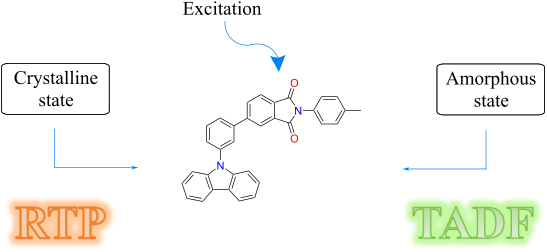
- without further purification. Instruments and measurements Low-resolution mass spectra were recorded on a DSQ electron-impact (EI) mass spectrometer. High-resolution mass spectra (HRMS) were acquired on a Thermo MAT95XP instrument using fast atom bombardment (FAB) ionization. 1H and 13C NMR spectra were


Synthesis of diaryl phosphates using phytic acid as a phosphorus source
Beilstein J. Org. Chem. 2026, 22, 213–223, doi:10.3762/bjoc.22.15
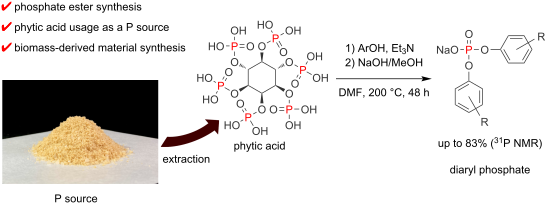
- acid molecule (Figure 6 and Figure S3 in Supporting Information File 1) [57][58][59]. The full 1H, 13C, and 31P NMR spectra are provided in Supporting Information File 1. Next, the extracted phytic acid was used for phosphate synthesis. Although the reaction was conducted under the same conditions as
- (SHIMADZU, Kyoto, Japan) and JMS GC-mate II (JEOL, Tokyo, Japan) instruments. The melting points were determined using a Q-200 differential scanning calorimeter (TA Instruments, New Castle, DE, USA). The NMR spectra were recorded in a deuterated solvent (D2O, methanol-d4 or dimethyl sulfoxide (DMSO)-d6
- )), and the residual solvent was set to the chemical shift reference for 1H NMR (H2O, δ 4.79 ppm; MeOH, δ 3.31 ppm; DMSO, δ 2.50 ppm). All NMR spectra were compared with those reported in previous studies [15][46][47][48] and found to be consistent with the references. The spectra are provided in




Base-promoted deacylation of 2-acetyl-2,5-dihydrothiophenes and their oxygen-mediated hydroxylation
Beilstein J. Org. Chem. 2026, 22, 192–204, doi:10.3762/bjoc.22.13
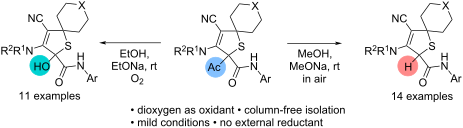
- : Full experimental details and characterization data of all new compounds. Supporting Information File 18: Copies of NMR spectra of all new compounds. Supporting Information File 19: CIF-file for compound 5g. Supporting Information File 20: CheckCIF-file for compound 5g. Funding We gratefully




Streptoquinolines A and B, new antibacterial meroterpenoids produced by Streptomyces sp. TMPU-A0679
Beilstein J. Org. Chem. 2026, 22, 185–191, doi:10.3762/bjoc.22.12
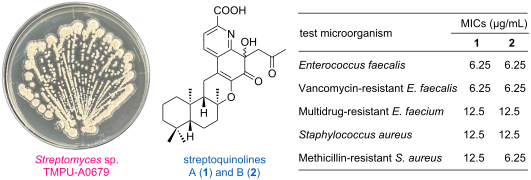
- . Streptoquinoline B (2): The molecular formula of compound 2 was elucidated as C28H35NO6 based on HRESIMS measurements. The 13C NMR and 1H NMR spectra (in DMSO-d6) of compound 2 showed chemical shift values that were almost identical to those of compound 1 (Table 2). Furthermore, 2D NMR experiments revealed similar
- Kyokuto Pharmaceutical Co. (Tokyo, Japan). All other chemicals used in this study were of special grade. General experimental procedures HRESIMS spectra were recorded using a mass spectrometer (Xevo G2-XS QTof, Waters Co., Milford, MA, USA). NMR spectra were acquired on a spectrometer (JNM-AL-400; JEOL
- ) and B (2). Structural elucidation of compounds 1 and 2 by 2D NMR experiments. ROESY correlations of 1. Physicochemical properties of 1 and 2. 1H and 13C NMR chemical shifts in 1 and 2.a MICs of 1 and 2. Supporting Information Supporting Information File 12: MS and NMR spectra of streptoquinolines A


Improved synthesis and physicochemical characterization of the selective serotonin 2A receptor agonist 25CN-NBOH
Beilstein J. Org. Chem. 2026, 22, 175–184, doi:10.3762/bjoc.22.11
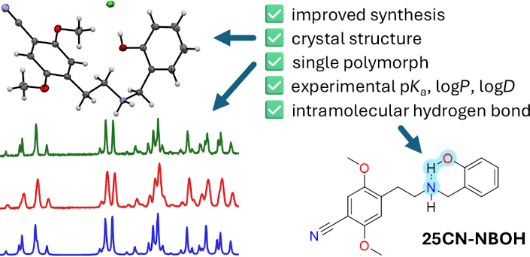
- bond [21]. When measuring 13C NMR spectra in DMSO-d6 containing different D2O/H2O ratios, isotope effects were clearly observed at several positions (Figure 6c and Figure 6d), with a particularly pronounced upfield shift of the phenol ipso-carbon atom (C14, Δδexp = 0.21 ppm). This two-bond isotope
- precoated with silica gel 60 F254 (Merck KGaA, Darmstadt, Germany), and retention factors are denoted Rf. Graphs were produced using GraphPad Prism 10.5, except for NMR spectra, where MestReNova was used. ChemDraw 23.1.2 was used to draw chemical structures. Synthesis of 25CN-NBOH·HCl (1·HCl) To a slurry of
- approach [30]. To ensure gauge independence, nuclear shielding was calculated using the GIAO approach [31][32]. NMR spectroscopy NMR spectra were acquired on a 600 MHz Bruker Avance III HD spectrometer equipped with a 5 mm DCH cryoprobe at 300 K unless otherwise specified. Spectra were processed using


Asymmetric Mannich reaction of aromatic imines with malonates in the presence of multifunctional catalysts
Beilstein J. Org. Chem. 2026, 22, 151–157, doi:10.3762/bjoc.22.8
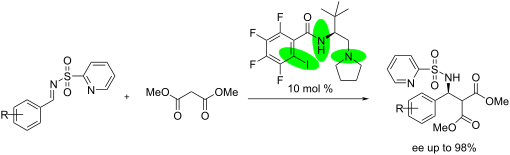
- 20: Experimental procedures, synthetic details, NMR spectra, chiral HPLC chromatograms. Funding The research was funded by the Estonian Ministry of Education and Research (grant No. PRG1031).


Design and synthesis of an axially chiral platinum(II) complex and its CPL properties in PMMA matrix
Beilstein J. Org. Chem. 2026, 22, 143–150, doi:10.3762/bjoc.22.7
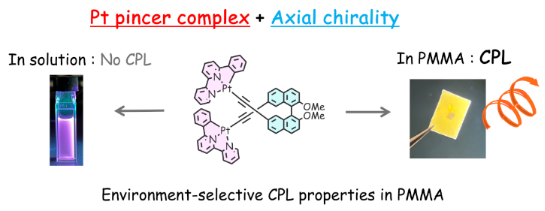
- and 13C NMR spectra were recorded on a Bruker Avance III 400 or JEOL JNM-ECZ600R spectrometer at 25 °C in chloroform-d1 or DMSO-d6. 1H NMR chemical shifts are expressed in parts per million (δ) relative to trimethylsilane (TMS) as a reference. Mass spectra were obtained with a Thermo Scientific


Highly electrophilic, gem- and spiro-activated trichloromethylnitrocyclopropanes: synthesis and structure
Beilstein J. Org. Chem. 2026, 22, 123–130, doi:10.3762/bjoc.22.5
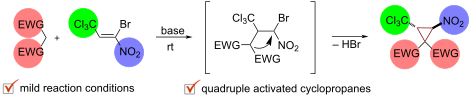
- use of method E in the reaction of 1-bromo-1-nitro-3,3,3-trichloropropene (1) with methyl cyanoacetate, ethyl cyanoacetate or benzoylacetonitrile makes it possible to obtain cyclopropanes 3–5 in the yields up to 72% (Scheme 2). They are formed as single diastereomers (according to the 1H NMR spectra
- Diffraction Research Methods of the A. E. Arbuzov Institute of Organic and Physical Chemistry, the Kazan Scientific Center of the Russian Academy of Sciences. The 1H-13C{1H}, 1H-1H dqfCOSY, 1H-1H NOESY, 1H-13C HMQC, 1H-13C HMBC NMR spectra were recorded on a Jeol ECX400A spectrometer operating at 399.78 MHz
- the structure are shown in Table S1 in Supporting Information File 1. Supporting Information File 14: General synthetic procedures, characterization data and copies of IR spectra, 1H-13C{1H}, 1H-1H dqfCOSY, 1H-1H NOESY, 1H-13C HMQC, 1H-13C HMBC NMR spectra of all synthesized compounds, and


Reactivity umpolung of the cycloheptatriene core in hexa(methoxycarbonyl)cycloheptatriene
Beilstein J. Org. Chem. 2026, 22, 64–70, doi:10.3762/bjoc.22.2
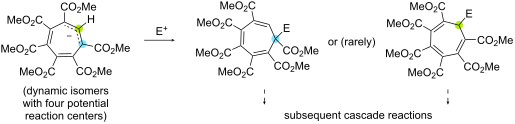
- , quantum chemical calculation details and copies of NMR spectra. Funding This work was financially supported by the Russian Science Foundation (Grant No. 25-23-00616).


Sustainable electrochemical synthesis of aliphatic nitro-NNO-azoxy compounds employing ammonium dinitramide and their in vitro evaluation as potential nitric oxide donors and fungicides
Beilstein J. Org. Chem. 2025, 21, 2739–2754, doi:10.3762/bjoc.21.211
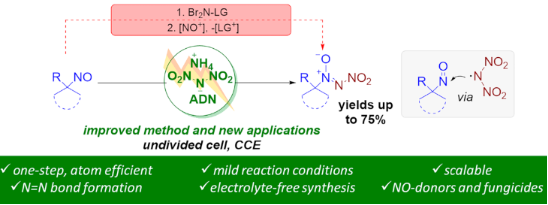
- hygroscopic nature. Any manipulations must be carried out by using appropriate standard safety precautions. 1H, 13C, 14N NMR spectra were recorded with Bruker DRX-500 (500.1, 125.8, 36.1 MHz, respectively) and Bruker AV600 (600.1, 150.9, 43.4 MHz, respectively) spectrometers. Chemical shifts are reported in
- all compounds, XRD of 2c, computational details, and copies of 1H, 13C, 14N, 1H,13C HSQC, and 1H,13C HMBC NMR spectra. Supporting Information File 5: Crystallographic information for compound 2c. Supporting Information File 6: CheckCIF report for the data of 2c. Acknowledgements Crystal structure





Competitive cyclization of ethyl trifluoroacetoacetate and methyl ketones with 1,3-diamino-2-propanol into hydrogenated oxazolo- and pyrimido-condensed pyridones
Beilstein J. Org. Chem. 2025, 21, 2716–2729, doi:10.3762/bjoc.21.209
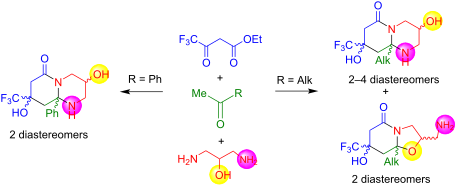
- –1628 cm−1 and NH2 groups at ν 3376–3272 cm−1. The structures of the obtained heterocycles 4 and 5 contain three stereocenters, so one could expect the formation of up to 8 stereoisomers in each case. Analysis of the 19F NMR spectra showed that from two to four diastereomers of
- crystal 4a–d and 5a–c are in excellent agreement with the results of 1D and 2D NMR studies, enabling us to extend these structural assignments to other synthesized bicycles. The complete assignment of signals in 1H and 13C NMR spectra was performed using two-dimensional 1H-1H COSY, NOESY and 1H-13C HSQC
- , whereas in the trans-configuration of the hexahydropyrimidine ring, a cross-peak (OHax, H(2)eq) appears in the spectrum. In the 1H NMR spectra of octahydropyrido[1,2-a]pyrimidinones 4att, 4a–dct, which have the trans-configuration of the hexahydropyrimidine ring, the signal of the H(3) proton has the form