
Search results
Search for "Cleavage" in Full Text gives 986 result(s) in Beilstein Journal of Organic Chemistry. Showing first 200.
Efficient solid-phase synthesis and structural characterization of segetalins A–H, J and K
Beilstein J. Org. Chem. 2025, 21, 2612–2617, doi:10.3762/bjoc.21.202
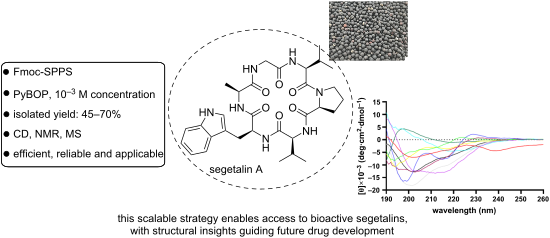
- resin as the solid support, enabling mild cleavage of the partially protected linear peptide precursor [21]. Efficient Fmoc deprotection was achieved using a solution of 1% pyridine and 1% 1,8-diazabicyclo[5.4.0]undec-7-ene (DBU) in N,N-dimethylformamide (DMF) [22]. For the assembly of the linear
- , successful macrocyclization was achieved by employing benzotriazol-1-yloxytripyrrolidinophosphonium hexafluorophosphate (PyBOP) as the coupling reagent in DMF at a concentration of 10−3 M. After cleavage from the resin and global side-chain deprotection, the crude cyclic peptides were purified by preparative


Visible-light-driven NHC and organophotoredox dual catalysis for the synthesis of carbonyl compounds
Beilstein J. Org. Chem. 2025, 21, 2584–2603, doi:10.3762/bjoc.21.200
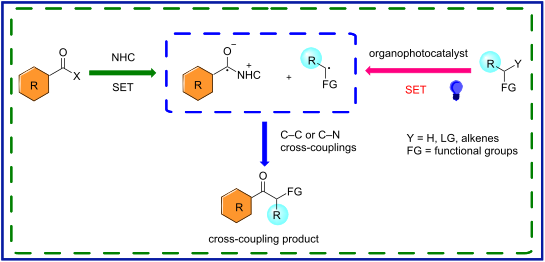
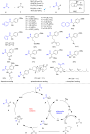
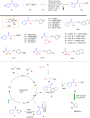
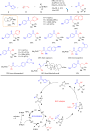
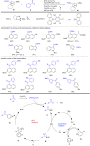
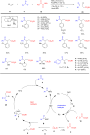
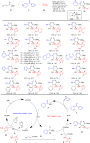
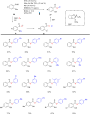
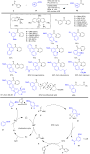
- cleavage and the new C–O bond formation process were achieved using NHC (10 mol %), a photocatalyst (2 mol %), and DABCO (1.5 equiv), providing the corresponding aryl salicylates 27 in moderate to good yields. Mechanistic studies support the oxidation of the Breslow intermediate by oxygen in the presence





Recent advances in total synthesis of illisimonin A
Beilstein J. Org. Chem. 2025, 21, 2571–2583, doi:10.3762/bjoc.21.199
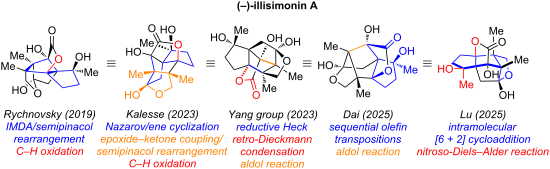
- protected prior to the RCM step. Oxidative cleavage of the cyclopentene followed by Pinnick oxidation of the resulting aldehyde to the carboxylic acid and esterification yielded ketoester 56. Dieckmann condensation of 56, esterification of the resulting enolate with 57, and subsequent one-pot partial
- -mediated N–O bond cleavage afforded carbamate 90. The carbamate was converted to a carbonyl group via Boc deprotection with TFA, oxidation of the resulting amine to the oxime with Na2WO4 and H2O2, and subsequent reduction with TiCl3·HCl to give 91. The LaCl3·2LiCl-mediated methyl addition to the carbonyl






Total syntheses of highly oxidative Ryania diterpenoids facilitated by innovations in synthetic strategies
Beilstein J. Org. Chem. 2025, 21, 2553–2570, doi:10.3762/bjoc.21.198
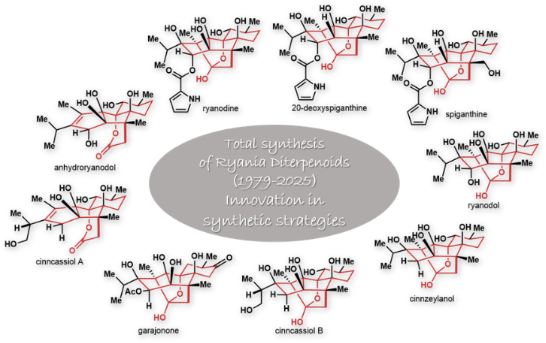
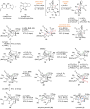
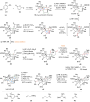
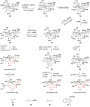
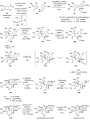
- pericyclic reactions [31][32][33][34][35][36][37][38][39][40][41][42][43][44], to control the formation of the crucial C5 chiral center precisely. Subsequent oxidative cleavage of the carbon–carbon double bond introduced in the Diels–Alder reaction, followed by an intramolecular aldol reaction, efficiently
- natural product. Similarly, starting from 57, installation of an allyl group at C2, followed by oxidative cleavage, reduction, and deprotection, provided cinncassiol B (7). Subjecting this compound to an acid-promoted fragmentation reaction then completed the total synthesis of cinncassiol A (9
- route commenced from (−)-pulegone. After introducing oxidation states at C6 and C10 and installing an alkynyl group at C11, oxidative cleavage of a double bond yielded the key propargylic alcohol intermediate 66. This compound underwent a 1,2-addition with alkynyl Grignard reagent 67, and the resulting







Rapid access to the core of malayamycin A by intramolecular dipolar cycloaddition
Beilstein J. Org. Chem. 2025, 21, 2542–2547, doi:10.3762/bjoc.21.196
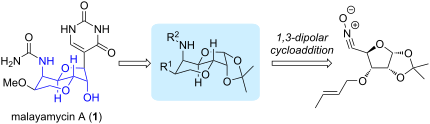
- cleavage of the N–O bond, oxidation and Baeyer–Villiger oxidation. The starting functional groups (including alkyne and nitrone) for the proposed oxazoline were established in literature precedents [29][30][31]. Moreover, the readily available intermediate 8 [32] bearing three defined stereogenic centers
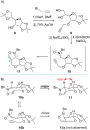
- is secured from the commercial source. Results and Discussion Based on the known protocol [33], diacetone-ᴅ-allofuranose 8 was first introduced with a propargyl group (Scheme 2A). Upon treatment of AcOH to afford diol 9, oxidative cleavage with Shing’s protocol (NaIO4 on silica gel) [34] proceeded
- position. Therefore, dihydroxylation [37] readily converted alkene 11 to diol 12 as a mixture of inseparable isomers. Without purification, oxidative cleavage with NaIO4 resulted in a compound with strong UV absorption, which was eventually identified as enone 14 (Scheme 3). It is assumed that the




Isoorotamide-based peptide nucleic acid nucleobases with extended linkers aimed at distal base recognition of adenosine in double helical RNA
Beilstein J. Org. Chem. 2025, 21, 2513–2523, doi:10.3762/bjoc.21.193
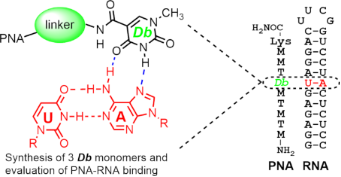
- conditions to afford carboxylic acid 19 in 65% yield, followed by coupling with the PNA benzyl backbone 12 [38] to provide ester 20 in 54% yield. The final Db3 monomer 21 was obtained in 90% yield through benzyl cleavage using the standard hydrogenolysis conditions, similar to previous monomers. PNA


Assembly strategy for thieno[3,2-b]thiophenes via a disulfide intermediate derived from 3-nitrothiophene-2,5-dicarboxylate
Beilstein J. Org. Chem. 2025, 21, 2489–2497, doi:10.3762/bjoc.21.191
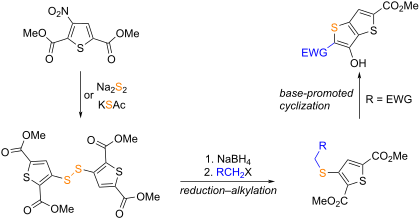
- ]. In route IV, cleavage of the ethyl xanthate group in the starting substrate by NaOMe generates a thiolate intermediate, which undergoes S-alkylation and subsequent NaOMe-promoted cyclization to afford the 3-hydroxy-TT [28]. In our recent works, it was presented an effective strategy for synthesizing
- reaction conditions to release thiolate species capable of reacting separately with ester 1 to form compound 2. Disulfide 3 was found to be an accessible and stable precursor of dimethyl 3-mercaptothiophene-2,5-dicarboxylate, a molecule that is suitable for S-alkylation. In this regard, reductive cleavage
- cleavage of the S–S bond and the subsequent S-alkylation reaction were successful. To suppress the side reaction and improve reduction efficiency, we next employed DMF as a polar aprotic solvent. In Table 2, entry 4, reduction of disulfide 3 in DMF at 75 °C with NaBH4 was complete within 15 min. The excess



Palladium-catalyzed regioselective C1-selective nitration of carbazoles
Beilstein J. Org. Chem. 2025, 21, 2479–2488, doi:10.3762/bjoc.21.190
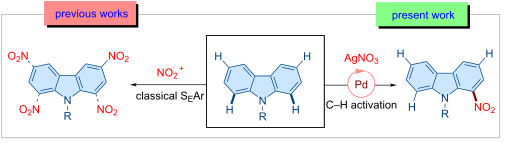
- after 2 hours, indicating that C–H bond cleavage is kinetically relevant and likely involved in the rate-determining step (Scheme 5b). To gain additional mechanistic insight, we synthesized palladacycle intermediate 6 following the reported procedure [58]. Then, the reaction was carried out using
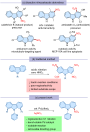
- ][78][79][80], a plausible catalytic cycle is proposed (Figure 2). The catalytic cycle commences with the formation of active palladium(II) species 7 in the presence of AgNO3. Coordination of the pyridyl group of 1a to Pd(NO₃)₂ is followed by irreversible C–H bond cleavage via cyclopalladation to form


Synthesis of the tetracyclic skeleton of Aspidosperma alkaloids via PET-initiated cationic radical-derived interrupted [2 + 2]/retro-Mannich reaction
Beilstein J. Org. Chem. 2025, 21, 2470–2478, doi:10.3762/bjoc.21.189
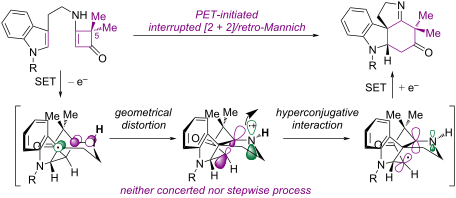
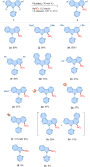
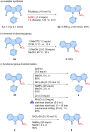
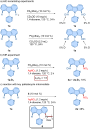
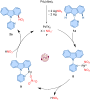
- that the rate-determining step of the key PET reaction involved C19–C12 bond formation and C19–C3 bond cleavage. Investigation of the bond length changes along the IRC path, spin density, and NBO analysis indicated that this process is neither strictly concerted nor stepwise, but falls in between, and
- photoredox catalysis) processes [8][9][10]. Cyclobutenone (A) is a versatile C4 synthon [11] – its [2 + 2] photocyclization yields B, featuring a strained bicyclo[2.2.0]hexane unit [12], which can fragment to form C (Figure 1a) [13][14]. However, competitive C1–C4 bond cleavage under irradiation or heating
- current interest in the synthesis of complex natural products via photochemical reactions, we decided to achieve such an unusual bond cleavage (Figure 1a, path A) of cyclobutenone by generating a radical cation species via a PET reaction. The synthetic plan is shown in Figure 1c and includes a PET


Transformation of the cyclohexane ring to the cyclopentane fragment of biologically active compounds
Beilstein J. Org. Chem. 2025, 21, 2416–2446, doi:10.3762/bjoc.21.185
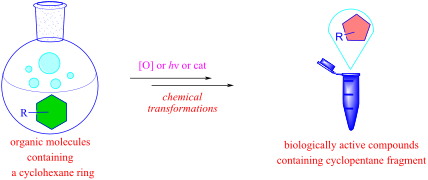
- contraction of six-membered cycles in the synthesis of functionalized cyclopentane/enones, which are biologically active compounds. The main synthetic methods of ring contraction (ozonolysis–aldol condensation, ozonolysis–Dieckmann reaction, Baeyer–Villiger cleavage–Dieckmann reaction) and rearrangements
- cyclohexane/ene ring contraction. The structure of the review includes examples of simple transformations (ozonolysis–aldol condensation, ozonolysis–Dieckmann reaction, and Baeyer–Villiger cleavage–Dieckmann reaction) and rearrangements (photochemical, benzil, semi-pinacol, Wolff, Meinwald, Wagner–Meerwein
- and Favorskii reaction), using oxidants based on thallium and iodine, with a focus on recent works published in the period from 2014 to 2024. Review 1 Recyclization A common method for converting cyclohexene 1 into cyclopentene 2 is the ozonolytic cleavage of the double bond followed by intramolecular


An Fe(II)-catalyzed synthesis of spiro[indoline-3,2'-pyrrolidine] derivatives
Beilstein J. Org. Chem. 2025, 21, 2383–2388, doi:10.3762/bjoc.21.183
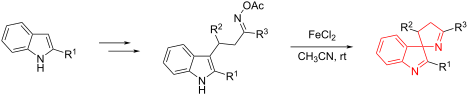
- bond cleavage to generate an N-imidoyl radical intermediate that undergoes intramolecular cyclization to yield the spirocyclic product (Scheme 1, path g) [14]. Notably, iron is known to exhibit similar behavior in single-electron transfer (SET) processes [15][16][17]. In fact, we previously
- pathway (Scheme 4). Initial Fe(II)-mediated reductive cleavage of the N–O bond in the ketoxime acetate generates an iminyl radical. This is followed by a 5-exo-trig cyclization to form a carbon-centered radical. Final single-electron oxidation by Fe(III) delivers the desired spirocyclic product. All




Comparative analysis of complanadine A total syntheses
Beilstein J. Org. Chem. 2025, 21, 2334–2344, doi:10.3762/bjoc.21.178
- TMSN3 recently developed by Xu and co-workers [34]. Mukaiyama conjugate addition between 60 and 61 promoted by Tf2NH followed by a one-pot enol ether hydrolysis gave 62 as a mixture of inconsequential stereoisomers. Subsequent oxidative cleavage of the terminal olefin of 62 using ozonolysis followed by



Recent advances in Norrish–Yang cyclization and dicarbonyl photoredox reactions for natural product synthesis
Beilstein J. Org. Chem. 2025, 21, 2315–2333, doi:10.3762/bjoc.21.177
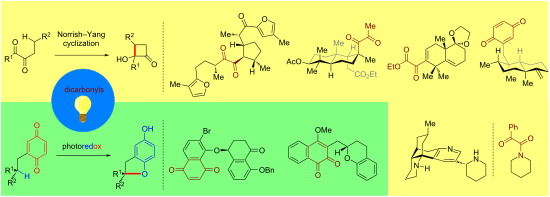
- Norrish–Yang cyclization, followed by a strain-release Pd-catalyzed C–C cleavage/cross-coupling protocol [9][11]; the strategy was subsequently applied to the total synthesis of lycoplatyrine A (89) in 2021 [38]. Isolated by Low’s group [39], lycoplatyrine A (89) belongs to the lycodine-type Lycopodium
- to construct a β-lactam, an α-metallated piperidine equivalent, overcoming poor yields and stereoselectivity in traditional methods. Its palladium-catalyzed cross-coupling with 2-bromolycodine via β-lactam C–C cleavage enabled stereoretentive coupling, efficiently synthesizing lycoplatyrine A and its







Enantioselective radical chemistry: a bright future ahead
Beilstein J. Org. Chem. 2025, 21, 2283–2296, doi:10.3762/bjoc.21.174
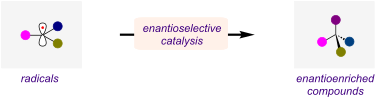
- has been largely supplanted by greener methods employing less-toxic reagents. Using alternative methods, radicals can be generated by hydrogen atom transfer (HAT), resulting in the homolytic cleavage of a carbon–hydrogen bond. Other approaches for radical generation in modern radical transformations


Pathway economy in cyclization of 1,n-enynes
Beilstein J. Org. Chem. 2025, 21, 2260–2282, doi:10.3762/bjoc.21.173
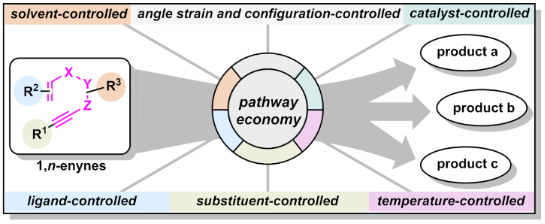
- 60 °C initiated nickel-mediated intramolecular [2 + 2] cycloaddition to form dihydrocyclobuta[c]quinolin-3-one framework 164. Conversely, when the temperature was elevated to 140 °C, thermal ring-expansion of the four-membered intermediate was induced through C–C bond cleavage/reorganization
- cleavage to form the boronated phenanthrene framework 170. It is worth mentioning that a unique skeleton rearrangement, supported by DFT calculations, was proposed in this work, which was unprecedented in BiCl3-promoted cyclization. Conclusion This comprehensive review has systematically delineated the


A chiral LC–MS strategy for stereochemical assignment of natural products sharing a 3-methylpent-4-en-2-ol moiety in their terminal structures
Beilstein J. Org. Chem. 2025, 21, 2243–2249, doi:10.3762/bjoc.21.171
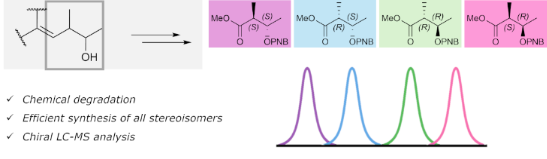
- Discussion Our degradation strategy of natural products bearing an MPO moiety includes (1) acylation of hydroxy group, (2) oxidative cleavage of olefin to generate 3-acyloxy-2-methylbutanoic acid, and (3) its methyl esterification (Scheme 1A). We initially investigated derivatization strategies to enable LC


Electrochemical cyclization of alkynes to construct five-membered nitrogen-heterocyclic rings
Beilstein J. Org. Chem. 2025, 21, 2173–2201, doi:10.3762/bjoc.21.166
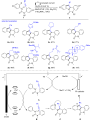
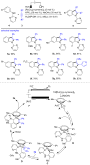
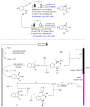
- occurred to give a radical cation PhSeSePh•+ at the anode. The subsequent cleavage of Se–Se bond formed a radical PhSe• and a cation PhSe+. Further additional oxidation of PhSe• yielded another PhSe+, which worked as the major reactive species and quickly added to C≡C in 13a to form intermediate A. Finally








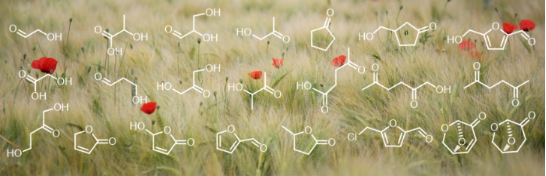
C2 to C6 biobased carbonyl platforms for fine chemistry
Beilstein J. Org. Chem. 2025, 21, 2103–2172, doi:10.3762/bjoc.21.165
- hydrogenation to produce furfuryl alcohol. This latter is a versatile intermediate for the production of resins, coatings, polymers and used as a solvent. It can also be converted into other chemicals through oxidative cleavage, over-reduction and etherification (Scheme 49) [177]. Zhang et al. reported the use
- of the system in favor of meta isomer. Acidic cleavage followed by reductive amination afforded m-xylylenediamine (Scheme 54). Tetrahydrofuran-derived amines were prepared from furfural via a one-pot two-step reaction. The condensation of furfural with ketones over Amberlyst-26 as catalyst produced


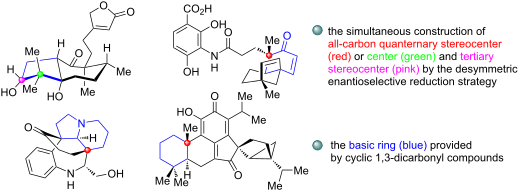
The application of desymmetric enantioselective reduction of cyclic 1,3-dicarbonyl compounds in the total synthesis of terpenoid and alkaloid natural products
Beilstein J. Org. Chem. 2025, 21, 2085–2102, doi:10.3762/bjoc.21.164
- group [35][36][37]. This catalytic system efficiently overcame the challenge and furnished the coupling product 46 in high yield. Oxidative cleavage of the double bond in 46 followed by Mg(II)-mediated chelation-controlled Friedel–Crafts cyclization delivered secondary alcohol 47, which was elaborated
- intramolecular Diels–Alder reaction generated tricyclo[3.2.1.02,7]-octene 113. A two-step transformation including HAT hydrogenation and acetal C–H oxidation with RuCl3/NaIO4, 113 was converted into ketoester 114. The TFA-mediated C13–C15 bond cleavage of 114 proceed smoothly to give ring-opening products, which







Discovery of cytotoxic indolo[1,2-c]quinazoline derivatives through scaffold-based design
Beilstein J. Org. Chem. 2025, 21, 2062–2071, doi:10.3762/bjoc.21.161
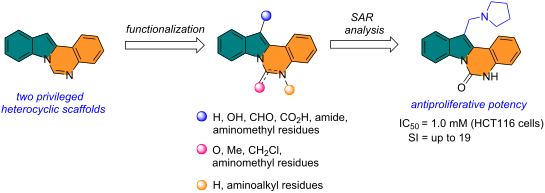
- as the activating agent under standard peptide coupling conditions. Cleavage of the Boc-protecting group with TFA afforded the target 6-oxoindolo[1,2-c]quinazoline-12-carboxamides 7a–c (Scheme 2). 3-Aminomethylindole derivatives represent a well-established class of compounds with diverse biological


Bioinspired total syntheses of natural products: a personal adventure
Beilstein J. Org. Chem. 2025, 21, 2048–2061, doi:10.3762/bjoc.21.160
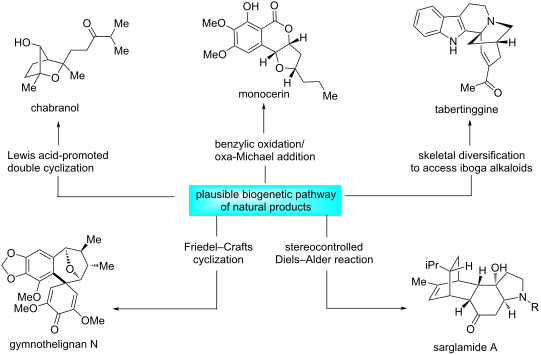
- propose the biosynthetic pathway, which has not yet been reported in Duh’s isolation report (Scheme 1a). In our proposal, the linear sesquiterpenoid trans-nerolidol (1) with a chiral tertiary alcohol undergoes dihydroxylation to generate triol 2, which further proceeds a C–C bond cleavage to afford
- evidences of chemical transformations. Thus, a bioinspired total synthesis was investigated (Scheme 1b). Synthetically, we did not start from trans-nerolidol (1) to construct a C–C bond cleavage. Instead, a convergent coupling approach was selected to quickly access the aldehyde precursor. Phenyl sulfide 5
- unreacted, which released the secondary alcohol, followed by BCl3-promoted selective cleavage of the isopropyl and one methyl protection ultimately furnished thenatural product fusarentin 6-methyl ether. With fusarentin 6-methyl ether in hand, we explored the bioinspired oxidation/oxa-Michael addition. This



Understanding the origin of stereoselectivity in the photochemical denitrogenation of 2,3-diazabicyclo[2.2.1]heptene and its derivatives with non-adiabatic molecular dynamics
Beilstein J. Org. Chem. 2025, 21, 2007–2020, doi:10.3762/bjoc.21.156
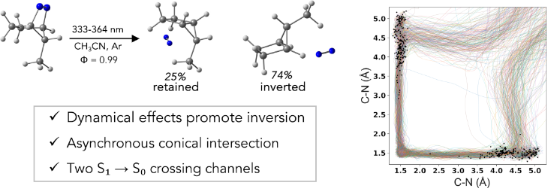
- calculations have provided valuable insights into the photochemical stereoselectivities of cyclic azoalkenes. In 1998, Yamamoto and co-workers investigated the reaction paths for α-C–N and β-C–C bond cleavage during the direct and sensitized photolysis of DBH [81]. The minimum energy geometries in S0, S1, T1
- the denitrogenation mechanism of 7,7‐diethoxy‐2,3‐diazabicyclo[2.2.1]hept‐2‐ene, showing that a stepwise C–N-bond cleavage is energetically favored using broken‐symmetry (BS)‐(U)CCSD/6‐31G(d) and suggested that an equatorial conformation of the diazinyl diradical leads to the formation of the inverted
- favorable. All MECI structures show partial stereochemical inversion. Following the initial σCN-bond cleavage, the carbon atom still bonded to N₂ begins to move towards inversion, indicating that dynamic effects help promote the stereoselective inversion. Conclusion We used multiconfigurational quantum


Measuring the stereogenic remoteness in non-central chirality: a stereocontrol connectivity index for asymmetric reactions
Beilstein J. Org. Chem. 2025, 21, 1995–2006, doi:10.3762/bjoc.21.155
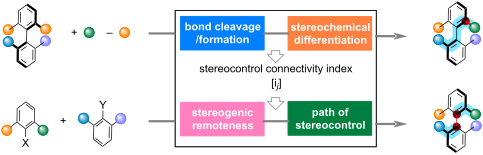
- chirality, the pairs of substituents (a and b, c and d) are separated in space because the stereogenic scaffolds span multiple atoms. Consequently, bond cleavage and formation occur at positions that are distant from the stereogenic elements and remote from the actual points of differentiation among the
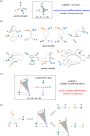
- index (Scheme 2). A detailed process for assigning the index is shown in Scheme 2A for asymmetric hydrogenation of 2-butanone [1]. The atoms involved in bond cleavage and bond formation are highlighted in orange color. The atoms responsible for assignment of the stereochemical configuration of the
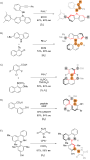
- rules, and the set(s) that do not involve bond formation and bond cleavage are used to identify the points of stereochemical differentiation. Different stereocontrol strategies could be employed to achieve asymmetric synthesis of axially chiral biaryls (Scheme 3). The stereocontrol connectivity indices



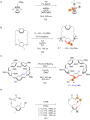
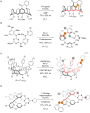
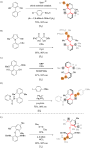

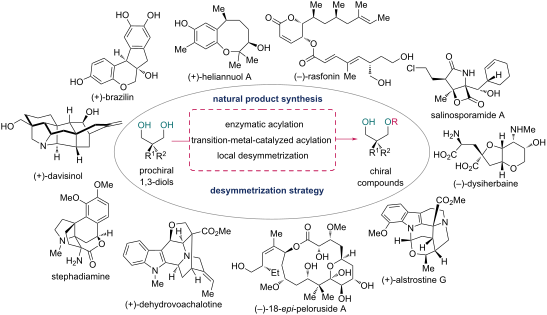
Enantioselective desymmetrization strategy of prochiral 1,3-diols in natural product synthesis
Beilstein J. Org. Chem. 2025, 21, 1932–1963, doi:10.3762/bjoc.21.151
- hydroxy group and auxiliary cleavage, thioester 92 was obtained. Five additional steps converted 92 into lactone 93. Oxidative cleavage of the diol group in 93 and following coupling with fragment 94 gave compound 95, which was further elaborated to leustroducsin B (96) in 15 steps. In 2013, Nanda and co
- . Epoxidation of 131 followed by methylation generated epoxide 132. Construction of the lactone moiety commenced with the oxidative cleavage of the double bond, and the resulting carboxylic acid underwent intramolecular cyclization in the presence of BF3·Et2O to give lactone 133. Subsequent hydride reduction
- monobenzoate 142 in 94% yield along with 4% yield of its diastereomer (dr = 24:1). Following a four-step conversion of 142 to epoxide 143, reductive cleavage produced a diol intermediate, which was subjected to chemoselective glycosylation with compound 144 to provide compound 145. After a four-step












Photoswitches beyond azobenzene: a beginner’s guide
Beilstein J. Org. Chem. 2025, 21, 1808–1853, doi:10.3762/bjoc.21.143