

Search results
Search for "tetrahydroisoquinoline" in Full Text gives 45 result(s) in Beilstein Journal of Organic Chemistry.
Synthesis of heterocycles based on azomethine ylides from α-amino acids (or amines) and carbonyl compounds
- Ekaterina V. Berezhnaya,
- Alexander I. Ponyaev,
- Vitali M. Boitsov and
- Alexander V. Stepakov
Beilstein J. Org. Chem. 2026, 22, 705–741, doi:10.3762/bjoc.22.55
- , pipecolic acid, or 1,2,3,4-tetrahydroisoquinoline-3-carboxylic acid) 99 (100) to N-propargylmaleimide (98) was described. The reaction yielded a mixture of endo- and exo-diastereomers 101 and 102 in overall yields of up to 69% (Scheme 37). In [83], Dhara and co-workers developed a simple strategy for the

Graphical Abstract

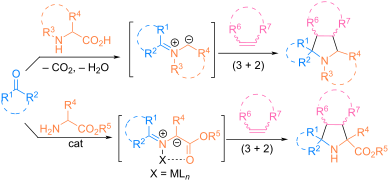
Scheme 1: Strategies for the preparation of pyrrolidine derivatives by (3 + 2) cycloaddition of azomethine yl...

Scheme 2: (3 + 2) Cycloaddition of iminoesters to dimethylmaleate.

Scheme 3: Cycloaddition of 1 with various dipolarophiles catalyzed by Ag(I)-L1.

Scheme 4: Cycloaddition of 1 with tert-butyl acrylate catalyzed by Ag(I)-L2.

Scheme 5: Cycloaddition of 1 with dimethyl maleate catalyzed by Cu(I)-L3.

Scheme 6: Cycloaddition of 1 with alkenes catalyzed by Zn(II)-t-Bu-BOX (L4).

Scheme 7: (3 + 2) Cycloaddition of iminoesters to acrylates.

Scheme 8: Catalytic double (3 + 2) cycloaddition to form pyrrolizidine derivatives.

Scheme 9: (3 + 2) Cycloaddition of iminoethers to vinyl phenyl sulfone.

Scheme 10: Regiodivergent and enantioselective synthesis of pyrrolidines 16 and 17.

Scheme 11: Substrate-controlled regioreversible "normal" and "incomplete" 1,3-dipolar cycloaddition.

Scheme 12: Enantioselective synthesis of exo-/endo-pyrrolidines.

Scheme 13: (3 + 2) Cycloaddition of iminoethers 21 to dipolarophiles 22–24.

Scheme 14: Synthesis of bicyclic pyrrolidines 29 from cyclopentene-1,3-diones.

Scheme 15: (3 + 2) Cycloaddition of aldimine esters and allyl alcohols using copper-ruthenium catalysis.

Scheme 16: Synthesis of 3,3-difluoro- and 3,3,4-trifluoropyrrolidine derivatives.

Scheme 17: Use of iminoesters from natural compounds and pharmaceuticals for reactions with 1,1-difluoro- and ...

Scheme 18: Reaction of iminoesters with 1,3-enynes.

Scheme 19: Synthesis of pyrrolidines from iminoesters and vinyl(hetero)arenes.

Scheme 20: Synthesis of exo-pyrrolidines 42 and 43.

Scheme 21: Enantioselective synthesis of heteroarylpyrrolidines 45 and 46.

Scheme 22: Catalytic reaction of (3 + 2) cycloaddition of imines 12 to benzofulvenes 47.

Scheme 23: Fullerene as a dipolarophile in (3 + 2) cycloaddition reactions.

Scheme 24: Asymmetric synthesis of optically active tetrasubstituted pyrrolidines 54.

Scheme 25: (3 + 2) Cycloaddition reaction of imines 55 and α,β-unsaturated aldehydes.

Scheme 26: Probable mechanism of enantioselective (3 + 2) cycloaddition of azomethine ylides to α,β-unsaturate...

Scheme 27: Cycloaddition between iminoesters 12 and sulfinylimines 58.

Scheme 28: (3 + 2) Cycloaddition between triarylideneacetylacetone and azomethine ylides in the presence of ti...

Scheme 29: Stereoselective synthesis of decahydropyrrolo[2,1,5-cd]indolizine 66.

Scheme 30: Synthesis of policyclic derivatives 71 and 72.

Scheme 31: Catalytic аsymmetric (3 + 2) сycloaddition of 2-pyridylimines with N-methylmaleimide.

Scheme 32: Catalytic аsymmetric (3 + 2) сycloaddition of 2-pyridylimines 1 with other dipolarophiles.

Scheme 33: Enantioselective (3 + 2) cycloaddition of silylimine with various dipolarophiles.

Scheme 34: Proposed mechanism of formation of pyrrolidines 78.

Scheme 35: Synthesis of polyheterocyclic pyrrolidines 82–91.

Scheme 36: Synthesis of spirocyclic (95) and fused (96) pyrrolidines.

Scheme 37: (3 + 2) Cycloaddition involving aromatic aldehydes 97, N-propargylmaleimide (98) and α-amino acids ...

Scheme 38: Synthesis of pyrrolizidines 106 and by-product 107.

Scheme 39: Iridium-catalyzed three-component cascade (3 + 2) cycloaddition.

Scheme 40: Intramolecular (3 + 2) cycloaddition of N-alkenylpyrrole-2-carbaldehyde 110 and α-amino acids.

Scheme 41: Three-component (3 + 2) cycloaddition involving fullerene.

Scheme 42: Four-component stereoselective one-pot synthesis of spiro-cycloadducts 119–122.

Scheme 43: Reactions of azomethine ylide 123 with cyclopropenes.

Scheme 44: Three-component reactions involving ninhydrin, cyclopropenes and acyclic α-amino acids.

Scheme 45: Reaction of cyclopropenes 138 with the N-protonated form of Ruhemann purple 137.

Scheme 46: Enantioselective (3 + 2) cycloaddition of azomethine ylides generated in situ from isatins and amin...

Scheme 47: (3 + 2) Cycloaddition of cyclohexenone 143, isatins 140 and aminomalonic diesters 141, catalyzed by...

Scheme 48: Enantioselective (3 + 2) cycloaddition of azomethine ylides generated in situ from isatins and amin...

Scheme 49: Enantioselective (3 + 2) cycloaddition of azomethine ylides generated in situ from isatins and benz...

Scheme 50: (3 + 2) Cycloaddition involving isatins, azetidine-2-carboxylic acid, maleimides or itaconimides.

Scheme 51: (3 + 2) Cycloaddition involving isatins, amino acids and tetraethylvinylidenebis(phosphonate).

Scheme 52: Synthesis of spirooxindoles 156 from triarylideneacetylacetones 155.

Scheme 53: Synthesis of spirooxindole derivatives 157–160.

Scheme 54: Synthesis of hybrid spiro-heterocycles 164–166.

Scheme 55: Formation of azomethine ylide from isatin and sarcosine.

Scheme 56: (3 + 2) Cycloaddition involving isatins, amino acids and trans-3-benzoylacrylic acid.

Scheme 57: Regioselective synthesis of spirooxindoles 170.

Scheme 58: Synthesis of hybrid spiro-heterocycles 86.

Scheme 59: (3 + 2) Cycloaddition involving acenaphthenequinones, amino acids and cyclopropenes.

Scheme 60: Synthesis of hybrid glyco-3-nitrochromane cycloadducts 179.

Scheme 61: Synthesis of spiro[indenoquinoxaline-(thia)pyrrolizidines] 90a.

Scheme 62: Three-component reactions of cyclopropenes, 11H-indeno[1,2-b]quinoxalin-11-onesand α-amino acids, s...

Scheme 63: Synthesis of hybrid glyco-3-nitrochromane cycloadducts 92.

Scheme 64: (3 + 2) Cycloaddition of 11H-benzo[4,5]imidazo[1,2-a]indol-11-one (189) with cyclopropenes and male...

Scheme 65: Diastereoselective synthesis of spiro derivatives of barbituric acid from alloxan 193, α-amino acid...

Scheme 66: Probable mechanism of formation of azomethine ylide from alloxan and ʟ-proline.

Scheme 67: Three-component reactions involving tryptanthrin 196, α-amino acids and cyclopropenes.
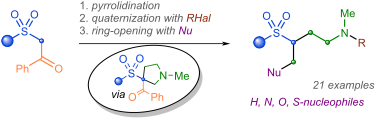
Dialkylaminoalkylation of β-ketosulfones via ring-opening of 3-sulfonylpyrrolidines
- Evgeny M. Buev,
- Alexander V. Pavlushin,
- Vladimir S. Moshkin and
- Vyacheslav Y. Sosnovskikh
Beilstein J. Org. Chem. 2026, 22, 383–389, doi:10.3762/bjoc.22.26
- , piperidine, morpholine, or 1,2,3,4-tetrahydroisoquinoline (THIQ). A special curiosity was associated with the use of mercaptans as nucleophiles for the synthesis of aminobutanes 4 containing both sulfide and sulfone moieties. To our delight, an excess of butylmercaptan or thiophenol readily afforded products

Graphical Abstract

Figure 1: Valuable amino sulfonic acids and aminosulfones.
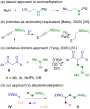
Figure 2: Selected approaches to aminoethylation.

Scheme 1: Pyrrolidination of β-ketosulfones. Reaction conditions: β-ketosulfones (4.0 mmol), sarcosine (1.2 e...

Scheme 2: Scope of the reaction. Reaction conditions: sulfone 1 (1.0 mmol), sarcosine (1.2 equiv), (CH2O)n (2...

Scheme 3: The presumable mechanism of the domino process.

Scheme 4: Reductive elimination of the nucleophiles.
Total synthesis of natural products based on hydrogenation of aromatic rings
- Haoxiang Wu and
- Xiangbing Qi
Beilstein J. Org. Chem. 2026, 22, 88–122, doi:10.3762/bjoc.22.4
- Magnus, 2005 Tetrahydroisoquinoline alkaloids have long captivated chemical and biological interest; among them, lemonomycin and renieramycins (A–S) are especially notable for their potent antitumor and antimicrobial activities [84]. In 2005, Magnus and co-worker achieved the total synthesis of two bis
- -tetrahydroisoquinoline natural products, (±)-lemonomycinone and (±)-renieramycin, featuring as key steps a dearomative nucleophilic addition and diastereoselective hydrogenation of a dihydroisoquinoline (Scheme 16) [85]. Starting from pentasubstituted isoquinoline 117, the authors utilized a dearomative nucleophilic

Graphical Abstract

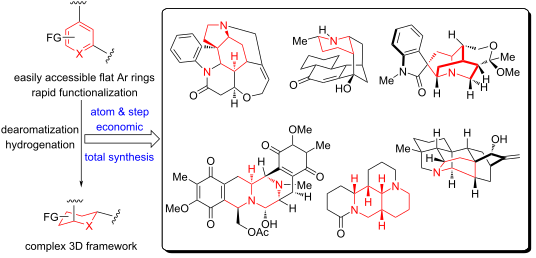
Scheme 1: The association between dearomatization and natural product synthesis.

Scheme 2: Key challenges in hydrogenation of aromatic rings.
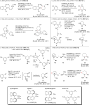
Scheme 3: Hydrogenation of heterocyclic aromatic rings.
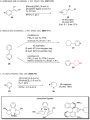
Scheme 4: Hydrogenation of the carbocyclic aromatic rings.
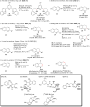
Scheme 5: Hydrogenation of the heterocycle part in bicyclic aromatic rings.
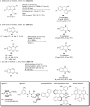
Scheme 6: Hydrogenation of the heterocycle part in bicyclic aromatic rings.
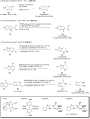
Scheme 7: Hydrogenation of benzofuran, indole, and their analogues.
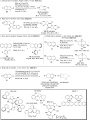
Scheme 8: Hydrogenation of benzofuran, indole, and their analogues.

Scheme 9: Total synthesis of (±)-keramaphidin B by Baldwin and co-workers.

Scheme 10: Total synthesis of (±)-LSD by Vollhardt and co-workers.

Scheme 11: Total synthesis of (±)-dihydrolysergic acid by Boger and co-workers.

Scheme 12: Total synthesis of (±)-lysergic acid by Smith and co-workers.

Scheme 13: Hydrogenation of (−)-tabersonine to (−)-decahydrotabersonine by Catherine Dacquet and co-workers.

Scheme 14: Total synthesis of (±)-nominine by Natsume and co-workers.
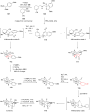
Scheme 15: Total synthesis of (+)-nominine by Gin and co-workers.

Scheme 16: Total synthesis of (±)-lemonomycinone and (±)-renieramycin by Magnus.

Scheme 17: Total synthesis of GB13 by Sarpong and co-workers.

Scheme 18: Total synthesis of GB13 by Shenvi and co-workers.

Scheme 19: Total synthesis of (±)-corynoxine and (±)-corynoxine B by Xia and co-workers.
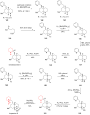
Scheme 20: Total synthesis of (+)-serratezomine E and the putative structure of huperzine N by Bonjoch and co-...

Scheme 21: Total synthesis of (±)-serralongamine A and the revised structure of huperzine N and N-epi-huperzin...

Scheme 22: Early attempts to indenopiperidine core.

Scheme 23: Homogeneous hydrogenation and completion of the synthesis.
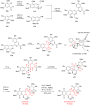
Scheme 24: Total synthesis of jorunnamycin A and jorumycin by Stoltz and co-workers.

Scheme 25: Early attempt towards (−)-finerenone by Aggarwal and co-workers.

Scheme 26: Enantioselective synthesis towards (−)-finerenone.

Scheme 27: Total synthesis of (+)-N-methylaspidospermidine by Smith, Grigolo and co-workers.

Scheme 28: Dearomatization approach towards matrine-type alkaloids.

Scheme 29: Asymmetric total synthesis to (−)-senepodine F via an asymmetric hydrogenation of pyridine.

Scheme 30: Selective hydrogenation of indole derivatives and application.
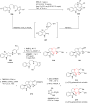
Scheme 31: Synthetic approaches to the oxindole alkaloids by Qi and co-workers.

Scheme 32: Total synthesis of annotinolide B by Smith and co-workers.
Recent advances in the electrochemical synthesis of organophosphorus compounds
- Babak Kaboudin,
- Milad Behroozi,
- Sepideh Sadighi and
- Fatemeh Asgharzadeh
Beilstein J. Org. Chem. 2025, 21, 770–797, doi:10.3762/bjoc.21.61
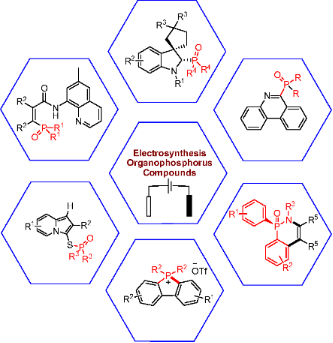
- detected when HP(O)(OEt)2 was used as the starting material. Electrosynthesis processes of tetrahydroisoquinoline usually have a lower yield in the final product due to two electroactive positions in the molecule. Sengmany et al. [56] reported an electrochemical C–P bond formation of N-Boc
- -tetrahydroisoquinoline with dialkyl phosphites for synthesizing 1-amino phosphonates. The reaction was carried out at a constant current using graphite electrodes in both the anode and cathode. The optimal current intensity was observed when a 10 mA current was applied to the system. At higher current intensities, the
- did not occur with diphenyl phosphite, which can be attributed to its oxidizability. Unlike other phosphites, diphenyl phosphite is more easily oxidized than THIQ-N-Boc, preventing the coupling reaction. The reaction proceeded by coupling a cation intermediate of N-Boc-tetrahydroisoquinoline at the

Graphical Abstract

Scheme 1: Electrosynthesis of phenanthridine phosphine oxides.

Scheme 2: Electrosynthesis of 1-aminoalkylphosphine oxides.

Scheme 3: Various electrochemical C–P coupling reactions.

Scheme 4: Electrochemical C–P coupling reaction of indolines.

Scheme 5: Electrochemical C–P coupling reaction of ferrocene.

Scheme 6: Electrochemical C–P coupling reaction of acridines with phosphites.

Scheme 7: Electrochemical C–P coupling reaction of alkenes.

Scheme 8: Electrochemical C–P coupling reaction of arenes in a flow system.

Scheme 9: Electrochemical C–P coupling reaction of heteroarenes.

Scheme 10: Electrochemical C–P coupling reaction of thiazoles.

Scheme 11: Electrochemical C–P coupling reaction of indole derivatives.

Scheme 12: Electrosynthesis of 1-amino phosphonates.

Scheme 13: Electrochemical C–P coupling reaction of aryl and vinyl bromides.

Scheme 14: Electrochemical C–P coupling reaction of phenylpyridine with dialkyl phosphonates in the presence o...

Scheme 15: Electrochemical P–C bond formation of amides.

Scheme 16: Electrochemical synthesis of α-hydroxy phosphine oxides.

Scheme 17: Electrochemical synthesis of π-conjugated phosphonium salts.

Scheme 18: Electrochemical phosphorylation of indoles.

Scheme 19: Electrochemical synthesis of phosphorylated propargyl alcohols.

Scheme 20: Electrochemical synthesis of phosphoramidates.

Scheme 21: Electrochemical reaction of carbazole with diphenylphosphine.

Scheme 22: Electrochemical P–N coupling of carbazole with phosphine oxides.

Scheme 23: Electrochemical P–N coupling of indoles with a trialkyl phosphite.

Scheme 24: Electrochemical synthesis of iminophosphoranes.

Scheme 25: Electrochemical P–O coupling of phenols with dialkyl phosphonate.

Scheme 26: Electrochemical P–O coupling of alcohols with diphenylphosphine.

Scheme 27: Electrochemical P–S coupling of thiols with dialkylphosphines.

Scheme 28: Electrochemical thiophosphorylation of indolizines.

Scheme 29: Electrosynthesis of S-heteroaryl phosphorothioates.

Scheme 30: Electrochemical phosphorylation reactions.

Scheme 31: Electrochemical P–Se formation.

Scheme 32: Electrochemical selenation/halogenation of alkynyl phosphonates.

Scheme 33: Electrochemical enantioselective aryl C–H bond activation.
Streamlined modular synthesis of saframycin substructure via copper-catalyzed three-component assembly and gold-promoted 6-endo cyclization
- Asahi Kanno,
- Ryo Tanifuji,
- Satoshi Yoshida,
- Sota Sato,
- Saori Maki-Yonekura,
- Kiyofumi Takaba,
- Jungmin Kang,
- Kensuke Tono,
- Koji Yonekura and
- Hiroki Oguri
Beilstein J. Org. Chem. 2025, 21, 226–233, doi:10.3762/bjoc.21.14
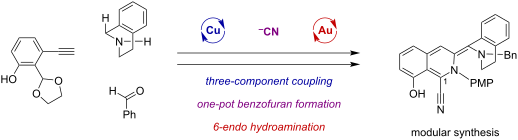
- coupling with gold(I)-mediated 6-endo cyclization streamlines the rapid and modular assembly of the substructure of bis-tetrahydroisoquinoline (THIQ) alkaloids. The design of the key synthetic intermediate bearing a 2,3-diaminobenzofuran moiety allows both gold(I)-mediated regiocontrolled 6-endo
- involvement of a fluorescent intermediate in the cascade synthetic process. Keywords: cascade reactions; copper-catalyzed three-component coupling; gold-mediated 6-endo hydroamination; tandem cyclizations; tetrahydroisoquinoline alkaloids; Introduction The bis-tetrahydroisoquinoline (THIQ) alkaloid family
- avenues for the development of fluorescent probes based on the bis-THIQ alkaloidal scaffold. Further efforts to develop a concise and modular synthetic process for saframycins are currently underway. Representative bis-tetrahydroisoquinoline (THIQ) alkaloids and their analogues. Oxygen atoms on both the A

Graphical Abstract

Figure 1: Representative bis-tetrahydroisoquinoline (THIQ) alkaloids and their analogues. Oxygen atoms on bot...
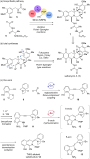
Scheme 1: Strategies for the construction of the pentacyclic core scaffold of saframycin A (1). (a) Biosynthe...

Scheme 2: Streamlined synthesis of the substructure 14 for saframycins 1 within just four steps in overall 29...

Figure 2: UV–vis absorption (gray solid line), the emission spectrum (blue solid line), and the corresponding...
One-pot Ugi-azide and Heck reactions for the synthesis of heterocyclic systems containing tetrazole and 1,2,3,4-tetrahydroisoquinoline
- Jiawei Niu,
- Yuhui Wang,
- Shenghu Yan,
- Yue Zhang,
- Xiaoming Ma,
- Qiang Zhang and
- Wei Zhang
Beilstein J. Org. Chem. 2024, 20, 912–920, doi:10.3762/bjoc.20.81
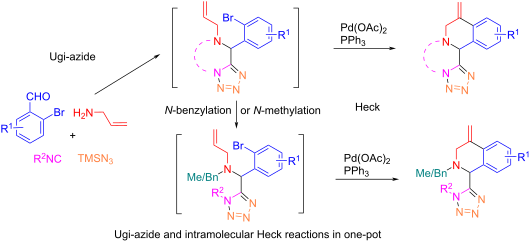
- Chemistry and Center for Green Chemistry, University of Massachusetts Boston, 100 Morrissey Blvd, Boston, MA 02125, USA 10.3762/bjoc.20.81 Abstract A new method for the synthesis of heterocyclic systems containing tetrazole and tetrahydroisoquinoline is developed via the performance of one-pot Ugi-azide
- and Heck cyclization reactions. The integration of the multicomponent and post-condensation reactions in one-pot maximizes the pot-, atom-, and step-economy (PASE). Keywords: Heck reaction; one-pot; tetrahydroisoquinoline; tetrazolo-pyrazino[2,1-a]isoquinolin-6(5H)-ones; tetrazole; Ugi-azide reaction
- [10][11] (Figure 1). The tetrazole ring can also be found in functional materials for photography, imaging, and military applications [12][13][14][15][16][17]. The hydroisoquinoline core, such as 1,2,3,4-tetrahydroisoquinoline and pyrazino[2,1-a]isoquinolinone, is also a privileged heterocycle which

Graphical Abstract

Figure 1: Representative bioactive tetrazole- and tetrahydroisoquinoline-containing compounds.

Scheme 1: The Ugi and Ugi-azide reactions.

Scheme 2: Ugi-azide and post-condensation reactions for the synthesis of various heterocyclic scaffolds.

Scheme 3: One-pot synthesis of tetrazolyl-1,2,3,4-tetrahydroisoquinoline.

Scheme 4: One-pot synthesis of tetrazolo-pyrazino[2,1-a]isoquinolin-6(5H)-ones 6.

Scheme 5: One-pot synthesis for tetrazolyl-1,2,3,4-tetrahydroisoquinolines 8.

Scheme 6: Gram-scale two-step one-pot synthesis of 6c.

Figure 2: ORTEP diagrams of compound 6d (left) [CCDC: 2164364] and 8c (right) [CCDC: 2321622].
Switchable molecular tweezers: design and applications
- Pablo Msellem,
- Maksym Dekthiarenko,
- Nihal Hadj Seyd and
- Guillaume Vives
Beilstein J. Org. Chem. 2024, 20, 504–539, doi:10.3762/bjoc.20.45
- proximity of the metallic centers which allows MMLCT transitions. These properties have been used to generate reactive oxygen species (ROS) and efficient photocatalytic oxidative cyanation of N-phenyl-1,2,3,4-tetrahydroisoquinoline. The photocatalytic activity of the catalyst could be allosterically imbibed

Graphical Abstract

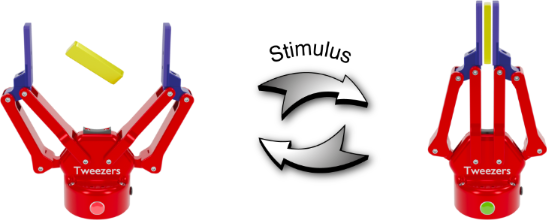
Figure 1: Principle of switchable molecular tweezers.

Figure 2: Principle of pH-switchable molecular tweezers 1 [19].

Figure 3: a) pH-Switchable tweezers 2 substituted with alkyl chains as switchable lipids. b) Schematic depict...

Figure 4: Modification of spectral properties of 3 by controlled induction of Pt–Pt interactions.

Figure 5: Conformational switching of di(hydroxyphenyl)pyrimidine-based tweezer 4 upon alkylation or fluoride...

Figure 6: Hydrazone-based pH-responsive tweezers 5 for mesogenic modulation.

Figure 7: pH-Switchable molecular tweezers 6 bearing acridinium moieties.

Figure 8: a) Terpyridine and pyridine-hydrazone-pyridine analogs molecular tweezers and b) extended pyridine ...

Figure 9: Terpyridine-based molecular tweezers with M–salphen arms and their field of application. Figure 9 was adapt...

Figure 10: a) Terpyridine-based molecular tweezers for diphosphate recognition [48]; b) bishelicene chiroptical te...

Figure 11: Terpyridine-based molecular tweezers with allosteric cooperative binding.

Figure 12: Terpyridine-based molecular tweezers presenting closed by default conformation.

Figure 13: Pyridine-pyrimidine-pyridine-based molecular tweezers.

Figure 14: Coordination-responsive molecular tweezers based on nitrogen-containing ligands.

Figure 15: Molecular tweezers exploiting the remote bipyridine or pyridine binding to trigger the conformation...

Figure 16: Bipyridine-based molecular tweezers exploiting the direct s-trans to s-cis-switching for a) anion b...

Figure 17: a) Podand-based molecular tweezers [66,67]. b) Application of tweezers 32 for the catalytic allosteric reg...

Figure 18: Anion-triggered molecular tweezers based on calix[4]pyrrole.

Figure 19: Anion-triggered molecular tweezers.

Figure 20: a) Principle of the weak link approach (WLA) developed by Mirkin and its application to b) symmetri...

Figure 21: Molecular tweezers as allosteric catalyst in asymmetric epoxide opening [80].

Figure 22: Allosteric regulation of catalytic activity in ring-opening polymerization with double tweezers 41.

Figure 23: a) Conformational switching of 42 by intramolecular –S–S– bridge formation. b) Shift of conformatio...

Figure 24: a) Redox-active glycoluril-TTF tweezers 44. b) Mechanism of stepwise oxidation of said tweezers wit...

Figure 25: Mechanism of formation of the mixed-valence dimers of tweezers 45.

Figure 26: Mechanism of carbohydrate liberation upon redox-mediated conformation switching of 46.

Figure 27: a) The encapsulation properties of 47 as well as the DCTNF release process from its host–guest comp...

Figure 28: Redox-active bipyridinium-based tweezers. a) With a ferrocenyl hinge 49, b) with a propyl hinge 50 ...

Figure 29: Redox-active calix[4]arene porphyrin molecular tweezers.

Figure 30: a) Mechanism of the three orthogonal stimuli. b) Cubic scheme showing the eight different states of ...

Figure 31: Redox-controlled molecular gripper based on a diquinone resorcin[4]arene.
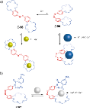
Figure 32: a) Shinkai's butterfly tweezers and their different host–guest properties depending on the isomer. ...

Figure 33: Cyclam-tethered tweezers and their different host–guest complexes depending on their configuration.

Figure 34: Azobenzene-based catalytic tweezers.

Figure 35: Photoswitchable PIEZO channel mimic.

Figure 36: Stilbene-based porphyrin tweezers for fullerene recognition.

Figure 37: Stiff-stilbene-based tweezers with urea or thiourea functional units for a) anion binding, b) anion...

Figure 38: Feringa’s photoswitchable organocatalyst (a) and different catalyzed reactions with that system (b)....

Figure 39: a) Irie and Takeshita’s thioindigo-based molecular tweezers. b) Family of hemithioindigo-based mole...

Figure 40: Dithienylethylene crown ether-bearing molecular tweezers reported by Irie and co-workers.
Facile and diastereoselective arylation of the privileged 1,4-dihydroisoquinolin-3(2H)-one scaffold
- Dmitry Dar’in,
- Grigory Kantin,
- Alexander Bunev and
- Mikhail Krasavin
Beilstein J. Org. Chem. 2022, 18, 1070–1078, doi:10.3762/bjoc.18.109
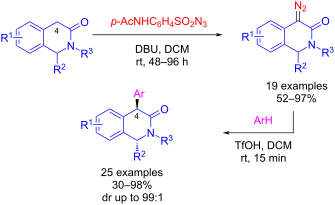
- cytotoxic agents. Keywords: 1,4-dihydroisoquinol-3-one; heterocyclic diazo compounds; hydroarylation; Regitz diazo transfer; triflic acid; Introduction Besides being derivatives of (or a precursor to) the 1,2,3,4-tetrahydroisoquinoline core which itself bears a special significance from the standpoint of

Graphical Abstract

Figure 1: Diverse bioactive compounds based on the privileged 1,4-DHIQ scaffold.

Figure 2: Strategy investigated in this work.
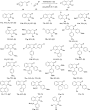
Scheme 1: Preparation of 3(2H)-isoquinolones 11. aObtained as a 10:1 mixture of regioisomers; purified by cry...

Scheme 2: Preparation of 4-diazo-3(2H)-isoquinolones 10. aConfirmed by single-crystal X-ray crystallography (...
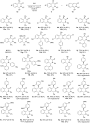
Scheme 3: TfOH-promoted arylation of diazo substrates 10. aStructure confirmed by single-crystal X-ray analys...

Scheme 4: Unexpected outcome of the TfOH-promoted arylation of 10a with N-formyl-N-methylaniline giving rise ...

Scheme 5: Plausible mechanism for the conversion of diazo substrates 10 to 4-aryl products 9 (shown for ArH =...
Chemistry of polyhalogenated nitrobutadienes, 17: Efficient synthesis of persubstituted chloroquinolinyl-1H-pyrazoles and evaluation of their antimalarial, anti-SARS-CoV-2, antibacterial, and cytotoxic activities
- Viktor A. Zapol’skii,
- Isabell Berneburg,
- Ursula Bilitewski,
- Melissa Dillenberger,
- Katja Becker,
- Stefan Jungwirth,
- Aditya Shekhar,
- Bastian Krueger and
- Dieter E. Kaufmann
Beilstein J. Org. Chem. 2022, 18, 524–532, doi:10.3762/bjoc.18.54
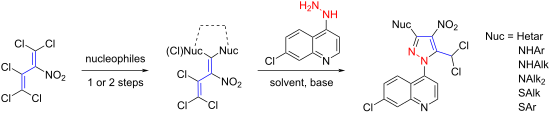
- -hydrazinylquinoline. Thus, the reaction of compound 2c with methylamine, 1,2,3,4-tetrahydroisoquinoline, 1-methyl-1,2,3,4-tetrahydroisoquinoline, (2-fluorophenyl)methylamine, and 5-methylisoxazolyl-3-amine proceeded smoothly under mild conditions (methanol, 0 °C to rt), similarly to the previously obtained dienes 4b

Graphical Abstract

Figure 1: The structures of chloroquine, hydroxychloroquine, and amodiaquine.

Scheme 1: Synthesis of 3-azolylpyrazoles 3a–c.

Scheme 2: Assumed mechanism for the formation of 1H-pyrazoles 3a–c.

Scheme 3: Synthesis of 3-aminopyrazoles 5b–k and 5-aminopyrazoles 5a and 5l–o.

Scheme 4: Orientation of nucleophilic attack of 7-chloro-4-hydrazinylquinoline on nitrobutadienes 4.

Scheme 5: Synthesis of oxazolidine 6 and pyrazole 7.

Scheme 6: A plausible mechanism for the formation of pyrazole 7.

Scheme 7: Synthesis of pyrazoles 9 and sulfoxide 10d.

Scheme 8: Synthesis of pyrazole 11.
Recent advances and perspectives in ruthenium-catalyzed cyanation reactions
- Thaipparambil Aneeja,
- Cheriya Mukkolakkal Abdulla Afsina,
- Padinjare Veetil Saranya and
- Gopinathan Anilkumar
Beilstein J. Org. Chem. 2022, 18, 37–52, doi:10.3762/bjoc.18.4
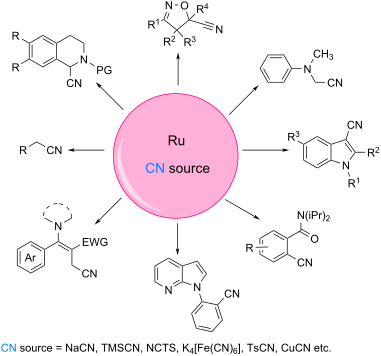
- such as piperidine, tetrahydroisoquinoline derivatives, and pyrrolidine were also tolerated well in this reaction. The use of the non-toxic and inexpensive acetone cyanohydrin makes this method more advantageous compared to the known methods. 2 Cyanation of arenes and heteroarenes 2.1 Cyanation of

Graphical Abstract

Scheme 1: Starch-immobilized ruthenium trichloride-catalyzed cyanation of tertiary amines.

Scheme 2: Proposed mechanism for the cyanation of tertiary amines using starch-immobilized ruthenium trichlor...

Scheme 3: Cyanation of tertiary amines using heterogeneous Ru/C catalyst.

Scheme 4: Proposed mechanism for cyanation of tertiary amines using a heterogeneous Ru/C catalyst.

Scheme 5: Ruthenium-carbamato complex-catalyzed oxidative cyanation of tertiary amines.

Scheme 6: Cyanation of tertiary amines using immobilized MCM-41-2N-RuCl3 as the catalyst.

Scheme 7: Cyanation of tertiary amines using RuCl3·nH2O as the catalyst and molecular oxygen as oxidant.

Scheme 8: RuCl3-catalyzed cyanation of tertiary amines using NaCN/HCN and H2O2 as oxidant.

Scheme 9: Proposed mechanism for the ruthenium-catalyzed oxidative cyanation using H2O2.

Scheme 10: Proposed mechanism for the ruthenium-catalyzed aerobic oxidative cyanation.

Scheme 11: RuCl3-catalyzed oxidative cyanation of tertiary amines using acetone cyanohydrin as the cyanating a...

Scheme 12: Cyanation of indoles using K4[Fe(CN)6] as cyano source and Ru(III)-exchanged NaY zeolite (RuY) as c...

Scheme 13: Cyanation of arenes and heteroarenes using a ruthenium(II) catalyst and N-cyano-N-phenyl-p-toluenes...

Scheme 14: Proposed mechanism for the cyanation of arenes and heteroarenes using ruthenium(II) as catalyst and...

Scheme 15: Synthesis of N-(2-cyanoaryl)-7-azaindoles.

Figure 1: Structure of the TiO2-immobilized ruthenium polyazine complex.

Scheme 16: Visible-light-induced oxidative cyanation of aza-Baylis–Hillman adducts.

Scheme 17: Synthesis of 1° alkyl nitriles using [Ru(bpy)3](PF6)2 as the photocatalyst.

Scheme 18: Synthesis of 2° and 3° alkyl nitriles using [Ru(bpy)3](PF6)2 as the photocatalyst.

Scheme 19: Photoredox cross coupling reaction.

Scheme 20: Synthesis of α-amino nitriles from amines via a one-pot strategy.

Scheme 21: Proposed mechanistic pathway for the cyanation of the aldimine intermediate.

Scheme 22: Strecker-type functionalization of N-aryl-substituted tetrahydroisoquinolines under flow conditions....

Scheme 23: One-pot synthesis of α-aminonitriles using RuCl3 as catalyst.

Scheme 24: Synthesis of alkyl nitriles using (Ru(TMHD)3) as the catalyst.

Scheme 25: Synthesis of cyanated isoxazolines from alkenyl oximes catalyzed by [RuCl2(p-cymene)]2 in the prese...

Scheme 26: Proposed mechanism for the synthesis of cyanated isoxazolines from alkenyl oximes.

Scheme 27: Oxidative cyanation of differently substituted alcohols.
The ethoxycarbonyl group as both activating and protective group in N-acyl-Pictet–Spengler reactions using methoxystyrenes. A short approach to racemic 1-benzyltetrahydroisoquinoline alkaloids
- Marco Keller,
- Karl Sauvageot-Witzku,
- Franz Geisslinger,
- Nicole Urban,
- Michael Schaefer,
- Karin Bartel and
- Franz Bracher
Beilstein J. Org. Chem. 2021, 17, 2716–2725, doi:10.3762/bjoc.17.183
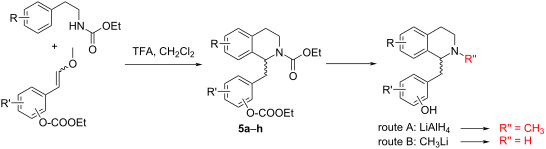
- approaches to the monomeric 1-benzyl-1,2,3,4-tetrahydroisoquinoline alkaloids are typically inspired by their biosynthesis and comprise Bischler–Napieralski-type cyclizations of arylacetamides (followed by reduction of the resulting 3,4-dihydroisoquinolines) or Pictet–Spengler-type cyclizations of
- -tetrahydroisoquinoline alkaloids (Figure 2 and Table 1). Since, as mentioned above, we recently demonstrated that substituted 1-benzyl-1,2,3,4-tetrahydroisoquinolines exhibit both cytotoxic and calcium channel-modulating activities, we subjected these alkaloids to our established screening systems in order to gain new
- ” retained antiproliferative activity, while losing activity on TPC2 [15]. This prompted us to analyze both TPC2 modulating and antiproliferative activities of the alkaloids from this project. TPC2 modulation To assess the activity of racemic 1-benzyl-1,2,3,4-tetrahydroisoquinoline alkaloids on TPC2 in

Graphical Abstract

Figure 1: Prominent synthetic approaches to 1-benzyltetrahydroisoquinolines: Bischler–Napieralski, Pictet–Spe...

Figure 2: Structures of N-methylcoclaurine (1) and the ten 1-benzyl-1,2,3,4-tetrahydroisoquinoline alkaloids ...

Figure 3: Two routes using N- and O-alkoxycarbonylated building blocks for the synthesis of phenolic N-methyl...

Figure 4: Structures of the building blocks A1–A4 (N-ethoxycarbonyl phenethylamines) and B1–B3 (ω-methoxystyr...
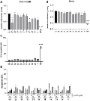
Figure 5: Biological activity. Antiproliferative effects of the 1-benzyltetrahydroisoquinoline alkaloids in A...
Electrocatalytic C(sp3)–H/C(sp)–H cross-coupling in continuous flow through TEMPO/copper relay catalysis
- Bin Guo and
- Hai-Chao Xu
Beilstein J. Org. Chem. 2021, 17, 2650–2656, doi:10.3762/bjoc.17.178
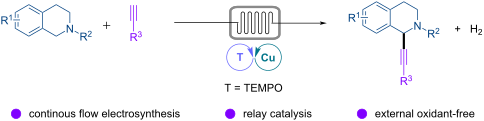
- ]. In this context, few methods have been developed for the dehydrogenative cross-coupling of tetrahydroisoquinolines with terminal alkynes because of the prevalence of the tetrahydroisoquinoline moiety in natural products and bioactive molecules [3][4][5][6][7][8][9][10]. These methods proceed through
- the oxidation of the tetrahydroisoquinoline to an iminium intermediate with various chemical oxidants such as peroxides and DDQ followed by reaction with the copper acetylide species to deliver the 2-substituted tetrahydroisoquinoline product (Scheme 1A). These methods usually require elevated
- electrosynthesis was conducted in a microreactor equipped with two Pt electrodes as the anode and cathode and operated with a constant current (Table 1). Under the optimized conditions, a solution of tetrahydroisoquinoline 1a (1 equiv), alkyne 2 (1.5 equiv), Cu(OTf)2 (10 mol %), TEMPO (20 mol %), n-Bu4NPF6 (0.2

Graphical Abstract

Scheme 1: C(sp3)–H alkynylation of tetrahydroisoquinolines. L* = chiral ligand. TEMPO = 2,2,6,6-tetramethylpi...
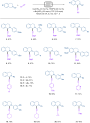
Scheme 2: Substrate scope. Reaction conditions: Pt anode, Pt cathode, interelectrode distance 0.25 mm, 1 (0.0...

Scheme 3: Reaction scale-up.

Scheme 4: Proposed mechanism.
Recent advances in organocatalytic asymmetric aza-Michael reactions of amines and amides
- Pratibha Sharma,
- Raakhi Gupta and
- Raj K. Bansal
Beilstein J. Org. Chem. 2021, 17, 2585–2610, doi:10.3762/bjoc.17.173
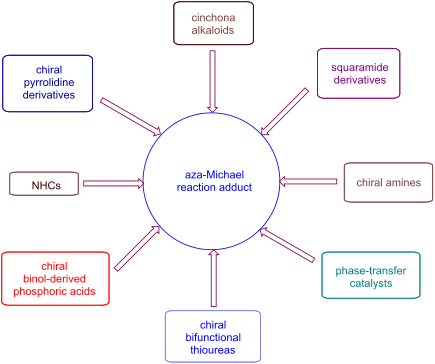
- different approach for the use of cinchona-based organocatalysts. Instead of using the cinchona derivative alone, they employed a mixture of cinchona derivative and amino acid such as ᴅ-proline, termed as the modularly designed organocatalyst (MDO) for the synthesis of bridged tetrahydroisoquinoline
- (quinidinethiourea + ᴅ-proline), instead of the expected domino Mannich/Michael product, the bridged tetrahydroisoquinoline product 25a was obtained in high yield (90%) and excellent dr (94:6) and ee value (99%) (Table 5). The controlled reactions using 23 and 24 as the catalyst gave the product in very poor yield
- -nitrophthalimide to α,β-unsaturated ketones. Diastereoselective synthesis of bridged 1,2,3,4-tetrahydroisoquinoline derivatives using modularly designed organocatalyst. Synthesis of spiro[pyrrolidine-3,3'-oxindoles] via asymmetric cascade aza-Michael reaction catalyzed by squaramide. Asymmetric aza-Michael

Graphical Abstract

Scheme 1: Asymmetric aza-Michael addition catalyzed by cinchona alkaloid derivatives.

Scheme 2: Intramolecular 6-exo-trig aza-Michael addition reaction.

Scheme 3: Asymmetric aza-Michael/Michael addition cascade reaction of 2-nitrobenzofurans and 2-nitrobenzothio...

Scheme 4: Asymmetric aza-Michael addition of para-dienone imide to benzylamine.

Scheme 5: Asymmetric synthesis of chiral N-functionalized heteroarenes.
Synthesis of new substituted 7,12-dihydro-6,12-methanodibenzo[c,f]azocine-5-carboxylic acids containing a tetracyclic tetrahydroisoquinoline core structure
- Agnieszka Grajewska,
- Maria Chrzanowska and
- Wiktoria Adamska
Beilstein J. Org. Chem. 2021, 17, 2511–2519, doi:10.3762/bjoc.17.168
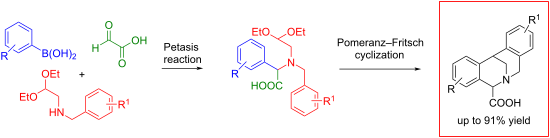
- tetrahydroisoquinoline derivatives, 7,12-dihydro-6,12-methanodibenzo[c,f]-azocine-5-carboxylic acids by three component Petasis reaction with the use of aminoacetaldehyde acetals bearing substituted benzyl groups as the amine components followed by Pomeranz–Fritsch double cyclization reaction. By applying this method
- ; cyclization; multicomponent reactions; synthetic methods; tetrahydroisoquinoline; Introduction The tetrahydroisoquinoline moiety is the key structure in large number of natural and synthetic biologically important molecules. Among them, isoquinoline alkaloids constitute a large family of natural products
- exhibiting a huge range of structural diversity and biological activity [1][2][3]. Within this family several structural motifs can be identified, for instance, the isopavines, constrained alkaloids possessing the 1,2,3,4-tetrahydroisoquinoline skeleton incorporated into the double cyclized azabicyclo[3.2.2

Graphical Abstract

Figure 1: Natural isopavine alkaloids and synthetic derivatives of isopavine.

Figure 2: The structure and numbering of dihydromethanodibenzoazocine.

Scheme 1: The Petasis reaction and the Pomeranz–Fritsch–Bobbitt cyclization.

Scheme 2: The synthesis of 7,12-dihydro-6,12-methanodibenzo[c,f]azocine-5-carboxylic acids via a combination ...

Scheme 3: Synthesis of N-benzylated aminoacetaldehyde acetals 3a–e. Conditions: a) reaction run in EtOH; b) r...

Scheme 4: Synthesis of amino acids 6a–g.

Scheme 5: Synthesis of dihydromethanodibenzoazocine-5-carboxylic acids 7a–f. Conditions: a) 20% HCl, rt, 24 h...

Scheme 6: Synthesis of TA-073.

Scheme 7: Reaction of 6a with 4% aqueous HCl solution in THF and with 20% aqueous HCl solution. Conditions: a...

Scheme 8: Three pathways of the synthesis of 12, the decarboxylated analogue of 6a.

Scheme 9: The chemical behavior of 12 in 4% aqueous HCl solution in THF and in 20% aqueous HCl solution.

Scheme 10: A plausible mechanism of the reaction of 6a with 4% aqueous HCl solution in THF.
Heterogeneous photocatalytic cyanomethylarylation of alkenes with acetonitrile: synthesis of diverse nitrogenous heterocyclic compounds
- Guanglong Pan,
- Qian Yang,
- Wentao Wang,
- Yurong Tang and
- Yunfei Cai
Beilstein J. Org. Chem. 2021, 17, 1171–1180, doi:10.3762/bjoc.17.89
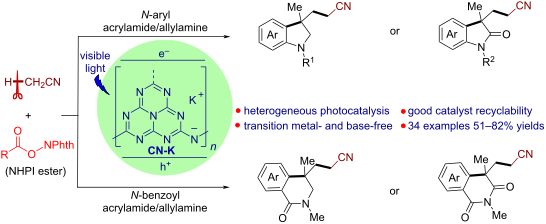
- , delivering the corresponding regioisomers 8l and 8l’ in 62% with 1:1.6 ratio. Moreover, the naphthalene and tetrahydroisoquinoline-derived acrylamides were also compatible, giving the polycyclic products 8m and 8n in 77% and 70%, respectively. Additionally, protecting groups such as isopropyl, benzyl, or

Graphical Abstract

Scheme 1: CN-K-Catalyzed cyanomethylarylation of alkenes to access diverse heterocyclic compounds.

Scheme 2: CN-K-catalyzed cyanomethylarylation of N-arylallylamines for the synthesis of indolines. Reaction c...

Scheme 3: CN-K-catalyzed cyanomethylarylation of N-benzoylallylamines for the synthesis of isoquinolinones. R...

Scheme 4: CN-K-catalyzed cyanomethylarylation of N-aryl acrylamides for the synthesis of oxindoles. Reaction ...

Scheme 5: CN-K-catalyzed cyanomethylarylation of N-benzoyl acrylamides for the synthesis of isoquinolinedione...

Figure 1: Evaluation of catalyst recycling. Reaction conditions: 1a (0.1 mmol, 1 equiv), 2d (0.2 mmol, 2 equi...

Scheme 6: Further survey of reaction scope and derivatization studies of 8a.

Scheme 7: Experiments for the mechanistic study.

Scheme 8: Plausible mechanism of the CN-K-catalyzed cyanomethylarylation of alkenes.
N-tert-Butanesulfinyl imines in the asymmetric synthesis of nitrogen-containing heterocycles
- Joseane A. Mendes,
- Paulo R. R. Costa,
- Miguel Yus,
- Francisco Foubelo and
- Camilla D. Buarque
Beilstein J. Org. Chem. 2021, 17, 1096–1140, doi:10.3762/bjoc.17.86

- 152, in a subsequent cyclization to obtain the intermediate 156 then, a substitution at the sulfur atom occurred to form 154a and 157 [131] (Scheme 41). In 2017, Reddy and co-workers described the stereoselective synthesis of (S)-1-benzyl-6,7-dimethoxy-1,2,3,4-tetrahydroisoquinoline (163), (S)-1
- -benzyl-6,7-dimethoxy-N-methyl-1,2,3,4-tetrahydroisoquinoline (164), (−)-O,O-dimethylcoclaurine (165) and (+)-O-methylarmapavine (166) alkaloids via chiral tert-butylsulfinamide through a haloamide cyclization. The strategy was based on the addition of organomagnesium bromide or chloride to chiral N
- -sulfinyl imine 160. A subsequent base promoted cyclization of chloroamides (158 and 162) and the products 165 and 163 were obtained in 91% and 93% yields respectively. The N-methylation of alkaloids 163 and 165 using 37% formaldehyde and sodium borohydride formed the tetrahydroisoquinoline 164 and 166 in

Graphical Abstract

Scheme 1: General strategy for the enantioselective synthesis of N-containing heterocycles from N-tert-butane...

Scheme 2: Methodologies for condensation of aldehydes and ketones with tert-butanesulfinamides (1).

Scheme 3: Transition models for cis-aziridines and trans-aziridines.

Scheme 4: Mechanism for the reduction of N-tert-butanesulfinyl imines.

Scheme 5: Transition models for the addition of organomagnesium and organolithium compounds to N-tert-butanes...

Scheme 6: Synthesis of 2,2-dibromoaziridines 15 from aldimines 14 and bromoform, and proposed non-chelation-c...

Scheme 7: Diastereoselective synthesis of aziridines from tert-butanesulfinyl imines.

Scheme 8: Synthesis of vinylaziridines 22 from aldimines 14 and 1,3-dibromopropene 23, and proposed chelation...

Scheme 9: Synthesis of vinylaziridines 27 from aldimines 14 and α-bromoesters 26, and proposed transition sta...

Scheme 10: Synthesis of 2-chloroaziridines 28 from aldimines 14 and dichloromethane, and proposed transition s...

Scheme 11: Synthesis of cis-vinylaziridines 30 and 31 from aldimines 14 and bromomethylbutenolide 29.

Scheme 12: Synthesis of 2-chloro-2-aroylaziridines 36 and 32 from aldimines 14, arylnitriles 34, and silyldich...

Scheme 13: Synthesis of trifluoromethylaziridines 39 and proposed transition state of the aziridination.

Scheme 14: Synthesis of aziridines 42 and proposed state transition.

Scheme 15: Synthesis of 1-substituted 2-azaspiro[3.3]heptanes, 1-phenyl-2-azaspiro[3.4]octane and 1-phenyl-2-a...

Scheme 16: Synthesis of 1-substituted 2,6-diazaspiro[3.3]heptanes 48 from chiral imines 14 and 1-Boc-azetidine...

Scheme 17: Synthesis of β-lactams 52 from chiral imines 14 and dimethyl malonate (49).

Scheme 18: Synthesis of spiro-β-lactam 57 from chiral (RS)-N-tert-butanesulfinyl isatin ketimine 53 and ethyl ...

Scheme 19: Synthesis of β-lactam 60, a precursor of (−)-batzelladine D (61) and (−)-13-epi-batzelladine D (62)...

Scheme 20: Rhodium-catalyzed asymmetric synthesis of 3-substituted pyrrolidines 66 from chiral imine (RS)-63 a...

Scheme 21: Asymmetric synthesis of 1,3-disubstituted isoindolines 69 and 70 from chiral imine 67.

Scheme 22: Asymmetric synthesis of cis-2,5-disubstituted pyrrolidines 73 from chiral imine (RS)-71.

Scheme 23: Asymmetric synthesis of 3-hydroxy-5-substituted pyrrolidin-2-ones 77 from chiral imine (RS)-74.

Scheme 24: Asymmetric synthesis of 4-hydroxy-5-substituted pyrrolidin-2-ones 80 from chiral imines 79.

Scheme 25: Asymmetric synthesis of 3-pyrrolines 82 from chiral imines 14 and ethyl 4-bromocrotonate (81).

Scheme 26: Asymmetric synthesis of γ-amino esters 84, and tetramic acid derivative 86 from chiral imines (RS)-...

Scheme 27: Asymmetric synthesis of α-methylene-γ-butyrolactams 90 from chiral imines (Z,SS)-87 and ethyl 2-bro...

Scheme 28: Asymmetric synthesis of methylenepyrrolidines 92 from chiral imines (RS)-14 and 2-(trimethysilylmet...

Scheme 29: Synthesis of dibenzoazaspirodecanes from cyclic N-tert-butanesulfinyl imines.

Scheme 30: Stereoselective synthesis of cyclopenta[c]proline derivatives 103 from β,γ-unsaturated α-amino acid...

Scheme 31: Stereoselective synthesis of alkaloids (−)-angustureine (107) and (−)-cuspareine (108).

Scheme 32: Stereoselective synthesis of alkaloids (−)-pelletierine (112) and (+)-coniine (117).

Scheme 33: Synthesis of piperidine alkaloids (+)-dihydropinidine (122a), (+)-isosolenopsin (122b) and (+)-isos...

Scheme 34: Stereoselective synthesis of the alkaloids(+)-sedamine (125) from chiral imine (SS)-119.

Scheme 35: Stereoselective synthesis of trans-5-hydroxy-6-substituted-2-piperidinones 127 and 129 from chiral ...

Scheme 36: Stereoselective synthesis of trans-5-hydroxy-6-substituted ethanone-2-piperidinones 132 from chiral...

Scheme 37: Stereoselective synthesis of trans-3-benzyl-5-hydroxy-6-substituted-2-piperidinones 136 from chiral...

Scheme 38: Stereoselective synthesis of trans-5-hydroxy-6-substituted 2-piperidinones 139 from chiral imine 138...

Scheme 39: Stereoselective synthesis of ʟ-hydroxypipecolic acid 145 from chiral imine 144.

Scheme 40: Synthesis of 1-substituted isoquinolones 147, 149 and 151.

Scheme 41: Stereoselective synthesis of 3-substituted dihydrobenzo[de]isoquinolinones 154.

Scheme 42: Enantioselective synthesis of alkaloids (S)-1-benzyl-6,7-dimethoxy-1,2,3,4-tetrahydroisoquinoline (...

Scheme 43: Enantioselective synthesis of alkaloids (−)-cermizine B (171) and (+)-serratezomine E (172) develop...

Scheme 44: Stereoselective synthesis of (+)-isosolepnosin (177) and (+)-solepnosin (178) from homoallylamine d...

Scheme 45: Stereoselective synthesis of tetrahydroquinoline derivatives 184, 185 and 187 from chiral imines (RS...

Scheme 46: Stereoselective synthesis of pyridobenzofuran and pyridoindole derivatives 193 from homopropargylam...

Scheme 47: Stereoselective synthesis of 2-substituted 1,2,5,6-tetrahydropyridines 196 from chiral imines (RS)-...

Scheme 48: Stereoselective synthesis of 2-substituted trans-2,6-disubstituted piperidine 199 from chiral imine...

Scheme 49: Stereoselective synthesis of cis-2,6-disubstituted piperidines 200, and alkaloid (+)-241D, from chi...

Scheme 50: Stereoselective synthesis of 6-substituted piperidines-2,5-diones 206 and 1,7-diazaspiro[4.5]decane...

Scheme 51: Stereoselective synthesis of spirocyclic oxindoles 210 from chiral imines (RS)-53.

Scheme 52: Stereoselective synthesis of azaspiro compound 213 from chiral imine 211.

Scheme 53: Stereoselective synthesis of tetrahydroisoquinoline derivatives from chiral imines (RS)-214.

Scheme 54: Stereoselective synthesis of (−)-crispine A 223 from chiral imine (RS)-214.

Scheme 55: Synthesis of (−)-harmicine (228) using tert-butanesulfinamide through haloamide cyclization.

Scheme 56: Stereoselective synthesis of tetraponerines T1–T8.

Scheme 57: Stereoselective synthesis of phenanthroindolizidines 246a and (−)-tylophorine (246b), and phenanthr...

Scheme 58: Stereoselective synthesis of indoline, tetrahydroquinoline and tetrahydrobenzazepine derivatives 253...

Scheme 59: Stereoselective synthesis of (+)-epohelmin A (258) and (+)-epohelmin B (260) from aldimine (RS)-79.

Scheme 60: Stereoselective synthesis of (−)-epiquinamide (266) from chiral aldimine (SS)-261.

Scheme 61: Synthesis synthesis of (–)-hippodamine (273) and (+)-epi-hippodamine (272) using chiral sulfinyl am...

Scheme 62: Stereoselective synthesis of (+)-grandisine D (279) and (+)-amabiline (283).

Scheme 63: Stereoselective synthesis of (−)-epiquinamide (266) and (+)-swaisonine (291) from aldimine (SS)-126....

Scheme 64: Stereoselective synthesis of (+)-C(9a)-epi-epiquinamide (294).

Scheme 65: Stereoselective synthesis of (+)-lasubine II (298) from chiral aldimine (SS)-109.

Scheme 66: Stereoselective synthesis of (−)-epimyrtine (300a) and (−)-lasubine II (ent-302) from β-amino keton...

Scheme 67: Stereoselective synthesis of (−)-tabersonine (310), (−)-vincadifformine (311), and (−)-aspidospermi...

Scheme 68: Stereoselective synthesis of (+)-epohelmin A (258) and (+)-epohelmin B (260) from aldehyde 313 and ...

Scheme 69: Total synthesis of (+)-lysergic acid (323) from N-tert-butanesulfinamide (RS)-1.
Synthesis of tetrafluorinated piperidines from nitrones via a visible-light-promoted annelation reaction
- Vyacheslav I. Supranovich,
- Igor A. Dmitriev and
- Alexander D. Dilman
Beilstein J. Org. Chem. 2020, 16, 3104–3108, doi:10.3762/bjoc.16.260
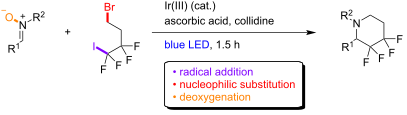
- also evaluated the construction of fluorinated tetrahydroisoquinoline structures starting from nitrones, but this required four consecutive reactions with different conditions and chromatographic separation at each step [25] (Scheme 1). Herein we report a single-step protocol for the construction of

Graphical Abstract

Scheme 1: The construction of tetrafluorinated piperidines from nitrones.

Scheme 2: The scope of the annelation reaction for the synthesis of piperidines. Isolated yields are shown. a...

Scheme 3: The proposed mechanism of the photoredox annelation reaction (asc = ascorbic acid).
Convenient access to pyrrolidin-3-ylphosphonic acids and tetrahydro-2H-pyran-3-ylphosphonates with multiple contiguous stereocenters from nonracemic adducts of a Ni(II)-catalyzed Michael reaction
- Alexander N. Reznikov,
- Dmitry S. Nikerov,
- Anastasiya E. Sibiryakova,
- Victor B. Rybakov,
- Evgeniy V. Golovin and
- Yuri N. Klimochkin
Beilstein J. Org. Chem. 2020, 16, 2073–2079, doi:10.3762/bjoc.16.174
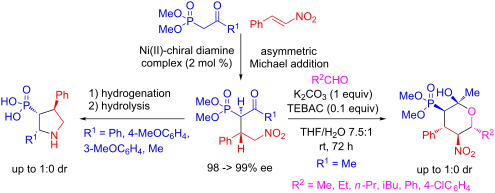
- octahydroindole [10], tetrahydroquinoline [11], tetrahydroisoquinoline [11][12], β-carboline [13], morpholine [14], and isoindoline [15] moieties have been developed. Obtained in an enantiomerically pure form, phosphonoproline and its analogues [16][17][18][19] were among the first compounds in this series

Graphical Abstract
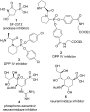
Figure 1: Pharmacologically active nonracemic phosphonates with heterocyclic moieties.
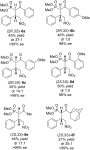
Figure 2: Starting nonracemic 4-nitro-2-oxophosphonates.

Scheme 1: Intermolecular N-methylation of reduction product 7.

Scheme 2: Synthesis of pyrrolidinyl phosphonic acids 11a–d.

Figure 3: ORTEP diagram of (2R,3R,4S)-10a.

Scheme 3: Synthesis of tetrahydropyranylphosphonates 13a–f via diastereoselective Henry/acetalyzation reactio...

Figure 4: ORTEP diagram of (2S,3R,4S,5S,6R)-13b.

Scheme 4: Synthesis of (3,4-dihydro-2H-pyran-5-yl)phosphonate 14.
One-step route to tricyclic fused 1,2,3,4-tetrahydroisoquinoline systems via the Castagnoli–Cushman protocol
- Aleksandar Pashev,
- Nikola Burdzhiev and
- Elena Stanoeva
Beilstein J. Org. Chem. 2020, 16, 1456–1464, doi:10.3762/bjoc.16.121
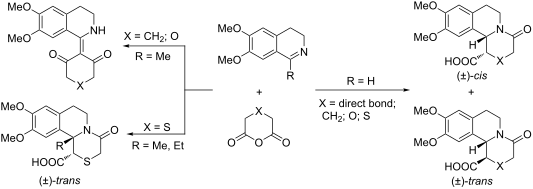
- products 25 and 26, respectively, containing an exocyclic double bond to the tetrahydroisoquinoline moiety (Scheme 5). The reaction with succinic anhydride (5) furnished the tetrahydroisoquinoline 27 with an open-chain acid substituent to the exocyclic double bond. Unlike 1-methyldihydroisoquinoline (19

Graphical Abstract

Figure 1: Compounds comprising a benzo[a]quinolizidine ring system.

Scheme 1: Reactions between enolizable anhydrides and imines.

Scheme 2: Mechanistic pathways for the reaction between cyclic anhydrides and imines.

Scheme 3: Retrosynthetic analysis of the target compounds.

Scheme 4: Reaction of 6,7-dimethoxy-3,4-dihydroisoquinoline (18) with anhydrides 5–8. Reagents and conditions...

Figure 2: Representative NOE interactions in cis and trans-21–24 (only one enantiomer is shown).

Scheme 5: Reaction of 1-methyl-3,4-dihydroisoquinoline (19) with anhydrides 5–7. Reagents and conditions: xyl...

Figure 3: X-ray crystal structure of products 25 and 26.

Scheme 6: Reactions of 1-alkyl-3,4-dihydroisoquinolines 19 and 20 with anhydride 8. Reagents and conditions: ...

Figure 4: Representative NOE interactions in 28 and 29.

Scheme 7: Suggested mechanism for the formation of products 25–27.
Oxime radicals: generation, properties and application in organic synthesis
- Igor B. Krylov,
- Stanislav A. Paveliev,
- Alexander S. Budnikov and
- Alexander O. Terent’ev
Beilstein J. Org. Chem. 2020, 16, 1234–1276, doi:10.3762/bjoc.16.107
- aromatic (products 88a–d) and aliphatic (products 88e,f) substituents are applicable. Oximes with an isoindoline or tetrahydroisoquinoline fragment also undergo this transformation to give substituted oxadiazolines (products 88g,h). The authors note that T(p-F)PPT plays the role of a photocatalyst that

Graphical Abstract

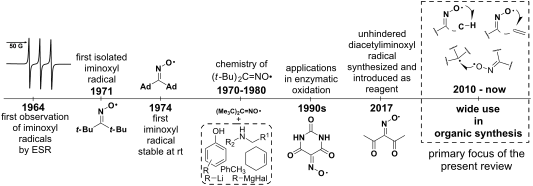
Figure 1: Imine-N-oxyl radicals (IV) discussed in the present review and other classes of N-oxyl radicals (I–...
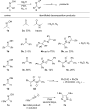
Figure 2: The products of decomposition of iminoxyl radicals generated from oximes by oxidation with Ag2O.

Scheme 1: Generation of oxime radicals and study of the kinetics of their decay by photolysis of the solution...

Scheme 2: Synthesis of di-tert-butyliminoxyl radical and its decomposition products.

Scheme 3: The proposed reaction pathway of the decomposition of di-tert-butyliminoxyl radical (experimentally...

Scheme 4: Monomolecular decomposition of the tert-butyl(triethylmethyl)oxime radical.

Scheme 5: The synthesis and stability of the most stable dialkyl oxime radicals – di-tert-butyliminoxyl and d...

Scheme 6: The formation of iminoxyl radicals from β-diketones under the action of NO2.

Scheme 7: Synthesis of the diacetyliminoxyl radical.

Scheme 8: Examples of long-living oxime radicals with electron-withdrawing groups and the conditions for thei...

Figure 3: The electronic structure iminoxyl radicals and their geometry compared to the corresponding oximes.

Figure 4: Bond dissociation enthalpies (kcal/mol) of oximes and N,N-disubstituted hydroxylamines calculated o...

Scheme 9: Examples demonstrating the low reactivity of the di-tert-butyliminoxyl radical towards the substrat...

Scheme 10: The reactions of di-tert-butyliminoxyl radical with unsaturated hydrocarbons involving hydrogen ato...

Scheme 11: Possible mechanisms of reaction of di-tert-butyliminoxyl radical with alkenes.

Scheme 12: Products of the reaction between di-tert-butyliminoxyl radical and phenol derivatives.

Scheme 13: The reaction of di-tert-butyliminoxyl radical with amines.

Scheme 14: Reaction of di-tert-butyliminoxyl radicals with organolithium reagents.

Scheme 15: Cross-dehydrogenative C–O coupling of 1,3-dicarbonyl compounds with oximes under the action of mang...

Scheme 16: Cross-dehydrogenative C–O coupling of 1,3-dicarbonyl compounds with oximes under the action of Cu(BF...

Scheme 17: Oxidative C–O coupling of benzylmalononitrile (47) with 3-(hydroxyimino)pentane-2,4-dione (19).

Scheme 18: The proposed mechanism of the oxidative coupling of benzylmalononitrile (47) with diacetyl oxime (19...

Scheme 19: Oxidative C–O coupling of pyrazolones with oximes under the action of Fe(ClO4)3.

Scheme 20: The reaction of diacetyliminoxyl radical with pyrazolones.

Scheme 21: Oxidative C–O coupling of oximes with acetonitrile, ketones, and esters.

Scheme 22: Intramolecular cyclizations of oxime radicals to form substituted isoxazolines or cyclic nitrones.

Scheme 23: TEMPO-mediated oxidative cyclization of oximes with C–H bond cleavage.

Scheme 24: Proposed reaction mechanism of oxidative cyclization of oximes with C–H bond cleavage.

Scheme 25: Selectfluor/Bu4NI-mediated C–H oxidative cyclization of oximes.

Scheme 26: Oxidative cyclization of N-benzyl amidoximes to 1,2,4-oxadiazoles.

Scheme 27: The formation of quinazolinone 73a from 5-phenyl-4,5-dihydro-1,2,4-oxadiazole 74 under air.

Scheme 28: DDQ-mediated oxidative cyclization of thiohydroximic acids.

Scheme 29: Plausible mechanism of the oxidative cyclization of thiohydroximic acids.

Scheme 30: Silver-mediated oxidative cyclization of α-halogenated ketoximes and 1,3-dicarbonyl compounds.

Scheme 31: Possible pathway of one-pot oxidative cyclization of α-halogenated ketoximes and 1,3-dicarbonyl com...

Scheme 32: T(p-F)PPT-catalyzed oxidative cyclization of oximes with the formation of 1,2,4-oxadiazolines.

Scheme 33: Intramolecular cyclization of iminoxyl radicals involving multiple C=C and N=N bonds.

Scheme 34: Oxidative cyclization of β,γ- and γ,δ-unsaturated oximes employing the DEAD or TEMPO/DEAD system wi...

Scheme 35: Cobalt-catalyzed aerobic oxidative cyclization of β,γ-unsaturated oximes.

Scheme 36: Manganese-catalyzed aerobic oxidative cyclization of β,γ-unsaturated oximes.

Scheme 37: Visible light photocatalytic oxidative cyclization of β,γ-unsaturated oximes.

Scheme 38: TBAI/TBHP-mediated radical cascade cyclization of the β,γ-unsaturated oximes.

Scheme 39: TBAI/TBHP-mediated radical cascade cyclization of vinyl isocyanides with β,γ-unsaturated oximes.

Scheme 40: tert-Butylnitrite-mediated oxidative cyclization of unsaturated oximes with the introduction of an ...

Scheme 41: Transformation of unsaturated oxime to oxyiminomethylisoxazoline via the confirmed dimeric nitroso ...

Scheme 42: tert-Butylnitrite-mediated oxidative cyclization of unsaturated oximes with the introduction of a n...

Scheme 43: Synthesis of cyano-substituted oxazolines from unsaturated oximes using the TBN/[RuCl2(p-cymene)]2 ...

Scheme 44: Synthesis of trifluoromethylthiolated isoxazolines from unsaturated oximes.

Scheme 45: Copper-сatalyzed oxidative cyclization of β,γ-unsaturated oximes with the introduction of an azido ...

Scheme 46: TBHP-mediated oxidative cascade cyclization of β,γ-unsaturated oximes and unsaturated N-arylamides.

Scheme 47: Copper-сatalyzed oxidative cyclization of unsaturated oximes with the introduction of an amino grou...

Scheme 48: TEMPO-mediated oxidative cyclization of unsaturated oximes followed by elimination.

Scheme 49: Oxidative cyclization of β,γ-unsaturated oximes with the introduction of a trifluoromethyl group.

Scheme 50: Oxidative cyclization of unsaturated oximes with the introduction of a nitrile group.

Scheme 51: Oxidative cyclization of β,γ-unsaturated oximes to isoxazolines with the introduction of a nitrile ...

Scheme 52: Oxidative cyclization of β,γ-unsaturated oximes to isoxazolines with the introduction of a sulfonyl...

Scheme 53: Oxidative cyclization of β,γ- and γ,δ-unsaturated oximes to isoxazolines with the introduction of a...

Scheme 54: Oxidative cyclization of β,γ-unsaturated oximes to isoxazolines with the introduction of a thiocyan...

Scheme 55: PhI(OAc)2-mediated oxidative cyclization of oximes with C–S and C–Se bond formation.

Scheme 56: PhI(OAc)2-mediated oxidative cyclization of unsaturated oximes accompanied by alkoxylation.

Scheme 57: PhI(OAc)2-mediated cyclization of unsaturated oximes to methylisoxazolines.

Scheme 58: Oxidative cyclization-alkynylation of unsaturated oximes.

Scheme 59: TEMPO-mediated oxidative cyclization of C-glycoside ketoximes to C-glycosylmethylisoxazoles.

Scheme 60: Silver-сatalyzed oxidative cyclization of β,γ-unsaturated oximes with formation of fluoroalkyl isox...

Scheme 61: Oxidative cyclization of β,γ-unsaturated oximes with the formation of haloalkyl isoxazolines.

Scheme 62: Cyclization of β,γ-unsaturated oximes into haloalkyl isoxazolines under the action of the halogenat...

Scheme 63: Synthesis of haloalkyl isoxazoles and cyclic nitrones via oxidative cyclization and 1,2-halogen shi...

Scheme 64: Electrochemical oxidative cyclization of diaryl oximes.

Scheme 65: Copper-сatalyzed cyclization and dioxygenation oximes containing a triple C≡C bond.

Scheme 66: Photoredox-catalyzed sulfonylation of β,γ-unsaturated oximes by sulfonyl hydrazides.

Scheme 67: Oxidative cyclization of β,γ-unsaturated oximes with introduction of sulfonate group.

Scheme 68: Ultrasound-promoted oxidative cyclization of β,γ-unsaturated oximes.
Anthelmintic drug discovery: target identification, screening methods and the role of open science
- Frederick A. Partridge,
- Ruth Forman,
- Carole J. R. Bataille,
- Graham M. Wynne,
- Marina Nick,
- Angela J. Russell,
- Kathryn J. Else and
- David B. Sattelle
Beilstein J. Org. Chem. 2020, 16, 1203–1224, doi:10.3762/bjoc.16.105
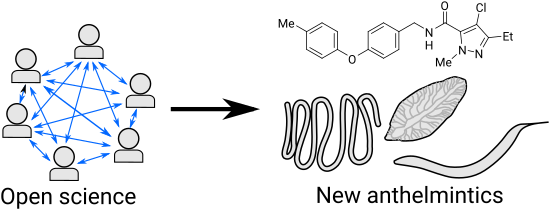
- 873 million) [40]. It looks unlikely that this target will be met, thus the development of new potent anthelmintic drugs that act via novel mechanisms of action are urgently needed. Current anthelmintics – schistosomiasis Praziquantel (PZQ, 5), an N-acylated tetrahydroisoquinoline-piperazinone

Graphical Abstract

Figure 1: Structures of some current front-line anthelmintics discussed in this review. *Denotes the stereoge...
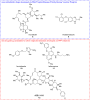
Figure 2: Structures of new anthelmintics drugs developed through repurposing, and new drugs or drug candidat...

Figure 3: Compounds with anthelmintic activity identified by a combination of screening against Ancylostoma c...

Figure 4: Inhibitors of S. mansoni thioredoxin glutathione reductase with anthelmintic activity [140].
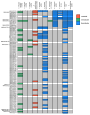
Figure 5: Active compounds from anthelmintic screens using the MMV Pathogen Box. NTS: newly transformed schis...

Figure 6: Two resolution approaches to enantiopure PZQ (R)-5 discovered through A) open science and B) contra...
Recent applications of porphyrins as photocatalysts in organic synthesis: batch and continuous flow approaches
- Rodrigo Costa e Silva,
- Luely Oliveira da Silva,
- Aloisio de Andrade Bartolomeu,
- Timothy John Brocksom and
- Kleber Thiago de Oliveira
Beilstein J. Org. Chem. 2020, 16, 917–955, doi:10.3762/bjoc.16.83
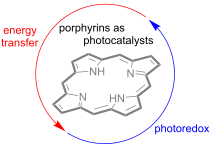
- with singlet oxygen to produce an imine, which was used as a substrate in the Ugi-type reaction. Thus, the oxidations of both 1,2,3,4-tetrahydroisoquinoline and dibenzylamine using TPP were carried out with high yield and selectivity, and the Ugi products were obtained after removal of the solvent and
- direct addition of isocyanide and carboxylic acid. The Ugi products were obtained in 41–89% and 72–96% yields from 1,2,3,4-tetrahydroisoquinoline (Scheme 60) and dibenzylamine (Scheme 61), respectively [102]. Furthermore, Che and co-workers obtained a wide range of Mannich-type products by coupling N

Graphical Abstract

Figure 1: Chemical structures of the porphyrinoids and their absorption spectra: in bold are highlighted the ...

Figure 2: Photophysical and photochemical processes (Por = porphyrin). Adapted from [12,18].

Figure 3: Main dual photocatalysts and their oxidative/reductive excited state potentials, including porphyri...

Scheme 1: Photoredox alkylation of aldehydes with diazo acetates using porphyrins and a Ru complex. aUsing a ...

Scheme 2: Proposed mechanism for the alkylation of aldehydes with diazo acetates in the presence of TPP.
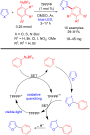
Scheme 3: Arylation of heteroarenes with aryldiazonium salts using TPFPP as photocatalyst, and corresponding ...

Scheme 4: A) Scope with different aryldiazonium salts and enol acetates. B) Photocatalytic cycles and compari...

Scheme 5: Photoarylation of isopropenyl acetate A) Comparison between batch and continuous-flow approaches an...

Scheme 6: Dehalogenation induced by red light using thiaporphyrin (STPP).

Scheme 7: Applications of NiTPP as both photoreductant and photooxidant.

Scheme 8: Proposed mechanism for obtaining tetrahydroquinolines by reductive quenching.

Scheme 9: Selenylation and thiolation of anilines.

Scheme 10: NiTPP as photoredox catalyst in oxidative and reductive quenching, in comparison with other photoca...

Scheme 11: C–O bond cleavage of 1-phenylethanol using a cobalt porphyrin (CoTMPP) under visible light.

Scheme 12: Hydration of terminal alkynes by RhIII(TSPP) under visible light irradiation.

Scheme 13: Regioselective photocatalytic hydro-defluorination of perfluoroarenes by RhIII(TSPP).

Scheme 14: Formation of 2-methyl-2,3-dihydrobenzofuran by intramolecular hydro-functionalization of allylpheno...
Scheme 15: Photocatalytic oxidative hydroxylation of arylboronic acids using UNLPF-12 as heterogeneous photoca...

Scheme 16: Photocatalytic oxidative hydroxylation of arylboronic acids using MOF-525 as heterogeneous photocat...

Scheme 17: Preparation of the heterogeneous photocatalyst CNH.

Scheme 18: Photoinduced sulfonation of alkenes with sulfinic acid using CNH as photocatalyst.

Scheme 19: Sulfonic acid scope of the sulfonation reactions.

Scheme 20: Regioselective sulfonation reaction of arimistane.

Scheme 21: Synthesis of quinazolin-4-(3H)-ones.

Scheme 22: Selective photooxidation of aromatic benzyl alcohols to benzaldehydes using Pt/PCN-224(Zn).

Scheme 23: Photooxidation of benzaldehydes to benzoic acids using Pt or Pd porphyrins.

Scheme 24: Photocatalytic reduction of various nitroaromatics using a Ni-MOF.

Scheme 25: Photoinduced cycloadditions of CO2 with epoxides by MOF1.

Figure 4: Electronic configurations of the species of oxygen. Adapted from [66].

Scheme 26: TPP-photocatalyzed generation of 1O2 and its application in organic synthesis. Adapted from [67-69].

Scheme 27: Pericyclic reactions involving singlet oxygen and their mechanisms. Adapted from [67].

Scheme 28: First scaled up ascaridole preparation from α-terpinene.

Scheme 29: Antimalarial drug synthesis using an endoperoxidation approach.

Scheme 30: Photooxygenation of colchicine.

Scheme 31: Synthesis of (−)-pinocarvone from abundant (+)-α-pinene.

Scheme 32: Seeberger’s semi-synthesis of artemisinin.

Scheme 33: Synthesis of artemisinin using TPP and supercritical CO2.

Scheme 34: Synthesis of artemisinin using chlorophyll a.

Scheme 35: Quercitol stereoisomer preparation.

Scheme 36: Photocatalyzed preparation of naphthoquinones.

Scheme 37: Continuous endoperoxidation of conjugated dienes and subsequent rearrangements leading to oxidized ...

Scheme 38: The Opatz group total synthesis of (–)-oxycodone.

Scheme 39: Biomimetic syntheses of rhodonoids A, B, E, and F.

Scheme 40: α-Photooxygenation of chiral aldehydes.

Scheme 41: Asymmetric photooxidation of indanone β-keto esters by singlet oxygen using PTC as a chiral inducer...

Scheme 42: Asymmetric photooxidation of both β-keto esters and β-keto amides by singlet oxygen using PTC-2 as ...

Scheme 43: Bifunctional photo-organocatalyst used for the asymmetric oxidation of β-keto esters and β-keto ami...

Scheme 44: Mechanism of singlet oxygen oxidation of sulfides to sulfoxides.

Scheme 45: Controlled oxidation of sulfides to sulfoxides using protonated porphyrins as photocatalysts. aIsol...

Scheme 46: Photochemical oxidation of sulfides to sulfoxides using PdTPFPP as photocatalyst.

Scheme 47: Controlled oxidation of sulfides to sulfoxides using SnPor@PAF as a photosensitizer.

Scheme 48: Syntheses of 2D-PdPor-COF and 3D-Pd-COF.

Scheme 49: Photocatalytic oxidation of A) thioanisole to methyl phenyl sulfoxide and B) various aryl sulfides,...

Scheme 50: General mechanism for oxidation of amines to imines.

Scheme 51: Oxidation of secondary amines to imines.

Scheme 52: Oxidation of secondary amines using Pd-TPFPP as photocatalyst.

Scheme 53: Oxidative amine coupling using UNLPF-12 as heterogeneous photocatalyst.

Scheme 54: Synthesis of Por-COF-1 and Por-COF-2.

Scheme 55: Photocatalytic oxidation of amines to imines by Por-COF-2.

Scheme 56: Photocyanation of primary amines.

Scheme 57: Synthesis of ᴅ,ʟ-tert-leucine hydrochloride.

Scheme 58: Photocyanation of catharanthine and 16-O-acetylvindoline using TPP.

Scheme 59: Photochemical α-functionalization of N-aryltetrahydroisoquinolines using Pd-TPFPP as photocatalyst.

Scheme 60: Ugi-type reaction with 1,2,3,4-tetrahydroisoquinoline using molecular oxygen and TPP.

Scheme 61: Ugi-type reaction with dibenzylamines using molecular oxygen and TPP.

Scheme 62: Mannich-type reaction of tertiary amines using PdTPFPP as photocatalyst.

Scheme 63: Oxidative Mannich reaction using UNLPF-12 as heterogeneous photocatalyst.

Scheme 64: Transformation of amines to α-cyanoepoxides and the proposed mechanism.
Recent advances in photocatalyzed reactions using well-defined copper(I) complexes
- Mingbing Zhong,
- Xavier Pannecoucke,
- Philippe Jubault and
- Thomas Poisson
Beilstein J. Org. Chem. 2020, 16, 451–481, doi:10.3762/bjoc.16.42
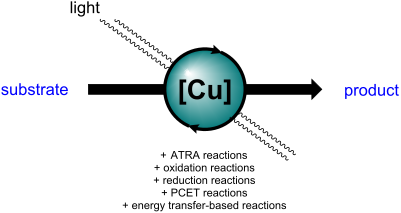
- reaction in photocatalysis, the oxidation of N-aryl tetrahydroisoquinoline (Scheme 31) [45]. Upon oxidation, the in situ-formed iminium ion was reacted with nitroalkanes, enamines, and indoles. In all cases, the 1-substituted tetrahydroisoquinolines were isolated in good to excellent yields. The reaction
- mechanism suggested by the authors was in agreement with the literature [46]: The excited copper catalyst oxidizes the tetrahydroisoquinoline and forms an N-centered radical cation. The copper catalyst is regenerated upon oxidation with O2. The resulting superoxide radical anion allowed the formation of the

Graphical Abstract

Scheme 1: [Cu(I)(dap)2]Cl-catalyzed ATRA reaction under green light irradiation.

Scheme 2: Photocatalytic allylation of α-haloketones.

Scheme 3: [Cu(I)(dap)2]Cl-photocatalyzed chlorosulfonylation and chlorotrifluoromethylation of alkenes.

Scheme 4: Photocatalytic perfluoroalkylchlorination of electron-deficient alkenes using the Sauvage catalyst.

Scheme 5: Photocatalytic synthesis of fluorinated sultones.
Scheme 6: Photocatalyzed haloperfluoroalkylation of alkenes and alkynes.
Scheme 7: Chlorosulfonylation of alkenes catalyzed by [Cu(I)(dap)2]Cl. aNo Na2CO3 was added. b1 equiv of Na2CO...

Scheme 8: Copper-photocatalyzed reductive allylation of diaryliodonium salts.

Scheme 9: Copper-photocatalyzed azidomethoxylation of olefins.

Scheme 10: Benzylic azidation initiated by [Cu(I)(dap)2]Cl.

Scheme 11: Trifluoromethyl methoxylation of styryl derivatives using [Cu(I)(dap)2]PF6. All redox potentials ar...

Scheme 12: Trifluoromethylation of silyl enol ethers.
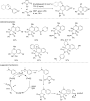
Scheme 13: Synthesis of annulated heterocycles upon oxidation with the Sauvage catalyst.
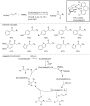
Scheme 14: Oxoazidation of styrene derivatives using [Cu(dap)2]Cl as a precatalyst.

Scheme 15: [Cu(I)(dpp)(binc)]PF6-catalyzed ATRA reaction.

Scheme 16: Allylation reaction of α-bromomalonate catalyzed by [Cu(I)(dpp)(binc)]PF6 following an ATRA mechani...

Scheme 17: Bromo/tribromomethylation reaction using [Cu(I)(dmp)(BINAP)]PF6.

Scheme 18: Chlorotrifluoromethylation of alkenes catalyzed by [Cu(I)(N^N)(xantphos)]PF6.

Scheme 19: Chlorosulfonylation of styrene and alkyne derivatives by ATRA reactions.

Scheme 20: Reduction of aryl and alkyl halides with the complex [Cu(I)(bcp)(DPEPhos)]PF6. aIrradiation was car...
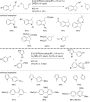
Scheme 21: Meerwein arylation of electron-rich aromatic derivatives and 5-exo-trig cyclization catalyzed by th...

Scheme 22: [Cu(I)(bcp)(DPEPhos)]PF6-photocatalyzed synthesis of alkaloids. aYield over two steps (cyclization ...

Scheme 23: Copper-photocatalyzed decarboxylative amination of NHP esters.

Scheme 24: Photocatalytic decarboxylative alkynylation using [Cu(I)(dq)(binap)]BF4.
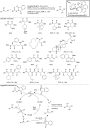
Scheme 25: Copper-photocatalyzed alkylation of glycine esters.

Scheme 26: Copper-photocatalyzed borylation of organic halides. aUnder continuous flow conditions.

Scheme 27: Copper-photocatalyzed α-functionalization of alcohols with glycine ester derivatives.
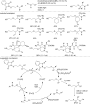
Scheme 28: δ-Functionalization of alcohols using [Cu(I)(dmp)(xantphos)]BF4.

Scheme 29: Photocatalytic synthesis of [5]helicene and phenanthrene.

Scheme 30: Oxidative carbazole synthesis using in situ-formed [Cu(I)(dmp)(xantphos)]BF4.
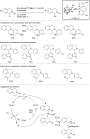
Scheme 31: Copper-photocatalyzed functionalization of N-aryl tetrahydroisoquinolines.

Scheme 32: Bicyclic lactone synthesis using a copper-photocatalyzed PCET reaction.

Scheme 33: Photocatalytic Pinacol coupling reaction catalyzed by [Cu(I)(pypzs)(BINAP)]BF4. The ligands of the ...

Scheme 34: Azide photosensitization using a Cu-based photocatalyst.
A review of asymmetric synthetic organic electrochemistry and electrocatalysis: concepts, applications, recent developments and future directions
- Munmun Ghosh,
- Valmik S. Shinde and
- Magnus Rueping
Beilstein J. Org. Chem. 2019, 15, 2710–2746, doi:10.3762/bjoc.15.264
- -cyclodextrin as the cocatalyst provide 196 in a good yield and excellent stereoselectivity (Scheme 61). In 2011, Hurvois and his group reported a stereoselective electrochemical total synthesis of the tetrahydroisoquinoline alkaloid (−)-crispine A (200) and its natural enantiomer [108]. The initial steps

Graphical Abstract

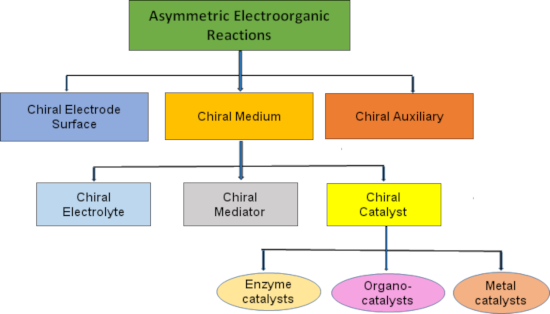
Figure 1: General classification of asymmetric electroorganic reactions.

Scheme 1: Asymmetric reduction of 4-acetylpyridine using a modified graphite cathode.

Scheme 2: Asymmetric hydrogenation of ketones using Raney nickel powder electrodes modified with optically ac...

Scheme 3: Asymmetric reduction of prochiral activated olefins with a poly-ʟ-valine-coated graphite cathode.

Scheme 4: Asymmetric reduction of prochiral carbonyl compounds, oximes and gem-dibromides on a poly-ʟ-valine-...

Scheme 5: Asymmetric hydrogenation of prochiral ketones with poly[RuIII(L)2Cl2]+-modified carbon felt cathode...

Scheme 6: Asymmetric hydrogenation of α-keto esters using chiral polypyrrole film-coated cathode incorporated...

Scheme 7: Quinidine and cinchonidine alkaloid-induced asymmetric electroreduction of acetophenone.

Scheme 8: Asymmetric electroreduction of 4- and 2-acetylpyridines at a mercury cathode in the presence of a c...

Scheme 9: Enantioselective reduction of 4-methylcoumarin in the presence of catalytic yohimbine.

Scheme 10: Cinchonine-induced asymmetric electrocarboxylation of 4-methylpropiophenone.

Scheme 11: Enantioselective hydrogenation of methyl benzoylformate using an alkaloid entrapped silver cathode.

Scheme 12: Alkaloid-induced enantioselective hydrogenation using a Cu nanoparticle cathode.

Scheme 13: Alkaloid-induced enantioselective hydrogenation of aromatic ketones using a bimetallic Pt@Cu cathod...

Scheme 14: Enantioselective reduction of ketones at mercury cathode using N,N'-dimethylquininium tetrafluorobo...

Scheme 15: Asymmetric synthesis of an amino acid using an electrode modified with amino acid oxidase and elect...

Scheme 16: Asymmetric oxidation of p-tolyl methyl sulfide using chemically modified graphite anode.

Scheme 17: Asymmetric oxidation of unsymmetric sulfides using poly(amino acid)-coated electrodes.

Scheme 18: Enantioselective, electocatalytic oxidative coupling on TEMPO-modified graphite felt electrode in t...

Scheme 19: Asymmetric electrocatalytic oxidation of racemic alcohols on a TEMPO-modified graphite felt electro...

Scheme 20: Asymmetric electrocatalytic lactonization of diols on TEMPO-modified graphite felt electrodes.

Scheme 21: Asymmetric electrochemical pinacolization in a chiral solvent.

Scheme 22: Asymmetric electroreduction using a chiral supporting electrolyte.

Scheme 23: Asymmetric anodic oxidation of enol acetates using chiral supporting electrolytes.

Scheme 24: Kinetic resolution of primary amines using a chiral N-oxyl radical mediator.

Scheme 25: Chiral N-oxyl-radical-mediated kinetic resolution of secondary alcohols via electrochemical oxidati...

Scheme 26: Chiral iodoarene-mediated asymmetric electrochemical lactonization.

Scheme 27: Os-catalyzed electrochemical asymmetric dihydroxylation of olefins using the Sharpless ligand and i...

Scheme 28: Asymmetric electrochemical epoxidation of olefins catalyzed by a chiral Mn-salen complex.

Scheme 29: Asymmetric electrooxidation of 1,2-diols, and amino alcohols using a chiral copper catalyst.

Scheme 30: Mechanism of asymmetric electrooxidation of 1,2-diols, and amino alcohols using a chiral copper cat...

Scheme 31: Enantioselective electrocarboxylation catalyzed by an electrogenerated chiral [CoI(salen)]− complex....

Scheme 32: Asymmetric oxidative cross coupling of 2-acylimidazoles with silyl enol ethers.

Scheme 33: Ni-catalyzed asymmetric electroreductive cleavage of allylic β-keto ester 89.

Scheme 34: Asymmetric alkylation using a combination of electrosynthesis and a chiral Ni catalyst.

Scheme 35: Mechanism of asymmetric alkylation using a combination of electrosynthesis and a chiral Ni catalyst....

Scheme 36: Asymmetric epoxidation by electrogenerated percarbonate and persulfate ions in the presence of chir...

Scheme 37: α-Oxyamination of aldehydes via anodic oxidation catalyzed by chiral secondary amines.

Scheme 38: The α-alkylation of aldehydes via anodic oxidation catalyzed by chiral secondary amines.
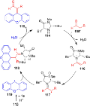
Scheme 39: Mechanism of α-alkylation of aldehydes via anodic oxidation catalyzed by chiral secondary amines.

Scheme 40: Electrochemical chiral secondary amine-catalyzed intermolecular α-arylation of aldehydes.

Scheme 41: Mechanism of electrochemical chiral secondary amine-catalyzed intermolecular α-arylation of aldehyd...

Scheme 42: Asymmetric cross-dehydrogenative coupling of tertiary amines with simple ketones via an electrochem...

Scheme 43: Electroenzymatic asymmetric reduction using enoate reductase.

Scheme 44: Assymetric reduction using alcohol dehydrogenase as the electrocatalyst.

Scheme 45: Asymmetric electroreduction catalyzed by thermophilic NAD-dependent alcohol dehydrogenase.

Scheme 46: Asymmetric epoxidation of styrene by electrochemical regeneration of flavin-dependent monooxygenase....

Scheme 47: Asymmetric electroreduction using a chloroperoxidase catalyst.

Scheme 48: Asymmetric electrochemical transformation mediated by hydrophobic vitamin B12.

Scheme 49: Diastereoselective cathodic reduction of phenylglyoxalic acids substituted with amines as chiral au...

Scheme 50: Ni-catalyzed asymmetric electroreductive cross coupling of aryl halides with α-chloropropanoic acid...

Scheme 51: Electrochemical Mannich addition of silyloxyfuran to in situ-generated N-acyliminium ions.

Scheme 52: Stereoselective electroreductive homodimerization of cinnamates attached to a camphor-derived chira...
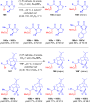
Scheme 53: Diastereoselective electrochemical carboxylation of chiral α-bromocarboxylic acid derivatives.

Scheme 54: Electrocatalytic stereoselective conjugate addition of chiral β-dicarbonyl compounds to methyl viny...

Scheme 55: Stereoselective electrochemical carboxylation of chiral cinnamic acid derivatives under a CO2 atmos...

Scheme 56: Electrochemical diastereoselective α-alkylation of pyrrolidines attached with phosphorus-derived ch...

Scheme 57: Electrogenerated cyanomethyl anion-induced synthesis of chiral cis-β-lactams from amides bearing ch...

Scheme 58: Diastereoselective anodic oxidation followed by intramolecular cyclization of ω-hydroxyl amides bea...

Scheme 59: Electrochemical deprotonation of Ni(II) glycinate containing (S)-BPB as a chiral auxiliary: diaster...

Scheme 60: Enantioselective electroreductive coupling of diaryl ketones with α,β-unsaturated carbonyl compound...

Scheme 61: Asymmetric total synthesis of ropivacaine and its analogues using a electroorganic reaction as a ke...

Scheme 62: Asymmetric total synthesis of (−)-crispine A and its natural enantiomer via anodic cyanation of tet...

Scheme 63: Asymmetric oxidative electrodimerization of cinnamic acid derivatives as key step for the synthesis...
Hoveyda–Grubbs catalysts with an N→Ru coordinate bond in a six-membered ring. Synthesis of stable, industrially scalable, highly efficient ruthenium metathesis catalysts and 2-vinylbenzylamine ligands as their precursors
- Kirill B. Polyanskii,
- Kseniia A. Alekseeva,
- Pavel V. Raspertov,
- Pavel A. Kumandin,
- Eugeniya V. Nikitina,
- Atash V. Gurbanov and
- Fedor I. Zubkov
Beilstein J. Org. Chem. 2019, 15, 769–779, doi:10.3762/bjoc.15.73
- synthesis of 2-vinylbenzylamines is reported. This involves obtaining 2-vinylbenzylamine ligands from tetrahydroisoquinoline by alkylation and reduction followed by the Hofmann cleavage. The resultant 2-vinylbenzylamines allowed us to obtain new Hoveyda–Grubbs catalysts, which were thoroughly characterised
- methods have been reported for the synthesis of 2-(N,N-dialkylaminomethyl)styrenes [39][40][41][42][43][44][45][46] relying on different approaches: i) from o-vinylbenzyl chloride [43], ii) by the Hofmann cleavage of quaternary tetrahydroisoquinoline salts under the action of silver oxide [39][42] and iii
- styrenes 5 with a cyclic tertiary amino group from 1,2,3,4-tetrahydroisoquinoline (Scheme 2). In this case, the initial isoquinoline was reduced in the presence of formic acid and then converted into the desired products 5 by a one-pot solvent-free reaction under the action of the corresponding dihalide in

Graphical Abstract

Figure 1: Commercially available ruthenium catalysts for metathesis reactions.

Figure 2: Retrosynthesis of the ruthenium catalysts.

Scheme 1: Efficient multigram synthesis of N,N-dialkyl-2-vinylbenzylamines 4 (R1X = Me2SO4, Et2SO4 or BnCl, s...

Scheme 2: Synthesis of N-(2-ethenylbenzyl)heterocycles 5.

Scheme 3: Synthesis of N-monoalkyl-2-vinylbenzylamine 7.

Scheme 4: Synthesis of Hoveyda–Grubbs-type catalysts 11.

Scheme 5: Synthesis of the “chloroform adduct” 9.

Figure 3: Selected X-ray data for ruthenium complexes 11a–c. All hydrogen atoms were deleted for clarity (exc...

Scheme 6: Catalytic activity of compounds 11 in the metathesis reactions.