
Search results
Search for "tert-butyl" in Full Text gives 711 result(s) in Beilstein Journal of Organic Chemistry. Showing first 200.
Palladium-catalyzed benzocyclization reactions of quinoline-2-carboxamides via sequential C–H/N–H functionalization
Beilstein J. Org. Chem. 2026, 22, 905–914, doi:10.3762/bjoc.22.71
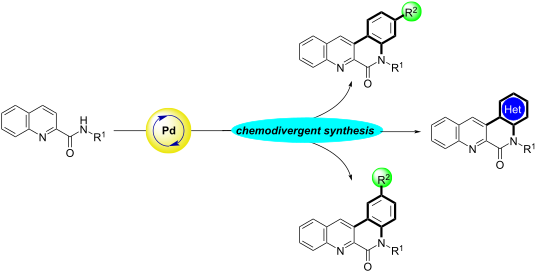
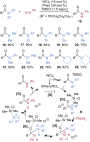
- . Although relatively low product yields were obtained when using dihaloarenes 2d and 2e, both containing a tert-butyl group, after 20 h, the corresponding products 3ad and 3ae were obtained in good to excellent yields when the reaction time was prolonged to 96 h (Table 3, entries 3 and 4). Similar trends
- ). The products 3ab and 3ac, which were synthesized from 2b and 2c, were detected as the corresponding isomers, with the methyl group attached to the C3 or C2 position of products 3ab and 3ac, respectively. In the case of product 3ad, derived from 1-bromo-2-iodobenzene 2d, which contains a tert-butyl
- group in the C5 position, a similar substitution pattern was detected as for compound 3ad derived from 1-bromo-2-iodo-5-methylbenzene (2b). Additionally, during the coupling reaction carried out with 5-tert-butyl-1-bromo-2-iodobenzene, Int-1ad species was detected as a reaction intermediate, as




Chiral cyclopropenimine-catalyzed enantioselective Michael reactions of phenol and benzofuran-derived α,β-unsaturated pyrazolamides with benzophenone-imine of glycine esters
Beilstein J. Org. Chem. 2026, 22, 888–896, doi:10.3762/bjoc.22.69
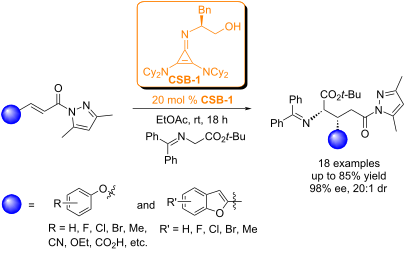
- asymmetric Michael reactions between β-substituted α,β-unsaturated ester 1a and benzophenone-imine of glycine tert-butyl ester 2a in the presence of 20 mol % of CSB-1 and other chiral tertiary amine catalysts including quinine, levamisole, (+)-sparteine (Scheme 1). To our disappointment, the results showed


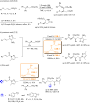

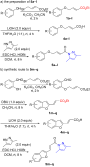

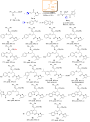


Unsymmetrical sulfoxides with sterically hindered catechol fragment: synthesis, structure, electrochemical properties, and antiradical activity
Beilstein J. Org. Chem. 2026, 22, 828–837, doi:10.3762/bjoc.22.65
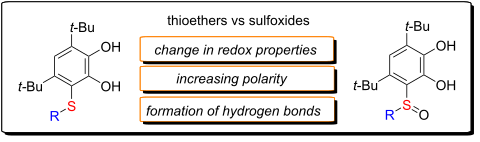
- the reaction with the 2,2′-diphenyl-1-picrylhydrazyl radical (DPPH) and the 2,2′-azinobis(3-ethylbenzothiazoline-6-sulfonic acid) radical cation (ABTS+•). In both assays, the lowest IC50 values among the studied catechol sulfoxides were found for compounds bearing isopropyl and tert-butyl substituents
- refined. In all the studied single-crystal compounds, the molecules (Figure 1) contain a catechol fragment, in which the bond lengths in the phenyl ring, hydroxy and tert-butyl groups (Table S2, Supporting Information File 1) correspond to the literature data for catechols [18][44]. The observed S=O
- transformations of the sulfur-centered intermediate can lead to the corresponding sulfone via a disproportionation reaction or in the presence of traces of water [49]. In the case of compounds 2a and 5a, which bear a tertiary hydrocarbon substituent at the sulfinyl group (tert-butyl and adamantyl, respectively


Synthetic study of vic-bromination of diarylacetylenes, easy purification and separation
Beilstein J. Org. Chem. 2026, 22, 795–802, doi:10.3762/bjoc.22.61
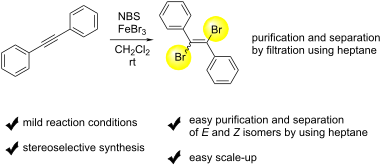
- -tolylethyne (1b) under the optimized conditions gave the corresponding product with a ratio of 68:32 of E and Z isomers. The isolated yield of E-2b was <54% yield (Table 2, entry 1). Likewise, 1,2-bis(4-(tert-butyl)phenyl)ethyne (1c) showed the similar tendency to give E-2c in 45% yield (Table 2, entry 2
- seemed to be good. In the case of unsymmetrical diarylacetylene, 1-(tert-butyl)-4-((4-fluorophenyl)ethynyl)benzene (1h) was tested and the corresponding E-2h was isolated and purified with MeOH. E-2h was obtained in 41% yield (Table 2, entry 7). A gram-scale synthesis of E-2a and Z-2a from 1a was



Synthesis of heterocycles based on azomethine ylides from α-amino acids (or amines) and carbonyl compounds
Beilstein J. Org. Chem. 2026, 22, 705–741, doi:10.3762/bjoc.22.55
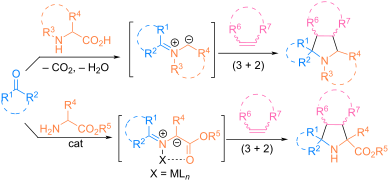
- dimethyl fumarate, acrylates, and N-methylmaleimide, were also studied in the cycloaddition reaction (Scheme 3). Lower enantioselectivity was observed in these cases, and the most important result was a significant improvement in enantioselectivity upon switching from methyl acrylate to bulk tert-butyl
- acrylate, 60 and 93% ee, respectively. In 2003, Schreiber et al. reported an efficient silver(I) acetate/QUINAP (L2) catalytic system for the (3 + 2) cycloaddition of azomethine ylides to unsaturated carboxylic acid esters [37]. The reaction with tert-butyl acrylate showed excellent levels of
- diastereoselectivity (>20:1) and enantioselectivity (89–96% ee) regardless of the electronic and steric properties of the aromatic ring in the α-(arylimino)ester (Scheme 4). However, when using other dipolarophiles, such as dimethyl maleate, tert-butyl crotonate, and tert-butyl cinnamate, a noticeable decrease in


Synthesis of depressin, cryptomeridiol and 4-epi-cryptomeridiol enabled by a terpenoid chiral pool-producing platform
Beilstein J. Org. Chem. 2026, 22, 683–690, doi:10.3762/bjoc.22.53
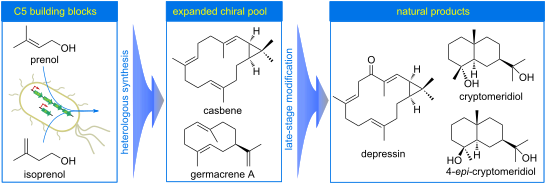
- either no reaction occurred or complex mixtures were obtained when 4 was treated in metal- and non-metal-mediated reaction conditions. We have finally found that selective allylic oxidation of 4 at C13 could be achieved by the action of a catalytic amount of SeO2 (0.1 equiv) and tert-butyl hydroperoxide


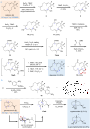
Synthesis and anti-cancer activity of naphthalimide–organylselanyl conjugates
Beilstein J. Org. Chem. 2026, 22, 416–435, doi:10.3762/bjoc.22.29
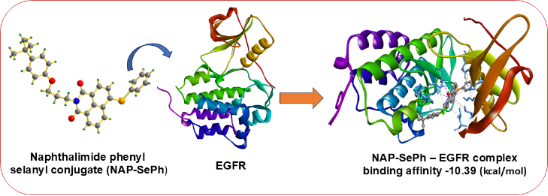
- conserved 3-(4-(tert-butyl)phenoxy)propyl function at the imide nitrogen. The resultant naphthalimide–organylselanyl conjugates, NAP-SePh and NAP-Se(n-Oct), were characterised using various spectroscopic techniques, including FTIR, ¹H, ¹³C, ⁷⁷Se NMR and high-resolution mass spectrometry (HRMS). NAP-SePh was
- naphthalimide has also been explored to a considerable extent [45][46]. In general, the tert-butyl group has attracted considerable attention in drug design and synthesis due to its lipophilic character [47][48]. From the above-mentioned point of view, we have changed both sides of the substitution with a new
- class of hydrophobic function (3-(4-(tert-butyl)phenoxy)propyl group) at the imide nitrogen and phenyl selanyl and octyl selanyl groups at the 6-position of naphthalimide to provide the naphthalimide-organyl selanyl conjugates 7 and 8. The molecular structures of these derivatives feature multivalent




Cone p-aminocalix[4]arenes enriched with ‘clickable’ alkyne or azide functionalities
Beilstein J. Org. Chem. 2026, 22, 399–415, doi:10.3762/bjoc.22.28
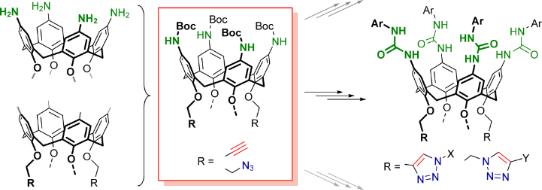
- compatible with propargyl or 2-azidoethyl functionalities residing at the calixarene narrow rims, these ‘simple’ transformations are not applicable to the available propargylated/2-azidoethylated p-tert-butyl- or p-H-calix[4]arenes. Therefore, the multistep reaction sequences presented below have been
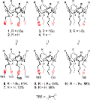
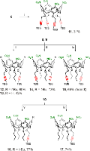
- mixture, from 0 °C → rt, overnight) the nitration of calixarene 6 resulted in a mixture of exhaustively nitrated product 11, partially nitrated calixarenes having nitro and tert-butyl groups at the wide rims, and a large amount of other calixarene side product(s) having broadened and non-interpretable NMR
- calixarene 16 all three propylated aromatic units were nitrated, and the propargylated one still contained a tert-butyl group. Thus, within a step-wise nitration paradigm, the narrow-rim propargylated aromatic units are more stable against nitration when compared to the propylated aromatic units of the






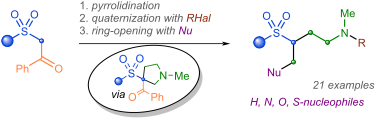
Dialkylaminoalkylation of β-ketosulfones via ring-opening of 3-sulfonylpyrrolidines
Beilstein J. Org. Chem. 2026, 22, 383–389, doi:10.3762/bjoc.22.26
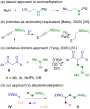
- bond (Figure 2b) [30]. At the same time, Yang et al. presented a domino radical reaction of CH2-active compounds II and N,N-dimethylanilines III promoted by di-tert-butyl peroxide (DTBP), allowing the formation of the ethylene link via a domino-process of the methylenation and subsequent aminomethyl




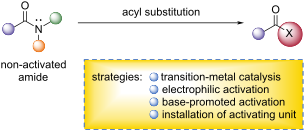
Recent advances in the cleavage of non-activated amides
Beilstein J. Org. Chem. 2026, 22, 352–369, doi:10.3762/bjoc.22.23
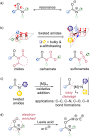
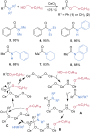
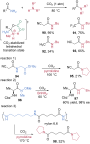
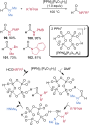
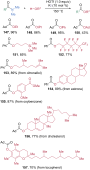
- specific reaction conditions. The Maes group introduced a tert-butyl nicotinate (N-t-Bu nic) moiety as a directing group to coordinate with transition metals, thereby enhancing electrophilicity and promoting esterification (Scheme 23) [75]. In the presence of a Zn catalyst, the amide is activated through
- bidentate chelation, as depicted in the proposed transition state AH, which facilitates nucleophilic attack of alcohols at the carbonyl center and subsequent C–N bond cleavage. Under the optimized conditions, tert-butyl benzamidonicotinate reacted smoothly with methanol, ethanol, and butanol to afford alkyl
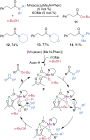
- epimerization. Notably, the chemoselective esterification of a complex peptide, containing four distinct amide bonds and the tert-butyl nicotinate directing group, delivered the ester product 193 in 58% yield. The p-methoxybenzyl (PMB) group was recognized as an efficient activating unit for the selective










Arene activation via π-bond localization: concepts and opportunities
Beilstein J. Org. Chem. 2026, 22, 257–273, doi:10.3762/bjoc.22.19
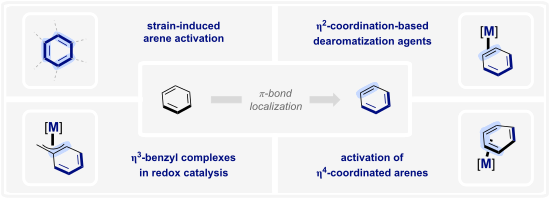
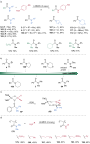
- [45][50]. Synthesis and utilization of enantioenrichted Mo(η2-arene) complexes in enantioselective synthesis [55]. Synthesis of trisubstituted cyclohexenes from phenyl sulfones enabled by tungsten-mediated dearomatization; TSME: 1-(tert-butyl-dimethylsilyloxy)-1-methoxyethene [60][62]. Diels–Alder


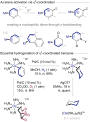


Circumventing Mukaiyama oxidation: selective S–O bond formation via sulfenamide–alcohol coupling
Beilstein J. Org. Chem. 2026, 22, 158–166, doi:10.3762/bjoc.22.9
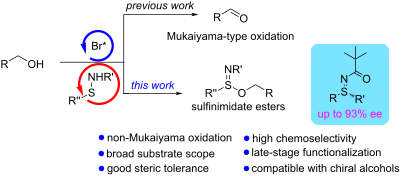
- efficiently even with secondary hydroxy groups. The method also accommodated sterically hindered and functionalized alcohols. tert-Butylmethanol in which the hydroxy group is attached to a methylene adjacent to a bulky tert-butyl group, gave the desired product 3v’ in 91% yield, while a halogenated alcohol


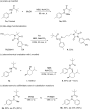
Asymmetric Mannich reaction of aromatic imines with malonates in the presence of multifunctional catalysts
Beilstein J. Org. Chem. 2026, 22, 151–157, doi:10.3762/bjoc.22.8
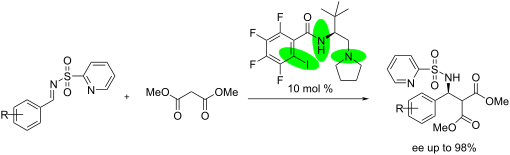
- with the steric effect of the tert-butyl group of the catalyst, is responsible for the high stereoselectivity of the reaction. Keywords: aromatic imine; asymmetric catalysis; Mannich reaction; noncovalent interactions; organocatalysis; Introduction The Mannich reaction, i.e., the addition of an


Total synthesis of natural products based on hydrogenation of aromatic rings
Beilstein J. Org. Chem. 2026, 22, 88–122, doi:10.3762/bjoc.22.4
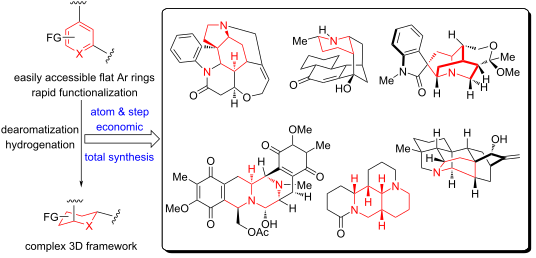
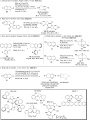
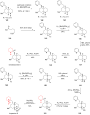
- , constructing the [2.2.2]-bridged ring within the (+)-nominine followed by protection of the primary alcohol as mesylate. Using lithium bromide as the bromine source, an SN2 reaction was performed, and the allylic position was oxidized with tert-butyl peroxide and selenium dioxide to generate the enone 104
- spontaneously underwent an intramolecular cycloaddition to yield the highly rigid [2.2.2]-bridged ring skeleton in ketone 116. Finally, nominine was generated via a two-step sequence comprising a Wittig reaction followed by tert-butyl peroxide/selenium dioxide-mediated allylic oxidation, thereby completing











Synthesis and applications of alkenyl chlorides (vinyl chlorides): a review
Beilstein J. Org. Chem. 2026, 22, 1–63, doi:10.3762/bjoc.22.1
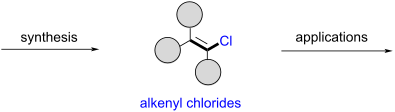
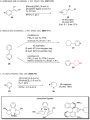
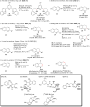
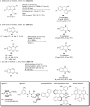
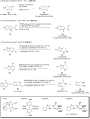
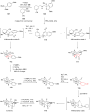
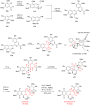
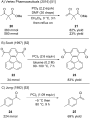
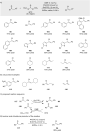
- alkenyl chloride 156 was isolated only in trace amounts, alongside isomerized alkene 157 and dichloride 158. Notably, only the sterically hindered tert-butyl-substituted alkyne afforded the desired product 155 in high yields, whereas hydrochlorination of 4-octyne proved inefficient to deliver compound 159
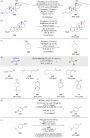
- aliphatic carbocations (Scheme 40A) [142]. Treatment of tert-butyl chloride (215) with alkyne 3 in the presence of ZnCl2 furnished alkenyl chlorides 155 and 9, along with considerable amounts of polymeric byproducts [93][143]. Compound 155 was obtained with excellent stereoselectivity (>98:2 E/Z
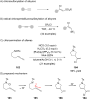
- , aligned with the axis of the vacant orbital. In the case depicted in Scheme 40B, the face syn to the hydrogen is significantly more accessible than the face syn to the bulky tert-butyl group, accounting for the high E-selectivity observed. In contrast, alkyl groups with reduced steric demand led to





















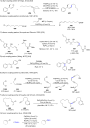


One-pot synthesis of ethylmaltol from maltol
Beilstein J. Org. Chem. 2025, 21, 2755–2760, doi:10.3762/bjoc.21.212

- adjustment through an Achmatowicz rearrangement [8] initiated by either anodic oxidation [7][9][10], chlorine gas [11][12], or tert-butyl hypochlorite [13] provides pyran-3-ones. Further oxidation and acid- or heat-induced rearrangement furnishes ethylmaltol (1). Of note, some of these procedures allow for
- aqueous hydrochloric acid in a one-pot protocol. To our surprise, this consistently resulted in a 1:1 mixture of ethylmaltol (1) and maltol (2), each isolated in 30% yield. Assuming insufficient silyl stability during the methylation step, we opted to investigate the bulkier tert-butyl(dimethyl)silyl (TBS
- ) group. Protection of maltol (2) with tert-butyl(dimethyl)silyl chloride (TBSCl) afforded silyl ether 8e in 99% (Table 2, entry 5). Indeed, methylation of the lithium dienolate of 8e with methyl iodide at 0 °C afforded TBS-protected ethylmaltol (9e) in 64% with no trace of maltol (2). Subsequent

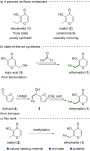

Pd-catalyzed dehydrogenative arylation of arylhydrazines to access non-symmetric azobenzenes, including tetra-ortho derivatives
Beilstein J. Org. Chem. 2025, 21, 2234–2242, doi:10.3762/bjoc.21.170
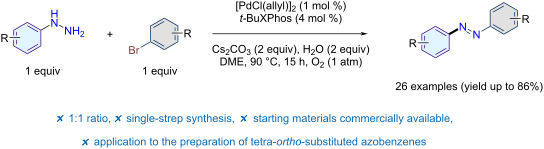
- were consumed, various impurities, including biphenyls, diarylamines, aniline, and toluidine, were formed in varying amounts. Since a final dehydrogenation step is required to complete the reaction, the experiment was repeated with various oxidants tested as additives. The use of di-tert-butyl peroxide


Synthesis of triazolo- and tetrazolo-fused 1,4-benzodiazepines via one-pot Ugi–azide and Cu-free click reactions
Beilstein J. Org. Chem. 2025, 21, 2202–2210, doi:10.3762/bjoc.21.167
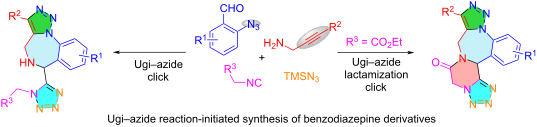
- ), tert-butyl isocyanide (3a), and TMSN3 (4) in 2 mL of MeOH. After heating the reaction mixture at 40 °C for 12 h, the solvent was removed and changed to 2 mL of MeCN followed by heating at 130 °C for 2 h (Scheme 3A). However, no desired product was detected in the reaction mixture. The functional groups


Electrochemical cyclization of alkynes to construct five-membered nitrogen-heterocyclic rings
Beilstein J. Org. Chem. 2025, 21, 2173–2201, doi:10.3762/bjoc.21.166
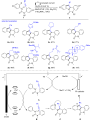
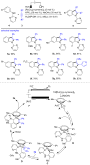
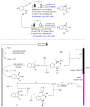
- reaction also showed high compatibility with 2-naphthyl (15h), 2-thiophenyl (15i), ferrocenyl (15j), cyclohexenyl (15k) and tert-butyl (15l) incorporated at the ethynyl moiety. According to the results of control experiments, a plausible mechanism was presented. Firstly, one-electron oxidation of 14a








C2 to C6 biobased carbonyl platforms for fine chemistry
Beilstein J. Org. Chem. 2025, 21, 2103–2172, doi:10.3762/bjoc.21.165
- versatile scaffold for bioactive molecules) with up to 99% yield and 96% ee were prepared (Scheme 69). The large electron-donating groups of 3,5-di-tert-butyl-4-methoxyphenyl (DTBM) improved the activities of the CuI–thiophene-2-carboxylate catalyst (CuTc) while the use of (R)-DTBM-GarPhos as the chiral


α-Ketoglutaric acid in Ugi reactions and Ugi/aza-Wittig tandem reactions
Beilstein J. Org. Chem. 2025, 21, 2021–2029, doi:10.3762/bjoc.21.157
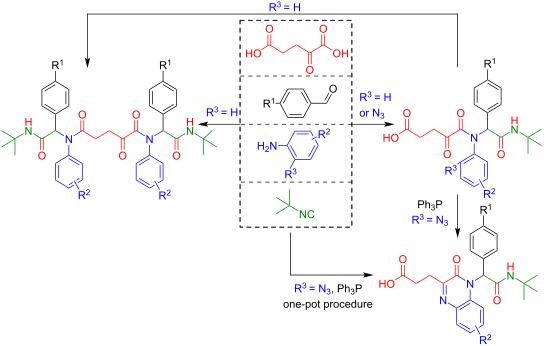
- library of bis- and tetraamides was synthesized by the Ugi reaction with α-ketoglutaric acid, tert-butyl isocyanide, aromatic aldehydes, and aromatic amines. When o-azidoanilines were used, azidated peptidomimetics were obtained, the post-cyclization of which by the aza-Wittig reaction yielded a series of
- -ketoglutaric acid in the four-component Ugi reaction with equimolar amounts of the reagents. It was found that stirring of aromatic aldehydes 2a–d, aromatic amines 3a–d, KGA (1) and tert-butyl isocyanide (4) (in a 1:1:1:1 molar ratio) in methanol for 24 hours at 45 °C resulted in the formation of 5-((aryl)(1
- procedures can be found in Supporting Information File 1). Since α-ketoglutaric acid is dibasic, increasing the stoichiometric amounts of the starting materials enables the Ugi reaction involving two carboxyl groups. Thus, mixing KGA (1), 4-chlorobenzaldehyde (2a), 4-chloroaniline (3a), and tert-butyl


Aryl iodane-induced cascade arylation–1,2-silyl shift–heterocyclization of propargylsilanes under copper catalysis
Beilstein J. Org. Chem. 2025, 21, 1984–1994, doi:10.3762/bjoc.21.154
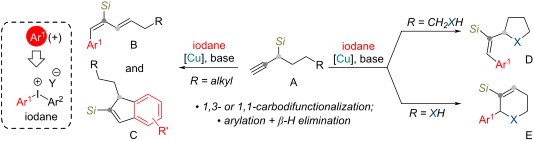
- it improves lipophilicity, oral absorption and biological activity [25]. Results and Discussion Arylation of aliphatic chain-containing propargylsilanes We started our investigation with the arylation of aliphatic chain-containing propargylsilanes. The starting material – tert-butyl(hept-1-yn-3-yl
- formation. Its silylated version (7, where R = COOSi(Me)3) only resulted in starting material degradation. Interestingly, tert-butyl ester 7e (R = COOt-Bu) provided the desired arylated lactone 8t, along with the protodecupration product 13, which was formed in excess under the standard arylation conditions
- an internal nucleophile (O-, N-) and reductive elimination affords the arylated product 8 and regenerates the Cu(I) catalyst. The added base (B:) traps the H+, generated in this catalytic cycle. In the case of tert-butyl esters (7: R = COOt-Bu) an equivalent of isobutylene gas is released as a side


Photochemical reduction of acylimidazolium salts
Beilstein J. Org. Chem. 2025, 21, 1973–1983, doi:10.3762/bjoc.21.153
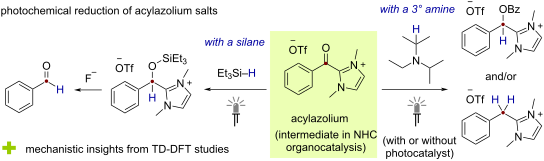
- = 4,4′-di-tert-butyl-2,2′-dipyridine) as a photocatalyst and the simple tertiary amine diisopropylethylamine (DIPEA, 5 equiv) in MeCN (0.05 M). After 24 h under irradiation with light from blue LEDs (λmax = 440 nm), the crude mixture was concentrated under reduced pressure and analyzed by 1H NMR


Systematic pore lipophilization to enhance the efficiency of an amine-based MOF catalyst in the solvent-free Knoevenagel reaction
Beilstein J. Org. Chem. 2025, 21, 1854–1863, doi:10.3762/bjoc.21.144
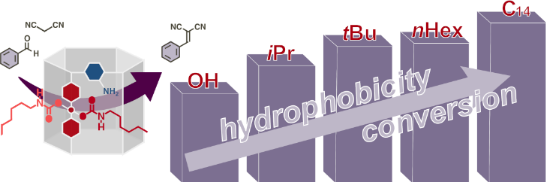
- functionalized MOFs to the Knoevenagel condensation reaction. A well-defined MOF material composed of both amine- and hydroxy-bearing linkers was reacted with a series of aliphatic isocyanates (isopropyl, tert-butyl, n-hexyl, and tetradecyl) and, incongruously, was found to preferentially react at the hydroxy
- whose pores are uniformly decorated with different lipophilic groups (Figure 2A). Using this strategy, we quantitatively functionalized the –OH groups of KSU-1 with isopropyl and tert-butyl isocyanate. While primary isocyanates were less selective, starting to react at the amines before the hydroxy
- respective isocyanate in acetonitrile at 80 °C; KSU-1 reacted with isopropyl, tert-butyl, n-hexyl, and tetradecyl isocyanate to generate KSU-1iPr and KSU-1t-Bu, KSU-1n-Hex, and KSU-1C14, respectively. Successful post synthetic reaction was observed by proton nuclear magnetic resonance (1H NMR) spectroscopy


Fe-catalyzed efficient synthesis of 2,4- and 4-substituted quinolines via C(sp2)–C(sp2) bond scission of styrenes
Beilstein J. Org. Chem. 2025, 21, 1799–1807, doi:10.3762/bjoc.21.142
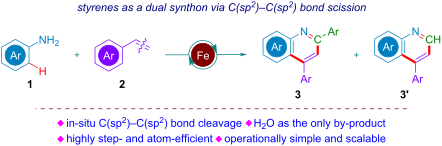
- , resulting in the formation of both 3r and 3r′, which were obtained in 86% combined yield. Gram-scale studies were conducted to further demonstrate the synthetic potential and practical utility of the developed methodology. The biologically significant compounds 6-(tert-butyl)-2,4-diphenylquinoline (3d) and