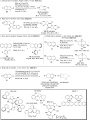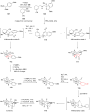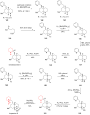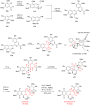

Search for "resistance" in Full Text gives 343 result(s) in Beilstein Journal of Organic Chemistry. Showing first 200.
Beilstein J. Org. Chem. 2026, 22, 857–881, doi:10.3762/bjoc.22.67
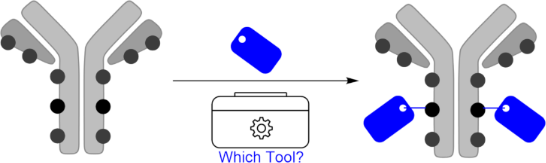
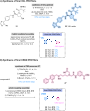
Graphical Abstract
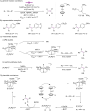
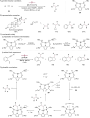
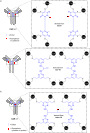
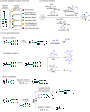
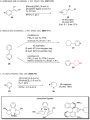
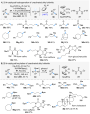
Scheme 1: a) Sanger’s reagent (1), b) reductive amination by sodium cyanoborohydride, c) native chemical liga...
Scheme 2: Introduction of carbonyl functionality at protein N-termini via a) oxidation by periodate, b) Rapop...
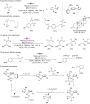
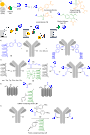
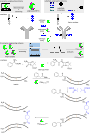
Scheme 3: a) Concept of disulfide rebridging. Reagents include b) sulfones 6, c) dihaloacetones 7, d) dibromo...
Scheme 4: Multi-disulfide rebridging technologies.
Scheme 5: Formation of full- and half-antibody as a result of disulfide rebridging.
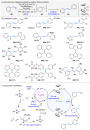
Scheme 6: Use of 2,3-diaminopropionic acid (DAP, 13) for native-sequence substrate profiling.
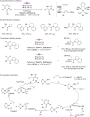
Scheme 7: Affinity-guided labelling. a) Reagents and catalysts appended to the binder include electrophilic m...
Scheme 8: Chemical sequence to convert subtilisin serine residue into a cysteine analogue.
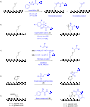
Scheme 9: Examples of small molecule reagents. Modifications of a–c) methionine by oxaziridine 22, hypervalen...
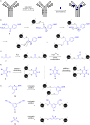
Scheme 10: Labelling of arginine by reagents carrying a) glyoxal 27, b) phenanthrenequinones 28, c) DKPA 29 gr...
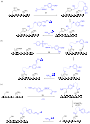
Scheme 11: Examples of linchpin-directed modification targeting a) histidine, b) aspartic acid, and c) lysine ...
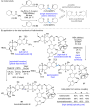
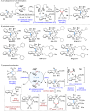
Scheme 12: Overview of glycan-directed strategies for site-specific protein modification. a) Structural motifs...
Scheme 13: Generic reaction mechanisms recruited by various native-sequence modifying enzymes.
Scheme 14: a,b) Engineered biocatalysts including sortase. Proteins AGA1 and AGA2 are surface proteins natural...
Scheme 15: Engineered biocatalysts include a) microbial transglutaminase (MTG) and b) penicillin G acylase (PG...
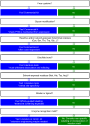
Scheme 16: Selection scheme of a suitable native-sequence labelling tool.
Beilstein J. Org. Chem. 2026, 22, 838–856, doi:10.3762/bjoc.22.66
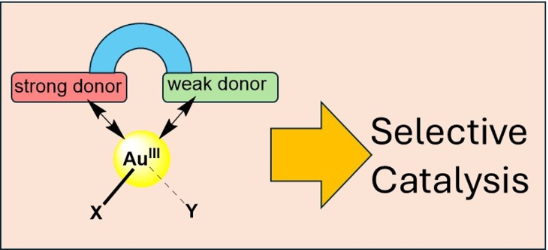
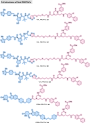
Graphical Abstract
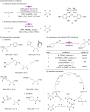
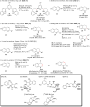
Scheme 1: Assessment of ligand influence by kinetic competition experiments.
Scheme 2: Ligand types employed in the stabilisation of gold(III) complexes.
Scheme 3: Au(III) π- and σ-complexes stabilised by C^N^C and C^N chelate ligands [28-32] and an example of a gold(II...
Scheme 4: Gold(III) C^C chelate complexes.
Figure 1: Examples of photoemissive gold(III) pyrazine complexes. Dr. J. Fernandez-Cestau is gratefully ackno...
Scheme 5: Gold hydride complexes supported by tridentate pincer ligands and corresponding1H NMR chemical shif...
Scheme 6: Gold(III) hydride formation by oxygen transfer.
Scheme 7: Heterolytic H–H bond cleavage by cationic Au(III) complexes [32,56].
Scheme 8: Gold(III) models of the water-gas shift reaction [30].
Scheme 9: Gold(III) hydride complexes supported by C^C and C^N chelate ligands [32,50].
Scheme 10: O2 insertions into Au–H bonds.
Scheme 11: Alkyne, alkene and isocyanide hydroauration by a bimolecular gold radical mechanism [49,65,66].
Scheme 12: Reactions of (C^C)Au–H with DMAD [50].
Scheme 13: Alkyne hydroauration by a bimolecular Au(III)–Au(I)-assisted process [69].
Scheme 14: Gold(III) π-allyl complexes.
Scheme 15: Outer-sphere mechanism of ethylene insertion into Au–O bonds [20,84].
Scheme 16: Catalytic acetylene functionalisation [86,87].
Scheme 17: Examples of alkene insertions into Au–C bonds [88,89].
Scheme 18: Examples of β-H elimination and chain walking processes in (C^P)-ligated gold alkyls [90].
Scheme 19: Mechanism of alkyne hydroarylation with (C^P) gold catalysts [92].
Scheme 20: Vinylic triflate esters by gold-catalysed nucleophilic attack on alkynes [94].
Scheme 21: Gold-catalysed and gold-free steps in the formation of Heck-type olefins [97,99].
Beilstein J. Org. Chem. 2026, 22, 828–837, doi:10.3762/bjoc.22.65
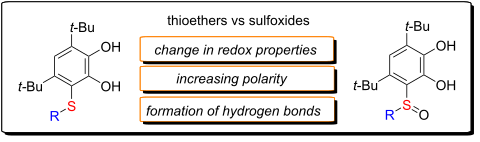
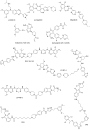
Graphical Abstract
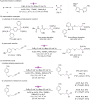
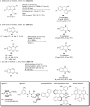
Scheme 1: Synthesis of catechol-contained thioethers 1–7 and sulfoxides 1a–7a.
Figure 1: Molecular structures of 1a (a), 4a (b), 5a (c), 6a (d), 7a (e) (solvent molecules and fragment diso...
Figure 2: CV curves of 1 and 1a at the potential ranges: from −0.5 to 1.75 V for 1 (curve 1); from −0.5 to 1....
Scheme 2: Proposed mechanism of electrochemical transformations of catechol sulfoxides (path a – for 1a, 3a, ...
Figure 3: CV curve of 5a at the potential range from −0.50 to 1.40 V (curve 1); from −0.50 to 1.70 V (curve 2...
Figure 4: CV curves of electrolysis products of 7a at the potential ranges from 0.5 to −0.4 V (CH3CN, GC elec...
Scheme 3: Proposed mechanism of the reduction of electrogenerated o-benzoquinone.
Beilstein J. Org. Chem. 2026, 22, 821–827, doi:10.3762/bjoc.22.64
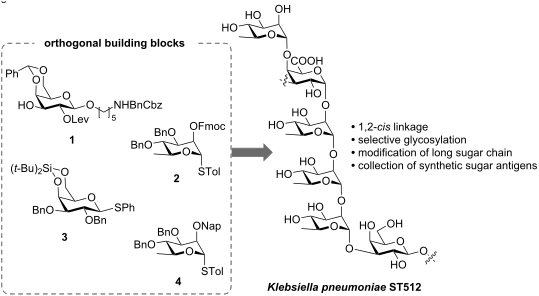
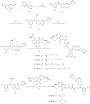
Graphical Abstract
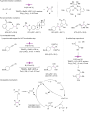
Figure 1: Structure of the K. pneumoniae ST512 CPS repeating unit and retrosynthetic analysis.
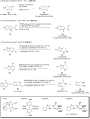
Scheme 1: Preparation of building blocks 1–4.
Scheme 2: Synthesis of hexasaccharide repeating unit 20.
Scheme 3: Synthesis of the analogues 21–24.
Beilstein J. Org. Chem. 2026, 22, 782–794, doi:10.3762/bjoc.22.60
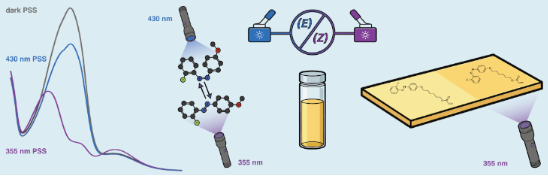
Graphical Abstract
Figure 1: Molecular structure of investigated compounds 1a–f and known azobenzene derivatives A–C exploited i...
Scheme 1: Synthesis of azobenzene-acrylate monomers 1a–f.
Figure 2: Representative TGA (left) and DSC (right) curves of compounds 1c (black) and 1d (red).
Figure 3: Energy level diagram of the electrochemically measured (black) and DFT-calculated (red for E-isomer...
Figure 4: A) Experimentally measured UV–vis absorption spectra of the monosubstituted azobenzenes 1a, c and e...
Figure 5: A) Experimentally measured UV–vis absorption spectra of the azobenzenes 1c and 1d at c = 4 × 10⁻⁵ M...
Figure 6: A) HOMO/LUMO localizations in representative E-1a. B) HOMO−1/LUMO localizations in representative Z-...
Figure 7: 1H NMR spectra (500 MHz, CDCl3, 20 °C) of azobenzene 1e corresponding to the dark-adapted PSS (blac...
Figure 8: A) UV–vis absorption spectra of azobenzene 1e corresponding to the dark-adapted PSS (black), 355 nm...
Figure 9: A) Thermal kinetics curve of compound 1e obtained by UV–vis monitoring at c = 4 × 10⁻⁵ M (DCE, 60 °...
Figure 10: Photoswitching of target azobenzene 1a in the solid state (polymeric matrix). A) Polystyrene thin f...
Beilstein J. Org. Chem. 2026, 22, 771–781, doi:10.3762/bjoc.22.59
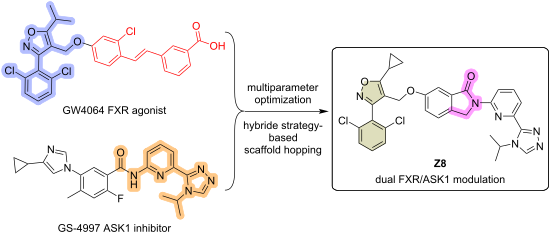
Graphical Abstract
Scheme 1: Steroidal and nonsteroidal FXR agonists.
Scheme 2: ASK1 inhibitors.
Scheme 3: Dual FXR/ASK1 modulation strategy for MASH.
Scheme 4: Synthesis of compound 2. Conditions: (a) NH2OH·HCl, NaOH, EtOH/H2O, 70 °C, 12 h; (b) NCS, DMF, 40 °...
Scheme 5: Synthesis of compounds IXa–d. Conditions: (a) N2H4·H2O, MeOH, rt, 12 h; (b) DMF–DMA, 80 °C, 12 h; (...
Scheme 6: Synthesis of compounds Z1–15. Conditions: (a) K2CO3, KI, MeCN, 50 °C, 6 h, 86–96% yield; (b) Pd2(db...
Scheme 7: Synthesis of compounds Z16–29. Conditions: (a) Pd(PPh3)4, Na2CO3, 1,4-dioxane/H2O, 80 °C, 18 h, 64–...
Scheme 8: Synthesis of compound Z30. Conditions: (a) NaH, DMF, rt, 16 h; (b) TFA, DCM, 0 °C, 3 h; (c) Pd2(dba)...
Scheme 9: Molecular docking of dual-target modulator Z8 to the ligand binding sites of FXR (PDB ID: 3DCT, htt...
Figure 1: FXR agonist activity of all compounds. Results of the dual-luciferase reporter assay in CHO cells c...
Figure 2: ASK1 inhibition of all compounds. Results of the ADP-Glo™ kinase assay after treating ASK1 kinase w...
Figure 3: Effects of Z8 and Z30 on OA-induced lipid accumulation in HepG2 cells. Cells were treated with GW40...
Beilstein J. Org. Chem. 2026, 22, 628–661, doi:10.3762/bjoc.22.49
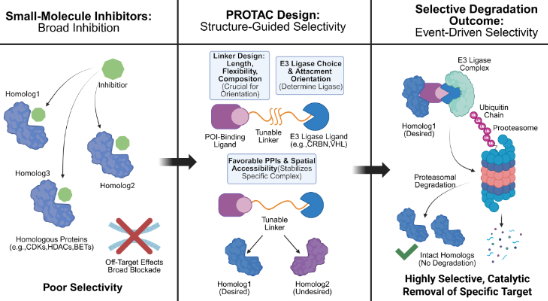
Graphical Abstract
Figure 1: Mechanism of a PROTAC-mediated targeted protein degradation. Created in BioRender. Wu, M. (2026) ht...
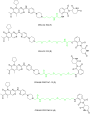
Figure 2: CDK4/6 PROTACs with alkyl or PEG chains as linkers.
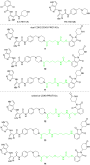
Figure 3: CDK4/6 PROTACs with triazole-containing linkers.
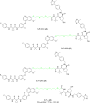
Figure 4: Structures of AT-7519 (7) and FN-1501 (8), and CDK9 degrading PROTACs based on compound 8 with vari...
Figure 5: CDK9 PROTACs with alkane chain as linkers or triazole linkers.
Figure 6: Structures of HDAC6 inhibitors ACY1215 (17) and ACY-241 (18), as well as the structure of PROTACs 1...
Figure 7: C4-linked-series and C5-linked-series of HDAC6 PROTACs.
Figure 8: Structures of VHL-based degraders.
Figure 9: Structures of VHL-based and CRBN-based selective HDAC PROTACs.
Figure 10: Structures of the “amide series” and “phenyl series” PROTACs studied by Crews et al.
Figure 11: Structures of the “amide series” PROTACs.
Figure 12: Structures of the “phenyl series” PROTACs.
Figure 13: Structures of JQ1 (34) and MZ1 (35).
Figure 14: Structures of macro-PROTAC-1 and SHD913.
Figure 15: Commonly utilized thalidomide-derived CRBN ligands and possible linker attachment styles. A1, A2: p...
Figure 16: VHL ligands frequently used in PROTACs. Linker attachment options are represented with curly bonds ...
Figure 17: Varying the inhibitor warhead and the recruited E3 ligase permits targets to be accessed for degrad...
Figure 18: Structures of YX-2-233 (42) and YX-2-107 (43).
Figure 19: Structures of compounds 44 and 45.
Figure 20: Design of the SGK3 PROTACs.
Figure 21: CRBN, VHL, and IAP ligands used when designing HDAC-PROTACs.
Figure 22: CDK4/6-PROTACs with different E3 ligands targeting the same E3 ubiquitin ligase.
Figure 23: Structural basis for the selective degradation of CDK6 over CDK4 by PROTAC 2. (A) CDK4–molecule 2–C...
Figure 24: Regarding the PPI-driven selectivity mechanism of two PROTAC molecules, SJF-α and SJF-δ, for p38α a...
Figure 25: Co-crystal structure and ultra-high selectivity of the STAT6 PROTAC degrader AK-1690. (A) STAT6–AK-...
Beilstein J. Org. Chem. 2026, 22, 611–619, doi:10.3762/bjoc.22.47
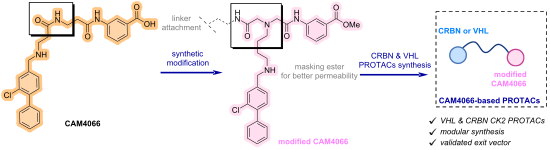
Graphical Abstract
Figure 1: Design strategy and validation. A) Structure of CAM4066 (1) that served as a model design for the d...
Scheme 1: Synthesis of the key ligand-linker PROTAC precursors. For compound 14, HATU/DIPEA has been used ins...
Scheme 2: (A) Synthesis of final VHL PROTACs; (B) Synthesis of final CRBN PROTACs. Abbreviations: Boc = tert-...
Figure 2: Full structures of final VHL PROTACs 23–26 and CRBN PROTACs 28 and 29.
Beilstein J. Org. Chem. 2026, 22, 592–602, doi:10.3762/bjoc.22.45
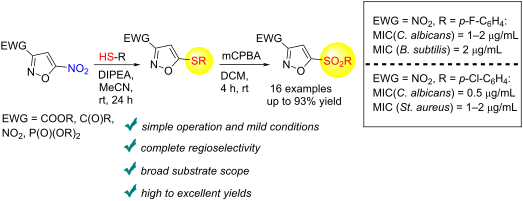
Graphical Abstract
Figure 1: Examples of sulfonylisoxazoles with biological activities.
Scheme 1: Reactions for preparing 5-sulfonylisoxazoles.
Scheme 2: Scope of 5-nitroisoxazoles 1a–g in the reaction with thiophenols.
Scheme 3: Scope of 5-thioisoxazoles 2a-p in the reaction with mCPBA.
Scheme 4: Oxidation of 5-thioisoxazoles into 5-sulfinylisoxazoles.
Figure 2: The samples of isoxazole derivatives trigger SOS response in E. coli reporter strains. A) Agar plat...
Figure 3: Inhibition of Klenow fragment of E. coli DNA polymerase I. A) The principal scheme of the Klenow fr...
Figure 4: Inhibition of E. coli DNA gyrase and Topo IV cleavage activity. A) The principal scheme of E. coli ...
Figure 5: Inhibition of E. coli DNA Topo I cleavage activity. A) The principal scheme of E. coli DNA Topo I c...
Figure 6: Inhibition of E. coli DNA gyrase supercoiling activity. A) The principal scheme of E. coli DNA gyra...
Figure 7: Inhibition of E. coli DNA Topo IV decatenation activity. A) The principal scheme of of E. coli DNA ...
Beilstein J. Org. Chem. 2026, 22, 583–591, doi:10.3762/bjoc.22.44
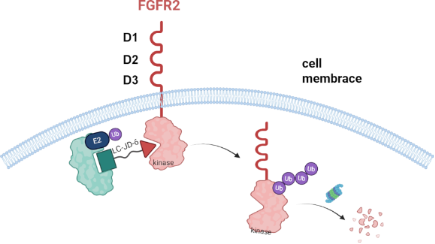
Graphical Abstract
Figure 1: Chemical structures of severel FGFR inhibitors and degraders.
Figure 2: Rationale of the FGFR2 degrader design. a) Structure of the erdafitinib–FGFR complex. The figure wa...
Scheme 1: Synthesis of PROTACs towards FGFR2. Reagents and conditions: (a) K2CO3, Pd (dppf)Cl2, 1,4-dioxane/H2...
Figure 3: a) Representative western blots evaluating the total FGFR2 levels in KATO III cells following treat...
Figure 4: a) FGFR1, FGFR2, FGFR3, and FGFR4 levels in cells after treatment. b) The mechanism of PROTAC. It w...
Beilstein J. Org. Chem. 2026, 22, 495–526, doi:10.3762/bjoc.22.37
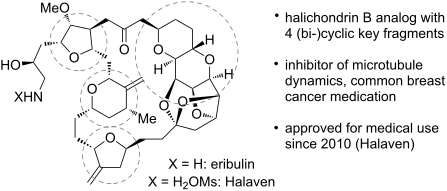
Graphical Abstract
Figure 1: Eribulin with common synthetic precursor fragments and halichondrin B.
Scheme 1: Overview of the industrial process pathway for the large-scale production of the mesylate salt of 1...
Scheme 2: Synthesis of 22. (a) i. 2,2-dimethoxypropane, p-TsOH, MeOH, 65 °C; ii. NaBH4, MeOH, rt; (b) i. NaH,...
Scheme 3: Synthesis of 27. (a) i. NaH, BnBr, THF, rt; ii. iodobenzoic acid, MeCN, 80 °C; iii. (EtO)2POCH2COOE...
Scheme 4: Synthesis of 31 and 33. (a) i. MMTrCl, iPr2NEt, DCM, rt; ii. K2CO3, MeOH, DCM, rt; iii. TBDMSCl, im...
Scheme 5: Synthesis of 1. (a) CrCl2, 37, 38, 39 (proton sponge), LiCl, Mn, ZrCp2Cl2, MeCN, EtOAc; (b) SrCO3, t...
Scheme 6: Synthesis of 45. Above: Reaction conditions: (a) methoxyacetic acid, BF3·OEt2, DCM, −30 °C; (b) Pd(...
Scheme 7: Synthesis of 64. Reaction conditions: (a) i. acetone, I2, rt; ii. vinylmagnesium bromide, THF, −20 ...
Scheme 8: Synthesis of 79. Above: Reaction conditions: (a) i. K2CO3, MeOH, 60 °C; ii. 2,2-dimethoxypropane, H2...
Scheme 9: Synthesis of 92. Reaction conditions: (a) TESCl, imidazole, DCM, 0 °C to rt; (b) i. oxalyl chloride...
Scheme 10: Synthesis of 104. Above: Reaction conditions: (a) cyclohexanone, p-TsOH, toluene, 110 °C, crystalli...
Scheme 11: Synthesis of 117. (a) i. acetone, CuSO4, rt; ii. H2O2, K2CO3, H2O, rt; iii. EtI, MeCN, 70 °C; (b) i...
Scheme 12: Synthesis of 121. Reaction conditions: (a) i. TBDPSCl, imidazole, DMF, rt; ii. O3, DCM, −78 °C; iii...
Scheme 13: Synthesis of 131. (a) i. 2,2-dimethoxypropane, p-TsOH, MeOH, 60 °C; ii. LiAlH4, THF, 0 °C to rt; (b...
Scheme 14: Synthesis of 143. (a) i. I2, PPh3, imidazole, DCM; ii. HMPA, CuI, vinylmagnesium bromide, THF, −20 ...
Scheme 15: Modified synthesis of 104. Reaction conditions: (a) (EtO)2POCH2COOEt, KOt-Bu, THF, 15 °C; (b) TBAF,...
Scheme 16: Synthesis of 161. Reaction conditions: (a) crotyl bromide, Sn, TBAI, NaI, DMF/H2O, rt; (b) NaH, BnB...
Scheme 17: Synthesis of 169. Reaction conditions: (a) i. Co2(CO)8, BF3·Et2O, DCM, 23 °C; ii. CAN, acetone, 0 °...
Scheme 18: Synthesis of 181. Reaction conditions: (a) i. Co2(CO)8, BF3·Et2O, DCM, 23 °C; ii. (NH4)2Ce(NO3)6, a...
Scheme 19: Synthesis of 186. Reaction conditions: (a) NEt3, LiCl, MeCN, 0–23 °C; (b) HF·pyridine, MeCN, 23 °C;...
Scheme 20: Modified synthesis of 181. Reaction conditions: (a) i. Ni(cod)2, P(n-Bu)3, Et3SiH, THF, 23 °C; ii. ...
Scheme 21: Synthesis of 200. Reaction conditions: (a) i. Co2(CO)8, DCM, 23 °C; ii. BF3·Et2O, 0 °C; iii. (NH4)2...
Scheme 22: Modified synthesis of 186. Reaction conditions: (a) DDQ, 2,6-di-t-Bu-4-hydroxytoluene, hv, MeCN, 23...
Scheme 23: Synthesis of 1. Reaction conditions: (a) i. CrCl2, NiCl2, 206, NEt3, THF, 23 °C; ii. DBU, toluene, ...
Scheme 24: Synthesis of 217. Above: Reaction conditions: (a) TBDPSCl, imidazole, DCM, 0–5 °C. (b) m-CPBA, DCM,...
Scheme 25: Synthesis of 231. Reaction conditions: (a) i. AcCl, MeOH, 0 °C to rt; ii. TrCl, pyridine, 50 °C; (b...
Scheme 26: Synthesis of 239. Reaction conditions: (a) i. Boc2O, K2CO3, THF, rt; ii. Ru(acac)3, NaBrO3, EtOAc, H...
Scheme 27: Synthesis of 247. Reaction conditions: (a) NCS, 248, MeCN, 0 °C to rt; (b) LDA, 249, THF, −78 °C; (...
Scheme 28: Synthesis of 255. Reaction conditions: (a) i. LiHMDS, THF, −78 °C to rt; ii. m-CPBA, DCM, −78 °C to...
Scheme 29: Synthesis of 261. Reaction conditions: (a) allyltrimethylsilane, TiCl4, DCM −78 °C; (b) LiBH4, EtOH...
Scheme 30: Synthesis of 265. Reaction conditions: (a) (R,R)-Ru-cat (0.2 mol %), DCM, NEt3, HCOOH, rt; (b) TBAF...
Scheme 31: Synthesis of 272. Reaction conditions: (a) LDA, THF, −78 °C; (b) DMP, NaHCO3, DCM, 0 °C to rt; (c) (...
Scheme 32: Synthesis of 292. Reaction conditions: (a) TsCl, NEt3, DCM, rt; (b) K2CO3, MeOH, 45 °C; (c) vinylma...
Scheme 33: Synthesis of 296. Reaction conditions: (a) 171 (see Scheme 17), Cr-cat, CoPc (see Scheme 17), Mn, NEt3·HCl, LiCl, TMS...
Scheme 34: Synthesis of 299. Reaction conditions: (a) 172 (see Scheme 17), CrCl2, NEt3, NiCl2, THF, rt; (b) KHMDS, THF,...
Scheme 35: Synthesis of 305. Reaction conditions: (a) i. p-TsOH, MeOH, 40 °C; ii. MeLi, LiBr, THF, −25 °C; (b)...
Scheme 36: Synthesis of 1. Reaction conditions: (a) i. 41 (see Scheme 6), LDA, THF, −78 °C; ii. DMP, NaHCO3, DCM, rt; ...
Scheme 37: Synthesis of 324. Reaction conditions: (a) i. acetone, CuSO4, rt; ii. H2O2 (30%), K2CO3, rt; iii. E...
Beilstein J. Org. Chem. 2026, 22, 213–223, doi:10.3762/bjoc.22.15
Graphical Abstract
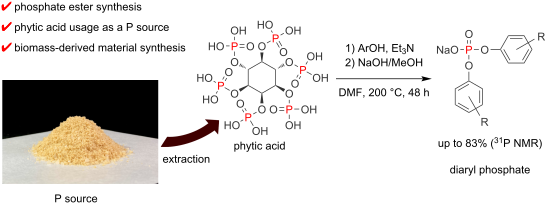
Scheme 1: Structure of phytic acid.
Figure 1: Structures of representative phosphate esters.
Figure 2: Synthetic methods for phosphorus compounds bypassing white phosphorus or phosphorus chloride.
Figure 3: Conditions for the syntheses of diaryl phosphates using phytic acid as a phosphorus source and scop...
Scheme 2: Phosphoric acid diesterification reaction conducted in a previous study.
Scheme 3: Scale-up reaction conducted for the time-course analysis of phosphate esterification. The reaction ...
Figure 4: Time-course analysis plots of the diphenylphosphate formation from phytic acid and 1a. The beginnin...
Figure 5: A possible reaction pathway for the formation of phosphate ester using phytic acid as the phosphoru...
Figure 6: 31P NMR spectrum of phytic acid extracted from rice bran.
Scheme 4: Esterification reaction conditions using the extracted phytic acid. The yield refers to the isolate...
Beilstein J. Org. Chem. 2026, 22, 88–122, doi:10.3762/bjoc.22.4
Graphical Abstract
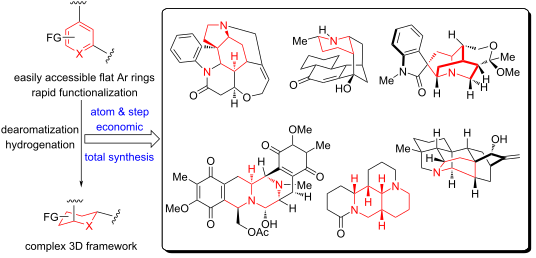
Scheme 1: The association between dearomatization and natural product synthesis.
Scheme 2: Key challenges in hydrogenation of aromatic rings.
Scheme 3: Hydrogenation of heterocyclic aromatic rings.
Scheme 4: Hydrogenation of the carbocyclic aromatic rings.
Scheme 5: Hydrogenation of the heterocycle part in bicyclic aromatic rings.
Scheme 6: Hydrogenation of the heterocycle part in bicyclic aromatic rings.
Scheme 7: Hydrogenation of benzofuran, indole, and their analogues.
Scheme 8: Hydrogenation of benzofuran, indole, and their analogues.
Scheme 9: Total synthesis of (±)-keramaphidin B by Baldwin and co-workers.
Scheme 10: Total synthesis of (±)-LSD by Vollhardt and co-workers.
Scheme 11: Total synthesis of (±)-dihydrolysergic acid by Boger and co-workers.
Scheme 12: Total synthesis of (±)-lysergic acid by Smith and co-workers.
Scheme 13: Hydrogenation of (−)-tabersonine to (−)-decahydrotabersonine by Catherine Dacquet and co-workers.
Scheme 14: Total synthesis of (±)-nominine by Natsume and co-workers.
Scheme 15: Total synthesis of (+)-nominine by Gin and co-workers.
Scheme 16: Total synthesis of (±)-lemonomycinone and (±)-renieramycin by Magnus.
Scheme 17: Total synthesis of GB13 by Sarpong and co-workers.
Scheme 18: Total synthesis of GB13 by Shenvi and co-workers.
Scheme 19: Total synthesis of (±)-corynoxine and (±)-corynoxine B by Xia and co-workers.
Scheme 20: Total synthesis of (+)-serratezomine E and the putative structure of huperzine N by Bonjoch and co-...
Scheme 21: Total synthesis of (±)-serralongamine A and the revised structure of huperzine N and N-epi-huperzin...
Scheme 22: Early attempts to indenopiperidine core.
Scheme 23: Homogeneous hydrogenation and completion of the synthesis.
Scheme 24: Total synthesis of jorunnamycin A and jorumycin by Stoltz and co-workers.
Scheme 25: Early attempt towards (−)-finerenone by Aggarwal and co-workers.
Scheme 26: Enantioselective synthesis towards (−)-finerenone.
Scheme 27: Total synthesis of (+)-N-methylaspidospermidine by Smith, Grigolo and co-workers.
Scheme 28: Dearomatization approach towards matrine-type alkaloids.
Scheme 29: Asymmetric total synthesis to (−)-senepodine F via an asymmetric hydrogenation of pyridine.
Scheme 30: Selective hydrogenation of indole derivatives and application.
Scheme 31: Synthetic approaches to the oxindole alkaloids by Qi and co-workers.
Scheme 32: Total synthesis of annotinolide B by Smith and co-workers.
Beilstein J. Org. Chem. 2026, 22, 71–87, doi:10.3762/bjoc.22.3
Graphical Abstract
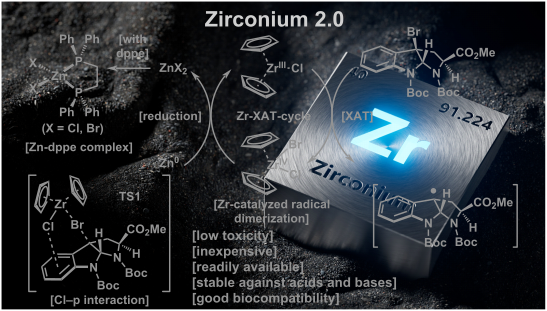
Figure 1: Historical background of zirconium and its physical properties. Image depicted in the background of ...
Scheme 1: Zr-mediated radical cyclization.
Scheme 2: Ni/Zr-mediated one-pot ketone synthesis.
Scheme 3: Zirconocene-catalyzed alkylative dimerization of 2-methylene-1,3-dithiane.
Scheme 4: Zirconium complexes as a photoredox catalyst.
Scheme 5: Zr-catalyzed reductive ring opening of epoxides.
Scheme 6: Zr-catalyzed reductive ring opening of oxetanes. a10 mol % of Cp2Zr(OTf)2·THF was used. bPhCF3 was ...
Scheme 7: Zr-catalyzed halogen atom transfer of alkyl chlorides.
Scheme 8: Zr-catalyzed radical homo coupling of alkyl chlorides.
Scheme 9: Zr-catalyzed fluorine atom transfer.
Scheme 10: Zr-catalyzed C–O bond cleavage. aYield without the use of P(OEt)3.
Scheme 11: Application to the total synthesis of halichondrins.
Scheme 12: Zr-catalyzed C3 dimerization of 3-bromotryptophan derivatives. aCp2ZrCl2 was used.
Scheme 13: Mechanistic studies.
Scheme 14: Application to the total synthesis of cyctetryptomycins. A photo of compound 61b was taken by the a...
Beilstein J. Org. Chem. 2025, 21, 2542–2547, doi:10.3762/bjoc.21.196
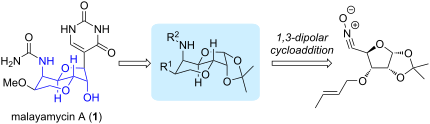
Graphical Abstract
Figure 1: Selected natural uracil-containing nucleosides (the key perhydrofuropyran core highlighted in blue)....
Scheme 1: Synthetic strategies toward malayamycin A. (A) Previous synthetic route. (B) Our strategy toward th...
Scheme 2: Rational for intramolecular dipolar cycloaddition.
Scheme 3: Proposed pathway for the enone formation.
Scheme 4: Modified route to access the core of malayamycins.
Scheme 5: Attempting the Baeyer–Villiger reaction.
Beilstein J. Org. Chem. 2025, 21, 2535–2541, doi:10.3762/bjoc.21.195
Graphical Abstract
Scheme 1: Procedure for the synthesis of compound 3.
Figure 1: 1H NMR (left) and 13C NMR (right) spectra of compound 3 in DMSO-d6 (400.13 MHz, 297 K).
Figure 2: Intensity-weighted mean hydrodynamic diameter (left), and zeta potential distribution (right) of co...
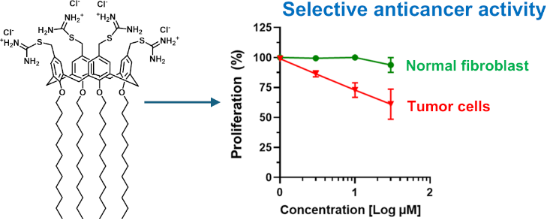
Figure 3: Antiproliferative effects by compound 3 and its chemical precursor 1. A) Results on proliferative k...
Beilstein J. Org. Chem. 2025, 21, 2345–2366, doi:10.3762/bjoc.21.179
Graphical Abstract
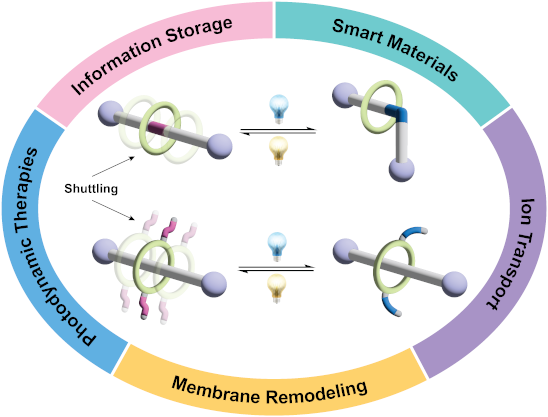
Figure 1: Schematic of common rotaxanes (left) and depiction of the macrocycle shuttling (right).
Figure 2: Structure of some common photoswitches integrated into rotaxanes.
Figure 3: Rotaxane with an acridane photoswitch on the axle modulates the translation of a CBQT4+ macrocycle ...
Figure 4: Hydrogel composed of [2]rotaxanes featuring a central azobenzene in the axle and a cyclodextrin mac...
Figure 5: Dendrimer composed of [2]rotaxane with an azobenzene photoswitch functioning as a macroscopic actua...
Figure 6: (a) Structure of the [2]rotaxane and (b) mechanism for K+ cations transport across lipid bilayers. Figure 6...
Figure 7: Dithienylethene-based [2]rotaxane used in writing patterning applications: (a) rotaxane with open d...
Figure 8: Dithienylethene-based [1]rotaxane shuttling motion triggered by pH changes (top). Dithienylethene p...
Figure 9: Depiction of a fumaramide-based [2]rotaxane photoswitching cycle and deposition on glass and mica s...
Figure 10: Hydrazone-based rotaxane controls helical pitch in a liquid crystal. Figure 10 was adapted from [73] (© 2024 S. ...
Figure 11: (a) Light- and pH-responsive Förster resonance energy transfer observed on a spiropyran-based [2]ro...
Figure 12: Photoresponsive bending of artificial muscle with [c2]daisy chain reported by Harada and collaborat...
Figure 13: Light-responsive shuttling motion of [2]rotaxane based on a stiff-stilbene photoswitch. Figure 13 was reprod...
Figure 14: Azobenzene-based rotaxane modulating lipid bilayers upon photoisomerization. Figure 14 was adapted from [23] (© ...
Figure 15: Depiction of fluorescence quenching processes upon external stimuli of a dithienylethene-based [2]r...
Figure 16: Diagrammatic illustration of rotaxane 1-H-SP depicting interconversions between the four isomeric s...
Figure 17: Representation of [2]rotaxane chloride binding modulated by photoisomerization of a stiff-stilbene. ...
Beilstein J. Org. Chem. 2025, 21, 2297–2301, doi:10.3762/bjoc.21.175
Graphical Abstract
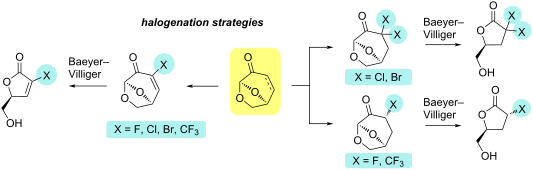
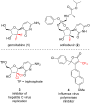
Figure 1: Halogen-containing butyrolactone-derived bioactives.
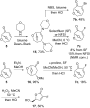
Scheme 1: Preparation of chlorinated and brominated lactones 8a,b and 11a,b.
Scheme 2: Preparation of fluorinated lactone 14.
Scheme 3: Fluorination of LGO (5) and conversion to lactone 17.
Scheme 4: Trifluoromethylation of 9a,b and 15 and subsequent Baeyer–Villiger oxidation.
Beilstein J. Org. Chem. 2025, 21, 2103–2172, doi:10.3762/bjoc.21.165
Graphical Abstract
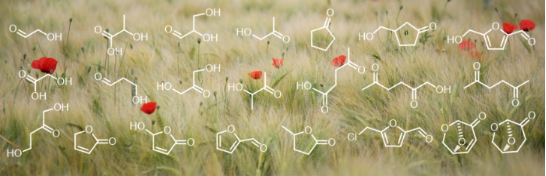
Figure 1: C2–C6 biobased carbonyl building blocks.
Scheme 1: Proposed (2 + 2) route to glycolaldehyde and glycolic acid from erythritol by Cu/AC catalyst (AC = ...
Scheme 2: Reductive amination of GCA.
Scheme 3: N-Formylation of secondary amines by reaction with GCA.
Scheme 4: Synthesis and conversion of hydroxy acetals to cyclic acetals.
Scheme 5: Synthesis of 3-(indol-3-yl)-2,3-dihydrofurans via three-component reaction of glycolaldehyde, indol...
Scheme 6: BiCl3-catalyzed synthesis of benzo[a]carbazoles from 2-arylindoles and α-bromoacetaldehyde ethylene...
Scheme 7: Cu/NCNSs-based conversion of glycerol to glycolic acid and other short biobased acids.
Scheme 8: E. coli-based biotransformation of C1 source molecules (CH4, CO2 and CO) towards C2 glycolic acid.
Scheme 9: N-Formylation of amines with C2 (a) or C3 (b) biomass-based feedstocks.
Scheme 10: Methods for the formation of propanoic acid (PA) from lactic acid (LA).
Scheme 11: Co-polymerization of biobased lactic acid and glycolic acid via a bicatalytic process.
Scheme 12: Oxidation of α-hydroxy acids by tetrachloroaurate(III) in acetic acid–sodium acetate buffer medium.
Figure 2: Selective catalytic pathways for the conversion of lactic acid (LA).
Scheme 13: Synthesis of 1,3-PDO via cross-aldol reaction between formaldehyde and acetaldehyde to 3-hydroxypro...
Scheme 14: Hydrothermal conversion of 1,3-dihydroxy-2-propane and 2,3-dihydroxypropanal to methylglyoxal.
Scheme 15: FLS-catalyzed formose reaction to synthesize GA and DHA.
Scheme 16: GCA and DHA oxidation products of glycerol and isomerization of GCA to DHA under flow conditions us...
Scheme 17: Acid-catalyzed reactions of DHA with alcohols.
Scheme 18: Synthesis of dihydroxyacetone phosphate from dihydroxyacetone.
Scheme 19: Bifunctional acid–base catalyst DHA conversion into lactic acid via pyruvaldehyde or fructose forma...
Scheme 20: Catalytic one-pot synthesis of GA and co-synthesis of formamides and formates from DHA.
Scheme 21: (a) Synthesis of furan derivatives and (b) synthesis of thiophene derivative by cascade [3 + 2] ann...
Scheme 22: Brønsted acidic ionic liquid catalyzed synthesis of benzo[a]carbazole from renewable acetol and 2-p...
Scheme 23: Asymmetric hydrogenation of α-hydroxy ketones to 1,2-diols.
Scheme 24: Synthesis of novel 6-(substituted benzylidene)-2-methylthiazolo [2,3-b]oxazol-5(6H)-one from 1-hydr...
Scheme 25: ʟ-Proline-catalyzed synthesis of anti-diols from hydroxyacetone and aldehydes.
Scheme 26: C–C-bond-formation reactions of a biomass-based feedstock aromatic aldehyde (C5) and hydroxyacetone...
Scheme 27: Ethanol upgrading to C4 bulk chemicals via the thiamine (VB1)-catalyzed acetoin condensation.
Scheme 28: One-pot sequential chemoenzymatic synthesis of 2-aminobutane-1,4-diol and 1,2,4-butanetriol via 1,4...
Scheme 29: Synthesis of 1,4-dihydroxybutan-2-one by microbial transformation.
Scheme 30: Conversion of polyols by [neocuproine)Pd(OAc)]2(OTf)2] to α-hydroxy ketones.
Scheme 31: Chemoselective oxidation of alcohols with chiral palladium-based catalyst 2.
Scheme 32: Electrochemical transformation of furfural to 5-hydroxy-2(5H)-furanone (HFO).
Scheme 33: Selective hydrodeoxygenation of HFO and oxidation to γ-butyrolactone (GBL).
Scheme 34: Photosensitized oxygenation of furan towards HFO via ozonide intermediates.
Scheme 35: Conversion of furfural to HFO and MAN by using mesoporous carbon nitride (SGCN) as photocatalyst.
Scheme 36: Synthesis of HFO from furan derivatives.
Scheme 37: Photooxidation of furfural to 5-hydroxy-2(5H)-furanone (HFO).
Scheme 38: Synthesis of Friedel–Crafts indole adduct from HFO.
Scheme 39: Conversion of HFO to α,γ-substituted chiral γ-lactones.
Scheme 40: Tautomeric transformation of HFO to formylacrylic acid.
Scheme 41: Hydrolysis of HFO to succinic acid in aqueous solution.
Scheme 42: Substitution and condensation reactions of 5-hydroxy-2(5H)-furanone (HFO).
Scheme 43: (a) Conversion of HFO towards valuable C4 chemicals and (b) anodic oxidation of 5-hydroxy-2(5H)-fur...
Figure 3: Conversion of HFO towards other natural and synthetic substances.
Scheme 44: Conversion of furfural to maleic anhydride (reaction a: VOx/Al2O3; reaction b: VPO).
Scheme 45: Conversion of furfural into succinic acid.
Scheme 46: Electro‑, photo‑, and biocatalysis for one-pot selective conversions of furfural into C4 chemicals.
Scheme 47: Production route of furfural from hemicellulose.
Scheme 48: Mechanism for xylose dehydration to furfural through a choline xyloside intermediate.
Scheme 49: Conversion of furfural to furfuryl alcohol and its derivatives.
Scheme 50: Conversion of furfural to furfuryl alcohol and 3-(2-furyl)acrolein.
Scheme 51: The aerobic oxidative condensation of biomass-derived furfural and linear alcohols.
Scheme 52: The single-step synthesis of 2-pentanone from furfural.
Scheme 53: Electrocatalytic coupling reaction of furfural and levulinic acid.
Scheme 54: Conversion of furfural to m-xylylenediamine.
Scheme 55: Conversion of furfural to tetrahydrofuran-derived amines.
Scheme 56: Formation of trans-4,5-diamino-cyclopent-2-enones from furfural.
Scheme 57: Production of pyrrole and proline from furfural.
Scheme 58: Synthesis of 1‑(trifluoromethyl)-8-oxabicyclo[3.2.1]oct-3-en-2-ones from furfural.
Scheme 59: Conversion of furfural to furfural-derived diacids.
Scheme 60: A telescope protocol derived from furfural and glycerol.
Scheme 61: A tandem cyclization of furfural and 5,5-dimethyl-1,3-cyclohexanedione.
Scheme 62: A Ugi four-component reaction to construct furfural-based polyamides.
Scheme 63: One-pot synthesis of γ-acyloxy-Cy7 from furfural.
Scheme 64: Dimerization–Piancatelli sequence toward humins precursors from furfural.
Scheme 65: Conversion of furfural to CPN.
Scheme 66: Synthesis of jet fuels range cycloalkanes from CPN and lignin-derived vanillin.
Scheme 67: Solar-energy-driven synthesis of high-density biofuels from CPN.
Scheme 68: Reductive amination of CPN to cyclopentylamine.
Scheme 69: Asymmetric hydrogenation of C=O bonds of exocyclic α,β-unsaturated cyclopentanones.
Scheme 70: Preparation of levulinic acid via the C5 route (route a) or C6 route (routes b1 and b2).
Scheme 71: Mechanism of the rehydration of HMF to levulinic acid and formic acid.
Scheme 72: Important levulinic acid-derived chemicals.
Scheme 73: Direct conversion of levulinic acid to pentanoic acid.
Scheme 74: Catalytic aerobic oxidation of levulinic acid to citramalic acid.
Scheme 75: Conversion of levulinic acid to 1,4-pentanediol (a) see ref. [236]; b) see ref. [237]; c) see ref. [238]; d) see r...
Scheme 76: Selective production of 2-butanol through hydrogenolysis of levulinic acid.
Scheme 77: General reaction pathways proposed for the formation of 5MPs from levulinic acid.
Scheme 78: Selective reductive amination of levulinic acid to N-substituted pyrroles.
Scheme 79: Reductive amination of levulinic acid to chiral pyrrolidinone.
Scheme 80: Reductive amination of levulinic acid to non-natural chiral γ-amino acid.
Scheme 81: Nitrogen-containing chemicals derived from levulinic acid.
Scheme 82: Preparation of GVL from levulinic acid by dehydration and hydrogenation.
Scheme 83: Ruthenium-catalyzed levulinic acid to chiral γ-valerolactone.
Scheme 84: Catalytic asymmetric hydrogenation of levulinic acid to chiral GVL.
Scheme 85: Three steps synthesis of ε-caprolactam from GVL.
Scheme 86: Multistep synthesis of nylon 6,6 from GVL.
Scheme 87: Preparation of MeGVL by α-alkylation of GVL.
Scheme 88: Ring-opening polymerization of five-membered lactones.
Scheme 89: Synthesis of GVL-based ionic liquids.
Scheme 90: Preparation of butene isomers from GVL under Lewis acid conditions.
Scheme 91: Construction of C5–C12 fuels from GVL over nano-HZSM-5 catalysts.
Scheme 92: Preparation of alkyl valerate from GVL via ring opening/reduction/esterification sequence.
Scheme 93: Construction of 4-acyloxypentanoic acids from GVL.
Scheme 94: Synthesis of 1,4-pentanediol (PDO) from GVL.
Scheme 95: Construction of novel cyclic hemiketal platforms via self-Claisen condensation of GVL.
Scheme 96: Copper-catalyzed lactamization of GVL.
Figure 4: Main scaffolds obtained from HMF.
Scheme 97: Biginelli reactions towards HMF-containing dihydropyrimidinones.
Scheme 98: Hantzsch dihydropyridine synthesis involving HMF.
Scheme 99: The Kabachnik–Fields reaction involving HMF.
Scheme 100: Construction of oxazolidinone from HMF.
Scheme 101: Construction of rhodamine-furan hybrids from HMF.
Scheme 102: A Groebke–Blackburn–Bienaymé reaction involving HMF.
Scheme 103: HMF-containing benzodiazepines by [4 + 2 + 1] cycloadditions.
Scheme 104: Synthesis of fluorinated analogues of α-aryl ketones.
Scheme 105: Synthesis of HMF derived disubstituted γ-butyrolactone.
Scheme 106: Functionalized aromatics from furfural and HMF.
Scheme 107: Diels–Alder adducts from HMF or furfural with N-methylmaleimide.
Scheme 108: Pathway of the one-pot conversion of HMF into phthalic anhydride.
Scheme 109: Photocatalyzed preparation of humins (L-H) from HMF mixed with spoiled HMF residues (LMW-H) and fur...
Scheme 110: Asymmetric dipolar cycloadditions on HMF.
Scheme 111: Dipolar cycloadditions of HMF based nitrones to 3,4- and 3,5-substituted isoxazolidines.
Scheme 112: Production of δ-lactone-fused cyclopenten-2-ones from HMF.
Scheme 113: Aza-Piancatelli access to aza-spirocycles from HMF-derived intermediates.
Scheme 114: Cross-condensation of furfural, acetone and HMF into C13, C14 and C15 products.
Scheme 115: Base-catalyzed aldol condensation/dehydration sequences from HMF.
Scheme 116: Condensation of HMF and active methylene nitrile.
Scheme 117: MBH reactions involving HMF.
Scheme 118: Synthesis of HMF-derived ionic liquids.
Scheme 119: Reductive amination/enzymatic acylation sequence towards HMF-based surfactants.
Scheme 120: The formation of 5-chloromethylfurfural (CMF).
Scheme 121: Conversion of CMF to HMF, levulinic acid, and alkyl levulinates.
Scheme 122: Conversion of CMF to CMFCC and FDCC.
Scheme 123: Conversion of CMF to BHMF.
Scheme 124: Conversion of CMF to DMF.
Scheme 125: CMF chlorine atom substitutions toward HMF ethers and esters.
Scheme 126: Introduction of carbon nucleophiles in CMF.
Scheme 127: NHC-catalyzed remote enantioselective Mannich-type reactions of CMF.
Scheme 128: Conversion of CMF to promising biomass-derived dyes.
Scheme 129: Radical transformation of CMF with styrenes.
Scheme 130: Synthesis of natural herbicide δ-aminolevulinic acid from CMF.
Scheme 131: Four step synthesis of the drug ranitidine from CMF.
Scheme 132: Pd/CO2 cooperative catalysis for the production of HHD and HXD.
Scheme 133: Different ruthenium (Ru) catalysts for the ring-opening of 5-HMF to HHD.
Scheme 134: Proposed pathways for preparing HXD from HMF.
Scheme 135: MCP formation and uses.
Scheme 136: Cu(I)-catalyzed highly selective oxidation of HHD to 2,5-dioxohexanal.
Scheme 137: Synthesis of N‑substituted 3‑hydroxypyridinium salts from 2,5-dioxohexanal.
Scheme 138: Ru catalyzed hydrogenations of HHD to 1,2,5-hexanetriol (a) see ref. [396]; b) see ref. [397]).
Scheme 139: Aviation fuel range quadricyclanes produced by HXD.
Scheme 140: Synthesis of HDGK from HXD and glycerol as a chain extender.
Scheme 141: Synthesis of serinol pyrrole from HXD and serinol.
Scheme 142: Synthesis of pyrroles from HXD and nitroarenes.
Scheme 143: Two-step production of PX from cellulose via HXD.
Scheme 144: Preparation of HCPN from HMF via hydrogenation and ring rearrangement.
Scheme 145: Suggested pathways from HMF to HCPN.
Scheme 146: α-Alkylation of HCPN with ethylene gas.
Scheme 147: Synthesis of 3-(hydroxymethyl)cyclopentylamine from HMF via reductive amination of HCPN.
Scheme 148: Production of LGO and Cyrene® from biomass.
Scheme 149: Synthesis of HBO from LGO and other applications.
Scheme 150: Construction of m-Cyrene® homopolymer.
Scheme 151: Conversion of Cyrene® to THFDM and 1,6-hexanediol.
Scheme 152: RAFT co-polymerization of LGO and butadienes.
Scheme 153: Polycondensation of HO-LGOL and diols with dimethyl adipate.
Scheme 154: Self-condensation of Cyrene® and Claisen–Schmidt reactions.
Scheme 155: Synthesis of 5-amino-2-(hydroxymethyl)tetrahydropyran from Cyrene®.
Beilstein J. Org. Chem. 2025, 21, 2036–2047, doi:10.3762/bjoc.21.159
Graphical Abstract
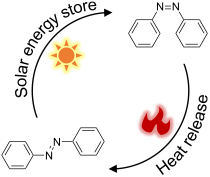
Figure 1: Schematic diagram of molecular solar thermal energy storage system.
Figure 2: Photoisomerization of different types of molecular optical switches. Figure 2 was redrawn from [8].
Figure 3: Nanocarbon-based azobenzene polymer solar thermal fuels: (a) SWCNT templating. Figure 3a is from [43] (T. J. Kuc...
Figure 4: Conjugated azobenzene polymer solar thermal fuels: (a) Photoisomerization and thermally induced rev...
Figure 5: Linear azobenzene polymer solar thermal fuels: (a) Schematic illustration of the trans-to-cis isome...
Figure 6: Representative examples of azobenzene small-molecule derivative solar thermal fuels. (a) Polarized ...
Figure 7: (a) Deicing test of charged solar thermal fuels under green light irradiation (550 nm). Figure 7a was reprin...
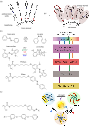
Beilstein J. Org. Chem. 2025, 21, 1808–1853, doi:10.3762/bjoc.21.143
Graphical Abstract
Figure 1: Energy diagram of a two-state photoswitch. Figure 1 was redrawn from [2].
Figure 2: Example of the absorption spectra of the isomers of a photoswitch with most efficient irradiation w...
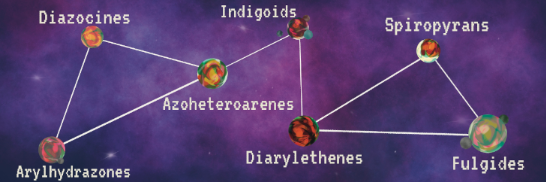
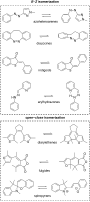
Scheme 1: Photoswitch classes described in this review.
Figure 3: Azoheteroarenes.
Scheme 2: E–Z Isomerisation (top) and mechanisms of thermal Z–E isomerisation (bottom).
Scheme 3: Rotation mechanism favoured by the electron displacement in push–pull systems. Selected examples of...
Figure 4: A) T-shaped and twisted Z-isomers determine the thermal stability and the Z–E-PSS (selected example...
Figure 5: Effect of di-ortho-substitution on thermal half-life and PSS.
Figure 6: Selected thermal lifetimes of azoindoles in different solvents and concentrations. aConcentration o...
Figure 7: Aryliminopyrazoles: N-pyrazoles (top) and N-phenyl (bottom).
Scheme 4: Synthesis of symmetrical heteroarenes through oxidation (A), reduction (B), and the Bayer–Mills rea...
Scheme 5: Synthesis of diazonium salt (A); different strategies of azo-coupling: with a nucleophilic ring (B)...
Scheme 6: Synthesis of arylazothiazoles 25 (A) and heteroaryltriazoles 28 (B).
Scheme 7: Synthesis of heteroarylimines 31a,b [36-38].
Figure 8: Push–pull non-ionic azo dye developed by Velasco and co-workers [45].
Scheme 8: Azopyridine reported by Herges and co-workers [46].
Scheme 9: Photoinduced phase transitioning azobispyrazoles [47].
Figure 9: Diazocines.
Scheme 10: Isomers, conformers and enantiomers of diazocine.
Scheme 11: Partial overlap of the ππ* band with electron-donating substituents and effect on the PSS. Scheme 11 was ada...
Figure 10: Main properties of diazocines with different bridges. aMeasured in n-hexane [56]. bMeasured in THF. cMe...
Scheme 12: Synthesis of symmetric diazocines.
Scheme 13: Synthesis of asymmetric diazocines.
Scheme 14: Synthesis of O- and S-heterodiazocines.
Scheme 15: Synthesis of N-heterodiazocines.
Scheme 16: Puromycin diazocine photoswitch [60].
Figure 11: Indigoids.
Figure 12: The main representatives of the indigoid photoswitch class.
Scheme 17: Deactivation process that prevents Z-isomerisation of indigo.
Figure 13: Stable Z-indigo derivative synthesised by Wyman and Zenhäusern [67].
Figure 14: Selected examples of indigos with aliphatic and aromatic substituents [68]. Dashed box: proposed π–π in...
Scheme 18: Resonance structures of indigo and thioindigo involving the phenyl ring.
Scheme 19: Possible deactivation mechanism for 4,4'-dihydroxythioindigo [76].
Scheme 20: Effect of different heteroaryl rings on the stability and the photophysical properties of hemiindig...
Figure 15: Thermal half-lives of red-shifted hemithioindigos in toluene [79]. aMeasured in toluene-d8.
Scheme 21: Structures of pyrrole [81] and imidazole hemithioindigo [64].
Figure 16: Examples of fully substituted double bond hemithioindigo (left), oxidised hemithioindigos (centre),...
Scheme 22: Structure of iminothioindoxyl 72 (top) and acylated phenyliminoindolinone photoswitch 73 (bottom). ...
Scheme 23: (top) Transition states of iminothioindoxyl 72. The planar transition state is associated with a lo...
Scheme 24: Baeyer–Drewsen synthesis of indigo (top) and N-functionalisation strategies (bottom).
Scheme 25: Synthesis of hemiindigo.
Scheme 26: Synthesis of hemithioindigo and iminothioindoxyl.
Scheme 27: Synthesis of double-bond-substituted hemithioindigos.
Scheme 28: Synthesis of phenyliminoindolinone.
Scheme 29: Hemithioindigo molecular motor [85].
Figure 17: Arylhydrazones.
Scheme 30: Switching of arylhydrazones. Note: The definitions of stator and rotor are arbitrary.
Scheme 31: Photo- and acidochromism of pyridine-based phenylhydrazones.
Scheme 32: A) E–Z thermal inversion of a thermally stable push–pull hydrazone [109]. B) Rotation mechanism favoured...
Scheme 33: Effect of planarisation on the half-life.
Scheme 34: The longest thermally stable hydrazone switches reported so far (left). Modulation of thermal half-...
Figure 18: Dependency of t1/2 on concentration and hypothesised aggregation-induced isomerisation.
Figure 19: Structure–property relationship of acylhydrazones.
Scheme 35: Synthesis of arylhydrazones.
Scheme 36: Synthesis of acylhydrazones.
Scheme 37: Photoswitchable fluorophore by Aprahamian et al. [115].
Scheme 38: The four-state photoswitch synthesised by the Cigáň group [116].
Figure 20: Diarylethenes.
Scheme 39: Isomerisation and oxidation pathway of E-stilbene to phenanthrene.
Scheme 40: Strategies adapted to avoid E–Z isomerisation and oxidation.
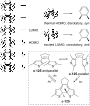
Scheme 41: Molecular orbitals and mechanism of electrocyclisation for a 6π system.
Figure 21: Aromatic stabilisation energy correlated with the thermal stability of the diarylethenes [127,129].
Figure 22: Half-lives of diarylethenes with increasing electron-withdrawing groups [128,129].
Scheme 42: Photochemical degradation pathway promoted by electron-donating groups [130].
Figure 23: The diarylethenes studied by Hanazawa et al. [134]. Increased rigidity leads to bathochromic shift.
Scheme 43: The dithienylethene synthesised by Nakatani's group [135].
Scheme 44: Synthesis of perfluoroalkylated diarylethenes.
Scheme 45: Synthesis of 139 and 142 via McMurry coupling.
Scheme 46: Synthesis of symmetrical derivatives 145 via Suzuki–Miyaura coupling.
Scheme 47: Synthesis of acyclic 148, malonic anhydride 149, and maleimide derivatives 154.
Figure 24: Gramicidin S (top left) and two of the modified diarylethene derivatives: first generation (bottom ...
Scheme 48: Pyridoxal 5'-phosphate and its reaction with an amino acid (top). The analogous dithienylethene der...
Figure 25: Fulgides.
Scheme 49: The three isomers of fulgides.
Scheme 50: Thermal and photochemical side products of unsubstituted fulgide [150].
Figure 26: Maximum absorption λc of the closed isomer compared with the nature of the aromatic ring and the su...
Scheme 51: Possible rearrangement of the excited state of 5-dimethylaminoindolylfulgide [153].
Figure 27: Quantum yields of ring closure (ΦE→C) and E–Z isomerisation (ΦE→Z) correlated with the increasing s...
Scheme 52: Active (Eα) and inactive (Eβ) conformers (left) and the bicyclic sterically blocked fulgide 169 (ri...
Scheme 53: Quantum yield of ring-opening (ΦC→E) and E–Z isomerisation (ΦE→Z) for different substitution patter...
Scheme 54: Stobbe condensation pathway for the synthesis of fulgides 179, fulgimides 181 and fulgenates 178.
Scheme 55: Alternative synthesis of fulgides through Pd-catalysed carbonylation.
Scheme 56: Optimised synthesis of fulgimides [166].
Scheme 57: Photoswitchable FRET with a fulgimide photoswitch [167].
Scheme 58: Three-state fulgimide strategy by Slanina's group.
Figure 28: Spiropyrans.
Scheme 59: Photochemical (left) and thermal (right) ring-opening mechanisms for an exemplary spiropyran with a...
Figure 29: Eight possible isomers of the open merocyanine according to the E/Z configurations of the bonds hig...
Scheme 60: pH-Controlled photoisomerisation between the closed spiropyran 191-SP and the open E-merocyanine 19...
Scheme 61: Behaviour of spiropyran in water buffer according to Andréasson and co-workers [180]. 192-SP in an aqueo...
Scheme 62: (left box) Proposed mechanism of basic hydrolysis of MC [184]. (right box) Introduction of electron-dona...
Scheme 63: Photochemical interconversion of naphthopyran 194 (top) and spirooxazine 195 (bottom) photoswitches...
Scheme 64: Synthesis of spiropyrans and spirooxazines 198 and the dicondensation by-product 199.
Scheme 65: Alternative synthesis of spiropyrans and spirooxazines with indolenylium salt 200.
Scheme 66: Synthesis of 4’-substituted spiropyrans 203 by condensation of an acylated methylene indoline 201 w...
Scheme 67: Synthesis of spironaphthopyrans 210 by acid-catalysed condensation of naphthols and diarylpropargyl...
Scheme 68: Photoswitchable surface wettability [194].
Figure 30: Some guiding principles for the choice of the most suitable photoswitch. Note that this guide is ve...
Beilstein J. Org. Chem. 2025, 21, 1757–1785, doi:10.3762/bjoc.21.139
Graphical Abstract
Figure 1: Schematic diagram of drug-controlled release mechanisms based on aromatic macrocycles.
Figure 2: Chemical structure of a) calix[n]arene (m = 1,3,5), and b) pillar[n]arene (m = 1,2,3).
Figure 3: Changes in pH conditions cause the release of drugs from CA8 host–guest complexes [101]. Figure 3 was adapted wi...
Figure 4: The illustration of the pH-mediated 1:1 complex formation between the host and guest molecules in a...
Figure 5: Illustration of the pH-responsive self-assembly of mannose-modified CA4 into micelles and the subse...
Figure 6: Illustration of the assembly of supramolecular prodrug nanoparticles from WP6 and DOX-derived prodr...
Figure 7: Illustration of the formation of supramolecular vesicles and their pH-dependent drug release [93]. Figure 7 was...
Figure 8: Schematic illustration of the application of the multifunctional nanoplatform CyCA@POPD in combined...
Figure 9: Illustration of the photolysis of an amphiphilic assembly via CA-induced aggregation [114]. Figure 9 was reprint...
Figure 10: Schematic illustration of drug release controlled by the photo-responsive macroscopic switch based ...
Figure 11: Schematic illustration of the formation process of Azo-SMX and its photoisomerization reaction unde...
Figure 12: Schematic illustration of the enzyme-responsive behavior of supramolecular polymers [95]. Figure 12 was used wit...
Figure 13: Schematic illustration of the amphiphilic assembly of SC4A and its enzyme-responsive applications [119]. ...
Figure 14: Stimuli-responsive nanovalves based on MSNs and choline-SC4A[2]pseudorotaxanes, MSN-C1 with ester-l...
Figure 15: A schematic diagram showing the construction of a supramolecular system by host–guest interaction b...
Figure 16: A schematic diagram showing the formation of the host–guest complex DOX@Biotin-SAC4A by biotin modi...
Figure 17: A schematic diagram showing the self-assembly of CA4 into a hypoxia-responsive peptide hydrogel, wh...
Figure 18: Schematic illustration of the formation process of Lip@GluAC4A and the release of Lip under hypoxic...
Figure 19: Schematic illustration of the construction of a supramolecular vesicle based on the host–guest comp...
Figure 20: Schematic illustration of WP6 self-assembly at pH > 7, and the stimulus-responsive drug release beh...
Figure 21: Schematic illustration of the formation of supramolecular vesicles based on the WP5⊃G super-amphiph...
Figure 22: Schematic illustrations of the host–guest recognition of QAP5⊃SXD, the formation of the nanoparticl...
Figure 23: Schematic illustration of the activation of T-SRNs by acid, alkali, or Zn2+ stimuli to regulate the...
Figure 24: Illustration of the triggered release of BH from CP[5]A@MSNs-Q NPs in response to a drop in pH or a...
Figure 25: Illustration of the supramolecular amphiphiles TPENCn@1 (n = 6 and 12) self-assembling with disulfi...
Beilstein J. Org. Chem. 2025, 21, 1678–1699, doi:10.3762/bjoc.21.132
Graphical Abstract
Figure 1: Three key dimensions of a complete nitration process.
Figure 2: A typical continuous-flow nitration reaction system.
Figure 3: Corrosion characteristics of common wetted materials used in continuous-flow nitration system. Note...
Figure 4: Analysis of the literature on continuous-flow nitration reaction over the past decade.
Scheme 1: Model reaction for the homogeneous nitration by nitric acid/mixed acid.
Figure 5: Safety assessment criteria for nitration reactions. Notes: apressure-independent; bno hazards arisi...
Figure 6: Guide for the investigation of continuous-flow nitration processes.
Beilstein J. Org. Chem. 2025, 21, 1404–1421, doi:10.3762/bjoc.21.105
Graphical Abstract
Scheme 1: Investigated compounds.
Scheme 2: Long-range PT in the studied compounds along with undesired processes of E/Z isomerization. The ind...
Figure 1: Simulated absorption spectra of the tautomers of 1 in toluene. The spectra in acetonitrile are show...
Figure 2: Normalized absorption spectra of 1.
Figure 3: Absorption spectra of 1 in acetonitrile with stepwise addition of water.
Figure 4: VT 1H NMR spectra of compound 1 in acetonitrile-d3.
Figure 5: Changes in the absorption spectrum of 2 in acetonitrile upon addition of trifluoroacetic acid (TFA)...
Figure 6: Ground (M06-2X/TZVP) and excited (CAM-B3LYP/TZVP) state potential energy surface of compound 1 in t...
Figure 7: Changes of the absorbance of compound 1 at 465 nm in toluene upon turning on and off the irradiatio...
Figure 8: a) Change of ΔE(K-E) in kcal/mol as a function of the substitution on different positions (2–6) in ...
Scheme 3: Perspective switching compounds, generated by the computational quantum chemistry calculations.
Beilstein J. Org. Chem. 2025, 21, 1388–1396, doi:10.3762/bjoc.21.103
Graphical Abstract
Figure 1: Structures of the pseudomonins D–G (1–4), pseudomonine (5), pseudomonin B (6) and salicylic acid (7...
Figure 2: Key HMBC, 1H-1H COSY and NOE correlations.
Figure 3: Extracted ion chromatogram and corresponding mass spectrum of compound 4 in the crude extract.
Figure 4: Proposed biosynthetic scheme for the formation of compounds (1–4).