

Search results
Search for "organic" in Full Text gives 3071 result(s) in Beilstein Journal of Organic Chemistry. Showing first 200.
Rhodopyran, a carboxylated hexahydrocyclopenta[b]pyran from Rhodococcus
Beilstein J. Org. Chem. 2026, 22, 1107–1113, doi:10.3762/bjoc.22.89
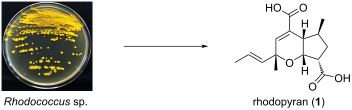
- incubation, 100 mL of 1-BuOH was added to each flask, and the flasks were allowed to shake for 1 h. The mixture was centrifuged at 6,000 rpm for 10 min, and the organic layer was separated from the aqueous layer containing the mycelium. The BuOH layer was evaporated to give 12.6 g of extract from 2 L of


Controlled supramolecular assemblies of luminescent tridentate cyclometalated alkynylgold(III) amphiphiles in aqueous media
Beilstein J. Org. Chem. 2026, 22, 1097–1106, doi:10.3762/bjoc.22.88
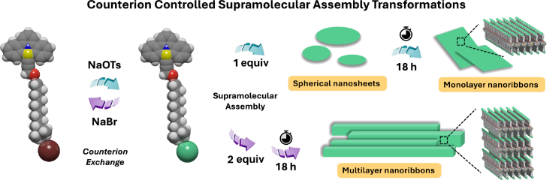
- acetonitrile and water through variation of counterions and its concentration [51]. Yam and co-workers have reported multiresponsive luminescent cationic gold(III) amphiphiles undergoing the self-assembly process in mixed organic solvents [52]. These reports demonstrate remarkable structural sensitivities to
- no signs of spectral shift and is reversible upon annealing (Supporting Information File 1, Figure S2a), indicating the absence of supramolecular aggregation in an organic environment and the thermal stability of GA in both organic and aqueous media. Upon excitation a methanol solution of GA (200 µM
- at 429 nm (Figure 1b, green-line) is lower than that of GA in organic media (Supporting Information File 1, Figure S2b, green line) at 20.0 °C. Given that a dichloromethane solution of cyclometalated gold(III) complex 2 (200 µM) shows significantly lowered emission intensity at 430 nm (Supporting


Amino acid-based surfactants: sustainable synthesis and antimicrobial mechanisms
Beilstein J. Org. Chem. 2026, 22, 1067–1085, doi:10.3762/bjoc.22.85
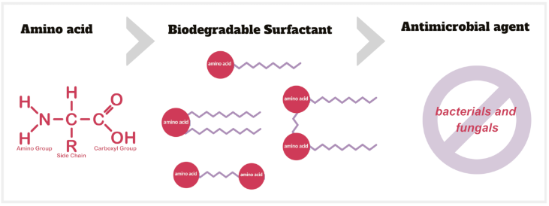
- ][10]. The tensoactive or surfactant is a compound distinguished by its capacity to modify the interfacial and surface property of a liquid. Their amphiphilic property is marked by a hydrophobic pole with a high affinity for organic solvents and a hydrophilic pole with a high affinity for water [11
- and involves a streamlined two-step synthesis that avoids the use of heavy organic solvents and protected amino acid groups, enhancing its environmental sustainability [5][6]. Life cycle analyses confirm their advantages over petrochemical-derived surfactants. Pinazo, Manresa et al. (2016) highlight


One-pot four-component sequential synthesis of S-alkyl dithiocarbamates using lipase as a biocatalyst
Beilstein J. Org. Chem. 2026, 22, 1048–1056, doi:10.3762/bjoc.22.83
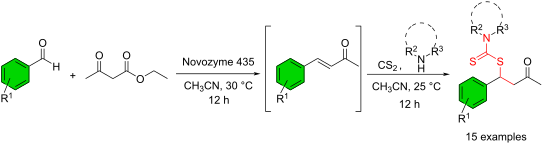
- Mansour Shahedi Pargol Tahmasebi pour Zohreh Habibi Department of Organic Chemistry, Shahid Beheshti University, 1983969411 Tehran, Iran 10.3762/bjoc.22.83 Abstract Dithiocarbamates are widely recognized for their versatile applications in both agriculture as effective pesticides and medicine
- pharmaceuticals [3][4], agrochemicals [5], and organic synthesis [6]. Among the different types of dithiocarbamates, S-alkyl dithiocarbamates (also known as organic dithiocarbamates) are particularly prominent, owing to their remarkable utility, especially in the pharmaceutical and agrochemical industries [7][8
- ]. S-Alkyl dithiocarbamates demonstrate a broad spectrum of bioactivities, including potent anticancer [9], anti-Alzheimer [10][11], antibacterial [12], and antifungal [13][14] properties. In the realm of synthetic organic chemistry, these compounds serve as valuable intermediates, protecting groups


Semisynthesis, characterisation, and antibacterial evaluation of a novel lecanoric acid-derived amide library
Beilstein J. Org. Chem. 2026, 22, 1023–1032, doi:10.3762/bjoc.22.81
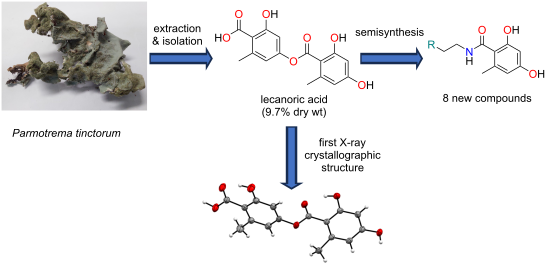
- ) [1]. Through this partnership, the alga provides food for both itself and the fungal symbiont by reducing atmospheric CO2 into organic sugars. The fungal partner protects the organism from UV exposure, parasitic attacks, and animal predators by producing a diverse range of natural products [2][3]. Of


Synthesis and optical resolution of 4,5-diaminohomoadamantane: a promising scaffold for chiral ligands and bioactive compounds
Beilstein J. Org. Chem. 2026, 22, 1013–1022, doi:10.3762/bjoc.22.80
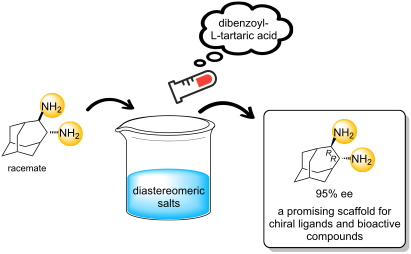
- Polina A. Man'kova Vadim A. Shiryaev Olga S. Podlipnova Marat M. Khisyamov Dmitry S. Nikerov Alexander N. Reznikov Yuri N. Klimochkin Department of Organic Chemistry Samara State Technical University, Molodogvardeyskaya st. 244, 443100 Samara, Russia 10.3762/bjoc.22.80 Abstract Vicinal diamines
- suggest that further molecular design of homoadamantane-based chiral N,N-ligands is promising. Keywords: asymmetric Henry reaction; asymmetric Michael reaction; diaminohomoadamantane; enantiodivergent effect; resolution of racemate; Introduction The chemistry of organic polycyclic cage compounds has
- been of interest to organic chemists for many years. Such a simple and symmetric structure as adamantane is widely used in pharmaceutics to obtain drugs with a wide spectrum of action, as well as to improve the properties of drugs currently in use [1][2][3][4][5][6][7]. The chemistry of adamantane has


Z-Selective semihydrogenation of alkynes via Ni/Lewis acid synergistic catalyzed system using DMF as hydrogen source and solvent
Beilstein J. Org. Chem. 2026, 22, 1004–1012, doi:10.3762/bjoc.22.79
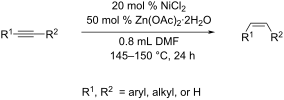
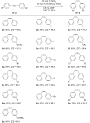
- Lei Kang Haifeng Gao Luo Yang School of Surveying & Testing, Shaanxi Railway Institute, Weinan, 714000, China Key Laboratory for Green Organic Synthesis and Application of Hunan Province, College of Chemistry, Xiangtan University, Hunan, 411105, China 10.3762/bjoc.22.79 Abstract A Ni/Lewis acid



Rh(III)-catalyzed chelation-assisted C–H activation/annulation of 2-arylimidazolines with cyclic diazo-1,3-dicarbonyl compounds: a novel approach to tetracyclic annulated derivatives of 2,3-dihydroimidazo[2,1-a]isoquinoline
Beilstein J. Org. Chem. 2026, 22, 997–1003, doi:10.3762/bjoc.22.78
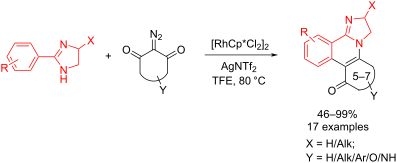
- -heterocycle. Keywords: annulation; 2-arylimidazolines; catalysis; С–H activation; diazodiketones; 2,3-dihydroimidazo[2,1-a]isoquinolines; dimedone; tetraheterocycles; Introduction The advancement of organic synthesis techniques, especially methods for creating nitrogen-containing heterocycles, is essential


The role of spacer length and flexibility in peptide self-assembly
Beilstein J. Org. Chem. 2026, 22, 986–996, doi:10.3762/bjoc.22.77
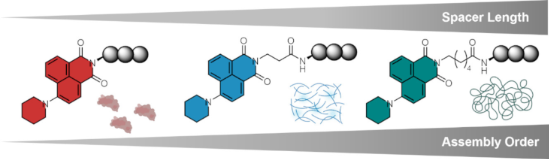
- behavior of molecules by monitoring spectral changes upon increasing the fraction of an organic co-solvent. A gradual, linear change in signal intensity or chemical shift with increasing co-solvent content is indicative of simple dissolution and bulk solvent effects. In contrast, a pronounced transition
- % results in the emergence of sharp, well-resolved signals for both peptides 6 and 7. This pronounced transition suggests that the aggregates present in aqueous media are disrupted once a critical level of organic co-solvent is reached. The additional increase in TFE-d3 content to 50% does not produce


Novel macrocycles: from synthesis to supramolecular function
Beilstein J. Org. Chem. 2026, 22, 982–985, doi:10.3762/bjoc.22.76
- ], cryptands [3], and spherands [4], calixarenes and resorcinarenes feature aromatic cavities that accommodate a wide variety of neutral and charged organic guests. A major advance in the field occurred in 2008, with the introduction of pillararenes by Ogoshi and co-workers [9]. Composed of 1,4-dialkoxybenzene
- hydrophobic effects. Complementing this focus on ionic interactions, the thematic issue proceeds with a study by Qi-Qiang Wang, De-Xian Wang, and coworkers [34] that addresses the long-standing challenge of recognizing organic dicarboxylate anions in solution. Using a one-pot synthetic strategy based on
- multiple research areas will continue to grow. We sincerely thank all authors who contributed their work to this thematic issue. We are also grateful to the referees for their careful evaluations and valuable suggestions. Finally, we thank the Editorial Team of the Beilstein Journal of Organic Chemistry
Electrochemical reduction of unsaturated carbon–carbon bonds via 3d transition-metal catalysis
Beilstein J. Org. Chem. 2026, 22, 955–981, doi:10.3762/bjoc.22.75
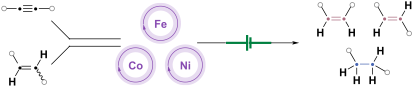
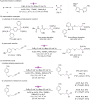
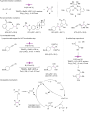
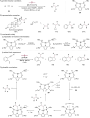
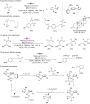
- the use of stoichiometric reagents. In this context, when electrochemistry is employed as a synthetic tool in organic chemistry, several critical parameters must be taken into account, including (a) electrode, (b) electrolysis mode, and (c) cell configuration (Figure 1). Among these, the choice of








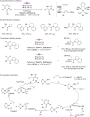
Synthesis of sterically shielded piperidine nitroxides via acid-catalyzed heterocyclization of β-aminoketone derivatives with ketones
Beilstein J. Org. Chem. 2026, 22, 948–954, doi:10.3762/bjoc.22.74
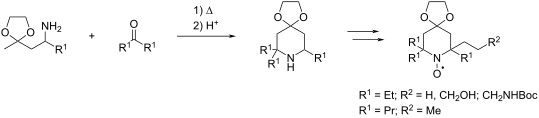
- Mark M. Gulman Yurii I. Glazachev Sergey A. Dobrynin N. N. Vorozhtsov Novosibirsk Institute of Organic Chemistry, Siberian Branch of the Russian Academy of Sciences, Novosibirsk, 630090, Russia Novosibirsk State University, Pirogova Str. 2, Novosibirsk, 630090, Russia Voevodsky Institute of


Recent advances in copper-catalyzed direct hydroamination of alkenes with (hetero)aromatic amines
Beilstein J. Org. Chem. 2026, 22, 925–947, doi:10.3762/bjoc.22.73
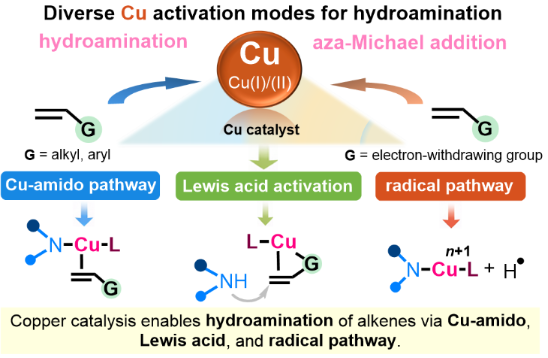
- remains a primary objective of modern organic synthesis [5][6]. Among the diverse strategies available for C–N bond formation, the direct addition of an N–H bond across a C–C double bond, known as hydroamination, is an ideal transformation considering atom and step economy [7][8][9][10][11][12


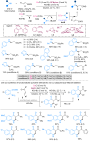





Palladium-catalyzed benzocyclization reactions of quinoline-2-carboxamides via sequential C–H/N–H functionalization
Beilstein J. Org. Chem. 2026, 22, 905–914, doi:10.3762/bjoc.22.71
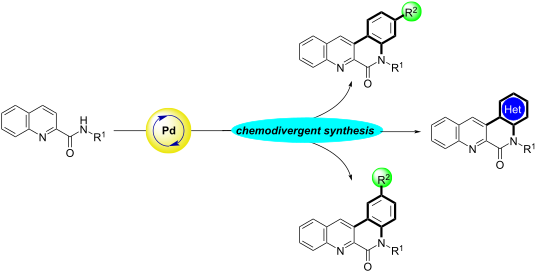
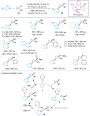
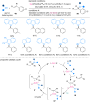
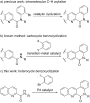
- intriguing moiety in biologically active compounds (e.g., natural products used for medicines, quinine, and quinidine [5][6][7]) and synthesized pharmaceutical agents (e.g., quinolone antibiotics [8]). Moreover, quinoline-2-carboxamide derivatives are used as ligands in organic synthesis owing to their high




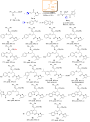
Chiral cyclopropenimine-catalyzed enantioselective Michael reactions of phenol and benzofuran-derived α,β-unsaturated pyrazolamides with benzophenone-imine of glycine esters
Beilstein J. Org. Chem. 2026, 22, 888–896, doi:10.3762/bjoc.22.69
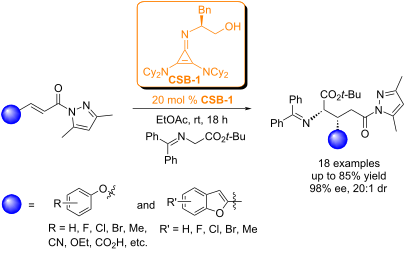
- in organic synthesis. Many medicines and intermediates contain these two motifs and show diverse functions and bioactivities [1][2]. The esterification and etherification of phenols are some of their common modifications. 2-Substituted benzofurans are backbones for many medicines such as amiodarone
- , dronedarone, saprisartan and so on [3]. Therefore, the introduction of benzofuran to organic molecules plays an important role in drug research and development. Compounds containing glutamic and pyroglutamic acid frameworks (Figure 1) indicate many pharmacologic properties including influence on protein
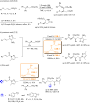
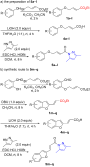
- hydrolysis and lactamization to compound 7d To 6d (1.0 mmol) in DCM (5.0 mL) was added 4 N HCl (5.0 mL) and the mixture was stirred at rt for 2–3 h. After the reaction was completed (detected by TLC), it was quenched by H2O (15.0 mL) and extracted with DCM (2 × 25.0 mL). The combined organic layers were






Site-specific labelling of native peptides and proteins: chemical and enzymatic strategies
Beilstein J. Org. Chem. 2026, 22, 857–881, doi:10.3762/bjoc.22.67
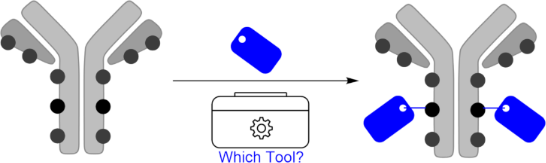
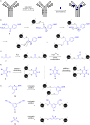
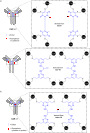
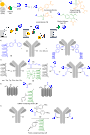
- reagents, organic solvents or chaotropic agents must be avoided to preserve protein stability, preventing folding heterogeneity and supporting sustainability. Scalability. For therapeutic and industrial applications, modification methods should minimise waste and curtail costs, reflected in low process









The trans-influence in gold chemistry from a catalytic perspective
Beilstein J. Org. Chem. 2026, 22, 838–856, doi:10.3762/bjoc.22.66
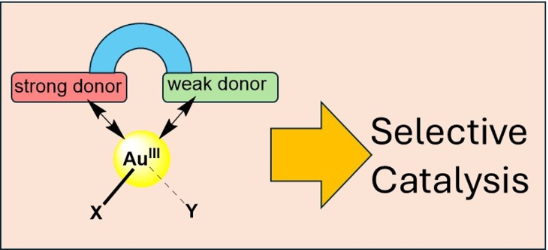
- Manfred Bochmann School of Chemistry, University of East Anglia, Norwich Research Park, NR4 7TJ, Norwich, United Kingdom 10.3762/bjoc.22.66 Abstract Gold catalysis has developed into an increasingly important method in organic synthesis. Especially the potential of gold(I,III) redox systems and
- recent mechanistic insights. Keywords: catalysis; gold; ligands; reaction mechanism; trans-influence; Introduction Gold catalysts have emerged as catalysts of choice in a multitude of organic transformations, not least due to their high functional group tolerance. Their applications have been widely
- − or Cl− to −15 ppm for BH2− [46]. Whereas in organic compounds 1H NMR chemical shifts tend to be interpreted in terms of the acidic or hydridic character of the H atom concerned, the shifts in metal hydrides permit no such interpretations and are the result of spin–orbit and paramagnetic contributions


Unsymmetrical sulfoxides with sterically hindered catechol fragment: synthesis, structure, electrochemical properties, and antiradical activity
Beilstein J. Org. Chem. 2026, 22, 828–837, doi:10.3762/bjoc.22.65
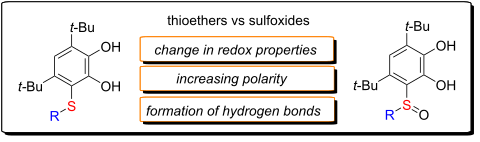
- states provides a powerful way to control organic molecules. Through the controlled conversion of thioethers to sulfoxides and sulfones [21], it is possible to tune their reactivity and biological properties. Indeed, compounds of this type possess pronounced neuroprotective properties [12][13][14
- chemoselective oxidation of the thioether group to the sulfoxide, without overoxidation to the sulfone, remains a current challenge in organic chemistry. Peroxide compounds – such as hydrogen peroxide [33], organic hydroperoxides [34][35], peracids [36], ozone, and the peroxymonosulfate anion (the active


Total synthesis of the capsular polysaccharide repeating unit towards the development of a glycoconjugate vaccine against Klebsiella pneumoniae ST512
Beilstein J. Org. Chem. 2026, 22, 821–827, doi:10.3762/bjoc.22.64
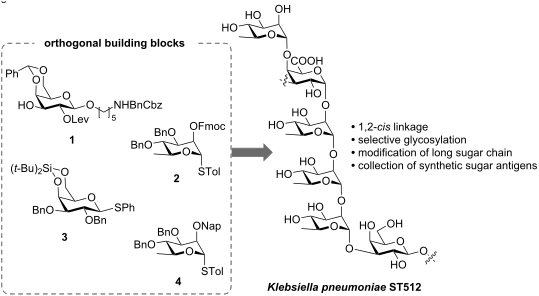
- : Department of Chemistry, Dalian University of Technology, No. 2 Linggong Road, 116024 Dalian, China Institute of Organic Chemistry and Biochemistry of the Czech Academy of Sciences, Flemingovo náměstí 542/2, 160 00 Praha 6, Czech Republic 10.3762/bjoc.22.64 Abstract Klebsiella pneumoniae ST512 is an



Synthesis and structural elucidation of a novel bis-spirooxindole from isatin and ethylenediamine
Beilstein J. Org. Chem. 2026, 22, 813–820, doi:10.3762/bjoc.22.63
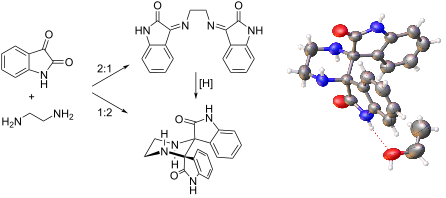
- Irene Moreno-Gutierrez Josefa L. Lopez-Martinez Sonia Berenguel-Gomez Irene Torres-Garcia Duane Choquesillo-Lazarte Manuel Munoz-Dorado Miriam Alvarez-Corral Ignacio Rodriguez-Garcia Organic Chemistry, University of Almería, CIAIMBITAL, 04120 Almería, Spain Laboratorio de Estudios Cristalográficos


Knoevenagel condensation of 4,5- and 1,8-diazafluorenes
Beilstein J. Org. Chem. 2026, 22, 803–812, doi:10.3762/bjoc.22.62
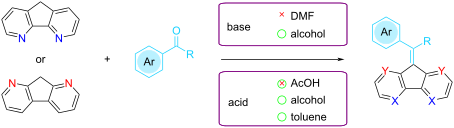
- Darya S. Cheshkina Christina S. Becker Alina A. Sonina Maxim S. Kazantsev N.N. Vorozhtsov Novosibirsk Institute of Organic Chemistry SB RAS, Lavrentieva 9, 630090 Novosibirsk, Russia 10.3762/bjoc.22.62 Abstract Diazafluorenylidenes are potential antitumor agents, ligands, and functional materials
- materials [14]. Furthermore, diazafluorenylidenes may exhibit polymorphism, high solid-state emission, and decent charge carrier mobility which makes these molecules promising for use in organic optoelectronics [5][15][16]. Current synthetic approaches to diazafluorenylidenes are limited. The typical method




Synthetic study of vic-bromination of diarylacetylenes, easy purification and separation
Beilstein J. Org. Chem. 2026, 22, 795–802, doi:10.3762/bjoc.22.61
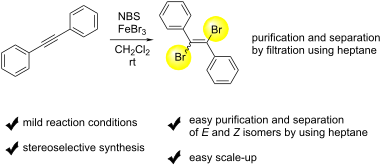
- ; Introduction The addition reaction of bromine to diphenylacetylene is one of basic reactions and is recognized as important, because resulting 1,2-dibromo-1,2-diphenylethylene can serve as a precursor for various molecular transformations in organic synthesis [1][2]. This reaction seems to be simple, but some
- was stirred at room temperature for 2 hours. A 10% aqueous solution of Na2S2O3 (20 mL) was added to stop the reaction. The mixture was extracted with CH2Cl2 (20 mL × 1), and separated. The aqueous phase was extracted with CH2Cl2 (20 mL × 2). The combined organic phase was washed with H2O (20 mL) and
- brine (20 mL), and dried over Na2SO4. After this, filtration and concentration were performed; the organic phase was passed through a short column of silica gel using CH2Cl2 (100 mL) to remove inorganic materials and others; then it was concentrated under reduced pressure to give the crude product. This



Halogenated azobenzene acrylates: from efficient solution photoswitching to stable solid-state photochromic materials
Beilstein J. Org. Chem. 2026, 22, 782–794, doi:10.3762/bjoc.22.60
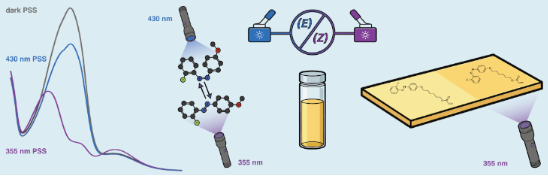
- . Neumanna 1316, Pardubice, 53002, Czech Republic Institute of Organic Chemistry and Technology, Faculty of Chemical Technology, University of Pardubice, Studentská 573, Pardubice, 53210, Czech Republic 10.3762/bjoc.22.60 Abstract The design, synthesis, and comprehensive characterization of six novel


Preparation of 3-(alkylamino)imidazo[1,2-a]pyridine-2-carbaldehydes via Kornblum oxidation and unexpected ring-opening reactions of the corresponding alcohols under oxidative conditions
Beilstein J. Org. Chem. 2026, 22, 763–770, doi:10.3762/bjoc.22.58
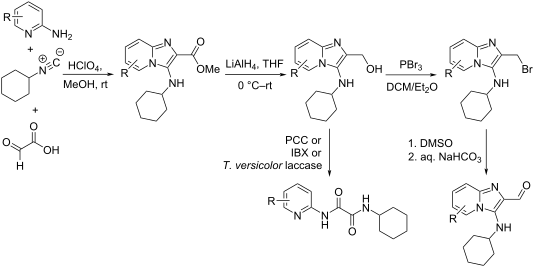
- derivatives have been found to be of interest in the development of organic materials with interesting properties [11][12]. The importance of imidazo[1,2-a]pyridines is evidenced by the plethora of recent review articles covering methods for their preparation [13][14][15][16] and functionalisation reactions


Synthesis of heterocycles based on azomethine ylides from α-amino acids (or amines) and carbonyl compounds
Beilstein J. Org. Chem. 2026, 22, 705–741, doi:10.3762/bjoc.22.55
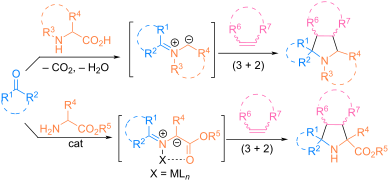
- compounds; catalysis; (3 + 2) cycloaddition; decarboxylation; dipolarophiles; iminoesters; polycyclic compounds; spirocyclic compounds; stereoselectivity; Introduction The 1,3-dipolar cycloaddition is one of the most popular pericyclic reactions in organic synthesis, in which a dipole molecule interacts
- reactions. Due to their unique chemical properties and high versatility, fullerenes are finding increasing application in organic synthesis. In this work, the authors focused on the functionalization of C60 with a helicene component via Cu(II)/L13-catalyzed enantioselective 1,3-dipolar cycloaddition of