
Search results
Search for "gold catalyst" in Full Text gives 56 result(s) in Beilstein Journal of Organic Chemistry.
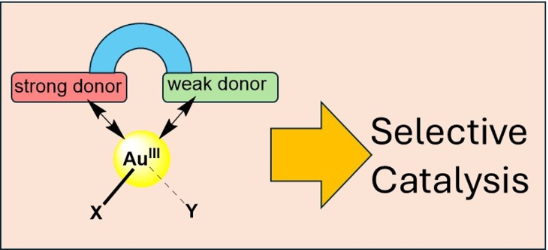
The trans-influence in gold chemistry from a catalytic perspective
- Manfred Bochmann
Beilstein J. Org. Chem. 2026, 22, 838–856, doi:10.3762/bjoc.22.66
- step HOTf is eliminated, to give the observed non-conjugated alkene. This second step also proceeds in the absence of a gold catalyst, with identical outcomes (Scheme 21). Given the strong Lewis acidity of cationic Au(III) centres, in the presence of traces of moisture H+-initiated reactions are always

Graphical Abstract

Scheme 1: Assessment of ligand influence by kinetic competition experiments.

Scheme 2: Ligand types employed in the stabilisation of gold(III) complexes.

Scheme 3: Au(III) π- and σ-complexes stabilised by C^N^C and C^N chelate ligands [28-32] and an example of a gold(II...

Scheme 4: Gold(III) C^C chelate complexes.

Figure 1: Examples of photoemissive gold(III) pyrazine complexes. Dr. J. Fernandez-Cestau is gratefully ackno...

Scheme 5: Gold hydride complexes supported by tridentate pincer ligands and corresponding1H NMR chemical shif...

Scheme 6: Gold(III) hydride formation by oxygen transfer.

Scheme 7: Heterolytic H–H bond cleavage by cationic Au(III) complexes [32,56].

Scheme 8: Gold(III) models of the water-gas shift reaction [30].

Scheme 9: Gold(III) hydride complexes supported by C^C and C^N chelate ligands [32,50].

Scheme 10: O2 insertions into Au–H bonds.

Scheme 11: Alkyne, alkene and isocyanide hydroauration by a bimolecular gold radical mechanism [49,65,66].

Scheme 12: Reactions of (C^C)Au–H with DMAD [50].

Scheme 13: Alkyne hydroauration by a bimolecular Au(III)–Au(I)-assisted process [69].

Scheme 14: Gold(III) π-allyl complexes.

Scheme 15: Outer-sphere mechanism of ethylene insertion into Au–O bonds [20,84].

Scheme 16: Catalytic acetylene functionalisation [86,87].

Scheme 17: Examples of alkene insertions into Au–C bonds [88,89].

Scheme 18: Examples of β-H elimination and chain walking processes in (C^P)-ligated gold alkyls [90].

Scheme 19: Mechanism of alkyne hydroarylation with (C^P) gold catalysts [92].

Scheme 20: Vinylic triflate esters by gold-catalysed nucleophilic attack on alkynes [94].

Scheme 21: Gold-catalysed and gold-free steps in the formation of Heck-type olefins [97,99].
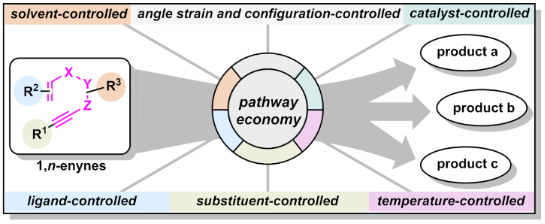
Pathway economy in cyclization of 1,n-enynes
- Hezhen Han,
- Wenjie Mao,
- Bin Lin,
- Maosheng Cheng,
- Lu Yang and
- Yongxiang Liu
Beilstein J. Org. Chem. 2025, 21, 2260–2282, doi:10.3762/bjoc.21.173
- -dependent selectivity was attributed to differences in alkyne activation modes between gold and silver. The gold catalyst induced linear coordination of the alkyne to generate a carbenoid species, while silver ions favored formation of a π-activated intermediate. In 2018, the Liu group demonstrated a
- quinazolinone's amino group. When this carbon atom was in a sp2 hybridization state, the C3 position of the indole attacked the inner side of the triple bond under the action of a gold catalyst, leading to a 6-exo-dig cyclization to yield 1,2-fused quinazolinones 146 (Scheme 30, path a). When the carbon atom was

Graphical Abstract

Scheme 1: Economical synthesis and pathway economy.

Scheme 2: Au(I)-catalyzed cascade cyclization paths of 1,5-enynes.

Scheme 3: Au(I)-catalyzed cyclization paths of 1,7-enynes.

Scheme 4: I2/TBHP-mediated radical cycloisomerization paths of 1,n-enyne.

Scheme 5: Au(I)-catalyzed cycloisomerization paths of 3-allyloxy-1,6-diynes.

Scheme 6: Pd(II)-catalyzed cycloisomerization paths of 2-alkynylbenzoate-cyclohexadienone.

Scheme 7: Stereoselective cyclization of 1,5-enynes.

Scheme 8: Substituent-controlled cycloisomerization of propargyl vinyl ethers.

Scheme 9: Au(I)-catalyzed pathway-controlled domino cyclization of 1,2-diphenylethynes.

Scheme 10: Au(I)-catalyzed tandem cyclo-isomerization of tryptamine-N-ethynylpropiolamide.

Scheme 11: Au(I)-catalyzed tunable cyclization of 1,6-cyclohexenylalkyne.

Scheme 12: Substituent-controlled 7-exo- and 8-endo-dig-selective cyclization of 2-propargylaminobiphenyl deri...

Scheme 13: BiCl3-catalyzed cycloisomerization of tryptamine-ynamide derivatives.

Scheme 14: Au(I)-mediated substituent-controlled cycloisomerization of 1,6-enynes.

Scheme 15: Ligand-controlled regioselective cyclization of 1,6-enynes.

Scheme 16: Ligand-dependent cycloisomerization of 1,7-enyne esters.

Scheme 17: Ligand-controlled cycloisomerization of 1,5-enynes.

Scheme 18: Ligand-controlled cyclization strategy of alkynylamide tethered alkylidenecyclopropanes.

Scheme 19: Ag(I)-mediated pathway-controlled cycloisomerization of tryptamine-ynamides.

Scheme 20: Gold-catalyzed cycloisomerization of indoles with alkynes.

Scheme 21: Catalyst-dependent cycloisomerization of dienol silyl ethers.

Scheme 22: Cycloisomerization of aromatic enynes governed by catalyst.

Scheme 23: Catalyst-dependent 1,2-migration in cyclization of 1-(indol-2-yl)-3-alkyn-1-ols.

Scheme 24: Gold-catalyzed cycloisomerization of N-propargyl-N-vinyl sulfonamides.

Scheme 25: Gold(I)-mediated enantioselective cycloisomerizations of ortho-(alkynyl)styrenes.

Scheme 26: Catalyst-controlled intramolecular cyclization of 1,7-enynes.

Scheme 27: Brønsted acid-catalyzed cycloisomerizations of tryptamine ynamides.

Scheme 28: Catalyst-controlled cyclization of indolyl homopropargyl amides.

Scheme 29: Angle strain-dominated 6-endo-trig cyclization of propargyl vinyl ethers.

Scheme 30: Angle strain-controlled cycloisomerization of alkyn-tethered indoles.

Scheme 31: Geometrical isomeration-dependent cycloisomerization of 1,3-dien-5-ynes.

Scheme 32: Temperature-controlled cyclization of 1,7-enynes.

Scheme 33: Cycloisomerizations of n-(o-ethynylaryl)acrylamides through temperature modulation.

Scheme 34: Temperature-controlled boracyclization of biphenyl-embedded 1,3,5-trien-7-ynes.
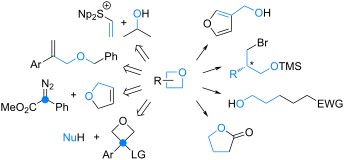
Oxetanes: formation, reactivity and total syntheses of natural products
- Peter Gabko,
- Martin Kalník and
- Maroš Bella
Beilstein J. Org. Chem. 2025, 21, 1324–1373, doi:10.3762/bjoc.21.101
- ]. These oxetanone precursors are generated from easily accessible alkynylphosphonates 124 via gold-mediated alkyne oxidation by pyridine N-oxide 125 followed by a formal O–H-insertion of the resulting metallacarbene intermediate 128. The optimised procedure requires 5 mol % loadings of the gold catalyst

Graphical Abstract

Figure 1: Bond lengths and bond angles in oxetane at 140 K [2].

Figure 2: Analogy of 3-substituted oxetanes to carbonyl and gem-dimethyl groups [12].

Figure 3: Use of oxetanes in drug design – selected examples.

Figure 4: Examples of oxetane-containing natural products.

Scheme 1: Synthetic strategies towards construction of the oxetane ring.

Scheme 2: Overview of intramolecular Williamson etherification and competing Grob fragmentation.

Scheme 3: Synthesis of spiro-oxetanes via 1,4-C–H insertion and Williamson etherification.

Scheme 4: Use of phenyl vinyl selenone in the synthesis of spirooxindole oxetanes.

Scheme 5: Synthesis of bicyclic 3,5-anhydrofuranoses via double epoxide opening/etherification.

Scheme 6: Preparation of spirooxetanes by cycloisomerisation via MHAT/RPC.

Scheme 7: Oxetane synthesis via alcohol C–H functionalisation.

Scheme 8: Access to oxetanes 38 from α-acetyloxy iodides.

Scheme 9: The kilogram-scale synthesis of oxetane intermediate 41.

Scheme 10: Overview of the intramolecular opening of 3-membered rings.

Scheme 11: Synthesis of 4,7-dioxatricyclo[3.2.1.03,6]octane skeletons.

Scheme 12: Silicon-directed electrophilic cyclisation of homoallylic alcohols.

Scheme 13: Hydrosilylation–iodocyclisation of homopropargylic alcohols.

Scheme 14: Cu-catalysed intramolecular O-vinylation of γ-bromohomoallylic alcohols.

Scheme 15: Cu-catalysed intramolecular cross-coupling of hydroxyvinylstannanes.

Scheme 16: Isomerisation of oxiranyl ethers containing weakly carbanion-stabilising groups.

Scheme 17: Cyclisation of diethyl haloalkoxymalonates.

Scheme 18: Synthesis of oxetanes through a 1,5-HAT/radical recombination sequence.

Scheme 19: General approach to oxetanes via [2 + 2] cycloadditions.

Scheme 20: Synthesis of tricyclic 4:4:4 oxetanes through a photochemical triple cascade reaction.

Scheme 21: Iridium-catalysed Paternò–Büchi reaction between α-ketoesters and simple alkenes.

Scheme 22: Three-step synthesis of spirocyclic oxetanes 83 via Paternò–Büchi reaction, nucleophilic ring openi...

Scheme 23: Enantioselective Paternò–Büchi reaction catalysed by a chiral iridium photocatalyst.

Scheme 24: Synthesis of polysubstituted oxetanes 92 via Cu(II)-mediated formal [2 + 2] cycloadditions.
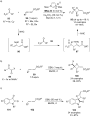
Scheme 25: Synthesis of alkylideneoxetanes via NHC- and DBU-mediated formal [2 + 2] cycloadditions.

Scheme 26: Use of sulphur-stabilised carbanions in ring expansions.

Scheme 27: Synthesis of α,α-difluoro(arylthio)methyl oxetanes.

Scheme 28: Ring expansion in an industrial synthesis of PF-06878031.

Scheme 29: Ring contraction of triflated 2-hydroxy-γ-lactones.

Scheme 30: Ring contraction in an industrial synthesis of PF-06878031.

Scheme 31: Photochemical ring contraction of 2,5-dihydrofurans by aryldiazoacetic acid esters.

Scheme 32: Synthesis of 3-oxetanones via O-H insertion of carbenes.

Scheme 33: Synthesis of phosphonate oxetanones via gold-mediated alkyne oxidation/O–H insertion.

Scheme 34: Syntheses and common derivatisations of 3-oxetanone.

Scheme 35: SN1 substitution of 3-aryloxetan-3-ols by thiols and alcohols.

Scheme 36: Fe–Ni dual-catalytic olefin hydroarylation towards 3-alkyl-3-(hetero)aryloxetanes.

Scheme 37: Synthesis of 3-aryloxetan-3-carboxylic acids.

Scheme 38: Decarboxylative alkylation of 3-aryloxetan-3-carboxylic acids.

Scheme 39: Synthesis of 3-amino-3-aryloxetanes via photoredox/nickel cross-coupling catalysis.
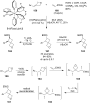
Scheme 40: Intermolecular cross-selective [2 + 2] photocycloaddition towards spirooxetanes.

Scheme 41: Synthesis of 3-aryl-3-aminooxetanes via defluorosulphonylative coupling.

Scheme 42: Two-step synthesis of amide bioisosteres via benzotriazolyl Mannich adducts 170.

Scheme 43: Functionalisation of oxetanyl trichloroacetimidates 172.

Scheme 44: Synthesis of oxetane-amino esters 176.

Scheme 45: Tandem Friedel–Crafts alkylation/intramolecular ring opening of 3-aryloxetan-3-ols.

Scheme 46: Synthesis of polysubstituted furans and pyrroles.

Scheme 47: Synthesis of oxazolines and bisoxazolines.

Scheme 48: Tandem, one-pot syntheses of various polycyclic heterocycles.

Scheme 49: Synthesis of 1,2-dihydroquinolines via skeletal reorganisation of oxetanes.

Scheme 50: Synthesis of benzoindolines and 2,3-dihydrobenzofurans and their derivatisations.

Scheme 51: Synthesis of polysubstituted 1,4-dioxanes.

Scheme 52: Preparation of various lactones via ring opening of oxetane-carboxylic acids 219.

Scheme 53: Tsuji-Trost allylation/ring opening of 3-aminooxetanes.

Scheme 54: Arylative skeletal rearrangement of 3-vinyloxetan-3-ols to 2,5-dihydrofurans.

Scheme 55: Reductive opening of oxetanes using catalytic Mg–H species.

Scheme 56: Opening of oxetanes by silyl ketene acetals.

Scheme 57: Rhodium-catalysed hydroacylation of oxetanes.

Scheme 58: Generation of radicals from oxetanes mediated by a vitamin B12-derived cobalt catalyst.

Scheme 59: Reductive opening of oxetanes by B–Si frustrated Lewis pairs.
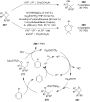
Scheme 60: Zirconocene-mediated reductive opening of oxetanes.

Scheme 61: Enantioselective syntheses of small and medium-size rings using chiral phosphoric acids.

Scheme 62: Asymmetric synthesis of 2,3-dihydrobenzo[b]oxepines catalysed by a chiral scandium complex.

Scheme 63: Enantioselective synthesis of 1,3-bromohydrins under a chiral squaramide catalysis.

Scheme 64: Enantioselective opening of 2-aryl-2-ethynyloxetanes by anilines.

Scheme 65: Ru-catalysed insertion of diazocarbonyls into oxetanes.

Scheme 66: Ring expansion of oxetanes by stabilised carbenes generated under blue light irradiation.

Scheme 67: Expansion of oxetanes via nickel-catalysed insertion of alkynyltrifluoroborates.

Scheme 68: Nickel-catalysed expansion of oxetanes into ε-caprolactones.

Scheme 69: Expansion of oxetanes via cobalt-catalysed carbonyl insertion.

Scheme 70: Gold-catalysed intramolecular 1,1-carboalkoxylation of oxetane-ynamides.

Scheme 71: Expansion of oxetanes by stabilised sulphoxonium ylides.

Scheme 72: Cu-catalysed ring expansion of 2-vinyloxetanes by diazoesters.

Scheme 73: Total synthesis of (+)-oxetin.

Scheme 74: Total synthesis of racemic oxetanocin A.

Scheme 75: Total synthesis of (−)-merrilactone A.
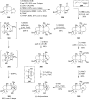
Scheme 76: Total synthesis of (+)-dictyoxetane.

Scheme 77: Total synthesis of ent-dichrocephone B.

Scheme 78: Total synthesis of (−)-mitrephorone A.
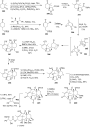
Scheme 79: Total synthesis of (−)-taxol.
Recent total synthesis of natural products leveraging a strategy of enamide cyclization
- Chun-Yu Mi,
- Jia-Yuan Zhai and
- Xiao-Ming Zhang
Beilstein J. Org. Chem. 2025, 21, 999–1009, doi:10.3762/bjoc.21.81
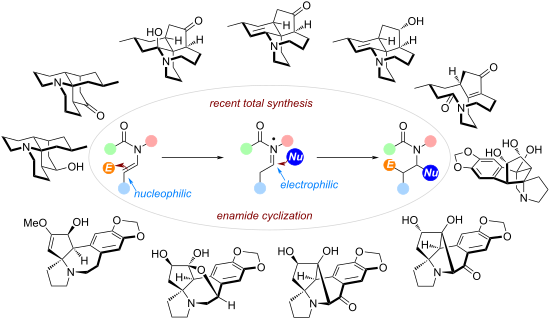
- was utilized to transform enamine 18 and propargyl ester 19 into 1-azaspiro[4.4]nonane 20 with high diastereoselectivity. Notably, the combination of an N-heterocyclic carbene gold catalyst and a silver salt AgSbF6 was found to be essential in guaranteeing the reactivity of the alkyne partner

Graphical Abstract

Figure 1: Reactivity of enamides and enamide cyclizations.

Scheme 1: Total synthesis of (−)-dihydrolycopodine and (−)-lycopodine.
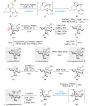
Scheme 2: Collective total synthesis of fawcettimine-type alkaloids.

Scheme 3: Total syntheses of cephalotaxine and cephalezomine H.
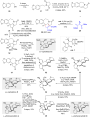
Scheme 4: Collective total syntheses of Cephalotaxus alkaloids.
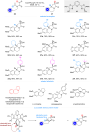
Scheme 5: Asymmetric tandem cyclization/Pictet–Spengler reaction of tertiary enamides.

Scheme 6: Tandem cyclization/Pictet–Spengler reaction for the synthesis of chiral tetracyclic compounds.

Scheme 7: Total synthesis of (−)-cephalocyclidin A.
Ligand effects, solvent cooperation, and large kinetic solvent deuterium isotope effects in gold(I)-catalyzed intramolecular alkene hydroamination
- Ruichen Lan,
- Brock Yager,
- Yoonsun Jee,
- Cynthia S. Day and
- Amanda C. Jones
Beilstein J. Org. Chem. 2024, 20, 479–496, doi:10.3762/bjoc.20.43
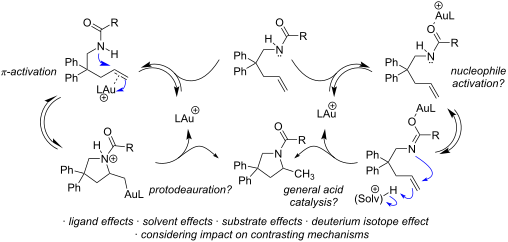
- typical relatively dilute conditions in this study for 1a (0.05 M) and in the absence of added MeOH, the data is consistent with a second order rate law rate = k2[alkene][gold catalyst]. To determine activation parameters rates of urea 1a hydroamination were measured with 1 mol % [JPhosAu(NCCH3)]SbF6 (5
- have been masked by the high temperatures and long reaction times of early reports. For example, Widenhoefer engaged carbamates and amides in dioxane at temperatures >80 °C [12][13]. Later work showed that ureas could be engaged at room temperature when a NHC–gold catalyst system was used, outpacing
- , which boosts reaction rates, may be counterbalancing any expected slowdown. • Activation parameters suggest an ordered transition state. Reaction orders indicate an approach to zero-order dependence on gold catalyst when in the presence of MeOH, while first-order dependence on gold catalyst is

Graphical Abstract
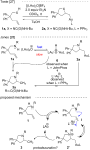
Scheme 1: Proposed mechanism and observation of alkylgold intermediates.

Figure 1: First order alkene decay for urea alkene 1a (0.05 M) hydroamination with [JPhosAu(NCCH3)]SbF6 (5, 2...

Figure 2: Cooperative effect of mixed CD2Cl2/MeOH on alkene 1a → 3a conversion with catalyst 5 (2.5 mol %). E...

Figure 3: Different additive impact on rate of 1a → 3a depending upon catalyst and co-solvent. The data for J...
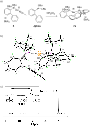
Figure 4: (a) Schematic for synthesis of [L–Au–L]SbF6 where L = JPhos. (b) Perspective drawing of the cation ...

Figure 5: (a) kobs for reaction of urea 1a (0.05 M) in DCM with catalyst 5 and titrated CH3OH/CH3OD. Data for...

Figure 6: Rate of urea 1a (0.05 M) hydroamination with JPhosAu(NCCH3)SbF6 (2.5 mol %) in CH2Cl2 with 5, 25, a...
Figure 7: Observed rates for the reaction of carbamate 1b (0.03–0.24 M) with JackiephosAuNTf2 (0.0013 M, 6a) ...
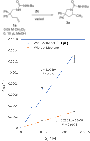
Figure 8: Influence of catalyst 5 concentration on rate of 1a (0.05 M in CH2Cl2 with 0, 10 μL MeOH). Error ba...

Scheme 2: Proposed alternate mechanism.
Formal total synthesis of macarpine via a Au(I)-catalyzed 6-endo-dig cycloisomerization strategy
- Jiayue Fu,
- Bingbing Li,
- Zefang Zhou,
- Maosheng Cheng,
- Lu Yang and
- Yongxiang Liu
Beilstein J. Org. Chem. 2022, 18, 1589–1595, doi:10.3762/bjoc.18.169
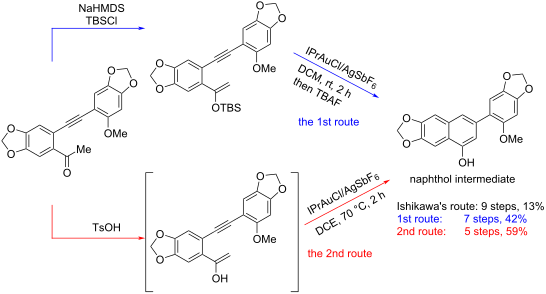
- ) itself failed to catalyze the cycloisomerization (Table 1, entry 1). Evaluation of a number of silver salts illustrated that silver hexafluoroantimonate (AgSbF6) was the optimal additive to activate the gold catalyst (Table 1, entries 2, 3, and 7). Screening of the other ligands of Au(I) catalysts

Graphical Abstract

Scheme 1: Classification of benzo[c]phenanthridine alkaloids.

Scheme 2: Representative synthetic strategies for macarpine (1).

Scheme 3: Retrosynthetic analysis of marcarpine precursor 12 for a partial synthesis.

Scheme 4: Syntheses of precursors 5 and 8.

Scheme 5: Synthesis of enol silyl ether 10.

Scheme 6: Formal total synthesis of macarpine (1).
Diametric calix[6]arene-based phosphine gold(I) cavitands
- Gabriele Giovanardi,
- Andrea Secchi,
- Arturo Arduini and
- Gianpiero Cera
Beilstein J. Org. Chem. 2022, 18, 190–196, doi:10.3762/bjoc.18.21
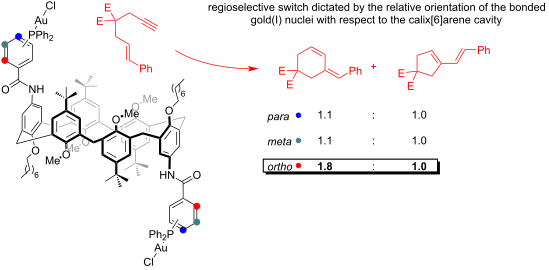
- calix[6]arene scaffold, we carried out the synthesis of three monomeric gold catalyst analogues A’,B’,C’(AuCl). The synthesis of these compounds was performed using the previously optimized protocol, starting from a 4-(octyloxy)aniline intermediate (Scheme 2). Subsequently, due to the general interest
- .), CH2Cl2, 0 °C to rt [A, 60%; B, 55%, C, 53%); iii) (Me2S)AuCl in CH2Cl2, 0 °C to rt (A(AuCl)2, 93%; B(AuCl)2, 74%; C(AuCl)2, 69%). Synthesis of the monomeric gold catalyst analogues A’,B’,C’(AuCl). Conditions: i) diphenylphosphinobenzoic acid, EDC∙HCl, DMAP (cat.), CH2Cl2, 0 °C to rt (A’, 71%; B’, 76%; C

Graphical Abstract

Figure 1: Selected examples of: a) calix[4]arene-; b) resorcin[4]arene-; c) calix[6]arene-gold(I) macrocyclic...

Scheme 1: i) NH2NH2∙H2O, Pd/C in EtOH, 80 °C (quant.); ii) diphenylphosphinobenzoic acid, EDC∙HCl, DMAP (cat....

Figure 2: Stacked-plot, mid-field expanded region of the 1H NMR spectrum (400 MHz, 298 K) of A(AuCl)2, B(AuCl)...

Figure 3: Stacked plot 1H NMR (tetrachloroethane-d2) of A(AuCl)2 at variable temperature.
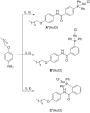
Scheme 2: Synthesis of the monomeric gold catalyst analogues A’,B’,C’(AuCl). Conditions: i) diphenylphosphino...
α-Ketol and α-iminol rearrangements in synthetic organic and biosynthetic reactions
- Scott Benz and
- Andrew S. Murkin
Beilstein J. Org. Chem. 2021, 17, 2570–2584, doi:10.3762/bjoc.17.172
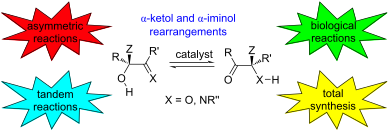
- derivative 28, which has a lower tendency for ring expansion. At room temperature, this substrate stopped at the hydrated intermediate 29, which could be isolated and remained intact when heated to 80 °C alone in 1,4-dioxane. Inclusion of the gold catalyst while heating, however, initiated the rearrangement
- to 30, confirming the importance of Au(I) in catalyzing both steps in the tandem reaction. Notably, this is the first time in the literature that α-ketol rearrangements have been initiated by a gold catalyst. Optimization revealed that the tandem reaction is best performed with Au(JohnPhos)SbF6 in
- . The catalyst is also capable of kinetic resolution of a mixture of enantiomeric substrates. Al* = 18. BF3-promoted diastereospecific rearrangement of α-ketol 21 to difluoroalkoxyborane 22. In the presence of a gold catalyst and water in 1,4-dioxane, 1-alkynylbutanol derivatives undergo tandem

Graphical Abstract

Figure 1: Generalized α-ketol or α-iminol rearrangement.

Figure 2: Nickel(II)-catalyzed enantioselective rearrangement of ketol 3 to form the ring-expanded and chiral...

Figure 3: Enantioselective ring expansion of β-hydroxy-α-dicarbonyl 6 catalyzed by a chiral copper-bisoxazoli...

Figure 4: Enantioselective rearrangement of ketols 9 and 12 and hydroxyaldimine 14 catalyzed by Al(III) or Sc...

Figure 5: Asymmetric rearrangement of α,α-dialkyl-α-siloxyaldehydes 16 to α-siloxyketones 17 catalyzed by chi...

Figure 6: BF3-promoted diastereospecific rearrangement of α-ketol 21 to difluoroalkoxyborane 22.

Figure 7: In the presence of a gold catalyst and water in 1,4-dioxane, 1-alkynylbutanol derivatives undergo t...

Figure 8: The diastereospecific α-ketol rearrangement of 32 to 33, part of the total synthesis of periconiano...

Figure 9: Two α-ketol rearrangements, one catalyzed by silica gel on 38 and the other by NaOMe on both 38 and ...

Figure 10: α-Ketol rearrangement of triumphalone (41) to isotriumphalone (42) via ring contraction.

Figure 11: Tandem reaction of strophasterol A synthetic intermediate 43 to 44 through a vinylogous α-ketol rea...

Figure 12: Tandem reaction consisting of a Diels–Alder cycloaddition followed by an α-ketol rearrangement, par...

Figure 13: Single-pot reaction consisting of Claisen and α-ketol rearrangements, part of the total synthesis o...

Figure 14: Enzyme-catalyzed α-ketol rearrangements. a) Ketol-acid reductoisomerase (KAR) catalyzes the rearran...

Figure 15: The conversion of asperfloroid (73) to asperflotone (72), featuring the ring-expanding α-ketol rear...
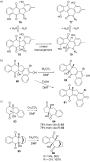
Figure 16: Hypothetical interconversion of natural products prekinamycin (76) and isoprekinamycin (77) and che...

Figure 17: Proposed biosynthetic pathway converting acylphloroglucinol (87) to isolated elodeoidins A–H 92–96....

Figure 18: α-Iminol rearrangements catalyzed by VANOL Zr (99). The rearrangement can be conducted with preform...

Figure 19: α-Iminol rearrangements catalyzed by silica gel and montmorillonite K 10. a) For 102a (102 with R =...

Figure 20: Synthesis of tryptamines 110 via a ring-contracting α‑iminol rearrangement. A mechanism for the fin...

Figure 21: Tandem synthesis of functionalized α-amino cyclopentanones 119 from heteroarenes 115 and cyclobutan...

Figure 22: Four eburnane-type alkaloid natural products 122–125 were synthesized from common intermediate 127,...
Methodologies for the synthesis of quaternary carbon centers via hydroalkylation of unactivated olefins: twenty years of advances
- Thiago S. Silva and
- Fernando Coelho
Beilstein J. Org. Chem. 2021, 17, 1565–1590, doi:10.3762/bjoc.17.112
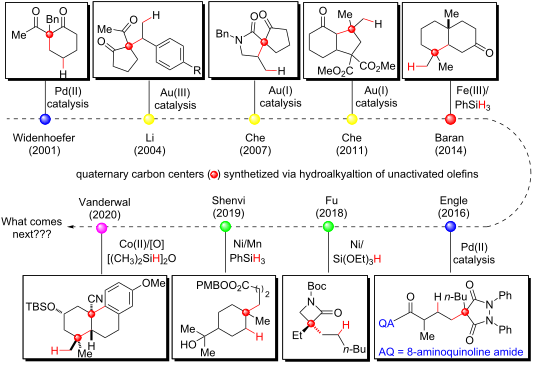
- changing the previously optimized mild reaction conditions (Scheme 6). Only traces of 10 were observed in the absence of one of the metal salts; this excluded the participation of the silver salt in the olefin activation but highlighted its usual role in the activation of the gold catalyst, namely halide

Graphical Abstract

Figure 1: Some examples of natural products and drugs containing quaternary carbon centers.

Scheme 1: Simplified mechanism for olefin hydrofunctionalization using an electrophilic transition metal as a...

Scheme 2: Selected examples of quaternary carbon centers formed by the intramolecular hydroalkylation of β-di...

Scheme 3: Control experiments and the proposed mechanism for the Pd(II)-catalyzed intermolecular hydroalkylat...

Scheme 4: Intermolecular olefin hydroalkylation of less reactive ketones under Pd(II) catalysis using HCl as ...

Scheme 5: A) Selected examples of Pd(II)-mediated quaternary carbon center synthesis by intermolecular hydroa...

Scheme 6: Selected examples of quaternary carbon center synthesis by gold(III) catalysis. This is the first r...
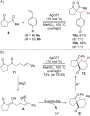
Scheme 7: Selected examples of inter- (A) and intramolecular (B) olefin hydroalkylations promoted by a silver...
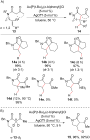
Scheme 8: A) Intermolecular hydroalkylation of N-alkenyl β-ketoamides under Au(I) catalysis in the synthesis ...
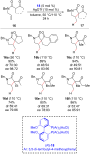
Scheme 9: Asymmetric pyrrolidine synthesis through intramolecular hydroalkylation of α-substituted N-alkenyl ...
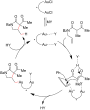
Scheme 10: Proposed mechanism for the chiral gold(I) complex promotion of the intermolecular olefin hydroalkyl...
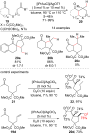
Scheme 11: Selected examples of carbon quaternary center synthesis by gold and evidence of catalytic system pa...

Scheme 12: Synthesis of a spiro compound via an aza-Michael addition/olefin hydroalkylation cascade promoted b...

Scheme 13: A selected example of quaternary carbon center synthesis using an Fe(III) salt as a catalyst for th...

Scheme 14: Intermolecular hydroalkylation catalyzed by a cationic iridium complex (Fuji (2019) [47]).

Scheme 15: Generic example of an olefin hydrofunctionalization via MHAT (Shenvi (2016) [51]).

Scheme 16: The first examples of olefin hydrofunctionalization run under neutral conditions (Mukaiyama (1989) [56]...

Scheme 17: A) Aryl olefin dimerization catalyzed by vitamin B12 and triggered by HAT. B) Control experiment to...
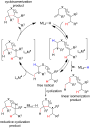
Scheme 18: Generic example of MHAT diolefin cycloisomerization and possible competitive pathways. Shenvi (2014...
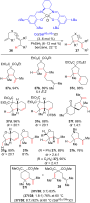
Scheme 19: Selected examples of the MHAT-promoted cycloisomerization reaction of unactivated olefins leading t...
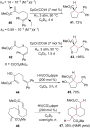
Scheme 20: Regioselective carbocyclizations promoted by an MHAT process (Norton (2008) [76]).

Scheme 21: Selected examples of quaternary carbon centers synthetized via intra- (A) and intermolecular (B) MH...

Scheme 22: A) Proposed mechanism for the Fe(III)/PhSiH3-promoted radical conjugate addition between olefins an...

Scheme 23: Examples of cascade reactions triggered by HAT for the construction of trans-decalin backbone uniti...
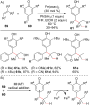
Scheme 24: A) Selected examples of the MHAT-promoted radical conjugate addition between olefins and p-quinone ...
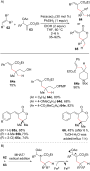
Scheme 25: A) MHAT triggered radical conjugate addition/E1cB/lactonization (in some cases) cascade between ole...
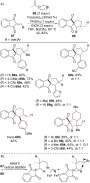
Scheme 26: A) Spirocyclization promoted by Fe(III) hydroalkylation of unactivated olefins. B) Simplified mecha...
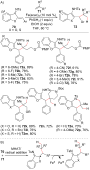
Scheme 27: A) Selected examples of the construction of a carbon quaternary center by the MHAT-triggered radica...

Scheme 28: Hydromethylation of unactivated olefins under iron-mediated MHAT (Baran (2015) [95]).

Scheme 29: The hydroalkylation of unactivated olefins via iron-mediated reductive coupling with hydrazones (Br...
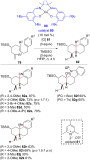
Scheme 30: Selected examples of the Co(II)-catalyzed bicyclization of dialkenylarenes through the olefin hydro...

Scheme 31: Proposed mechanism for the bicyclization of dialkenylarenes triggered by a MHAT process (Vanderwal ...
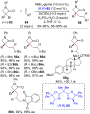
Scheme 32: Enantioconvergent cross-coupling between olefins and tertiary halides (Fu (2018) [108]).

Scheme 33: Proposed mechanism for the Ni-catalyzed cross-coupling reaction between olefins and tertiary halide...

Scheme 34: Proposed catalytic cycles for a MHAT/Ni cross-coupling reaction between olefins and halides (Shenvi...
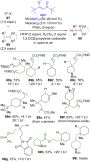
Scheme 35: Selected examples of the hydroalkylation of olefins by a dual catalytic Mn/Ni system (Shenvi (2019) ...

Scheme 36: A) Selected examples of quaternary carbon center synthesis by reductive atom transfer; TBC: 4-tert-...

Scheme 37: A) Selected examples of quaternary carbon centers synthetized by radical addition to unactivated ol...
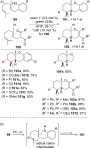
Scheme 38: A) Selected examples of organophotocatalysis-mediated radical polyene cyclization via a PET process...
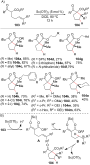
Scheme 39: A) Sc(OTf)3-mediated carbocyclization approach for the synthesis of vicinal quaternary carbon cente...
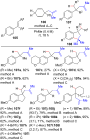
Scheme 40: Scope of the Lewis acid-catalyzed methallylation of electron-rich styrenes. Method A: B(C6F5)3 (5.0...
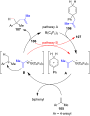
Scheme 41: The proposed mechanism for styrene methallylation (Oestreich (2019) [123]).
Au(III) complexes with tetradentate-cyclam-based ligands
- Ann Christin Reiersølmoen,
- Thomas N. Solvi and
- Anne Fiksdahl
Beilstein J. Org. Chem. 2021, 17, 186–192, doi:10.3762/bjoc.17.18
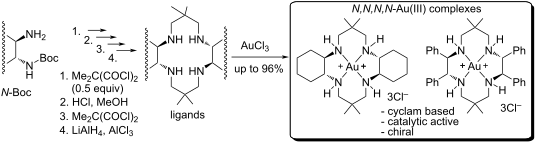
- trans product. Thus, the proper choice of the gold catalyst allows highly stereoselective formation of either cis or trans cyclopropanation products and facilitates the isolation of pure isomers. Despite the chiral nature of these ligands, no enantioselectivity was observed in the test reactions

Graphical Abstract

Scheme 1: Synthetic protocols for the preparation of potential ligands 1–4.

Scheme 2: Reduction of diamides 1a,b and tetraamides 2a,b.

Scheme 3: Au(III) coordination conditions for ligands 5a,b and 6a,b. Coordination of 5b was unsuccessful.

Figure 1: 1H NMR study of the formation of complex 6a-Au(III) by AuCl3 coordination to ligand 6a.
When metal-catalyzed C–H functionalization meets visible-light photocatalysis
- Lucas Guillemard and
- Joanna Wencel-Delord
Beilstein J. Org. Chem. 2020, 16, 1754–1804, doi:10.3762/bjoc.16.147
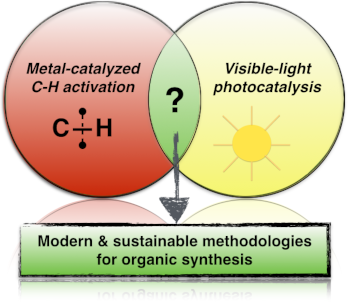
- -forming reaction under oxidant-free conditions, while the use of the gold catalyst gives promise of accessing highly site-selective transformations. Indeed, electrophilic Au(III) species were able to site-selectively activate C–H bonds of activated electron-rich arenes thus generating Au(III)–Ar species

Graphical Abstract

Figure 1: Concept of dual synergistic catalysis.

Figure 2: Classification of catalytic systems involving two catalysts.

Figure 3: General mechanism for the dual nickel/photoredox catalytic system.

Figure 4: General mechanisms for C–H activation catalysis involving different reoxidation strategies.

Figure 5: Indole synthesis via dual C–H activation/photoredox catalysis.

Figure 6: Proposed mechanism for the indole synthesis via dual catalysis.

Figure 7: Oxidative Heck reaction on arenes via the dual catalysis.

Figure 8: Proposed mechanism for the Heck reaction on arenes via dual catalysis.

Figure 9: Oxidative Heck reaction on phenols via the dual catalysis.

Figure 10: Proposed mechanism for the Heck reaction on phenols via dual catalysis.

Figure 11: Carbazole synthesis via dual C–H activation/photoredox catalysis.

Figure 12: Proposed mechanism for the carbazole synthesis via dual catalysis.

Figure 13: Carbonylation of enamides via the dual C–H activation/photoredox catalysis.

Figure 14: Proposed mechanism for carbonylation of enamides via dual catalysis.

Figure 15: Annulation of benzamides via the dual C–H activation/photoredox catalysis.

Figure 16: Proposed mechanism for the annulation of benzamides via dual catalysis.

Figure 17: Synthesis of indoles via the dual C–H activation/photoredox catalysis.

Figure 18: Proposed mechanism for the indole synthesis via dual catalysis.

Figure 19: General concept of dual catalysis merging C–H activation and photoredox catalysis.

Figure 20: The first example of dual catalysis merging C–H activation and photoredox catalysis.

Figure 21: Proposed mechanism for the C–H arylation with diazonium salts via dual catalysis.

Figure 22: Dual catalysis merging C–H activation/photoredox using diaryliodonium salts.

Figure 23: Direct arylation via the dual catalytic system reported by Xu.

Figure 24: Direct arylation via dual catalytic system reported by Balaraman.

Figure 25: Direct arylation via dual catalytic system reported by Guo.

Figure 26: C(sp3)–H bond arylation via the dual Pd/photoredox catalytic system.

Figure 27: Acetanilide derivatives acylation via the dual C–H activation/photoredox catalysis.

Figure 28: Proposed mechanism for the C–H acylation with α-ketoacids via dual catalysis.

Figure 29: Acylation of azobenzenes via the dual catalysis C–H activation/photoredox.

Figure 30: C2-acylation of indoles via the dual C–H activation/photoredox catalysis.

Figure 31: Proposed mechanism for the C2-acylation of indoles with aldehydes via dual catalysis.

Figure 32: C2-acylation of indoles via the dual C–H activation/photoredox catalysis.

Figure 33: Perfluoroalkylation of arenes via the dual C–H activation/photoredox catalysis.

Figure 34: Proposed mechanism for perfluoroalkylation of arenes via dual catalysis.

Figure 35: Sulfonylation of 1-naphthylamides via the dual C–H activation/photoredox catalysis.

Figure 36: Proposed mechanism for sulfonylation of 1-naphthylamides via dual catalysis.

Figure 37: meta-C–H Alkylation of arenes via visible-light metallaphotocatalysis.

Figure 38: Alternative procedure for meta-C–H alkylation of arenes via metallaphotocatalysis.

Figure 39: Proposed mechanism for meta-C–H alkylation of arenes via metallaphotocatalysis.

Figure 40: C–H borylation of arenes via visible-light metallaphotocatalysis.

Figure 41: Proposed mechanism for C–H borylation of arenes via visible-light metallaphotocatalysis.

Figure 42: Undirected C–H aryl–aryl cross coupling via dual gold/photoredox catalysis.

Figure 43: Proposed mechanism for the undirected C–H aryl–aryl cross-coupling via dual catalysis.

Figure 44: Undirected C–H arylation of (hetero)arenes via dual manganese/photoredox catalysis.

Figure 45: Proposed mechanism for the undirected arylation of (hetero)arenes via dual catalysis.

Figure 46: Photoinduced C–H arylation of azoles via copper catalysis.

Figure 47: Photo-induced C–H chalcogenation of azoles via copper catalysis.

Figure 48: Decarboxylative C–H adamantylation of azoles via dual cobalt/photoredox catalysis.

Figure 49: Proposed mechanism for the C–H adamantylation of azoles via dual catalysis.

Figure 50: General mechanisms for the “classical” (left) and Cu-free variant (right) Sonogoshira reaction.

Figure 51: First example of a dual palladium/photoredox catalysis for Sonogashira-type couplings.

Figure 52: Arylation of terminal alkynes with diazonium salts via dual gold/photoredox catalysis.

Figure 53: Proposed mechanism for the arylation of terminal alkynes via dual catalysis.

Figure 54: C–H Alkylation of alcohols promoted by H-atom transfer (HAT).

Figure 55: Proposed mechanism for the C–H alkylation of alcohols promoted by HAT.

Figure 56: C(sp3)–H arylation of latent nucleophiles promoted by H-atom transfer.

Figure 57: Proposed mechanism for the C(sp3)–H arylation of latent nucleophiles promoted by HAT.

Figure 58: Direct α-arylation of alcohols promoted by H-atom transfer.

Figure 59: Proposed mechanism for the direct α-arylation of alcohols promoted by HAT.

Figure 60: C–H arylation of amines via dual Ni/photoredox catalysis.

Figure 61: Proposed mechanism for the C–H arylation of amines via dual Ni/photoredox catalysis.

Figure 62: C–H functionalization of nucleophiles via excited ketone/nickel dual catalysis.

Figure 63: Proposed mechanism for the C–H functionalization enabled by excited ketones.

Figure 64: Selective sp3–sp3 cross-coupling promoted by H-atom transfer.

Figure 65: Proposed mechanism for the selective sp3–sp3 cross-coupling promoted by HAT.

Figure 66: Direct C(sp3)–H acylation of amines via dual Ni/photoredox catalysis.

Figure 67: Proposed mechanism for the C–H acylation of amines via dual Ni/photoredox catalysis.

Figure 68: C–H hydroalkylation of internal alkynes via dual Ni/photoredox catalysis.

Figure 69: Proposed mechanism for the C–H hydroalkylation of internal alkynes.

Figure 70: Alternative procedure for the C–H hydroalkylation of ynones, ynoates, and ynamides.

Figure 71: Allylic C(sp3)–H activation via dual Ni/photoredox catalysis.

Figure 72: Proposed mechanism for the allylic C(sp3)–H activation via dual Ni/photoredox catalysis.

Figure 73: Asymmetric allylation of aldehydes via dual Cr/photoredox catalysis.

Figure 74: Proposed mechanism for the asymmetric allylation of aldehydes via dual catalysis.

Figure 75: Aldehyde C–H functionalization promoted by H-atom transfer.

Figure 76: Proposed mechanism for the C–H functionalization of aldehydes promoted by HAT.

Figure 77: Direct C–H arylation of strong aliphatic bonds promoted by HAT.

Figure 78: Proposed mechanism for the C–H arylation of strong aliphatic bonds promoted by HAT.

Figure 79: Direct C–H trifluoromethylation of strong aliphatic bonds promoted by HAT.

Figure 80: Proposed mechanism for the C–H trifluoromethylation of strong aliphatic bonds.
Pauson–Khand reaction of fluorinated compounds
- Jorge Escorihuela,
- Daniel M. Sedgwick,
- Alberto Llobat,
- Mercedes Medio-Simón,
- Pablo Barrio and
- Santos Fustero
Beilstein J. Org. Chem. 2020, 16, 1662–1682, doi:10.3762/bjoc.16.138
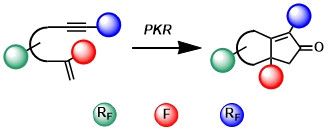
- which they detailed the Markovnikov hydrofluorination of alkynes using HF.DMPU coupled with a gold catalyst [60]. Accordingly, the appropriate propargylmalonate derivatives were fluorinated to give fluoroalkene intermediates, which were then converted into malonate-based enynes 37 (Z = CO2R) through a

Graphical Abstract

Scheme 1: Schematic representation of the Pauson–Khand reaction.

Scheme 2: Substrates included in this review.

Scheme 3: Commonly accepted mechanism for the Pauson–Khand reaction.

Scheme 4: Regioselectivity of the PKR.

Scheme 5: Variability at the acetylenic and olefinic counterpart.

Scheme 6: Pauson–Khand reaction of fluoroolefinic enynes reported by the group of Ishizaki [46].

Scheme 7: PKR of enynes bearing fluorinated groups on the alkynyl moiety, reported by the group of Ishizaki [46]....

Scheme 8: Intramolecular PKR of 1,7-enynes reported by the group of Billard [47].

Scheme 9: Intramolecular PKR of 1,7-enynes reported by the group of Billard [48].

Scheme 10: Intramolecular PKR of 1,7-enynes by the group of Bonnet-Delpon [49]. Reaction conditions: i) Co(CO)8 (1...

Scheme 11: Intramolecular PKR of 1,6-enynes reported by the group of Ichikawa [50].

Scheme 12: Intramolecular Rh(I)-catalyzed PKR reported by the group of Hammond [52].

Scheme 13: Intramolecular PKR of allenynes reported by the group of Osipov [53].

Scheme 14: Intramolecular PKR of 1,7-enynes reported by the group of Osipov [53].

Scheme 15: Intramolecular PKR of fluorine-containing 1,6-enynes reported by the Konno group [54].

Scheme 16: Diastereoselective PKR with enantioenriched fluorinated enynes 34 [55].

Scheme 17: Intramolecular PKR reported by the group of Martinez-Solorio [56].

Scheme 18: Fluorine substitution at the olefinic counterpart.

Scheme 19: Synthesis of fluorinated enynes 37 [59].

Scheme 20: Fluorine-containing substrates in PKR [59].
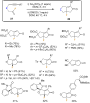
Scheme 21: Pauson Khand reaction for fluorinated enynes by the Fustero group: scope and limitations [59].

Scheme 22: Synthesis of chloro and bromo analogues [59].

Scheme 23: Dimerization pathway [59].

Scheme 24: Synthesis of fluorine-containing N-tethered 1,7-enynes [61].

Scheme 25: Intramolecular PKR of chiral N-tethered fluorinated 1,7-enynes [61].

Scheme 26: Examples of further modifications to the Pauson−Khand adducts [61].

Scheme 27: Asymmetric synthesis the fluorinated enynes 53.

Scheme 28: Intramolecular PKR of chiral N-tethered 1,7-enynes 53 [64].

Scheme 29: Intramolecular PKR of chiral N-tethered 1,7-enyne bearing a vinyl fluoride [64].

Scheme 30: Catalytic intramolecular PKR of chiral N-tethered 1,7-enynes [64].

Scheme 31: Model fluorinated alkynes used by Riera and Fustero [70].

Scheme 32: PKR with norbornadiene and fluorinated alkynes 58 [71].

Scheme 33: Nucleophilic addition/detrifluoromethylation and retro Diels-Alder reactions [70].

Scheme 34: Tentative mechanism for the nucleophilic addition/retro-aldol reaction sequence.

Scheme 35: Catalytic PKR with norbornadiene [70].

Scheme 36: Scope of the PKR of trifluoromethylalkynes with norbornadiene [72].

Scheme 37: DBU-mediated detrifluoromethylation [72].

Scheme 38: A simple route to enone 67, a common intermediate in the total synthesis of α-cuparenone.

Scheme 39: Effect of the olefin partner in the regioselectivity of the PKR with trifluoromethyl alkynes [79].

Scheme 40: Intermolecular PKR of trifluoromethylalkynes with 2-norbornene reported by the group of Konno [54].

Scheme 41: Intermolecular PKR of diarylalkynes with 2-norbornene reported by the group of Helaja [80].

Scheme 42: Intermolecular PKR reported by León and Fernández [81].

Scheme 43: PKR reported with cyclopropene 73 [82].
Photoredox-catalyzed silyldifluoromethylation of silyl enol ethers
- Vyacheslav I. Supranovich,
- Vitalij V. Levin and
- Alexander D. Dilman
Beilstein J. Org. Chem. 2020, 16, 1550–1553, doi:10.3762/bjoc.16.126

- analyzed by 19F NMR spectroscopy. A series of typical photocatalysts (for example, iridium catalysts) were ineffective in promoting the reaction. Rewardingly, a gold catalyst, [AuCl(μ-dppm)]2 [25][26][27], provided reasonable yields of 3a after one day of irradiation along with a full conversion of the

Graphical Abstract

Scheme 1: Reactions of (bromodifluoromethyl)trimethylsilane (1).

Scheme 2: Optimization studies. Yield determined by 19F NMR spectroscopy using an internal standard.

Figure 1: Reaction of silyl enol ethers. Yields refer to isolated yields. aReaction time 24 h; b1.0 equiv of ...

Scheme 3: Proposed mechanism of the fluoroalkylation reaction.
Gold-catalyzed direct alkynylation of tryptophan in peptides using TIPS-EBX
- Gergely L. Tolnai,
- Jonathan P. Brand and
- Jerome Waser
Beilstein J. Org. Chem. 2016, 12, 745–749, doi:10.3762/bjoc.12.74
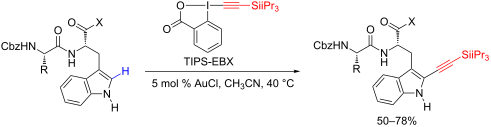
- protocol using a gold catalyst and TIPS-EBX (1a) for the alkynylation of tryptophan-containing peptides and even proteins (Scheme 1C) [39]. This recent disclosure motivated us to report our own work on this transformation, resulting in an efficient direct alkynylation of tryptophan-containing peptides

Graphical Abstract

Figure 1: Functionalization of natural peptides and proteins: state of the art.
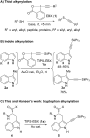
Scheme 1: Alkynylation with EBX reagents.

Scheme 2: Alkynylation of tryptophan-containing peptides.
Pyridylidene ligand facilitates gold-catalyzed oxidative C–H arylation of heterocycles
- Kazuhiro Hata,
- Hideto Ito,
- Yasutomo Segawa and
- Kenichiro Itami
Beilstein J. Org. Chem. 2015, 11, 2737–2746, doi:10.3762/bjoc.11.295
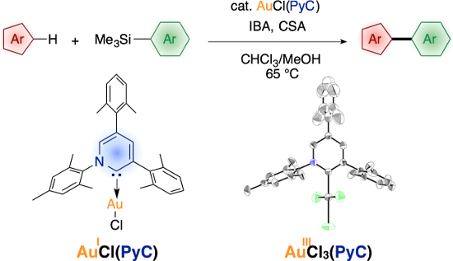
- numerous benefits such as high activity and stability of gold catalyst, thereby achieving otherwise-difficult oxidative transformations [37][38][39][40]. Recently, we have introduced highly electron-donating triaryl-2-pyridylidene (PyC: pyridine-based carbene) [82][83][84] as a new type of nonclassical N

Graphical Abstract

Figure 1: Triaryl-2-pyridylidene (PyC) and PyC-gold(I) complex (AuCl(PyC)).
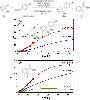
Figure 2: Yield–time profiles of 4-(4-bromophenyl)-5-methylisoxazole (3ba) and methyl 2-iodobenzoate (5) with...

Scheme 1: Plausible reaction mechanism of gold-catalyzed oxidative C–H arylation of heteroarenes with arylsil...

Figure 3: ORTEP drawing of AuCl3(PyC) with 50% probability. Hydrogen atoms and solvent are omitted for clarit...

Scheme 2: Direct observation and isolation of carbene-gold(III) complex. Mes = 2,4,6-Me3C6H2, Xyl = 2,6-Me2C6H...
Rapid pseudo five-component synthesis of intensively blue luminescent 2,5-di(hetero)arylfurans via a Sonogashira–Glaser cyclization sequence
- Fabian Klukas,
- Alexander Grunwald,
- Franziska Menschel and
- Thomas J. J. Müller
Beilstein J. Org. Chem. 2014, 10, 672–679, doi:10.3762/bjoc.10.60
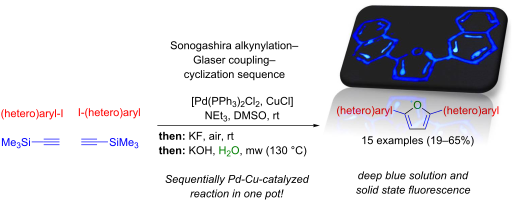
- ]. However, the major drawback of this approach is the complex, time-consuming preparation of the complicated gold catalyst and the separate synthesis of the butadiyne substrates. In a similar study arylbutadiynes prepared by Glaser homocoupling were converted into symmetrical 2,5-di(hetero)arylfurans [32

Graphical Abstract

Scheme 1: Sonogashira–Glaser sequence in DMSO as a solvent.
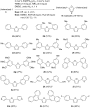
Scheme 2: Pseudo five-component Sonogashira–Glaser cyclisation synthesis of 2,5-di(hetero)arylfurans 2 (aobta...

Figure 1: Compounds 2d (solid and THF solution) and 2n (solid and THF solution) (from left to right) under da...

Figure 2: Selected computed minimum conformations of the 2,5-diarylfurans 2i, 2j, and 2n.

Figure 3: Kohn–Sham HOMOs (bottom) and LUMOs (top) of the compounds 2i, 2j, and 2n (calculated on the DFT lev...
Silver and gold-catalyzed multicomponent reactions
- Giorgio Abbiati and
- Elisabetta Rossi
Beilstein J. Org. Chem. 2014, 10, 481–513, doi:10.3762/bjoc.10.46
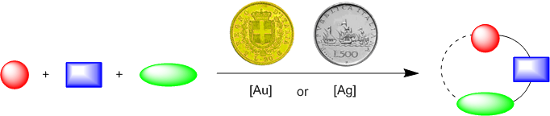
- reaction with the chloride ion released during the initial imine acylation. Finally, a combination between Brønsted acid and metal catalysis, promote the isomerization of V to oxazole 21. It is noteworthy, that the gold catalyst seemed to be essential only for the formation of the gold-acetylide

Graphical Abstract

Scheme 1: General reaction mechanism for Ag(I)-catalyzed A3-coupling reactions.

Scheme 2: A3-coupling reaction catalyzed by polystyrene-supported NHC–silver halides.

Figure 1: Various NHC–Ag(I) complexes used as catalysts for A3-coupling.

Scheme 3: Proposed reaction mechanism for NHC–AgCl catalyzed A3-coupling reactions.

Scheme 4: Liu’s synthesis of pyrrole-2-carboxaldehydes 4.

Scheme 5: Proposed reaction mechanism for Liu’s synthesis of pyrrole-2-carboxaldehydes 4.

Scheme 6: Gold-catalyzed synthesis of propargylamines 1.

Scheme 7: A3-coupling catalyzed by phosphinamidic Au(III) metallacycle 6.

Scheme 8: Gold-catalyzed KA2-coupling.

Scheme 9: A3-coupling applied to aldehyde-containing oligosaccharides 8.

Scheme 10: A3-MCR for the preparation of propargylamine-substituted indoles 9.

Scheme 11: A3-coupling interceded synthesis of furans 12.

Scheme 12: A3/KA2-coupling mediated synthesis of functionalized dihydropyrazoles 13 and polycyclic dihydropyra...

Scheme 13: Au(I)-catalyzed entry to cyclic carbamimidates 17 via an A3-coupling-type approach.

Scheme 14: Proposed reaction mechanism for the Au(I)-catalyzed synthesis of cyclic carbamimidates 17.

Figure 2: Chiral trans-1-diphenylphosphino-2-aminocyclohexane–Au(I) complex 20.

Scheme 15: A3-coupling-type synthesis of oxazoles 21 catalyzed by Au(III)–salen complex.

Scheme 16: Proposed reaction mechanism for the synthesis of oxazoles 21.

Scheme 17: Synthesis of propargyl ethyl ethers 24 by an A3-coupling-type reaction.

Scheme 18: General mechanism of Ag(I)-catalyzed MCRs of 2-alkynylbenzaldehydes, amines and nucleophiles.

Scheme 19: General synthetic pathway to 1,3-disubstituted-1,2-dihydroisoquinolines.

Scheme 20: Synthesis of 1,3-disubstituted-1,2-dihydroisoquinolines 29.

Scheme 21: Synthesis of 1,3-disubstituted-1,2-dihydroisoquinolines 35 and 36.

Scheme 22: Rh(II)/Ag(I) co-catalyzed synthesis of 1,3-disubstituted-1,2-dihydroisoquinolines 40.

Scheme 23: General synthetic pathway to 2-amino-1,2-dihydroquinolines.

Scheme 24: Synthesis of 2-amino-1,2-dihydroquinolines 47.

Scheme 25: Synthesis of tricyclic H-pyrazolo[5,1-a]isoquinoline 48.

Scheme 26: Synthesis of tricyclic H-pyrazolo[5,1-a]isoquinolines 48.

Scheme 27: Cu(II)/Ag(I) catalyzed synthesis of H-pyrazolo[5,1-a]isoquinolines 48.

Scheme 28: Synthesis of 2-aminopyrazolo[5,1-a]isoquinolines 53.

Scheme 29: Synthesis of 1-(isoquinolin-1-yl)guanidines 55.

Scheme 30: Ag(I)/Cu(I) catalyzed synthesis of 2-amino-H-pyrazolo[5,1-a]isoquinolines 58.

Scheme 31: Ag(I)/Ni(II) co-catalyzed synthesis of 3,4-dihydro-1H-pyridazino[6,1-a]isoquinoline-1,1-dicarboxyla...

Scheme 32: Ag(I) promoted activation of the α-carbon atom of the isocyanide group.

Scheme 33: Synthesis of dihydroimidazoles 65.

Scheme 34: Synthesis of oxazoles 68.

Scheme 35: Stereoselective synthesis of chiral butenolides 71.

Scheme 36: Proposed reaction mechanism for the synthesis of butenolides 71.

Scheme 37: Stereoselective three-component approach to pirrolidines 77 by means of a chiral auxiliary.

Scheme 38: Stereoselective three-component approach to pyrrolidines 81 and 82 by means of a chiral catalyst.

Scheme 39: Synthesis of substituted five-membered carbocyles 86.

Scheme 40: Synthesis of regioisomeric arylnaphthalene lactones.

Scheme 41: Enantioselective synthesis of spiroacetals 96 by Fañanás and Rodríguez [105].

Scheme 42: Enantioselective synthesis of spiroacetals 101 by Gong [106].

Scheme 43: Synthesis of polyfunctionalized fused bicyclic ketals 103 and bridged tricyclic ketals 104.

Scheme 44: Proposed reaction mechanism for the synthesis of ketals 103 and 104.

Scheme 45: Synthesis of β-alkoxyketones 108.

Scheme 46: Synthesis of N-methyl-1,4-dihydropyridines 112.

Scheme 47: Synthesis of tetrahydrocarbazoles 115–117.

Scheme 48: Plausible reaction mechanism for the synthesis of tetrahydrocarbazoles 115–117.

Scheme 49: Carboamination, carboalkoxylation and carbolactonization of terminal alkenes.

Scheme 50: Oxyarylation of alkenes with arylboronic acids and Selectfluor as reoxidant.

Scheme 51: Proposed reaction mechanism for oxyarylation of alkenes.

Scheme 52: Oxyarylation of alkenes with arylsilanes and Selectfluor as reoxidant.

Scheme 53: Oxyarylation of alkenes with arylsilanes and IBA as reoxidant.
Aminofluorination of 2-alkynylanilines: a Au-catalyzed entry to fluorinated indoles
- Antonio Arcadi,
- Emanuela Pietropaolo,
- Antonello Alvino and
- Véronique Michelet
Beilstein J. Org. Chem. 2014, 10, 449–458, doi:10.3762/bjoc.10.42
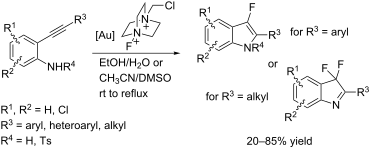
- competitive pathway in the presence of gold catalysts and Selectfluor [41][42][43] were observed. The yield of 2a was increased to 35% when the reaction was carried out in the presence of 10 mol % of the gold catalyst (Table 1, entry 3). Various other parameters were modified to increase the reaction

Graphical Abstract

Scheme 1: Cycloisomerization/fluorination of functionalized indoles.

Scheme 2: Synthesis of hemiaminal derivatives.

Scheme 3: Reaction on n-hexyl-substituted derivative 1i.

Scheme 4: Mechanism rationale for the formation of 7.
Recent applications of the divinylcyclopropane–cycloheptadiene rearrangement in organic synthesis
- Sebastian Krüger and
- Tanja Gaich
Beilstein J. Org. Chem. 2014, 10, 163–193, doi:10.3762/bjoc.10.14
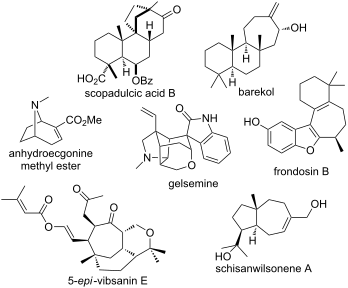
- schisanwilsonene A (126, see Scheme 15), isolated from Schisandra wilsoniana [111], a plant used in traditional chinese medicine. Submission of 1,6-enyne 116 to cationic gold-catalyst 117 led to 5-exo-dig cyclization and intermediate formation of bridged bicycle 119. Subsequent 1,5-acyl-shift afforded

Graphical Abstract

Scheme 1: Vogel’s first approach towards the divinylcyclopropane rearrangement [4] and characterization of cis-d...

Scheme 2: Transition states for the Cope rearrangement and the related DVCPR. Ts = transition state.

Scheme 3: Two possible mechanisms of trans-cis isomerizations of divinylcyclopropanes.

Scheme 4: Proposed biosynthesic pathway to ectocarpene (21), an inactive degradation product of a sexual pher...

Scheme 5: Proposed biosynthesis of occidenol (25) and related natural compounds.

Scheme 6: Gaich’s bioinspired system using the DVCPR to mimick the dimethylallyltryptophan synthase. DMAPP = ...

Scheme 7: Iguchi’s total synthesis of clavubicyclone, part 1.

Scheme 8: Iguchi’s total synthesis of clavubicyclone, part 2.

Scheme 9: Wender’s syntheses of the two pseudoguainanes confertin (50) and damsinic acid (51) and Pier’s appr...
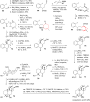
Scheme 10: Overman’s total synthesis of scopadulcic acid B.

Scheme 11: Davies’ total syntheses of tremulenolide A and tremulenediol A.

Scheme 12: Davies formal [4 + 3] cycloaddition approach towards the formal synthesis of frondosin B.

Scheme 13: Davies and Sarpongs formal [4 + 3]-cycloaddition approach towards barekoxide (106) and barekol (107...

Scheme 14: Davies formal [4 + 3]-cycloaddition approach to 5-epi-vibsanin E (115) containing an intermediate c...

Scheme 15: Echavarren’s total synthesis of schisanwilsonene A (126) featuring an impressive gold-catalzed casc...

Scheme 16: Davies early example of a formal [4 + 3]-cycloaddition in alkaloids synthesis.

Scheme 17: Fukuyama’s total synthesis of gelsemine, part 1.

Scheme 18: Fukuyama’s total synthesis of gelsemine, featuring a divinylcyclopropane rearrangement, part 2.

Scheme 19: Kende’s total synthesis of isostemofoline, using a formal [4 + 3]-cycloaddition, including an inter...

Scheme 20: Danishefsky’s total synthesis of gelsemine, part 1.

Scheme 21: Danishefsky’s total synthesis of gelsemine, part 2.

Scheme 22: Fukuyama’s total synthesis of gelsemoxonine.

Scheme 23: Wender’s synthetic access to the core skeleton of tiglianes, daphnanes and ingenanes.

Scheme 24: Davies’ approach towards the core skeleton of CP-263,114 (212).

Scheme 25: Wood’s approach towards actinophyllic acid.

Scheme 26: Takeda’s approach towards the skeleton of the cyanthins, utilitizing the divinylcyclopropane rearra...

Scheme 27: Donaldson’s organoiron route towards the guianolide skeleton.

Scheme 28: Stoltz’s tandem Wolff/DVCPR rearrangement.

Scheme 29: Stephenson’s tandem photocatalysis/arylvinylcyclopropane rearrangement.

Scheme 30: Padwa’s rhodium cascade involving a DVCPR.

Scheme 31: Matsubara’s version of a DVCPR.

Scheme 32: Toste’s tandem gold-catalyzed Claisen-rearrangement/DVCPR.

Scheme 33: Ruthenium- and gold-catalyzed versions of tandem reactions involving a DVCPR.

Scheme 34: Tungsten, platinum and gold catalysed cycloisomerizations leading to a DVCPR.

Scheme 35: Reisman’s total synthesis of salvileucalin B, featuring an (undesired) vinylcyclopropyl carbaldehyd...

Scheme 36: Studies on the divinylepoxide rearrangement.

Scheme 37: Studies on the vinylcyclopropanecarbonyl rearrangement.

Scheme 38: Nitrogen-substituted variants of the divinylcyclopropane rearrangement.
New developments in gold-catalyzed manipulation of inactivated alkenes
- Michel Chiarucci and
- Marco Bandini
Beilstein J. Org. Chem. 2013, 9, 2586–2614, doi:10.3762/bjoc.9.294
- moderate yields whereas monoalkyl olefins were completely unreactive under the optimized conditions. Although an activation of the acetals by the gold catalyst cannot be ruled out, a reaction pathway involving gold activation of the alkene, followed by addition of the alkyl gold intermediate 10 to the
- aldehydes was performed under synergistic activation of the substrate by gold catalyst 20c and organocatalyst 116 (Scheme 30). The 5-membered hetero- and carbocycles 115 were obtained in moderate to good yield and interesting level of diastereo- and enantioselectivity, supporting the perfect compatibility

Graphical Abstract

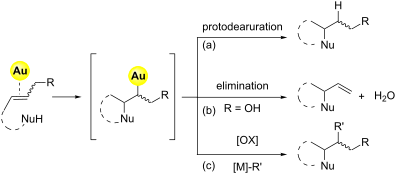
Figure 1: Elementary steps in the gold-catalyzed nucleophilic addition to olefins.

Figure 2: Different approaches for the gold-catalyzed manipulation of inactivated alkenes.

Figure 3: Computed mechanistic cycle for the gold-catalyzed alkoxylation of ethylene with PhOH.

Scheme 1: [Au(I)]-catalyzed addition of phenols and carboxylic acids to alkenes.

Scheme 2: [Au(III)] catalyzed annulations of phenols and naphthols with dienes.

Scheme 3: [Au(III)]-catalyzed addition of aliphatic alcohols to alkenes.

Scheme 4: [Au(III)]-catalyzed carboalkoxylation of alkenes with dimethyl acetals 6.

Figure 4: Postulated mechanism for the [Au(I)]-catalyzed hydroamination of olefins.
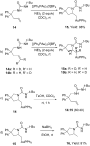
Scheme 5: Isolation and reactivity of alkyl gold intermediates in the intramolecular hydroamination of alkene...

Scheme 6: [Au(I)]-catalyzed intermolecular hydroamination of dienes.
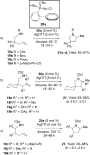
Scheme 7: Intramolecular [Au(I)]-catalyzed hydroamination of alkenes with carbamates.
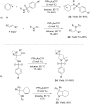
Scheme 8: [Au(I)]-catalyzed inter- as well as intramolecular addition of sulfonamides to isolated alkenes.

Scheme 9: Intramolecular hydroamination of N-alkenylureas catalyzed by gold(I) carbene complex.

Scheme 10: Enantioselective hydroamination of alkenyl ureas with biphenyl tropos ligand and chiral silver phos...

Scheme 11: Intramolecular [Au(I)]-catalyzed hydroamination of N-allyl-N’-aryl ureas. (PNP = pNO2-C6H4, PMP = p...

Scheme 12: [Au(I)]-catalyzed hydroamination of alkenes with ammonium salts.

Scheme 13: Enantioselective [Au(I)]-catalyzed intermolecular hydroamination of alkenes with cyclic ureas.

Scheme 14: Mechanistic proposal for the cooperative [Au(I)]/menthol catalysis for the enantioselective intramo...

Scheme 15: [Au(III)]-catalyzed addition of 1,3-diketones to alkenes.

Scheme 16: [Au(I)]-catalyzed intramolecular addition of β-keto amides to alkenes.

Scheme 17: Intermolecular [Au(I)]-catalyzed addition of indoles to alkenes.

Scheme 18: Intermolecular [Au(III)]-catalyzed hydroarylation of alkenes with benzene derivatives and thiophene....

Scheme 19: a) Intramolecular [Au(III)]-catalyzed hydroarylation of alkenes. b) A SEAr-type mechanism was hypot...

Scheme 20: Intramolecular [Au(I)]-catalyzed hydroalkylation of alkenes with simple ketones.

Scheme 21: Proposed reaction mechanism for the intramolecular [Au(I)]-catalyzed hydroalkylation of alkenes wit...

Scheme 22: Tandem Michael addition/hydroalkylation catalyzed by [Au(I)] and [Ag(I)] salts.

Scheme 23: Intramolecular [Au(I)]-catalyzed tandem migration/[2 + 2] cycloaddition of 1,7-enyne benzoates.

Scheme 24: Intramolecular [Au(I)]-catalyzed cyclopropanation of alkenes.

Scheme 25: Stereospecificity in [Au(I)]-catalyzed hydroalkoxylation of allylic alcohols.

Scheme 26: Mechanistic investigation on the intramolecular [Au(I)]-catalyzed hydroalkoxylation of allylic alco...

Scheme 27: Mechanistic investigation on the intramolecular enantioselective [Au(I)]-catalyzed alkylation of in...

Scheme 28: Synthesis of (+)-isoaltholactone via stereospecific intramolecular [Au(I)]-catalyzed alkoxylation o...

Scheme 29: Intramolecular enantioselective dehydrative amination of allylic alcohols catalyzed by chiral [Au(I...

Scheme 30: Enantioselective intramolecular hydroalkylation of allylic alcohols with aldehydes catalyzed by 20c...
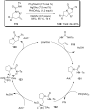
Scheme 31: Gold-catalyzed intramolecular diamination of alkenes.
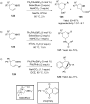
Scheme 32: Gold-catalyzed aminooxygenation and aminoarylation of alkenes.

Scheme 33: Gold-catalyzed carboamination, carboalkoxylation and carbolactonization of terminal alkenes with ar...
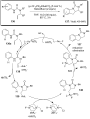
Scheme 34: Synthesis of tricyclic indolines via gold-catalyzed formal [3 + 2] cycloaddition.

Scheme 35: Gold(I) catalyzed aminoarylation of terminal alkenes in presence of Selectfluor [dppm = bis(dipheny...

Scheme 36: Mechanistic investigation on the aminoarylation of terminal alkenes by bimetallic gold(I) catalysis...

Scheme 37: Proposed mechanism for the aminoarylation of alkenes via [Au(I)-Au(I)]/[Au(II)-Au(II)] redox cataly...

Scheme 38: Oxyarylation of terminal olefins via redox gold catalysis.

Scheme 39: a) Intramolecular gold-catalyzed oxidative coupling reactions with aryltrimethylsilanes. b) Oxyaryl...
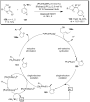
Scheme 40: Oxy- and amino-arylation of alkenes by [Au(I)]/[Au(III)] photoredox catalysis.
Stereodivergent synthesis of jaspine B and its isomers using a carbohydrate-derived alkoxyallene as C3-building block
- Volker M. Schmiedel,
- Stefano Stefani and
- Hans-Ulrich Reissig
Beilstein J. Org. Chem. 2013, 9, 2564–2569, doi:10.3762/bjoc.9.291
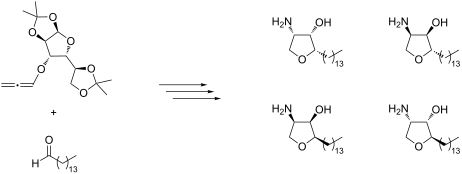
- cyclization of 7 gave a higher yield than the attempted gold(I) catalysis (39% overall yield), which might be due to the deactivation of the gold catalyst by impurities still present in the crude allenyl alcohol 7. Next, several methods for the introduction of the amino group were examined. We were very

Graphical Abstract

Scheme 1: Structure of jaspine B 1 and its stereoisomers 2–4.

Scheme 2: Retrosynthetic analysis of jaspine B leading to pentadecanal and an alkoxyallene.

Scheme 3: Synthesis of racemic dihydrofuran 8.

Scheme 4: Synthesis of racemic jaspine B rac-1 and its diastereomer rac-2.

Scheme 5: Synthesis of dihydrofurans 14 and 15.

Scheme 6: Synthesis of jaspine B (1) and its (2S,3R,4R)-diastereomer 2.

Scheme 7: Protection and separation of the diastereomers.

Scheme 8: Reduction of the separated diastereomers leading to jaspine B (1) and its diastereomer 2.

Scheme 9: Route to ent-jaspine B (3) and the (2R,3S,4S)-diastereomer 4.
Ambient gold-catalyzed O-vinylation of cyclic 1,3-diketone: A vinyl ether synthesis
- Yumeng Xi,
- Boliang Dong and
- Xiaodong Shi
Beilstein J. Org. Chem. 2013, 9, 2537–2543, doi:10.3762/bjoc.9.288
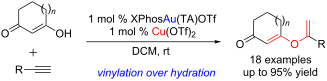
- the reaction, likely caused by the low reactivity of the C–C triple bonds. Interestingly, the addition to the ethynylferrocene gave the corresponding vinyl ether in good yield, which highlighted the mild conditions of this catalytic system and potential applications of this gold catalyst in other

Graphical Abstract

Scheme 1: Intermolecular O-addition to alkynes: challenge and opportunity.

Scheme 2: Acid as the critical additive for optimal performance.

Scheme 3: Reactions of internal alkyne and other O-nucleophiles. Isolated yields are given in paranthesis. aA...
Gold(I)-catalyzed enantioselective cycloaddition reactions
- Fernando López and
- José L. Mascareñas
Beilstein J. Org. Chem. 2013, 9, 2250–2264, doi:10.3762/bjoc.9.264
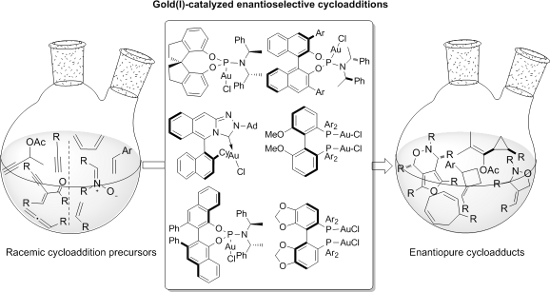
- , which was particularly successful in the abovementioned intermolecular cases, only provided good enantioselectivities in the case of systems affording products with seven-membered rings (3, n = 0, Scheme 2). For the eight-membered counterparts, the authors found that a related bisphosphine–gold catalyst
- -tuning of the catalyst and substrate is required to achieve excellent enantioselectivities. More recently, Nevado and co-workers have shown that propargyl acetates 4 react with 1,3-dienes in the presence of a gold catalyst to give good yields of cycloheptadiene products of type 5; thus the process could
- authors also demonstrated the feasibility of an enantioselective variant. Thus, treatment of pivaloate 4a with 6,6-dimethyl-1-vinylcyclohexene in the presence of the chiral gold catalyst (S)-MeO-DTBM-Biphep(AuCl)2/AgSbF6, followed by in situ hydrolysis, allowed the construction of the basic bicarbocyclic

Graphical Abstract

Figure 1: Gold-promoted 1,2-acyloxy migration on propargylic systems.

Scheme 1: Gold-catalyzed enantioselective intermolecular cyclopropanation.

Scheme 2: Gold-catalyzed enantioselective intramolecular cyclopropanation.

Scheme 3: Gold-catalyzed cyclohepta-annulation cascade.

Scheme 4: Application to the formal synthesis of frondosin A.

Scheme 5: Gold(I)-catalyzed enantioselective cyclopropenation of alkynes.

Scheme 6: Enantioselective cyclopropanation of diazooxindoles.

Figure 2: Proposed structures for gold-activated allene complexes.

Scheme 7: Gold-catalyzed enantioselective [2 + 2] cycloadditions of allenenes.

Scheme 8: Gold-catalyzed allenediene [4 + 3] and [4 + 2] cycloadditions.

Scheme 9: Gold-catalyzed enantioselective [4 + 2] cycloadditions of allenedienes.

Scheme 10: Gold-catalyzed enantioselective [4 + 3] cycloadditions of allenedienes.

Scheme 11: Gold-catalyzed enantioselective [4 + 2] cycloadditions of allenamides.

Scheme 12: Enantioselective [2 + 2] cycloadditions of allenamides.

Scheme 13: Mechanistic rational for the gold-catalyzed [2 + 2] cycloadditions.

Scheme 14: Enantioselective cascade cycloadditions between allenamides and oxoalkenes.

Scheme 15: Enantioselective [3 + 2] cycloadditions of nitrones and allenamides.

Scheme 16: Enantioselective formal [4 + 3] cycloadditions leading to 1,2-oxazepane derivatives.

Scheme 17: Enantioselective gold(I)-catalyzed 1,3-dipolar [3 + 3] cycloaddition between 2-(1-alkynyl)-2-alken-...

Scheme 18: Enantioselective [4 + 3] cycloaddition leading to 5,7-fused bicyclic furo[3,4-d][1,2]oxazepines.
Gold(I)-catalyzed hydroarylation reaction of aryl (3-iodoprop-2-yn-1-yl) ethers: synthesis of 3-iodo-2H-chromene derivatives
- Pablo Morán-Poladura,
- Eduardo Rubio and
- José M. González
Beilstein J. Org. Chem. 2013, 9, 2120–2128, doi:10.3762/bjoc.9.249
- competition with a direct Friedel–Crafts-type cyclization reaction yielding 3. In previous work dealing with the cyclization of N-(3-iodoprop-2-ynyl)-N-tosylanilines to give related 1,2-dihydroquinolines (Scheme 4A, X = NTs) [43], we documented for a phosphite-based gold-catalyst, which render a more
- electrophilic metal center, an increase of the relative amount of the cyclization product 3 (4-iodo-substituted, X = NTs) at the expenses of the formation of the one with concomitant iodine shift, product 2 (3-iodo-substituted, X = NTs). On the contrary, under related conditions, a gold catalyst based on the

Graphical Abstract
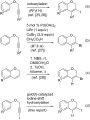
Scheme 1: Synthesis of 3-halo-2H-chromenes.

Figure 1: X-ray molecular structure of 2f.

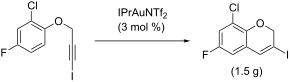
Scheme 2: Gram-scale synthesis of 2f.

Scheme 3: Retaining propargylic chirality.

Scheme 4: Mechanistic basis postulated for the synthesis of 2.
Post-Ugi gold-catalyzed diastereoselective domino cyclization for the synthesis of diversely substituted spiroindolines
- Amit Kumar,
- Dipak D. Vachhani,
- Sachin G. Modha,
- Sunil K. Sharma,
- Virinder S. Parmar and
- Erik V. Van der Eycken
Beilstein J. Org. Chem. 2013, 9, 2097–2102, doi:10.3762/bjoc.9.246
- hydroarylation [44]. Reaction of 5a with 5 mol % of Au(PPh3)SbF6 in chloroform at room temperature produced the desired spiroindoline 6a in a moderate yield of 55% along with some unidentified byproducts (Table 1, entry 1). The use of a protic acid with a gold catalyst is known in the literature [61][62][63][64
- starting material was recovered quantitatively (Table 1, entries 3 and 4). In absence of the gold catalyst no product could be observed (Table 1, entry 5). The application of p-toluenesulfonic acid (PTSA) instead of TFA did not improve the outcome (Table 1, entry 6). Having the optimized conditions in hand

Graphical Abstract

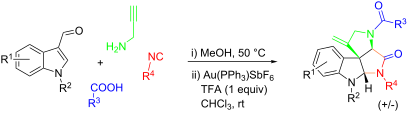
Scheme 1: Gold-catalyzed approaches towards spiroindolines.

Scheme 2: Plausible mechanism for the domino sequence.