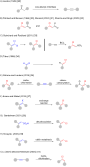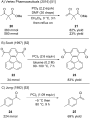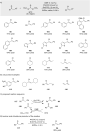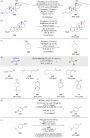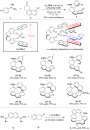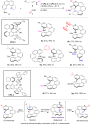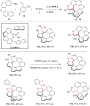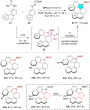

Search for "electrophiles" in Full Text gives 315 result(s) in Beilstein Journal of Organic Chemistry. Showing first 200.
Beilstein J. Org. Chem. 2026, 22, 383–389, doi:10.3762/bjoc.22.26
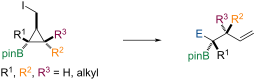
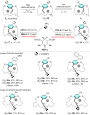
Graphical Abstract
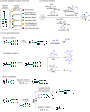
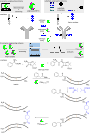
Figure 1: Valuable amino sulfonic acids and aminosulfones.
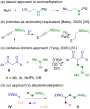
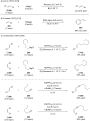
Figure 2: Selected approaches to aminoethylation.
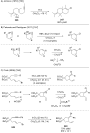
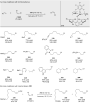
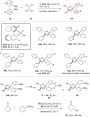
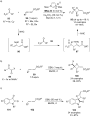
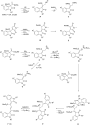
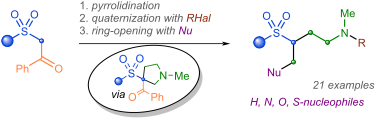
Scheme 1: Pyrrolidination of β-ketosulfones. Reaction conditions: β-ketosulfones (4.0 mmol), sarcosine (1.2 e...
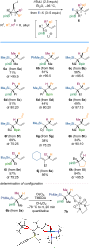
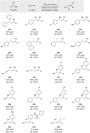
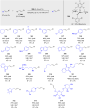
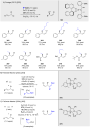
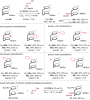
Scheme 2: Scope of the reaction. Reaction conditions: sulfone 1 (1.0 mmol), sarcosine (1.2 equiv), (CH2O)n (2...
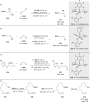
Scheme 3: The presumable mechanism of the domino process.
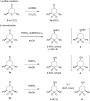
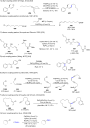
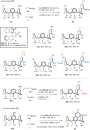
Scheme 4: Reductive elimination of the nucleophiles.
Beilstein J. Org. Chem. 2026, 22, 289–343, doi:10.3762/bjoc.22.21
Graphical Abstract
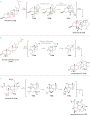
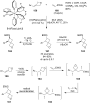
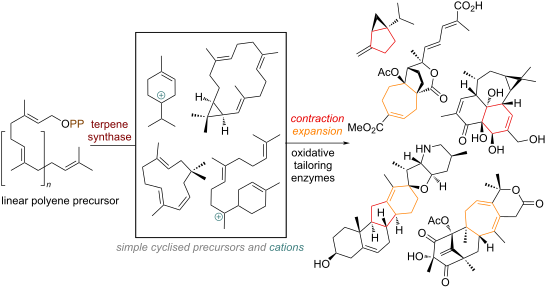
Scheme 1: Mechanistic overview of enzymes involved in ring-size-altering reactions: A: Difference in ionisati...
Scheme 2: A: Ring contraction through involvement of carbocationic intermediates in thujane monoterpene biosy...
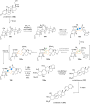
Scheme 3: Examples of concerted ring expansions of carbocation intermediates in PxaTPS8-catalysed cyclisation...
Scheme 4: Sequential ring expansions during astellifadiene (17) synthesis reported by Abe and co-workers.
Scheme 5: Cyclobutane ring expansion and sequential ring contractions catalysed by the synthase AITS in the b...
Scheme 6: Ring expansion and transannular ring contraction of a cyclopentane to cyclobutane in the biosynthes...
Scheme 7: Computationally elucidated concerted cyclisations/alkyl/hydride shifts during the biosynthesis of t...
Scheme 8: Cyclisation events and 6→5-ring contraction during the construction of epi-isozizaene (26) catalyse...
Scheme 9: Transannular cyclisations and 4→5-membered ring expansion through dyotropic 1,2-rearrangement of al...
Scheme 10: Ring expansion in presilphiperfolan-8b-ol (31) biosynthesis and ring contraction of the presilphipe...
Scheme 11: Ring contraction via transannular cyclopropanation and opening of cyclopropane in the biosynthesis ...
Scheme 12: The crucial CYP450-catalysed oxidative rearrangement defining the skeleton in gibberellin biosynthe...
Scheme 13: CYP450-mediated oxidation of cyclopentane methylene expanding the 8-membered ring in the biosynthes...
Scheme 14: CYP450-mediated oxidation of an exocyclic methyl group to effect transannular cyclisation across th...
Scheme 15: Non-enzymatic transannular aldol reaction enables the formation of the 5/13/3-tricyclic ring system...
Scheme 16: A: Oxidative ring expansion of a cyclopentane by incorporation of a methyl group in the biosynthesi...
Scheme 17: Rearrangement and ring expansion in the construction of the complex bridged carbon framework of and...
Scheme 18: Ketoglutarate-mediated oxidations of preaustinoid A1 (53) en route to complex meroterpenoids, B-rin...
Scheme 19: Proposed putative biosynthetic formation of the tigliane skeleton from an E,E,Z-triene.
Scheme 20: Photocatalytic tandem ring expansion/contraction of santonin to give photosantonin products and gua...
Scheme 21: A: Proposed biosynthesis of stelleroid B (66) from stelleranoid I (65) by ketol rearrangement; B: o...
Scheme 22: Singular examples of A,B-ring contractions and expansions in the biosynthesis of sesquiterpenoids e...
Scheme 23: A: plausible proposed biosynthetic pathway for the tigliane/ingenane skeletal rearrangement and 1,2...
Scheme 24: A: Multiple ring-size alterations during xenovulene A (90) biosynthesis; B: Ring contraction and re...
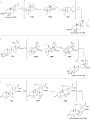
Scheme 25: Proposed biosyntheses of the complex, polycyclic terpenoid illisimonin A (97) and the bridged antro...
Scheme 26: Proposed biogenetic origin for the meroterpenoid liphagal (104) via epoxide-mediated ring expansion....
Scheme 27: Proposed biogenetic origin for the ring-contracted members of the taiwaniaquinol family.
Scheme 28: A: Schenck ene/Hock/Aldol cascade effecting B-ring contraction in atheronal B (113); B: Selective C...
Scheme 29: A: D-ring expansion of buxenone (118) via cyclopropanation towards buxaustroine A (119); B: Propose...
Scheme 30: Biosynthetic origin of alstoscholarinoids A (124) and B (125) via cascade oxidative rearrangement c...
Scheme 31: Biogenetic origin of the hedgehog signalling inhibitor cyclopamine (129) by tandem ring contraction...
Scheme 32: Proposed biogenetic origin of the B-ring contracted spirocyclic triterpenoid spirochensilide A (131...
Scheme 33: A: Proposed B-ring contraction during the biosynthesis of holophyllane A (133); B: B-ring contracti...
Scheme 34: Radical and ionic/polar mechanisms for the C-ring-contracted triterpenoids phomopsterone B (139) an...
Scheme 35: A: Plausible mechanism for the formation of schiglautone A (144) from anwuweizic acid (145); B: Pro...
Scheme 36: Reported biosynthetic proposal for the formation of B-ring expanded triterpenoids rhodoterpenoids A...
Scheme 37: A: Final reaction step in the synthesis of euphorikanin A (154), benzilic acid-type ring contractio...
Scheme 38: Tricyclic ring expansion in the Gui synthesis of gibbosterol A (158) and sarocladione (160) via Ru-...
Scheme 39: A: A-ring expansion during the Gui synthesis of rubriflordilactone B (161); B: Mechanism for the bi...
Scheme 40: Photosantonin rearrangement effects A/B ring contraction/expansion in Li’s synthesis of the complex...
Scheme 41: Tandem A/B ring expansion/contraction of an ergosterol derivative via pinacol rearrangement in the ...
Scheme 42: Synthetic studies towards cyclocitrinol (179) by A) the semisynthetic approach by Gui et al. using ...
Scheme 43: A: Bioinspired synthesis of spirochensilide A (131) by the Heretsch group via selective 8,9-epoxida...
Scheme 44: Baran’s synthesis of cortistatin A (191), expanding the B-ring through a cyclopropane fragmentation....
Scheme 45: Ding’s total synthesis of retigeranic acid (198) showcasing sequential 6→5 ring contractions.
Scheme 46: A: Oxa-di-π-methane (ODPM) rearrangement of a bicyclic ketone en route to silphiperfolenone (203); ...
Scheme 47: Biomimetic synthesis of liphagal (104) from sclareolide (221) by George and co-workers.
Scheme 48: Wu’s bioinspired synthesis of cucurbalsaminones B (224) and C (225) by photocatalytic oxa-di-π-meth...
Scheme 49: Baran’s total synthesis of maoecrystal V (230) featuring a pinacol rearrangement for ring expansion...
Scheme 50: A: Ketol rearrangement leading to ring contraction in the total synthesis of preaustinoid B; B: Ben...
Scheme 51: A: Scheidt’s synthesis of isovelleral (251) by pinacol rearrangement triggered by Mitsunobu conditi...
Scheme 52: Biomimetic transformations of simplified test substrates related to Euphorbia diterpenoids.
Scheme 53: A: First generation synthesis of taiwaniaquinones by benzilic acid-type rearrangement of the B-ring...
Scheme 54: A: Norrish type 1 radical recombination leading to ring contraction en route to cuparenone (272): 1...
Scheme 55: Ring contraction of a bridged D-ring system in the total synthesis of andrastatin D (280), terrenoi...
Scheme 56: Biomimetic synthesis of hyperjapone A (284) and hyperjaponol C (285) by George et al.
Scheme 57: Heretsch’ synthesis of dankastarones A (288) and B (289), swinhoeisterol A (290), and periconiaston...
Scheme 58: A: Zhang’s ring contraction during the synthesis of stemar-13-ene (295) by pinacol rearrangement; B...
Scheme 59: Trauner’s biomimetic synthesis of preuisolactone A (307) featuring a ring contraction via benzilic ...
Scheme 60: Bioinspired approaches for ring contraction/expansion reactions in the synthesis of alstoscholarino...
Scheme 61: A: Sarpong and Li, Wang and co-workers’ ring expansion of cephanolide A (313) to reach harringtonol...
Beilstein J. Org. Chem. 2026, 22, 257–273, doi:10.3762/bjoc.22.19
Graphical Abstract
Figure 1: Aromatic molecules as the foundation of modern molecular chemistry.
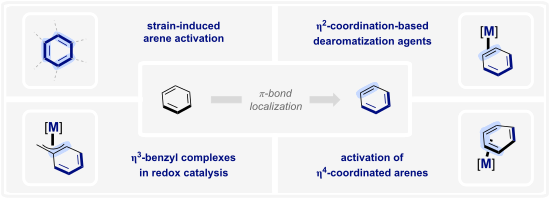
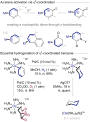
Figure 2: Arenes as springboards to three-dimensional chemical space and strategies toward arene activation v...
Figure 3: Structure and synthetic utilization of strained arenes; NICS: nucleus independent chemical shifts [26-28].
Figure 4: Bonding and reactivity of η2-coordinated aromatic systems [44,46].
Figure 5: Illustrative selection of η2-coordinating dearomatization agents; MeIm: N-methylimidazole, NHE: nor...
Figure 6: Preparation, lability and most stable linkage isomers of pentaammineosmium(II) complexes.
Scheme 1: Heteroatom-directed reactions of η2-arene complexes [45,50].
Figure 7: Latent functionality through transient metal binding.
Figure 8: Selective hydrogenation of η2-coordinated benzene to cyclohexene under ambient conditions [53,54].
Scheme 2: Synthesis and utilization of enantioenrichted Mo(η2-arene) complexes in enantioselective synthesis [55]....
Scheme 3: Synthesis of trisubstituted cyclohexenes from phenyl sulfones enabled by tungsten-mediated dearomat...
Scheme 4: Diels–Alder reactions of η2-arene complexes with alkenes and alkynes; NMM: N-methylmaleimide [64,65].
Scheme 5: Binding characteristics and pioneering examples of isolable η3-benzyl complexes.
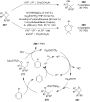
Figure 9: Divergent functionalization of benzyl electrophiles leveraging η3-benzyl complexes toward benzylic ...
Scheme 6: p-Selective allylation of benzyl chlorides with allylstannanes and subsequent synthetic expansion o...
Figure 10: Strategies for para- and ortho-selective arene functionalization/dearomatization via η3-benzyl comp...
Scheme 7: Substrate-dependent ortho- and para-selective dearomatization of naphthyl chlorides and leveraging ...
Figure 11: η4-Arene coordination as an underexplored but promising pathway for arene activation [96,98-100].
Beilstein J. Org. Chem. 2026, 22, 64–70, doi:10.3762/bjoc.22.2
Graphical Abstract
Figure 1: The expected and the unexpected in selected synthetic strategies.
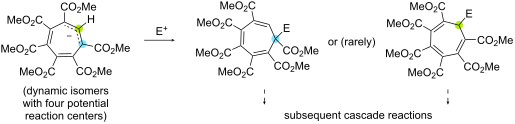
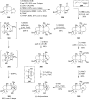
Figure 2: Distortion in antiaromatic hepta- and hexa(methoxycarbonyl)cycloheptatrienyl anions 1 and 2. HOMO (...
Scheme 1: Reactions of anion 2 generated from cycloheptatriene 3 with halogens and alkyl halides.
Scheme 2: Reactions of anion 2 generated from cycloheptatriene 3 with diazonium salts.
Figure 3: Two conformers of hexa(methoxycarbonyl)cycloheptatrienyl anion 2 and 2'. The energies were obtained...
Scheme 3: Radical mechanism for reactions of anion 2 with halogens, suggested structure of trapped product. T...
Beilstein J. Org. Chem. 2026, 22, 1–63, doi:10.3762/bjoc.22.1
Graphical Abstract
Figure 1: Representative alkenyl chloride motifs in natural products. References: Pinnaic acid [8], haterumalide ...
Figure 2: Representative alkenyl chloride motifs in pharmaceuticals and pesticides. References: clomifene [25], e...
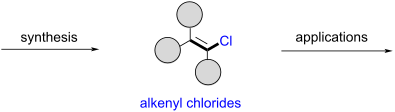
Figure 3: Graphical overview of previously published reviews addressing the synthesis of alkenyl chlorides.
Figure 4: Classification of synthetic approaches to alkenyl chlorides.
Scheme 1: Early works by Friedel, Henry, and Favorsky.
Scheme 2: Product distribution obtained by H NMR integration of crude compound as observed by Kagan and co-wo...
Scheme 3: Side reactions observed for the reaction of 14 with PCl5.
Scheme 4: Only compounds 15 and 18 were observed in the presence of Hünig’s base.
Scheme 5: Efficient synthesis of dichloride 15 at low temperatures.
Scheme 6: Various syntheses of alkenyl chlorides on larger scale.
Scheme 7: Scope of the reaction of ketones with PCl5 in boiling cyclohexane.
Scheme 8: Side reactions occur when using excess amounts of PCl5.
Scheme 9: Formation of versatile β-chlorovinyl ketones.
Scheme 10: Mixture of PCl5 and PCl3 used for the synthesis of 49.
Scheme 11: Catechol–PCl3 reagents for the synthesis of alkenyl chlorides.
Scheme 12: (PhO)3P–halogen-based reagents for the synthesis of alkenyl halides.
Scheme 13: Preparation of alkenyl chlorides from alkenyl phosphates.
Scheme 14: Preparation of alkenyl chlorides by treatment of ketones with the Vilsmeier reagent.
Scheme 15: Preparation of electron-rich alkenyl chlorides by treatment of ketones with the Vilsmeier reagent.
Scheme 16: Cu-promoted synthesis of alkenyl chlorides from ketones and POCl3.
Figure 5: GC yield of 9 depending on time and reaction temperature.
Figure 6: Broken reaction flask after attempts to clean the polymerized residue.
Figure 7: GC yield of 9 depending on the amount of CuCl and time.
Scheme 17: Treatment of 4-chromanones with PCl3.
Scheme 18: Synthesis of alkenyl chlorides from the reaction of ketones with acyl chlorides.
Scheme 19: ZnCl2-promoted alkenyl chloride synthesis.
Scheme 20: Regeneration of acid chlorides by triphosgene.
Scheme 21: Alkenyl chlorides from ketones and triphosgene.
Scheme 22: Various substitution reactions.
Scheme 23: Vinylic Finkelstein reactions reported by Evano and co-workers.
Scheme 24: Challenge of selective monohydrochlorination of alkynes.
Scheme 25: Sterically encumbered internal alkynes furnish the hydrochlorination products in high yield.
Scheme 26: Recent work by Kropp with HCl absorbed on alumina.
Scheme 27: High selectivities for monhydrochlorination with nitromethane/acetic acid as solvent.
Figure 8: Functionalized alkynes which typically afford the monhydrochlorinated products.
Scheme 28: Related chorosulfonylation and chloroamination reactions.
Scheme 29: Reaction of organometallic reagents with chlorine electrophiles.
Scheme 30: Elimination reactions of dichlorides to furnish alkenyl chlorides.
Scheme 31: Elimination reactions of allyl chloride 182 to furnish alkenyl chloride 183.
Scheme 32: Detailed studies by Schlosser on the elimination of dichloro compounds.
Scheme 33: Stereoselective variation caused by change of solvent.
Scheme 34: Elimination of gem-dichloride 189 to afford alkene 190.
Scheme 35: Oxidation of enones to dichlorides and in situ elimination thereof.
Scheme 36: Oxidation of allylic alcohols to dichlorides and in situ elimination thereof.
Scheme 37: Chlorination of styrenes with SOCl2 and elimination thereof.
Scheme 38: Chlorination of styrenes with SOCl2 and elimination thereof.
Scheme 39: Fluorine–chlorine exchange followed by elimination.
Scheme 40: Intercepting cations with alkynes and trapping of the alkenyl cation intermediate with chloride.
Scheme 41: Investigations by Mayr and co-workers.
Scheme 42: In situ activation of benzyl alcohol 230 with BCl3.
Scheme 43: In situ activation of benzylic alcohols with TiCl4.
Scheme 44: In situ activation of benzylic alcohols with FeCl3.
Scheme 45: In situ activation of benzylic alcohols with FeCl3.
Scheme 46: In situ activation of aliphatic chlorides and alcohols with ZnCl2, InCl3, and FeCl3.
Scheme 47: In situ generation of benzylic cations and trapping thereof with alkynes.
Scheme 48: Intramolecular trapping reactions affording alkenyl halides.
Scheme 49: Intramolecular trapping reactions affording alkenyl chlorides.
Scheme 50: Intramolecular trapping reactions of oxonium and iminium ions affording alkenyl chlorides.
Scheme 51: Palladium and nickel-catalyzed coupling reactions to afford alkenyl chlorides.
Scheme 52: Rhodium-catalyzed couplings of 1,2-trans-dichloroethene with arylboronic esters.
Scheme 53: First report on monoselective coupling reactions for 1,1-dichloroalkenes.
Scheme 54: Negishi’s and Barluenga’s contributions.
Scheme 55: First mechanistic investigation by Johnson and co-workers.
Scheme 56: First successful cross-metathesis with choroalkene 260.
Scheme 57: Subsequent studies by Johnson.
Scheme 58: Hoveyda and Schrock’s work on stereoretentive cross-metathesis with molybdenum-based catalysts.
Scheme 59: Related work with (Z)-dichloroethene.
Scheme 60: Further ligand refinement and traceless protection of functional groups with HBpin.
Scheme 61: Alkenyl chloride synthesis by Wittig reaction.
Scheme 62: Alkenyl chloride synthesis by Julia olefination.
Scheme 63: Alkenyl chloride synthesis by reaction of ketones with Mg/TiCl4 mixture.
Scheme 64: Frequently used allylic substitution reactions which lead to alkenyl chlorides.
Scheme 65: Enantioselective allylic substitutions.
Scheme 66: Synthesis of alkenyl chlorides bearing an electron-withdrawing group.
Scheme 67: Synthesis of α-nitroalkenyl chlorides from aldehydes.
Scheme 68: Synthesis of alkenyl chlorides via elimination of an in situ generated geminal dihalide.
Scheme 69: Carbenoid approach reported by Pace.
Scheme 70: Carbenoid approach reported by Pace.
Scheme 71: Ring opening of cyclopropenes in the presence of MgCl2.
Scheme 72: Electrophilic chlorination of alkenyl MIDA boronates to Z- or E-alkenyl chlorides.
Scheme 73: Hydroalumination and hydroboration of alkynyl chlorides.
Scheme 74: Carbolithiation of chloroalkynes.
Scheme 75: Chlorination of enamine 420.
Scheme 76: Alkyne synthesis by elimination of alkenyl chlorides.
Scheme 77: Reductive lithiation of akenyl chlorides.
Scheme 78: Reactions of alkenyl chlorides with organolithium reagents.
Scheme 79: Reactions of alkenyl chlorides with organolithium reagents.
Scheme 80: Addition–elimination reaction of alkenyl chloride 9 with organolithium reagents.
Scheme 81: C–H insertions of lithiumcarbenoids.
Scheme 82: Pd-catalyzed coupling reactions with alkenyl chlorides as coupling partner.
Scheme 83: Ni-catalyzed coupling of alkenylcopper reagent with alkenyl chloride 183.
Scheme 84: Ni-catalyzed coupling of heterocycle 472 with alkenyl chloride 473.
Scheme 85: Synthesis of α-chloroketones by oxidation of alkenyl chlorides.
Scheme 86: Tetrahalogenoferrate(III)-promoted oxidation of alkenyl chlorides.
Scheme 87: Chlorine–deuterium exchange promoted by a palladium catalyst.
Scheme 88: Reaction of alkenyl chlorides with thiols in the presence of AIBN (azobisisobutyronitrile).
Scheme 89: Chloroalkene annulation.
Beilstein J. Org. Chem. 2025, 21, 2739–2754, doi:10.3762/bjoc.21.211
Graphical Abstract
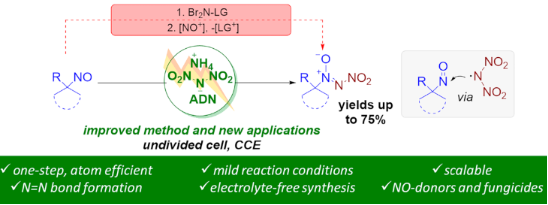
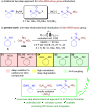
Scheme 1: Current synthetic approaches to aliphatic nitro-NNO-azoxy compounds and the summary of the present ...
Scheme 2: Scope of the discovered electrochemical nitro-NNO-azoxylation of nitrosoalkanes containing electron...
Scheme 3: Synthetic utility and derivatization of synthesized coupling product 2f.
Figure 1: CV-curves of 0.01 M solutions of a) 1a (blue), b) 1f (azure), c) 1c (pink), d) 1i (yellow), e) S4 (...
Figure 2: CV-curves of 0.01 M solutions of a) 1a (blue), b) ADN (red), c) the mixture of 1a and ADN (green), ...
Scheme 4: Control experiments.
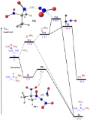
Figure 3: Free energy diagram of possible interaction pathways between 1a and dinitramide-derived radical A a...
Scheme 5: Proposed mechanism for electrochemical nitro-NNO-azoxylation of 1-nitro-1-nitroso compounds 1. Free...
Figure 4: Assessment of the NO release from compounds 2a–i, 3f, and 4f.
Beilstein J. Org. Chem. 2025, 21, 2489–2497, doi:10.3762/bjoc.21.191
Graphical Abstract
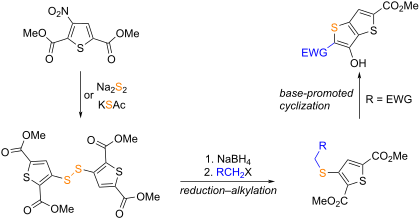
Scheme 1: The synthetic routes to 3-hydroxy-substituted TT derivatives.
Scheme 2: The present retrosynthetic plan for constructing TT molecules.
Scheme 3: An attempt to nucleophilically substitute the NO2 group in ester 1.
Scheme 4: The reaction of ester 1 with potassium thioacetate.
Scheme 5: A probable mechanism for the formation of compounds 2 and 3.
Scheme 6: The synthesis of 3-(alkylthio)thiophene-2,5-dicarboxylates 4–6, yields, and scope of products. *Fro...
Scheme 7: The synthesis of TT derivatives, yields, and scope of products. Conditions: i) LiH (5 equiv), DMF, ...
Beilstein J. Org. Chem. 2025, 21, 2283–2296, doi:10.3762/bjoc.21.174
Graphical Abstract
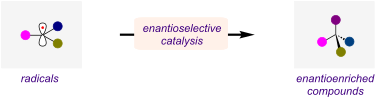
Figure 1: Methods of radical generation (A) and general types of radical reactions (B).
Figure 2: Chiral catalysis in enantioselective radical chemistry [13-37].
Scheme 1: Diastereo- and enantioselective additions of nucleophilic radicals to N-enoyloxazolidinone and pyrr...
Scheme 2: Organocatalyzed formal [3 + 2] cycloadditions affording substituted pyrrolidines.
Scheme 3: Synthesis of a hexacyclic compound via an organocatalyzed enantioselective polyene cyclization.
Scheme 4: Nickel-catalyzed asymmetric cross-coupling reactions.
Scheme 5: Chiral cobalt–porphyrin metalloradical-catalyzed radical cyclization reactions.
Scheme 6: Enantioselective radical chaperone catalysis.
Scheme 7: Enantioselective radical addition by decatungstate/iminium catalysis.
Scheme 8: An ene-reductase-catalyzed photoenzymatic enantioselective radical cyclization/enantioselective HAT...
Scheme 9: Photoenzymatic oxidative C(sp3)–C(sp3) coupling reactions between organoboron compounds and amino a...
Scheme 10: Electrochemical α-alkenylation reactions of 2-acylimidazoles catalyzed by a chiral-at-rhodium Lewis...
Scheme 11: Regio- and enantioselective electrochemical reactions of silyl polyenolates catalyzed by a chiral n...
Beilstein J. Org. Chem. 2025, 21, 2007–2020, doi:10.3762/bjoc.21.156
Graphical Abstract
Scheme 1: Applications of bicyclo[1.1.0]butane (a) and bicyclo[2.1.0]pentane (b). Molecules with biological a...
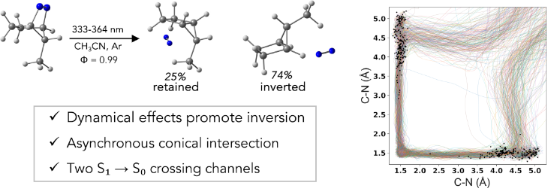
Scheme 2: Diastereoselectivity in the direct photolysis of 2,3-diazabicyclo[2.2.1]hept-2-enes.
Scheme 3: Mechanism for the photodenitrogenation of DBH proposed in the literature.
Figure 1: CASSCF(8,9) active space of 1 with average electron occupancies. Orbitals were calculated at the SA...
Figure 2: Absorption spectra and geometric overlays corresponding to Wigner-sampled geometries of 1 (a), 3 (b...
Figure 3: Minimum energy path using XMS-CASPT2(8,9)/ANO-S-VDZP for 1 (a), 3 (b), and 5 (c). The dots on the g...
Figure 4: (a) The bond lengths we calculated are depicted. σCN bonds plotted against each other for 1 (b), 3 ...
Figure 5: (a) Geometrical parameters. Plots show trajectories for a 1 ps NAMD simulation with CASSCF (8,9)/AN...
Figure 6: (a) Geometrical parameters. H–C–C–C dihedral angles plotted against each other for S1-to-S0 hopping...
Figure 7: The minimum energy conical intersection geometries are shown for the partially inverted hopping poi...
Beilstein J. Org. Chem. 2025, 21, 1984–1994, doi:10.3762/bjoc.21.154
Graphical Abstract
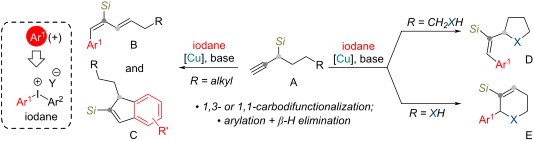
Scheme 1: Alkyne arylation with diaryl-λ3-iodanes in the context of 1,2-silyl shift and potential cyclization....
Scheme 2: Competing mechanistic pathways for diene 10 and indene 11 formation.
Scheme 3: Reaction scope for the synthesis of arylated tetrahydrofurans 8. Conditions: All reactions were per...
Scheme 4: Synthesis of lactone and pyrrolidine derivatives. Conditions: ac7e = 0.1 mmol/mL. bReaction conditi...
Scheme 5: Proposed arylation–heterocyclization mechanism for internal nucleophile-containing silanes 7.
Scheme 6: Arylation of C5-chain containing acylamides 16a–c. aThe reaction was performed under modified condi...
Beilstein J. Org. Chem. 2025, 21, 1924–1931, doi:10.3762/bjoc.21.150
Graphical Abstract
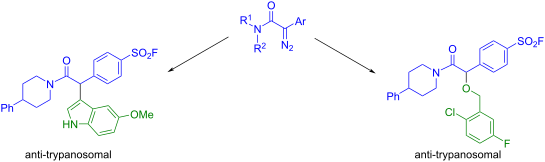
Figure 1: Envisaged connective synthesis of reactive probes 3 bearing S(VI) electrophilic warheads (WH). Dive...
Scheme 1: Synthesis of α-diazoamide substrates D1–5 of general structure 2 bearing S(VI) electrophiles. Panel...
Figure 2: Structures and reactions of co-substrates. Panel A: structures of the 16 selected co-substrates C1–...
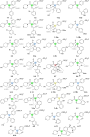
Figure 3: Structures and structure elucidation of intermolecular reaction products. The relevant reactivity m...
Beilstein J. Org. Chem. 2025, 21, 1864–1889, doi:10.3762/bjoc.21.145
Graphical Abstract
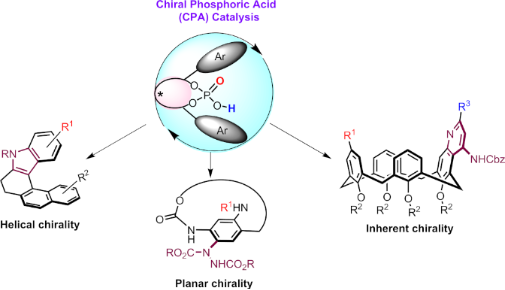
Figure 1: General structure of CPAs and selected CPAs with various chiral scaffolds.
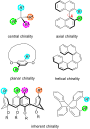
Figure 2: Representative elements of molecular chirality.
Scheme 1: CPA-catalyzed asymmetric synthesis of azahelicenes via Fischer indole synthesis.
Scheme 2: CPA-catalyzed asymmetric synthesis of azahelicenes via sequential Povarov reaction and oxidative ar...
Scheme 3: CPA-catalyzed asymmetric synthesis of azahelicenes via sequential Povarov reaction involving 3-viny...
Scheme 4: CPA-catalyzed asymmetric synthesis of heterohelicenes via sequential Povarov reaction involving 2-v...
Scheme 5: Diverse enantioselective synthesis of hetero[7]helicenes via a CPA-catalyzed double annulation stra...
Scheme 6: CPA-catalyzed asymmetric synthesis of indolohelicenoids through enantioselective cycloaddition and ...
Scheme 7: Kinetic resolution of helical polycyclic phenols via CPA-catalyzed enantioselective aminative dearo...
Scheme 8: Kinetic resolution of azahelicenes via CPA-catalyzed transfer hydrogenation.
Scheme 9: Asymmetric synthesis of planarly chiral macrocycles via CPA-catalyzed electrophilic aromatic aminat...
Scheme 10: Enantioselective synthesis of planarly chiral macrocycles via CPA-catalyzed macrocyclization.
Scheme 11: (Dynamic) kinetic resolution of planarly chiral paracyclophanes via CPA-catalyzed asymmetric reduct...
Scheme 12: Kinetic resolution of macrocyclic paracyclophanes through CPA/Bi-catalyzed asymmetric allylation.
Scheme 13: Enantioselective synthesis of planarly chiral macrocycles via CPA-catalyzed coupling of carboxylic ...
Scheme 14: Kinetic resolution of substituted amido[2.2]paracyclophanes via CPA-catalyzed asymmetric electrophi...
Scheme 15: Enantioselective synthesis of inherently chiral calix[4]arenes via sequential CPA-catalyzed Povarov...
Scheme 16: Asymmetric synthesis of inherently chiral calix[4]arenes via CPA-catalyzed aminative desymmetrizati...
Scheme 17: Asymmetric synthesis of chiral heterocalix[4]arenes via CPA-catalyzed intramolecular SNAr reaction.
Scheme 18: Enantioselective synthesis of inherently chiral DDDs via CPA-catalyzed cyclocondensation.
Scheme 19: Asymmetric synthesis of saddle-shaped inherently chiral 9,10-dihydrotribenzoazocines via CPA-cataly...
Scheme 20: Enantioselective synthesis of inherently chiral saddle-shaped dibenzo[b,f][1,5]diazocines via CPA-c...
Scheme 21: Enantioselective synthesis of inherent chiral 7-membered tribenzocycloheptene oximes via CPA-cataly...
Beilstein J. Org. Chem. 2025, 21, 1535–1543, doi:10.3762/bjoc.21.116
Graphical Abstract
Figure 1: Examples of compounds with medicinal effects containing an enaminone structural moiety.
Scheme 1: Synthesis of enaminones.
Scheme 2: Substrate scope.
Scheme 3: Scale-up synthesis of enaminone 9a.
Scheme 4: Mechanistic studies.
Scheme 5: Proposed mechanism.
Beilstein J. Org. Chem. 2025, 21, 1462–1476, doi:10.3762/bjoc.21.108
Graphical Abstract
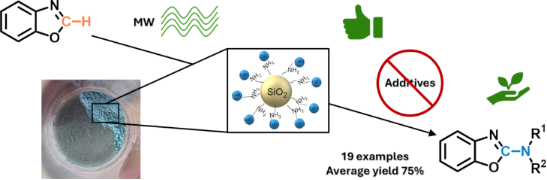
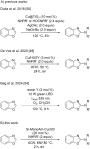
Scheme 1: Representative synthetic routes for the C–H amination of benzoxazole using supported copper catalys...
Figure 1: Reaction of benzimidazole with piperidine. a) Reaction scheme including intermaidates and b) conver...
Figure 2: Reaction rate comparison between conventional (oil bath) and MW heating. Reaction conditions: benzo...
Scheme 2: Graphical representation of Si-MonoAm-Cu(I) and Si-DiAm-Cu(I) preparation.
Figure 3: TGA profiles of SIPERNAT silica and Si-MonoAm and Si-DiAm.
Scheme 3: Scope of the MW-promoted C2-amination of benzoxazole catalysed by Si-MonoAm-Cu(I). Reaction conditi...
Scheme 4: C2-Amination of substituted benzoxazoles. Reaction conditions: benzoxazole (1.0 mmol), piperidine (...
Figure 4: Hot filtration test for the Si-MonoAm-Cu(I)-catalysed C2-amination of benzoxazole with piperidine i...
Figure 5: FTIR spectra of samples on the left 3800–2400 cm−1 wavenumber on the right 1750–1350 cm−1 wavenumbe...
Figure 6: Si-MonoAm-Cu(I) catalyst reuse.
Figure 7: FESEM images of sample a) Si-MonoAm-Cu(I) 5 wt % and c) Si-MonoAm-Cu(I) 5 wt % used.
Figure 8: EDS maps of a) Si-MonoAm-Cu(I) and b) Si-MonoAm-Cu(I) used.
Beilstein J. Org. Chem. 2025, 21, 1324–1373, doi:10.3762/bjoc.21.101
Graphical Abstract
Figure 1: Bond lengths and bond angles in oxetane at 140 K [2].
Figure 2: Analogy of 3-substituted oxetanes to carbonyl and gem-dimethyl groups [12].
Figure 3: Use of oxetanes in drug design – selected examples.
Figure 4: Examples of oxetane-containing natural products.
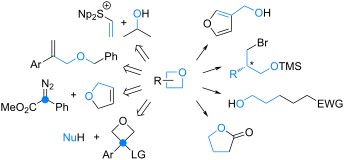
Scheme 1: Synthetic strategies towards construction of the oxetane ring.
Scheme 2: Overview of intramolecular Williamson etherification and competing Grob fragmentation.
Scheme 3: Synthesis of spiro-oxetanes via 1,4-C–H insertion and Williamson etherification.
Scheme 4: Use of phenyl vinyl selenone in the synthesis of spirooxindole oxetanes.
Scheme 5: Synthesis of bicyclic 3,5-anhydrofuranoses via double epoxide opening/etherification.
Scheme 6: Preparation of spirooxetanes by cycloisomerisation via MHAT/RPC.
Scheme 7: Oxetane synthesis via alcohol C–H functionalisation.
Scheme 8: Access to oxetanes 38 from α-acetyloxy iodides.
Scheme 9: The kilogram-scale synthesis of oxetane intermediate 41.
Scheme 10: Overview of the intramolecular opening of 3-membered rings.
Scheme 11: Synthesis of 4,7-dioxatricyclo[3.2.1.03,6]octane skeletons.
Scheme 12: Silicon-directed electrophilic cyclisation of homoallylic alcohols.
Scheme 13: Hydrosilylation–iodocyclisation of homopropargylic alcohols.
Scheme 14: Cu-catalysed intramolecular O-vinylation of γ-bromohomoallylic alcohols.
Scheme 15: Cu-catalysed intramolecular cross-coupling of hydroxyvinylstannanes.
Scheme 16: Isomerisation of oxiranyl ethers containing weakly carbanion-stabilising groups.
Scheme 17: Cyclisation of diethyl haloalkoxymalonates.
Scheme 18: Synthesis of oxetanes through a 1,5-HAT/radical recombination sequence.
Scheme 19: General approach to oxetanes via [2 + 2] cycloadditions.
Scheme 20: Synthesis of tricyclic 4:4:4 oxetanes through a photochemical triple cascade reaction.
Scheme 21: Iridium-catalysed Paternò–Büchi reaction between α-ketoesters and simple alkenes.
Scheme 22: Three-step synthesis of spirocyclic oxetanes 83 via Paternò–Büchi reaction, nucleophilic ring openi...
Scheme 23: Enantioselective Paternò–Büchi reaction catalysed by a chiral iridium photocatalyst.
Scheme 24: Synthesis of polysubstituted oxetanes 92 via Cu(II)-mediated formal [2 + 2] cycloadditions.
Scheme 25: Synthesis of alkylideneoxetanes via NHC- and DBU-mediated formal [2 + 2] cycloadditions.
Scheme 26: Use of sulphur-stabilised carbanions in ring expansions.
Scheme 27: Synthesis of α,α-difluoro(arylthio)methyl oxetanes.
Scheme 28: Ring expansion in an industrial synthesis of PF-06878031.
Scheme 29: Ring contraction of triflated 2-hydroxy-γ-lactones.
Scheme 30: Ring contraction in an industrial synthesis of PF-06878031.
Scheme 31: Photochemical ring contraction of 2,5-dihydrofurans by aryldiazoacetic acid esters.
Scheme 32: Synthesis of 3-oxetanones via O-H insertion of carbenes.
Scheme 33: Synthesis of phosphonate oxetanones via gold-mediated alkyne oxidation/O–H insertion.
Scheme 34: Syntheses and common derivatisations of 3-oxetanone.
Scheme 35: SN1 substitution of 3-aryloxetan-3-ols by thiols and alcohols.
Scheme 36: Fe–Ni dual-catalytic olefin hydroarylation towards 3-alkyl-3-(hetero)aryloxetanes.
Scheme 37: Synthesis of 3-aryloxetan-3-carboxylic acids.
Scheme 38: Decarboxylative alkylation of 3-aryloxetan-3-carboxylic acids.
Scheme 39: Synthesis of 3-amino-3-aryloxetanes via photoredox/nickel cross-coupling catalysis.
Scheme 40: Intermolecular cross-selective [2 + 2] photocycloaddition towards spirooxetanes.
Scheme 41: Synthesis of 3-aryl-3-aminooxetanes via defluorosulphonylative coupling.
Scheme 42: Two-step synthesis of amide bioisosteres via benzotriazolyl Mannich adducts 170.
Scheme 43: Functionalisation of oxetanyl trichloroacetimidates 172.
Scheme 44: Synthesis of oxetane-amino esters 176.
Scheme 45: Tandem Friedel–Crafts alkylation/intramolecular ring opening of 3-aryloxetan-3-ols.
Scheme 46: Synthesis of polysubstituted furans and pyrroles.
Scheme 47: Synthesis of oxazolines and bisoxazolines.
Scheme 48: Tandem, one-pot syntheses of various polycyclic heterocycles.
Scheme 49: Synthesis of 1,2-dihydroquinolines via skeletal reorganisation of oxetanes.
Scheme 50: Synthesis of benzoindolines and 2,3-dihydrobenzofurans and their derivatisations.
Scheme 51: Synthesis of polysubstituted 1,4-dioxanes.
Scheme 52: Preparation of various lactones via ring opening of oxetane-carboxylic acids 219.
Scheme 53: Tsuji-Trost allylation/ring opening of 3-aminooxetanes.
Scheme 54: Arylative skeletal rearrangement of 3-vinyloxetan-3-ols to 2,5-dihydrofurans.
Scheme 55: Reductive opening of oxetanes using catalytic Mg–H species.
Scheme 56: Opening of oxetanes by silyl ketene acetals.
Scheme 57: Rhodium-catalysed hydroacylation of oxetanes.
Scheme 58: Generation of radicals from oxetanes mediated by a vitamin B12-derived cobalt catalyst.
Scheme 59: Reductive opening of oxetanes by B–Si frustrated Lewis pairs.
Scheme 60: Zirconocene-mediated reductive opening of oxetanes.
Scheme 61: Enantioselective syntheses of small and medium-size rings using chiral phosphoric acids.
Scheme 62: Asymmetric synthesis of 2,3-dihydrobenzo[b]oxepines catalysed by a chiral scandium complex.
Scheme 63: Enantioselective synthesis of 1,3-bromohydrins under a chiral squaramide catalysis.
Scheme 64: Enantioselective opening of 2-aryl-2-ethynyloxetanes by anilines.
Scheme 65: Ru-catalysed insertion of diazocarbonyls into oxetanes.
Scheme 66: Ring expansion of oxetanes by stabilised carbenes generated under blue light irradiation.
Scheme 67: Expansion of oxetanes via nickel-catalysed insertion of alkynyltrifluoroborates.
Scheme 68: Nickel-catalysed expansion of oxetanes into ε-caprolactones.
Scheme 69: Expansion of oxetanes via cobalt-catalysed carbonyl insertion.
Scheme 70: Gold-catalysed intramolecular 1,1-carboalkoxylation of oxetane-ynamides.
Scheme 71: Expansion of oxetanes by stabilised sulphoxonium ylides.
Scheme 72: Cu-catalysed ring expansion of 2-vinyloxetanes by diazoesters.
Scheme 73: Total synthesis of (+)-oxetin.
Scheme 74: Total synthesis of racemic oxetanocin A.
Scheme 75: Total synthesis of (−)-merrilactone A.
Scheme 76: Total synthesis of (+)-dictyoxetane.
Scheme 77: Total synthesis of ent-dichrocephone B.
Scheme 78: Total synthesis of (−)-mitrephorone A.
Scheme 79: Total synthesis of (−)-taxol.
Beilstein J. Org. Chem. 2025, 21, 999–1009, doi:10.3762/bjoc.21.81
Graphical Abstract
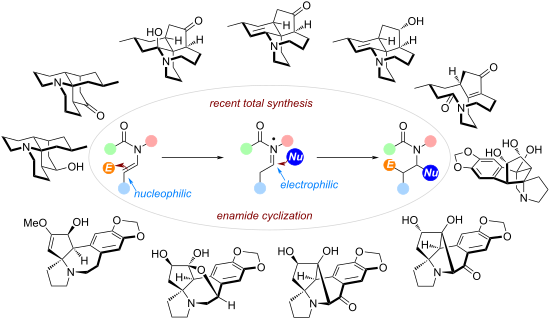
Figure 1: Reactivity of enamides and enamide cyclizations.
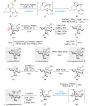
Scheme 1: Total synthesis of (−)-dihydrolycopodine and (−)-lycopodine.
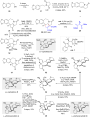
Scheme 2: Collective total synthesis of fawcettimine-type alkaloids.
Scheme 3: Total syntheses of cephalotaxine and cephalezomine H.
Scheme 4: Collective total syntheses of Cephalotaxus alkaloids.
Scheme 5: Asymmetric tandem cyclization/Pictet–Spengler reaction of tertiary enamides.
Scheme 6: Tandem cyclization/Pictet–Spengler reaction for the synthesis of chiral tetracyclic compounds.
Scheme 7: Total synthesis of (−)-cephalocyclidin A.
Beilstein J. Org. Chem. 2025, 21, 639–658, doi:10.3762/bjoc.21.51
Graphical Abstract
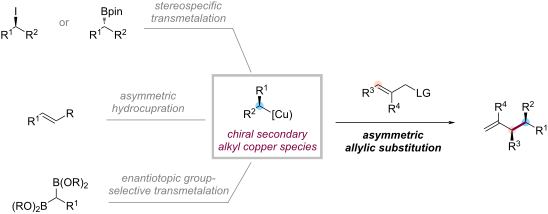
Scheme 1: Representative transition-metal catalysis for allylic substitution.
Scheme 2: Formation of stereogenic centers in copper-catalyzed allylic alkylation reactions.
Scheme 3: Copper-mediated, stereospecific SN2-selective allylic substitution through retentive transmetalatio...
Scheme 4: ZnCl2-promoted stereospecific SN2' allylic substitution of secondary alkylcopper species via sequen...
Scheme 5: Temperature and time-dependent configurational stability of chiral secondary organocopper species.
Scheme 6: DFT analysis of B–C bond lengths in various boronate complexes and correlation with reactivity.
Scheme 7: Copper-catalyzed stereospecific allylic alkylation of secondary alkylboronic esters via tert-butyll...
Scheme 8: Copper-catalyzed stereospecific allylic alkylation of chiral tertiary alkylboronic esters via adama...
Scheme 9: DFT-calculated energy surface for boron-to-copper transmetalation of either the tert-butyl group or...
Scheme 10: CuH-catalyzed enantioselective allylic substitution and postulated catalytic cycle.
Scheme 11: CuH-catalyzed enantioselective allylic substitution of vinylarenes.
Scheme 12: CuH-catalyzed stereoselective allylic substitution of vinylboronic esters.
Scheme 13: (a) Generation of chiral copper species via enantioselective CuH addition to vinylBpin. (b) Regardi...
Scheme 14: CuH-catalyzed enantioselective allylic substitution of 1‐trifluoromethylalkenes with 18-crown-6.
Scheme 15: CuH-catalyzed enantioselective allylic substitution of terminal alkynes.
Scheme 16: Copper-catalyzed enantiotopic-group-selective allylic substitution of 1,1-diborylalkanes.
Scheme 17: (a) Computational and (b) experimental studies to elucidate the mechanistic details of the enantiot...
Scheme 18: Copper-catalyzed regio-, diastereo- and enantioselective allylic substitution of 1,1-diborylalkanes....
Scheme 19: (a) Experimental and (b) computational studies to understand the stereoselectivities in oxidative a...
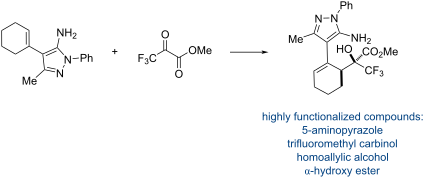
Beilstein J. Org. Chem. 2025, 21, 533–540, doi:10.3762/bjoc.21.41
Graphical Abstract
Figure 1: Biologically active compounds featuring a trifluoromethyl carbinol motif.
Figure 2: Nucleophilic sites of 5-aminopyrazoles and 4-alkenyl-5-aminopyrazoles. Stereoselective synthesis of...
Scheme 1: Synthesis of the starting materials 3.
Scheme 2: Scope of the reaction. Reaction conditions A: 3 (0.2 mmol) and 4 (0.6 mmol) in 2 mL of toluene at 7...
Scheme 3: Plausible mechanism and X-ray structure of compound 5aca.
Beilstein J. Org. Chem. 2025, 21, 421–443, doi:10.3762/bjoc.21.30
Graphical Abstract
Figure 1: Catalytic rate enhancements from a reduction in the Gibbs free energy transition barrier can be fra...
Figure 2: Typical catalysis modes using macrocycle cavities performing (non-specific) hydrophobic substrate b...
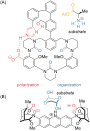
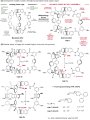
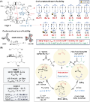
Figure 3: (A) Cram’s serine protease model system [87,88]. The macrocycle showed strong substrate binding (organizat...
Figure 4: (A) Self-assembling capsules can perform hydrophobic catalysis [116,117]. (B) Resorcin[4]arene building bloc...
Figure 5: (A) Metal-organic cages and key modes in catalysis. (B) Charged metals or ligands can result in +/−...
Figure 6: (A) Frameworks (MOFs, COFs) can be catalysts. (B) Example of a 2D-COF, assembled by dynamic covalen...
Figure 7: (A) Examples of dynamic covalent chemistry used to synthesize organic cages. (B) Organic cages are ...
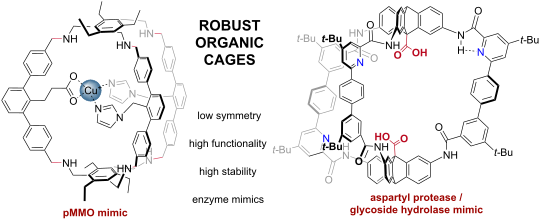
Figure 8: (A) Design and development of soluble, functionalized, robust organic cages. (B) Examples of modula...
Figure 9: (A) There are 13 metastable conformers (symmetry-corrected) for cage 1 due to permutations of amide...
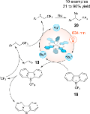
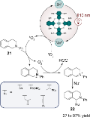
Beilstein J. Org. Chem. 2025, 21, 296–326, doi:10.3762/bjoc.21.22
Graphical Abstract
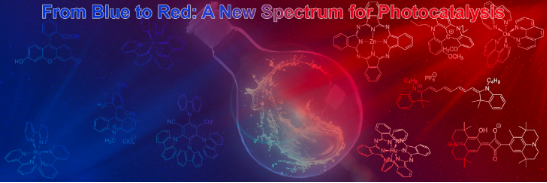
Figure 1: Influence of the metal center M (Fe, Ru, Os) on the position of the MLCT and MC (metal-centered) ab...
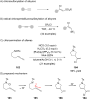
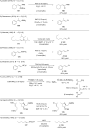
Scheme 1: Red-light-mediated ring-closing metathesis through activation of a ruthenium catalyst by an osmium ...
Scheme 2: Photocatalyzed polymerization of dicylopentadiene mediated with red or blue light.
Figure 2: Comparison between [Ru(bpy)3]2+ and [Os(tpy)2]2+ in a photocatalyzed trifluoromethylation reaction:...
Scheme 3: Red-light photocatalyzed C–N cross-coupling reaction by T. Rovis et al. (SET = single-electron tran...
Figure 3: Red-light-mediated aryl oxidative addition with a bismuthinidene complex.
Scheme 4: Red-light-mediated reduction of aryl derivatives by O. S. Wenger et al. (PC = photocatalyst, anh = ...
Scheme 5: Red-light-mediated aryl halides reduction with an isoelectronic chromium complex (TDAE = tetrakis(d...
Scheme 6: Red-light-photocatalyzed trifluoromethylation of styrene derivatives with Umemoto’s reagent and a p...
Scheme 7: Red-light-mediated energy transfer for the cross-dehydrogenative coupling of N-phenyltetrahydroisoq...
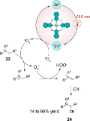
Scheme 8: Red-light-mediated oxidative cyanation of tertiary amines with a phthalocyanin zinc complex.
Scheme 9: Formation of dialins and tetralins via a red-light-photocatalyzed reductive decarboxylation mediate...
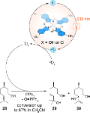
Scheme 10: Oxidation of β-citronellol (28) via energy transfer mediated by a red-light activable silicon phtha...
Scheme 11: Formation of alcohol derivatives 32 from boron compounds 31 using chlorophyll (chl) as a red-light-...
Scheme 12: Red-light-driven reductive dehalogenation of α-halo ketones mediated by a thiaporphyrin photocataly...
Figure 4: Photoinduced electron transfer-reversible addition-fragmentation chain transfer polymerization medi...
Figure 5: Recent examples of red-light-mediated photocatalytic reactions with traditional organic dyes.
Figure 6: Squaraine photocatalysts used by Goddard et al. and aza-Henry reaction with squaraine-based photoca...
Figure 7: Reactions described by Goddard et al. involving 40 as the photocatalyst.
Figure 8: Various structures of squaraine derivatives used to initiate photopolymerizations.
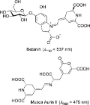
Figure 9: Naturally occurring cyanins.
Figure 10: Influence of the structure on the photophysical properties of a cyanin dye.
Figure 11: NIR-light-mediated aza-Henry reaction photocatalyzed by 46.
Scheme 13: Photocatalyzed arylboronic acids oxidation by 46.
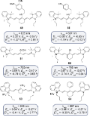
Figure 12: Cyanin structures synthetized and characterized by Goddard et al. (redox potentials given against s...
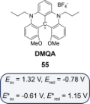
Figure 13: N,N′-Di-n-propyl-1,13-dimethoxyquinacridinium (55) with its redox potentials at its ground state an...
Scheme 14: Dual catalyzed C(sp2)–H arylation of 57 using DMQA 55 as the red-light-absorbing photocatalyst.
Scheme 15: Red-light-mediated aerobic oxidation of arylboronic acids 59 into phenols 60 via the use of DMQA as...
Figure 14: Red-light-photocatalyzed reactions proposed by Gianetti et al. using DMQA as the photocatalyst.
Scheme 16: Simultaneous release of NO and production of superoxide (O2•−) and their combination yielding the p...
Figure 15: Palladium porphyrin complex as the photoredox catalyst and the NO releasing substrate are linked in...
Scheme 17: Uncaging of compound 69 which is a microtubule depolymerizing agent using near IR irradiation. The ...
Scheme 18: Photochemical uncaging of drugs protected with a phenylboronic acid derivative using near IR irradi...
Scheme 19: Photoredox catalytical generation of aminyl radicals with near IR irradiation for the transfer of b...
Scheme 20: Photoredox catalytical fluoroalkylation of tryptophan moieties.
Figure 16: Simultaneous absorption of two photons of infrared light of low energy enables electronic excitatio...
Scheme 21: Uncaging Ca2+ ions using two-photon excitation with near infrared light.
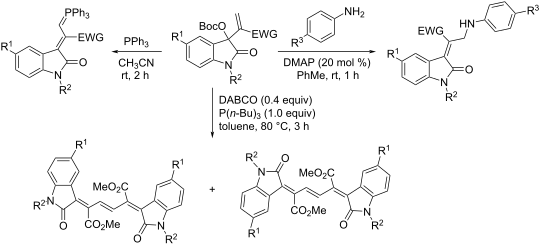
Beilstein J. Org. Chem. 2025, 21, 286–295, doi:10.3762/bjoc.21.21
Graphical Abstract
Scheme 1: Reaction of arylamines and MBH carbonates of isatins. Reaction conditions: MBH carbonate of isatin ...
Scheme 2: Reaction of arylamines and MBH maleimides of isatins. Reaction conditions: MBH maleimide of isatin ...
Figure 1: Single crystal structure of compound 5a.
Figure 2: Single crystal structure of compound 5j.
Scheme 3: Reactions of MBH carbonates of isatins and triphenylphosphine. Reaction conditions: MBH carbonate o...
Figure 3: Single crystal structure of compound 6e.
Figure 4: Single crystal structure of compound 7a.
Figure 5: Single crystal structure of compound 8a.
Scheme 4: Proposed reaction mechanism for the various compounds.
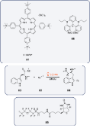
Beilstein J. Org. Chem. 2025, 21, 200–216, doi:10.3762/bjoc.21.12
Graphical Abstract
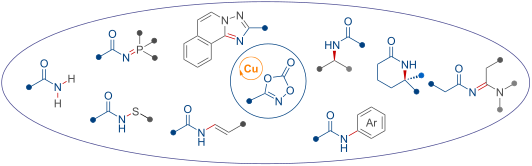
Scheme 1: Formation of isocyanates and amidated arenes from dioxazolones.
Scheme 2: Copper-catalyzed synthesis of δ-lactams via open-shell copper nitrenoid transfer. aCuBr (10 mol %) ...
Figure 1: Proposed reaction pathway for the copper-catalyzed synthesis of δ-lactams from dioxazolones.
Scheme 3: Copper(II)-catalyzed synthesis of 1,2,4-triazole derivatives.
Figure 2: Proposed reaction mechanism for the copper-catalyzed synthesis of 1,2,4-triazole analogues from dio...
Scheme 4: Copper(I)-catalyzed synthesis of N-acyl amidines from dioxazolones, acetylenes, and amines. aPerfor...
Figure 3: Proposed reaction mechanism for the copper(I)-catalyzed synthesis of N-acyl amidines.
Scheme 5: Preparation of N-arylamides from dioxazolones and boronic acids using a copper salt.
Figure 4: Proposed reaction pathway for the copper-mediated synthesis of N-arylamides from dioxazolones.
Scheme 6: Copper-catalyzed preparation of N-acyl iminophosphoranes from dioxazolones.
Figure 5: Proposed reaction pathway for the copper-catalyzed synthesis of N-acyl iminophosphoranes from dioxa...
Scheme 7: Copper-catalyzed synthesis of N-acyl sulfenamides. a1.0 equiv of 18 and 2.0 equiv of 19 were used. b...
Figure 6: Proposed reaction mechanism for the copper-catalyzed S-amidation of thiols.
Scheme 8: Copper-catalyzed asymmetric hydroamidation of vinylarenes. a4 mol % + 2 mol % catalyst was used. b4...
Figure 7: Proposed reaction mechanism for the copper-catalyzed hydroamidation of vinylarenes.
Scheme 9: Copper-catalyzed anti-Markovnikov hydroamidation of alkynes.
Figure 8: Proposed reaction mechanism for the copper-catalyzed amidation of alkynes.
Scheme 10: Copper-catalyzed preparation of primary amides through N–O bond reduction using reducing agent.
Figure 9: Proposed catalytic cycle for the copper-catalyzed reduction of dioxazolones.
Beilstein J. Org. Chem. 2025, 21, 155–178, doi:10.3762/bjoc.21.9
Graphical Abstract
Figure 1: General mechanisms of traditional and radical-mediated cross-coupling reactions.
Figure 2: Types of electrocatalysis (using anodic oxidation).
Figure 3: Recent developments and features of electrochemical copper catalysis.
Figure 4: Scheme and proposed mechanism for Cu-catalyzed alkynylation and annulation of benzamide.
Figure 5: Scheme and proposed mechanism for Cu-catalyzed asymmetric C–H alkynylation.
Figure 6: Scheme for Cu/TEMPO-catalyzed C–H alkenylation of THIQs.
Figure 7: Scheme and proposed mechanism for Cu-catalyzed electrophotochemical enantioselective cyanation of b...
Figure 8: Scheme and proposed mechanism for Cu-catalyzed electrophotochemical asymmetric heteroarylcyanation ...
Figure 9: Scheme and proposed mechanism for Cu-catalyzed enantioselective regiodivergent cross-dehydrogenativ...
Figure 10: Scheme and proposed mechanism for Cu/Ni-catalyzed stereodivergent homocoupling of benzoxazolyl acet...
Figure 11: Scheme and proposed mechanism for Cu-catalyzed electrochemical amination.
Figure 12: Scheme and proposed mechanism for Cu-catalyzed electrochemical azidation of N-arylenamines and annu...
Figure 13: Scheme and proposed mechanism for Cu-catalyzed electrochemical halogenation.
Figure 14: Scheme and proposed mechanism for Cu-catalyzed asymmetric cyanophosphinoylation of vinylarenes.
Figure 15: Scheme and proposed mechanism for Cu/Co dual-catalyzed asymmetric hydrocyanation of alkenes.
Figure 16: Scheme and proposed mechanism for Cu-catalyzed electrochemical diazidation of olefins.
Figure 17: Scheme and proposed mechanism for Cu-catalyzed electrochemical azidocyanation of alkenes.
Figure 18: Scheme and proposed mechanism for Cu-catalyzed electrophotochemical asymmetric decarboxylative cyan...
Figure 19: Scheme and proposed mechanism for electrocatalytic Chan–Lam coupling.
Beilstein J. Org. Chem. 2025, 21, 55–121, doi:10.3762/bjoc.21.6
Graphical Abstract
Scheme 1: Formation of axially chiral styrenes 3 via iminium activation.
Scheme 2: Synthesis of axially chiral 2-arylquinolines 6.
Scheme 3: Atroposelective intramolecular (4 + 2) annulation leading to aryl-substituted indolines.
Scheme 4: Atroposelective formation of biaryl via twofold aldol condensation.
Scheme 5: Strategy towards diastereodivergent formation of axially chiral oligonaphthylenes.
Scheme 6: Atroposelective formation of chiral biaryls based on a Michael/Henry domino reaction.
Scheme 7: Organocatalytic Michael/aldol cascade followed by oxidative aromatization.
Scheme 8: Atroposelective formation of C(sp2)–C(sp3) axially chiral compounds.
Scheme 9: NHC-catalyzed synthesis of axially chiral styrenes 26.
Scheme 10: NHC-catalyzed synthesis of biaxial chiral pyranones.
Scheme 11: Formation of bridged biaryls with eight-membered lactones.
Scheme 12: The NHC-catalyzed (3 + 2) annulation of urazoles 37 and ynals 36.
Scheme 13: NHC-catalyzed synthesis of axially chiral 4‑aryl α‑carbolines 41.
Scheme 14: NHC-catalyzed construction of N–N-axially chiral pyrroles and indoles.
Scheme 15: NHC-catalyzed oxidative Michael–aldol cascade.
Scheme 16: NHC-catalyzed (4 + 2) annulation for the synthesis of benzothiophene-fused biaryls.
Scheme 17: NHC-catalyzed desymmetrization of N-aryl maleimides.
Scheme 18: NHC-catalyzed deracemization of biaryl hydroxy aldehydes 55a–k into axially chiral benzonitriles 56a...
Scheme 19: NHC-catalyzed desymmetrization of 2-aryloxyisophthalaldehydes.
Scheme 20: NHC-catalyzed DKR of 2-arylbenzaldehydes 62.
Scheme 21: Atroposelective biaryl amination.
Scheme 22: CPA-catalyzed atroposelective amination of 2-anilinonaphthalenes.
Scheme 23: Atroposelective DKR of naphthylindoles.
Scheme 24: CPA-catalyzed kinetic resolution of binaphthylamines.
Scheme 25: Atroposelective amination of aromatic amines with diazodicarboxylates.
Scheme 26: Atroposelective Friedländer heteroannulation.
Scheme 27: CPA-catalyzed formation of axially chiral 4-arylquinolines.
Scheme 28: CPA-catalyzed Friedländer reaction of arylketones with cyclohexanones.
Scheme 29: CPA-catalyzed atroposelective Povarov reaction.
Scheme 30: Atroposelective CPA-catalyzed Povarov reaction.
Scheme 31: Paal–Knorr formation of axially chiral N-pyrrolylindoles and N-pyrrolylpyrroles.
Scheme 32: Atroposelective Paal–Knorr reaction leading to N-pyrrolylpyrroles.
Scheme 33: Atroposelective Pictet–Spengler reaction of N-arylindoles with aldehydes.
Scheme 34: Atroposelective Pictet–Spengler reaction leading to tetrahydroisoquinolin-8-ylanilines.
Scheme 35: Atroposelective formation of arylindoles.
Scheme 36: CPA-catalyzed arylation of naphthoquinones with indolizines.
Scheme 37: Atroposelective reaction of o-naphthoquinones.
Scheme 38: CPA-catalyzed formation of axially chiral arylquinones.
Scheme 39: CPA-catalyzed axially chiral N-arylquinones.
Scheme 40: Atroposelective additions of bisindoles to isatin-based 3-indolylmethanols.
Scheme 41: CPA-catalyzed synthesis of axially chiral arylindolylindolinones.
Scheme 42: CPA-catalyzed reaction between bisindoles and ninhydrin-derived 3-indoylmethanols.
Scheme 43: Atroposelective reaction of bisindoles and isatin-derived imines.
Scheme 44: CPA-catalyzed formation of axially chiral bisindoles.
Scheme 45: Atroposelective reaction of 2-naphthols with alkynylhydroxyisoindolinones.
Scheme 46: CPA-catalyzed reaction of indolylnaphthols with propargylic alcohols.
Scheme 47: Atroposelective formation of indolylpyrroloindoles.
Scheme 48: Atroposelective reaction of indolylnaphthalenes with alkynylnaphthols.
Scheme 49: CPA-catalyzed addition of naphthols to alkynyl-2-naphthols and 2-naphthylamines.
Scheme 50: CPA-catalyzed formation of axially chiral aryl-alkene-indoles.
Scheme 51: CPA-catalyzed formation of axially chiral styrenes.
Scheme 52: Atroposelective formation of alkenylindoles.
Scheme 53: Atroposelective formation of axially chiral arylquinolines.
Scheme 54: Atroposelective (3 + 2) cycloaddition of alkynylindoles with azonaphthalenes.
Scheme 55: CPA-catalyzed formation of axially chiral 3-(1H-benzo[d]imidazol-2-yl)quinolines.
Scheme 56: Atroposelective cyclization of 3-(arylethynyl)-1H-indoles.
Scheme 57: Atroposelective three-component heteroannulation.
Scheme 58: CPA-catalyzed formation of arylbenzimidazols.
Scheme 59: CPA-catalyzed reaction of N-naphthylglycine esters with nitrosobenzenes.
Scheme 60: CPA-catalyzed formation of axially chiral N-arylbenzimidazoles.
Scheme 61: CPA-catalyzed formation of axially chiral arylbenzoindoles.
Scheme 62: CPA-catalyzed formation of pyrrolylnaphthalenes.
Scheme 63: CPA-catalyzed addition of naphthols and indoles to nitronaphthalenes.
Scheme 64: Atroposelective reaction of heterobiaryl aldehydes and aminobenzamides.
Scheme 65: Atroposelective cyclization forming N-arylquinolones.
Scheme 66: Atroposelective formation of 9H-carbazol-9-ylnaphthalenes and 1H-indol-1-ylnaphthalene.
Scheme 67: CPA-catalyzed formation of pyrazolylnaphthalenes.
Scheme 68: Atroposelective addition of diazodicarboxamides to azaborinephenols.
Scheme 69: Catalytic formation of axially chiral arylpyrroles.
Scheme 70: Atroposelective coupling of 1-azonaphthalenes with 2-naphthols.
Scheme 71: CPA-catalyzed formation of axially chiral oxindole-based styrenes.
Scheme 72: Atroposelective electrophilic bromination of aminonaphthoquinones.
Scheme 73: Atroposelective bromination of dienes.
Scheme 74: CPA-catalyzed formation of axially chiral 5-arylpyrimidines.
Scheme 75: Atroposelective hydrolysis of biaryloxazepines.
Scheme 76: Atroposelective opening of dinaphthosiloles.
Scheme 77: Atroposelective reduction of naphthylenals.
Scheme 78: Atroposelective allylic substitution with 2-naphthols.
Scheme 79: Atroposelective allylic alkylation with phosphinamides.
Scheme 80: Atroposelective allylic substitution with aminopyrroles.
Scheme 81: Atroposelective allylic substitution with aromatic sulfinamides.
Scheme 82: Atroposelective sulfonylation of naphthylynones.
Scheme 83: Squaramide-catalyzed reaction of alkynyl-2-naphthols with 5H-oxazolones.
Scheme 84: Formation of axially chiral styrenes via sulfonylative opening of cyclopropanols.
Scheme 85: Atroposelective organo-photocatalyzed sulfonylation of alkynyl-2-naphthols.
Scheme 86: Thiourea-catalyzed atroposelective cyclization of alkynylnaphthols.
Scheme 87: Squaramide-catalyzed formation of axially chiral naphthylisothiazoles.
Scheme 88: Atroposelective iodo-cyclization catalyzed by squaramide C69.
Scheme 89: Squaramide-catalyzed formation of axially chiral oligoarenes.
Scheme 90: Atroposelective ring-opening of cyclic N-sulfonylamides.
Scheme 91: Thiourea-catalyzed kinetic resolution of naphthylpyrroles.
Scheme 92: Atroposelective ring-opening of arylindole lactams.
Scheme 93: Atroposelective reaction of 1-naphthyl-2-tetralones and diarylphosphine oxides.
Scheme 94: Atroposelective reaction of iminoquinones with indoles.
Scheme 95: Kinetic resolution of binaphthylalcohols.
Scheme 96: DKR of hydroxynaphthylamides.
Scheme 97: Atroposelective N-alkylation with phase-transfer catalyst C75.
Scheme 98: Atroposelective allylic substitution via kinetic resolution of biarylsulfonamides.
Scheme 99: Atroposelective bromo-functionalization of alkynylarenes.
Scheme 100: Sulfenylation-induced atroposelective cyclization.
Scheme 101: Atroposelective O-sulfonylation of isochromenone-indoles.
Scheme 102: NHC-catalyzed atroposelective N-acylation of anilines.
Scheme 103: Peptide-catalyzed atroposelective ring-opening of lactones.
Scheme 104: Peptide-catalyzed coupling of 2-naphthols with quinones.
Scheme 105: Atroposelective nucleophilic aromatic substitution of fluoroarenes.
Beilstein J. Org. Chem. 2024, 20, 3263–3273, doi:10.3762/bjoc.20.270
Graphical Abstract
Figure 1: Fluorotriphenylene derivatives and their nonfluorinated homologs obtained by SNFAr from 2,2'-dilith...
Scheme 1: Synthesis, yields, and nomenclature of 1,2,4-trifluoro-6,7,10,11-tetraalkoxy-3-(perfluorophenyl)tri...
Figure 2: Single crystal structure of 1,2,4-trifluoro-3-(perfluorophenyl)triphenylene (F) viewed along the ma...
Figure 3: POM textures, observed between crossed polarizers of Janus and dimer, F6, F12, G66, and G48, respec...
Figure 4: Comparative bar graph summarizing the thermal behavior of Fn, BTP6, and PHn derivatives (2nd heatin...
Figure 5: Representative S/WAXS patterns of Fn and Gnm compounds.
Figure 6: Absorption (a) and emission (b) spectra of F6 and G66, measured in different solvents at a concentr...
Figure 7: DFT calculated frontier molecular orbitals and optimized molecular structures for F1 and G11.