

Search results
Search for "catalyzed" in Full Text gives 1869 result(s) in Beilstein Journal of Organic Chemistry. Showing first 200.
Synthesis and acaricidal activity against Varroa destructor of α- and γ-costic acid dimers
Beilstein J. Org. Chem. 2026, 22, 1088–1096, doi:10.3762/bjoc.22.87
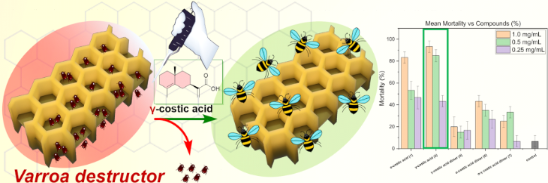
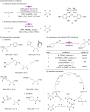
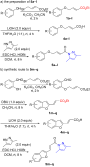
- homo- and heterodimers 4, 6, and 7 (Scheme 1). Accordingly, the formation of dimer of 6 with ethylene glycol was first attempted under classical acid-catalyzed Fischer esterification conditions, in the presence of p-toluenesulfonic acid (pTsOH) (Scheme 1). However, these conditions led to isomerization


Synthesis of functionalized, 13-alkyl-substituted coralyne derivatives and investigation of their interactions with duplex and abasic site-containing DNA
Beilstein J. Org. Chem. 2026, 22, 1057–1066, doi:10.3762/bjoc.22.84
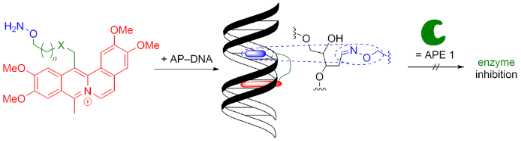
- , and absorption spectroscopy. The papaverine 3c was directly made to react with acetic anhydride and conc. H2SO4 to give the corresponding coralyne 2c as sulfoacetate salt in 37% yield. After ion metathesis by treatment with HBF4 the resulting tetrafluoroborate salt 2c was submitted to acid-catalyzed


One-pot four-component sequential synthesis of S-alkyl dithiocarbamates using lipase as a biocatalyst
Beilstein J. Org. Chem. 2026, 22, 1048–1056, doi:10.3762/bjoc.22.83
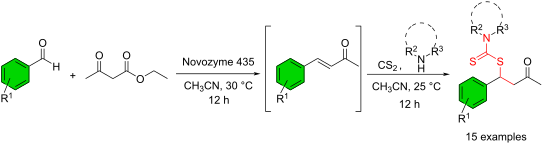
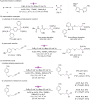
- (Scheme 1b) [26]. Although several methodologies for the synthesis of S-alkyl dithiocarbamates have been reported, the integration of biocatalysis with sequential multicomponent synthesis remains unexplored. In the present work, a lipase-catalyzed Knoevenagel condensation/decarboxylation is used to
- , in previously reported lipase-catalyzed promiscuous reactions, significant stereochemical induction has generally not been observed or discussed [36][37][38]. To investigate the reaction mechanism and the catalytic role of the enzyme in enhancing the efficiency of the second step, control reactions
- methodology was developed for the synthesis of S-alkyl dithiocarbamates using Novozym 435 as a biocatalyst. The protocol enables the in situ generation of the Michael acceptor through a lipase-catalyzed Knoevenagel condensation/decarboxylation reaction, followed by addition of a dithiocarbamate nucleophile


Synthesis of novel 1,2,4-oxadiazole-isoxazoline hybrids and their in silico potential with adenosine receptors
Beilstein J. Org. Chem. 2026, 22, 1033–1047, doi:10.3762/bjoc.22.82
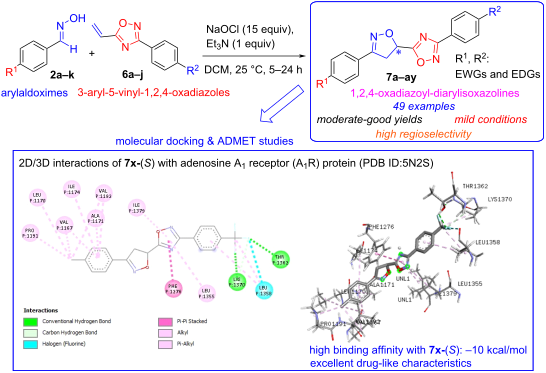
- , palladium-catalyzed reactions, anodic oxidations, transformations from other heterocycles or 1,3-dipolar cycloaddition [29][30][31][32][33][34][35][36][37][38][39][40][41][42][43][44]. For isoxazoline derivatives, the 1,3-dipolar cycloaddition (1,3-DC) of nitrile oxides serves as a fundamental synthetic


Synthesis and optical resolution of 4,5-diaminohomoadamantane: a promising scaffold for chiral ligands and bioactive compounds
Beilstein J. Org. Chem. 2026, 22, 1013–1022, doi:10.3762/bjoc.22.80
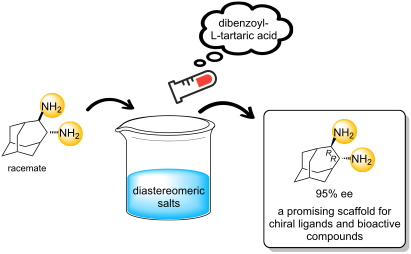
- based on a rigid polycyclic framework such as homoadamantane remain underexplored. We anticipated that the unique steric and lipophilic properties of chiral trans-4,5-diaminohomoadamantane could provide the necessary stereoinduction in metal-catalyzed asymmetric reactions. In addition, such structures


Z-Selective semihydrogenation of alkynes via Ni/Lewis acid synergistic catalyzed system using DMF as hydrogen source and solvent
Beilstein J. Org. Chem. 2026, 22, 1004–1012, doi:10.3762/bjoc.22.79
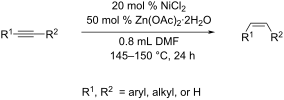
- . outlined the state-of-the-art progress on stereoselective semihydrogenation of alkynes catalyzed by first-row (3d) transition metals, which attract substantial attention owing to their natural abundance and low toxicity [5]. In recent years, homogeneous catalysts based on Ni, Cu, Rh, and Co have shown
- the reaction medium to facilitate this transformation. Based on our experimental observations, well-established nickel chemistry [40][48], and relevant findings from palladium-catalyzed systems [49], we propose a plausible catalytic cycle for the NiCl2-catalyzed semihydrogenation of internal alkynes
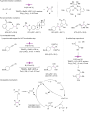
- , as outlined in Scheme 5. The cycle likely begins with the reduction of the Ni(II) precursor to an active Ni(0) species A – a common initiation step in nickel-catalyzed transformations, and the in-situ-generated formic acid functions as the reducing agent for this Ni(II)-to-Ni(0) conversion

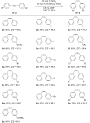


Rh(III)-catalyzed chelation-assisted C–H activation/annulation of 2-arylimidazolines with cyclic diazo-1,3-dicarbonyl compounds: a novel approach to tetracyclic annulated derivatives of 2,3-dihydroimidazo[2,1-a]isoquinoline
Beilstein J. Org. Chem. 2026, 22, 997–1003, doi:10.3762/bjoc.22.78
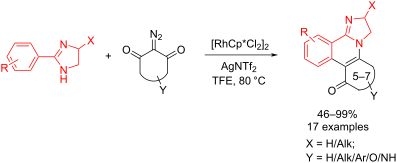
- obtaining structurally related 5,6-disubstituted 2,3-dihydroimidazo[2,1-a]isoquinolines 4 (Figure 1c) fused with an additional ring via a Rh(III)-catalyzed chelation-assisted C–H activation/annulation with diazo compounds. 2-Arylimidazolines 2 and various substituted cyclic 1,3-dicarbonyl diazo compounds 3
- , as we were unable to find any published successful examples of Rh(III)-catalyzed chelation-assisted C–H activation/annulation with diazo compounds when such heterocyclic substrates were used as CH-components. Substitution at position 4 of the imidazoline ring with a methyl group resulted in the
- more types of tetracyclic imidazoline-based systems, represented by compounds 4m, 4p, 4o, 4n. Isolation of compounds 4m and 4p is a rare example of involving derivatives of 2-diazocyclohexane-1,3-dione with additional endocyclic heteroatoms (compounds 3g and 3h) in Rh(III)-catalyzed chelation-assisted


Novel macrocycles: from synthesis to supramolecular function
Beilstein J. Org. Chem. 2026, 22, 982–985, doi:10.3762/bjoc.22.76
- designed protection and functionalization sequences, the authors introduced orthogonal reactive groups at opposite rims of the macrocycle. The synthetic versatility of these systems was demonstrated by copper-catalyzed “click” reactions and amine-based transformations, yielding highly functionalized
Electrochemical reduction of unsaturated carbon–carbon bonds via 3d transition-metal catalysis
Beilstein J. Org. Chem. 2026, 22, 955–981, doi:10.3762/bjoc.22.75
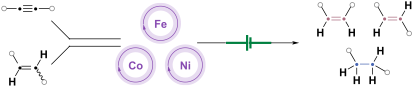
- unsaturated C–C bonds, enabling precise control without molecular hydrogen or stoichiometric reductants. This review summarizes recent advances in iron-, cobalt-, and nickel-catalyzed electroreduction of alkynes and alkenes, highlighting how electrochemical parameters and catalyst design unlock distinct
- stereoselective hydrogenation of alkynes under electrochemical and transition-metal-catalyzed conditions. The alkyne semihydrogenation generally benefits from the stronger coordination ability of the C–C triple bonds and the greater accessibility of metal-bound intermediates, thereby often enabling stereocontrol
- mechanistic design principles are particularly highlighted. By correlating catalyst structure, electrochemical behavior, and reaction outcome, this review aims to provide a unified framework for understanding how electrochemical control enables new reactivity modes in 3d metal-catalyzed hydrogenation








Synthesis of sterically shielded piperidine nitroxides via acid-catalyzed heterocyclization of β-aminoketone derivatives with ketones
Beilstein J. Org. Chem. 2026, 22, 948–954, doi:10.3762/bjoc.22.74
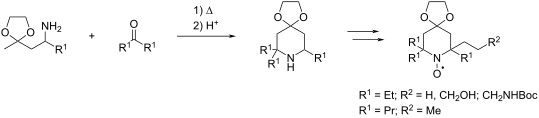
- of sterically hindered piperidine nitroxyl radicals. Six-membered cyclic nitrones – 2,2,6-trialkyl-substituted 2,3,4,5-tetrahydropyridine-1-oxides were prepared via the acid-catalyzed reaction of 2-(2-aminoalkyl)-2-methyl-1,3-dioxolanes with ketones in analogy to literature procedures [25][26][27][28
- alkynyl- or allylmagnesium halides gave 2-alkynyl or 2-allyl-substituted nitroxides. Finally, carbon–carbon multiple bonds were removed via Pd-catalyzed hydrogenation and the nitroxide group was recovered by mild oxidation. This approach was used to prepare both symmetric 2,2,6,6-tetraethyl- and 2,2,6,6
- ), the N-adjacent methine (2.71 ppm), and diastereotopic methylene protons (1.39, 1.58 ppm) supported the assigned structure. Compound 4b exhibited spectral data identical to those previously described [31]. The aminodioxolanes 4a,b were subjected to acid-catalyzed heterocyclization with the


Recent advances in copper-catalyzed direct hydroamination of alkenes with (hetero)aromatic amines
Beilstein J. Org. Chem. 2026, 22, 925–947, doi:10.3762/bjoc.22.73
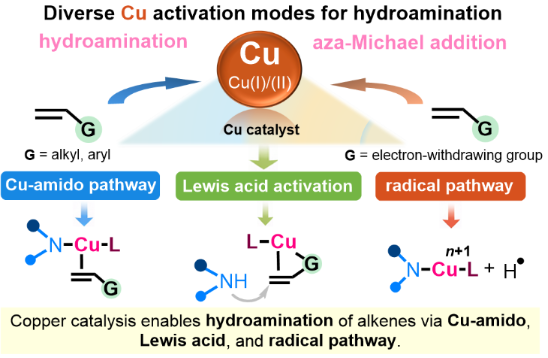
- , and functional group tolerance. This review summarizes recent advances in the copper-catalyzed hydroamination of alkenes with (hetero)aromatic N–H nucleophiles, emphasizing the mechanistic paradigms and the factors governing selectivity. Keywords: aromatic amines; aza-Michael addition; Cu catalysis
- valuable in hydroamination chemistry. Several distinct yet interrelated activation modes have been identified for copper-catalyzed alkene amination [27]. Copper frequently participates directly in amine activation via the formation of Cu–N species (Scheme 1a) [30][31]. In the presence of a base and
- Cu as a catalytic platform for C–N bond construction. Unlike earlier review articles that broadly covered copper-catalyzed C–N bond-forming reactions or hydroamination chemistry across diverse nitrogen sources [24][25][26][27], this review places a clear and specific emphasis on recent advances in







A practical CO2-mediated synthesis of 5,6-carboxylated silicon-rhodamines for targeted probe development
Beilstein J. Org. Chem. 2026, 22, 915–924, doi:10.3762/bjoc.22.72
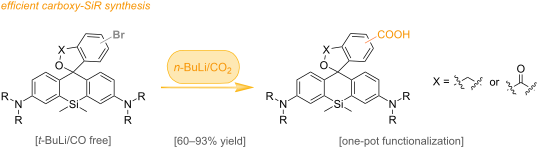
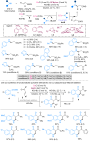
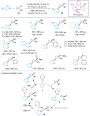
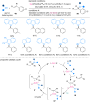
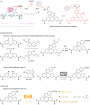
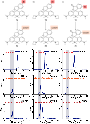
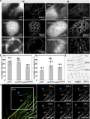
- -catalyzed carbonylation using in situ-generated CO then furnished the corresponding carboxylated SiRs in 50–90% yields. Although this approach significantly improved synthetic efficiency, it still relies on specialized setups for CO generation and expensive palladium catalysts, thereby increasing
- traditional multistep synthesis from protected carboxylated precursors. Butkevich convincingly demonstrated the generality of Pd-catalyzed carbonylation conditions employing ex situ CO for the conversion of bromo-oxorhodamines, carbo-rhodamines, and silicon-rhodamines into their corresponding carboxylated



Palladium-catalyzed benzocyclization reactions of quinoline-2-carboxamides via sequential C–H/N–H functionalization
Beilstein J. Org. Chem. 2026, 22, 905–914, doi:10.3762/bjoc.22.71
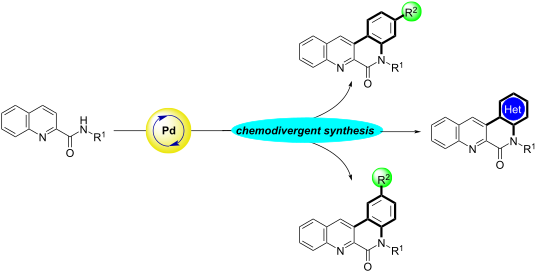
- University, 1-1 Rokkodai, Nada, Kobe 657-8501, Japan 10.3762/bjoc.22.71 Abstract A novel benzocyclization protocol has been developed for the synthesis of quinoline-fused lactams by palladium-catalyzed sequential C–H/N–H functionalization of quinoline-2-carboxamides and 1,2-dihaloarenes. The reaction
- metal affinity [9][10]. It is therefore expected that annulation of the amide moiety in quinoline-2-carboxamides would extend their functionality as biologically active structures, ligands, and extractants. Transition-metal-catalyzed coupling reactions are crucial for constructing carbon–carbon and
- This study explored a novel palladium-catalyzed C–H/N–H activated annulation reaction for the synthesis of quinoline-fused lactams. The annulation reaction afforded the desired products in up to 83% yield. The reaction displayed broad tolerance for various substituents. Moreover, the reaction


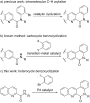


Cascade transformation of 2-(diazoacetyl)-2H-azirines to 2-aroyl-3-hydroxy-1H-pyrroles via condensation with aromatic aldehydes
Beilstein J. Org. Chem. 2026, 22, 897–904, doi:10.3762/bjoc.22.70
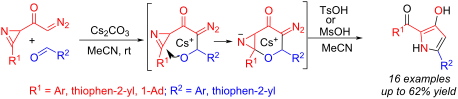
- [4.1.0]heptan-5-one derivative. The acid-catalyzed transformation of which leads to 2-aroyl-3-hydroxy-1H-pyrroles. Keywords: azirines; condensation; cyclization; diazo compounds; pyrroles; Introduction Diazo compounds play a significant role in the synthesis of heterocyclic compounds, which explains
- bicyclic intermediate 4. This acid-catalyzed transformation leads to 3-hydroxy-2-aroyl-1H-pyrroles 5 (Scheme 1). To the best of our knowledge, only few examples of such compounds have been so far reported [23][24]. Results and Discussion A test reaction of 2-(2-diazoacetyl)-3-phenyl-2H-azirine (1a, R = Ph
- proceeds via an azirinyl-substituted β-hydroxy-α-diazocarbonyl compound, which undergoes intramolecular cyclization involving the hydroxy group and the C=N bond of azirine, leading to the formation of a bicyclic intermediate, a 4-diazo-2-oxa-7-azabicyclo[4.1.0]heptan-5-one derivative. Acid-catalyzed


Chiral cyclopropenimine-catalyzed enantioselective Michael reactions of phenol and benzofuran-derived α,β-unsaturated pyrazolamides with benzophenone-imine of glycine esters
Beilstein J. Org. Chem. 2026, 22, 888–896, doi:10.3762/bjoc.22.69
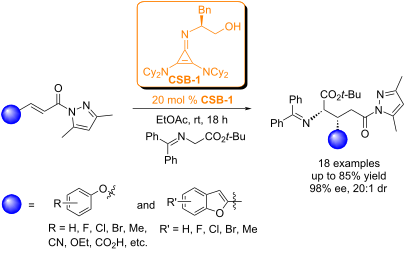
- series of 3-substitued glutamic acid esters in high yields and diastereoselectivities through DBU-catalyzed Michael additions of benzophenone-imine of glycine ester and α,β-unsaturated esters which derived from phenols and benzofurans under mild conditions [5][6]. The chiral 3-aryl-substituted glutamic
- -disubstituted glutamic and pyroglutamic acid esters by this protocol are underway. Experimental General procedure for the CSB-1-catalyzed Michael addition of compounds 2 and 5 To 2a (1.0 mmol) and 5a (1.0 mmol) in EtOAc (10.0 mL) was added CSB-1 (0.2 mmol) and the mixture was stirred at rt for 18 h. After the
- dried over Na2SO4 and the solvent was evaporated under vacuum. The residue was purified by flash column chromatography to afford pure 7d as a white solid. Bioactive molecules with benzofuran and pyroglutamic acid motif. CSB-1-catalyzed Michael reactions of α,β-unsaturated compouds with glycine






Diastereodivergent electrophilic trapping of α-boryl lithium derivatives
Beilstein J. Org. Chem. 2026, 22, 882–887, doi:10.3762/bjoc.22.68
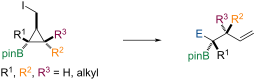
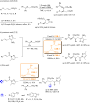
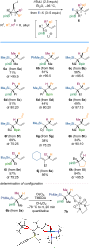
- electrophile PhMe2SiCl did not alter the selectivity of the transformation, yielding 6b as a single diastereomer (Scheme 3). The relative configuration of 6b was determined by X-ray analysis of the osmate ester 7b, derived from osmium-catalyzed dihydroxylation (Scheme 3) [38], and the other products were




Synthesis and structural elucidation of a novel bis-spirooxindole from isatin and ethylenediamine
Beilstein J. Org. Chem. 2026, 22, 813–820, doi:10.3762/bjoc.22.63
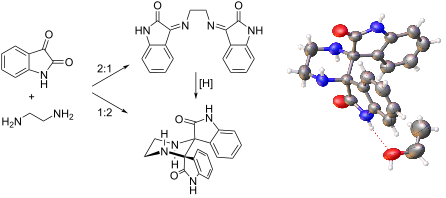
- arrangement of the two oxindole units and the central piperazine ring. Reaction of isatin (1) with ʟ-proline (7) [16][17]. Condensations of isatin with primary [18] and N-methylated diamines [19]. Catalyzed synthesis of the bis[spiro(quinazoline-oxindole)] derivative 21 [20]. (a) Ethylenediamine (0.5 equiv


Synthesis of heterocycles based on azomethine ylides from α-amino acids (or amines) and carbonyl compounds
Beilstein J. Org. Chem. 2026, 22, 705–741, doi:10.3762/bjoc.22.55
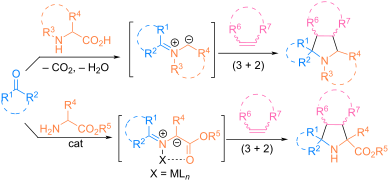
- from imino esters, catalyzed by chiral Cu(I,II) and Ag(I) complexes, are widely used. Reactions using α-amino acids proceed, in most cases, without the use of catalysts, with high yields and high stereoselectivity. Electrophilic alkenes of various structures, (hetero)aromatic olefins and benzofulvenes
- , the importance of the formation of azomethine ylides from amino esters, amino acids, imine derivatives, aziridines or other substrates was emphasized. A review [26] demonstrates metal-catalyzed as well as metal-free asymmetric and racemic transformations of imino ethers upon interaction with various
- development of this method is also presented. Review Imine derivatives as precursors of azomethine ylides Azomethine ylides based on iminoesters In 2002, Zhang and co-workers described a highly enantioselective Ag(I)-catalyzed (3 + 2) cycloaddition of azomethine ylides from α-(arylimino)esters using AgOAc as


Synthesis of depressin, cryptomeridiol and 4-epi-cryptomeridiol enabled by a terpenoid chiral pool-producing platform
Beilstein J. Org. Chem. 2026, 22, 683–690, doi:10.3762/bjoc.22.53
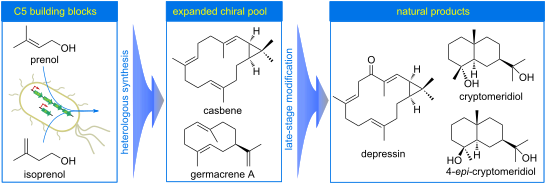
- be widely used as popular starting materials. It is interesting to note that for the biosynthesis of the complex terpenoid skeletons, Nature has evolved a straightforward strategy by the terpene cyclase-catalyzed cyclization of linear oligoprenyl pyrophosphates, which are generally derived from the


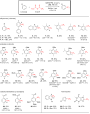
Photoorganocatalytic trifluoromethylation of (het)arenes in green conditions
Beilstein J. Org. Chem. 2026, 22, 662–671, doi:10.3762/bjoc.22.50
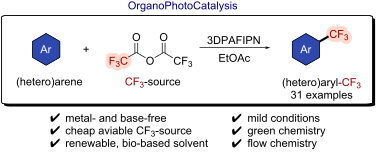
- -catalyzed [8], organic photocatalyst-mediated, or electrochemical transformations [9], and also include continuous-flow processes [6][10][11][12][13]. Given that photocatalytic reactions align with the principles of green chemistry, particularly energy efficiency and the use of catalytic pathways, such




Hydrogen production from formic acid catalyzed by NHC–Cu complexes
Beilstein J. Org. Chem. 2026, 22, 620–627, doi:10.3762/bjoc.22.48
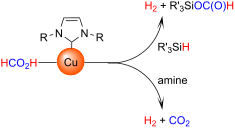
- 289, 9000 Gent, Belgium 10.3762/bjoc.22.48 Abstract The first NHC–Cu-catalyzed decomposition of formic acid (FA) is reported. In the presence of PhSiH3, only hydrogen is generated while CO2 is captured by a silane species. The decomposition of an equimolar mixture of FA and an amine provided an
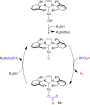
- performances than copper salts, even with lower catalyst loading and under milder conditions [49][50][51]. Based on this background, the first potential formic acid dehydrogenation catalyzed by NHC–Cu complexes (Figure 1) was investigated. Results and Discussion We have shown that the reaction of [Cu(OH)(IPr
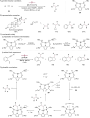
- experiments were carried out (Scheme 2). By reacting FA and PhSiH3 (1:1 molar ratio) in the presence of 10 mol % of 1a, in deuterated toluene at room temperature under D2 atmosphere (1 atm), no H–D scrambling was observed (Scheme 2a). Furthermore, the 1a-catalyzed reaction of FA labeled at the acidic position



Regioselective approach to 5-arylsulfonylisoxazoles and their antimicrobial activity
Beilstein J. Org. Chem. 2026, 22, 592–602, doi:10.3762/bjoc.22.45
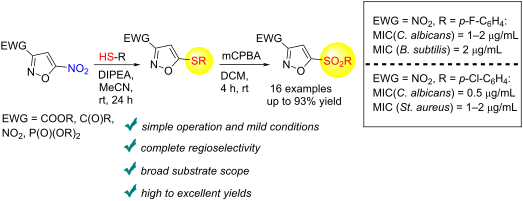
- 4-unsubstituted isoxazoles with various aryl substituents in position 3 [24][25] (approach B). One example describes the Ru-catalyzed reaction of nitrile oxide with alkynyl sulfone providing 5-sulfonylisoxazole with high regioselectivity [26] (approach C). Despite the widespread application of


Continuous-flow carbonyl hydrogenation under subatmospheric to atmospheric hydrogen pressure enabled by robust heterogeneous Pt–Fe catalysts
Beilstein J. Org. Chem. 2026, 22, 575–582, doi:10.3762/bjoc.22.43
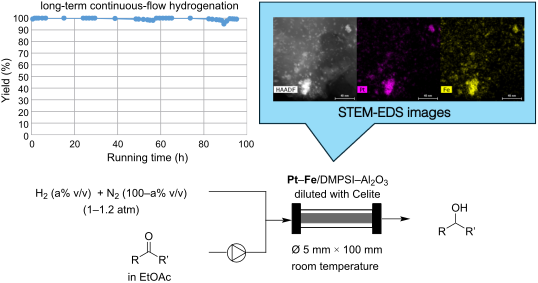
- might be reduced by NaBH4 faster than FeCl2 in the solution phase, and the generated Pt(0) nanoparticles are stabilized by DMPSi surface. The reduction of FeCl2, which is usually more difficult to achieve can be catalyzed on the surface of Pt(0) nanoparticles and the formed Fe species are deposited and


Kinetic resolution of racemic planar-chiral vinylcymantrenes by molybdenum-catalyzed asymmetric metathesis dimerization
Beilstein J. Org. Chem. 2026, 22, 568–574, doi:10.3762/bjoc.22.42
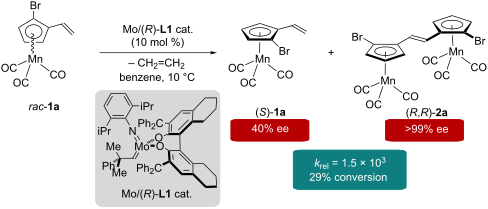
- ) reaction catalyzed by a chiral molybdenum-alkylidene precatalyst. The Mo/(R)-L1 precatalyst promoted the AMD/KR reaction of rac-1a (R = Br) to give (E)-(R,R)-2a of 99% ee together with unreacted recovered (S)-1a of 45% ee at 37% conversion. The diastereoselectivity of this reaction was excellent with
- ], racemic 5a–c were prepared in the same ways starting with rac-3. Vinylcymantrene substrates rac-1a–c were obtained in 68–79% yields by the Wittig methylenation of rac-5a–c. The moderate yields could be attributed to the volatility of rac-1a–c. Molybdenum-catalyzed asymmetric metathesis dimerization (AMD
- metathesis dimerization of (R)-1a preferentially, and the most of antipodal (S)-1a was recovered intact. In general, vinylcymantrenes are much less reactive than analogous vinylferrocenes in the molybdenum-catalyzed AMD [30], and the conversion tends to be lower. Only 25% conversion was attained in the


Experimental and DFT studies on the regioselective methanolysis of 5-azido-9-oxabicyclo[6.1.0]nonan-4-yl 4-nitrobenzoate isomers
Beilstein J. Org. Chem. 2026, 22, 547–556, doi:10.3762/bjoc.22.40
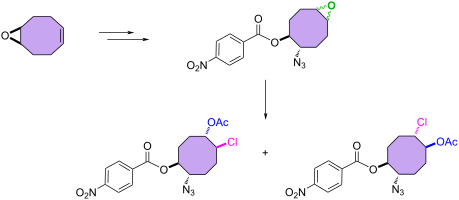
- , pharmaceutical compounds, and chiral ligands. The Lewis acid-catalyzed ring-opening reaction of cyclohexene oxide by MeZH (Z = O, S, and NH) is well known [20]. However, studies on large-sized bicyclic epoxides remain relatively limited in the published literature. In our previous study, we performed the ring