

Search results
Search for "anions" in Full Text gives 403 result(s) in Beilstein Journal of Organic Chemistry. Showing first 200.
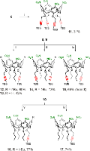
Synthesis of functionalized, 13-alkyl-substituted coralyne derivatives and investigation of their interactions with duplex and abasic site-containing DNA
Beilstein J. Org. Chem. 2026, 22, 1057–1066, doi:10.3762/bjoc.22.84
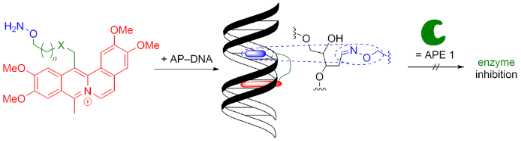
- a mixture of counter anions PF6− and Cl−. Therefore, the product was converted into its bromide salt by ion exchange chromatography to give coralyne 2e in an overall yield of 70%. Likewise, coralyne 2d was functionalized with an aminooxyalkyl linker [37] by PyBOP-assisted coupling and ion metathesis


One-pot four-component sequential synthesis of S-alkyl dithiocarbamates using lipase as a biocatalyst
Beilstein J. Org. Chem. 2026, 22, 1048–1056, doi:10.3762/bjoc.22.83
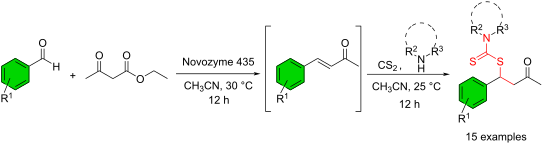
- nucleophilic addition reaction with dithiocarbamate anions, which are generated in situ by reacting CS2 with amines. This sequence successfully yields 15 derivatives of S-alkylated dithiocarbamates with high to excellent yields ranging from 69% to 96%. Keywords: biocatalysis; dithiocarbamate; four-component


Novel macrocycles: from synthesis to supramolecular function
Beilstein J. Org. Chem. 2026, 22, 982–985, doi:10.3762/bjoc.22.76
- hydrophobic effects. Complementing this focus on ionic interactions, the thematic issue proceeds with a study by Qi-Qiang Wang, De-Xian Wang, and coworkers [34] that addresses the long-standing challenge of recognizing organic dicarboxylate anions in solution. Using a one-pot synthetic strategy based on
- extraction efficiency even when flooded with competing anions. Furthermore, by evaluating the recyclability and solvent stability of covalent versus noncovalent immobilization, the study offers key design rules for building durable separation materials. While solid-supported systems demonstrate the
The trans-influence in gold chemistry from a catalytic perspective
Beilstein J. Org. Chem. 2026, 22, 838–856, doi:10.3762/bjoc.22.66
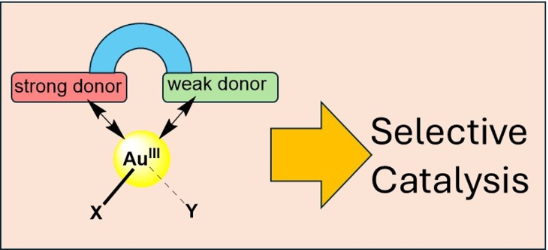
- other respects, notably in their π-acceptor capacity. This leads to interesting photoluminescence effects. For example, while (C^Npy^C)AuCl shows poor photoemissions in the solid state, this changes if Cl is replaced by strong donors, notably aryl, alkynyl or thiolate anions [39][40]. These raise the
- the 1H δ scale, while strong σ-donors like the CH3− or BH2− anions are strongly deshielding and have the opposite effect (“heavy atom effect on the light-atom shielding”, HALA). For a series of hypothetical complexes [LAuH]q this means the 1H NMR chemical shifts cover the range from +10 ppm for NO3


Knoevenagel condensation of 4,5- and 1,8-diazafluorenes
Beilstein J. Org. Chem. 2026, 22, 803–812, doi:10.3762/bjoc.22.62
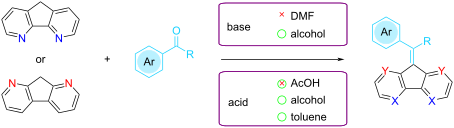
- ). Layers of dimers alternate with layers of ZnCl3(H2O)− anions containing free solvent accessible volume 284 Å3 with removed disordered water molecules (Figure 2g). Figure 2 also shows a schematic representation of the packing difference of the compounds in blue, showing that the dimers in 4,5-DPDAF




Molecular tweezer–peptide conjugates disrupt the protein–protein interaction between survivin and histone H3 essential in mitosis
Beilstein J. Org. Chem. 2026, 22, 557–567, doi:10.3762/bjoc.22.41
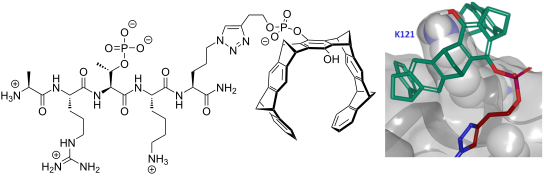
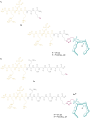
- attached phosph(on)ate anions as powerful new hosts for the amino acids lysine and arginine. In the recent past, we demonstrated that the affinity and selectivity of our lysine-selective molecular tweezers could be improved by attaching natural peptide recognition elements. This could be documented in




Synthesis and uranyl(VI) extraction performance of a calix[4]pyrrole–tetrahydroxamic acid receptor
Beilstein J. Org. Chem. 2026, 22, 486–494, doi:10.3762/bjoc.22.36
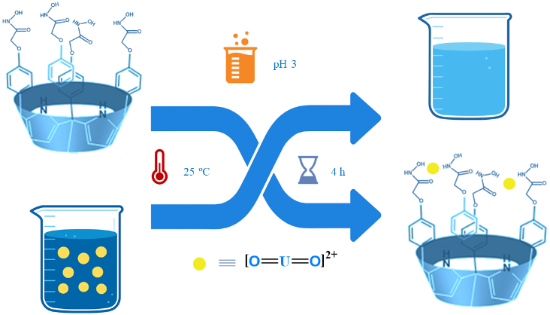
- their 2,5-positions through sp3-hybridized meso-carbon atoms [10]. The ability of CPs to selectively bind anions [11], cations, ion pairs and neutral guest species, combined with the versatility to introduce diverse functional groups, has enabled the fabrication of calix[4]pyrrole-based supramolecular


Cone p-aminocalix[4]arenes enriched with ‘clickable’ alkyne or azide functionalities
Beilstein J. Org. Chem. 2026, 22, 399–415, doi:10.3762/bjoc.22.28
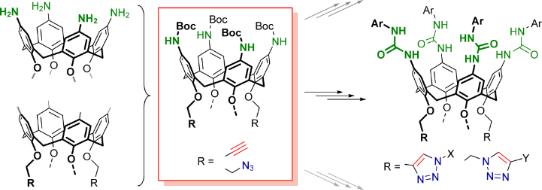
- affect the cycloaddition by, for instance, binding copper cations or counter anions, and thus their presence in the structures of calixarenes at the CuAAC step must be avoided. On the other hand, the unmodified amines may also contribute to undesired Cu(I) stabilization and complicate the CuAAC work up






Arene activation via π-bond localization: concepts and opportunities
Beilstein J. Org. Chem. 2026, 22, 257–273, doi:10.3762/bjoc.22.19
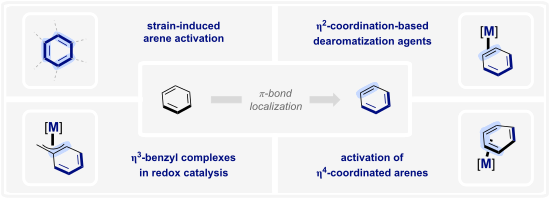
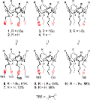
- ]. Beyond the η6-mode, characteristic of transition metal carbonyl chemistry, these electron-rich anions can engage arenes such as benzene and naphthalene in an η4-fashion, localizing their π-systems. In direct analogy to the ruthenium complex, two-electron reduction of the parent η6-arene complexes [Cr(CO




Base-promoted deacylation of 2-acetyl-2,5-dihydrothiophenes and their oxygen-mediated hydroxylation
Beilstein J. Org. Chem. 2026, 22, 192–204, doi:10.3762/bjoc.22.13
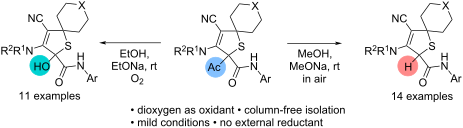
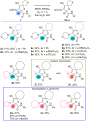
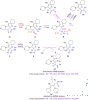
- lower donor character compared to pyrrolidine, but higher than that of morpholine and piperidine. As a result, a mixture of products 2l and 2l′ is formed. Starting dihydrothiophenes 1 form more stable anions B in comparison with regioisomers 4 due to the delocalization of the negative charge over the
- double bond, sulfur and amide group. The difference in the stability of these types of anions results in their distinct reactivity. Conclusion We have reported the solvent dependent transformation of dihydrothiophenes 1 under mild conditions. It was found that, in ethanolic solution in the presence of




Symmetrical D–π–A–π–D indanone dyes: a new design for nonlinear optics and cyanide detection
Beilstein J. Org. Chem. 2026, 22, 131–142, doi:10.3762/bjoc.22.6
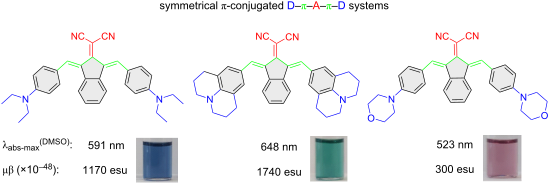
- photophysical properties of the dyes. The sensitivity/selectivity properties of the dyes to anions were investigated in DMSO and aqueous media, revealing that the dyes were selectively responsive only to cyanide anions. Changes after interactions were determined through absorption spectra and color changes
- detect cyanide anions due to the presence of vinyl groups, where cyanide can be attacked via nucleophilic addition reaction. Therefore, the sensitivity and selectivity of dyes towards cyanide were investigated by the addition of cyanide (CN−) and competing anions (F−, Cl−, Br−, I−, AcO−, ClO4−, H2PO4
- −, HSO4−, and NO3−) in the form of the corresponding tetrabutylammonium (TBA) salt. Firstly, a titration study was conducted by the addition of 20 equiv of anions to dyes in organic solvent as DMSO (Figure 3). A significant response was only observed during the addition of cyanide. Upon addition of


Reactivity umpolung of the cycloheptatriene core in hexa(methoxycarbonyl)cycloheptatriene
Beilstein J. Org. Chem. 2026, 22, 64–70, doi:10.3762/bjoc.22.2
- ; these equivalents can be transformed after the desired connection has taken place. For instance, nitroalkanes [1] and nitroalkenes [5][6] are regarded as equivalents of unavailable acyl anions and vinyloxenium cations, respectively. Reversed reactivity patterns also emerge due to non-uniform structures
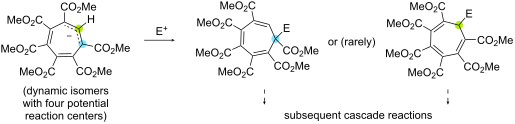
- [12][13][14][15][16] nucleophiles (Figure 1). Reactions of cycloheptatrienyl anions with electrophiles present an unexpected approach as the anions possess antiaromatic nature and, therefore, appear to be unstable. Previously we demonstrated that stable hepta(methoxycarbonyl)cycloheptatrienyl
- unavailability of other stable cycloheptatrienyl anions until recently, its derivatives were not expected to show high selectivity in reactions. Herein, we present the first examples of selective reactions of low-symmetry hexa(methoxycarbonyl)cycloheptatrienyl anion 2 [20] towards electrophiles. Additionally


Silica gel with covalently attached bambusuril macrocycle for dicyanoaurate sorption from water
Beilstein J. Org. Chem. 2025, 21, 2604–2611, doi:10.3762/bjoc.21.201
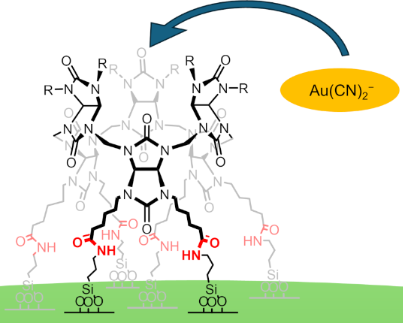
- remains a major challenge due to the strong hydration of anions. Here, we report the preparation of silica gel functionalized with covalently anchored bambusuril macrocycles. In aqueous solution, this material efficiently sorbs dicyanoaurate(I), the key anion in gold mining, even in the presence of
- competing dicyanoargentate(I) anions. We also examine the recyclability of the material and assess its stability in organic solvents, comparing its performance with that of a previously developed material containing noncovalently bound bambusuril. Keywords: anion binding; anion extraction; anion receptor
- ; gold mining; macrocycles; Introduction Inorganic anions play essential roles in a variety of biological and biochemical mechanisms and are also involved in many industrial and manufacturing processes. Due to their significant environmental impact, it is important to monitor their presence and control


Effect of a photoswitchable rotaxane on membrane permeabilization across lipid compositions
Beilstein J. Org. Chem. 2025, 21, 2498–2512, doi:10.3762/bjoc.21.192
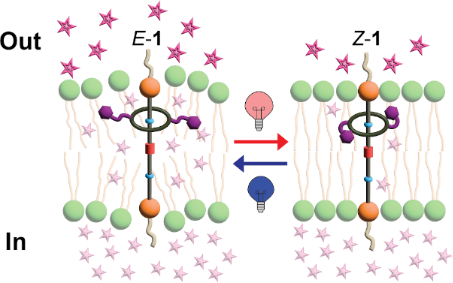
- transport [12]. Our group later demonstrated that non-switchable rotaxanes can transport chloride anions and exhibit bactericidal activity against methicillin-resistant Staphylococcus aureus (MRSA) [13]. In a separate study, Smith reported that incorporating non-switchable rotaxanes can induce phospholipid




Assembly strategy for thieno[3,2-b]thiophenes via a disulfide intermediate derived from 3-nitrothiophene-2,5-dicarboxylate
Beilstein J. Org. Chem. 2025, 21, 2489–2497, doi:10.3762/bjoc.21.191
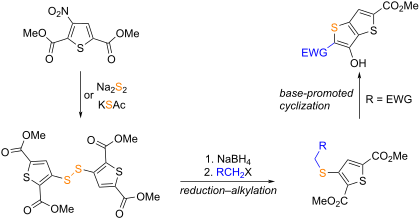
- . Nucleophilic substitution of the nitro group with sulfur nucleophiles, including thioacetate or disulfide anions as well as thioacetamide, yielded bis(thiophen-3-yl)disulfide and sulfide derivatives. The disulfide served as a suitable precursor for the preparation of 3-alkylthio-substituted thiophene-2,5



Conformational effects on iodide binding: a comparative study of flexible and rigid carbazole macrocyclic analogs
Beilstein J. Org. Chem. 2025, 21, 2369–2375, doi:10.3762/bjoc.21.181
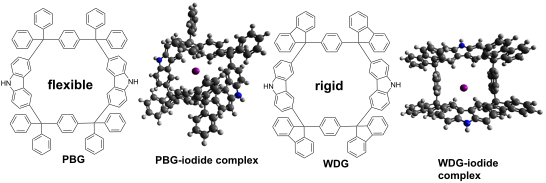
- . This experiment supports a 1:1 stoichiometric binding between the guest TBAI and the host PBG in CDCl3. Then, the binding affinity of the two receptors to iodine ions was further studied, and the changes of UV–visible absorption and fluorescence spectra of the two receptors to anions in CHCl3 were
- computational schematic (Figures S16 and S17 in Supporting Information File 1), the anions are positioned within the macrocycle cavity, exhibiting close contacts to hydrogen atoms on the bridging benzene rings, peripheral substituted phenyl groups, and carbazole moieties. These spatial interactions suggest a



Pd-catalyzed dehydrogenative arylation of arylhydrazines to access non-symmetric azobenzenes, including tetra-ortho derivatives
Beilstein J. Org. Chem. 2025, 21, 2234–2242, doi:10.3762/bjoc.21.170
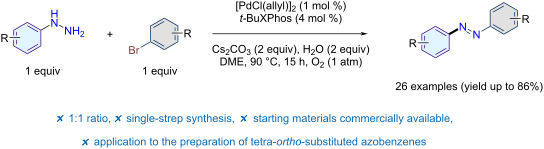
- hydrazines. Their method involved a three-step process comprising Cu and Pd-catalyzed C–N bond formations followed by a dehydrogenative deprotection step (Figure 1b, top) [42]. This desymmetric approach was further employed by Oestreich and co-workers in 2022, who introduced silicon-masked diazenyl anions in


C2 to C6 biobased carbonyl platforms for fine chemistry
Beilstein J. Org. Chem. 2025, 21, 2103–2172, doi:10.3762/bjoc.21.165


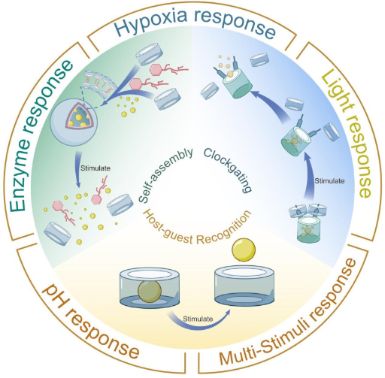
Research progress on calixarene/pillararene-based controlled drug release systems
Beilstein J. Org. Chem. 2025, 21, 1757–1785, doi:10.3762/bjoc.21.139






On the aromaticity and photophysics of 1-arylbenzo[a]imidazo[5,1,2-cd]indolizines as bicolor fluorescent molecules for barium tagging in the study of double-beta decay of 136Xe
Beilstein J. Org. Chem. 2025, 21, 1627–1638, doi:10.3762/bjoc.21.126
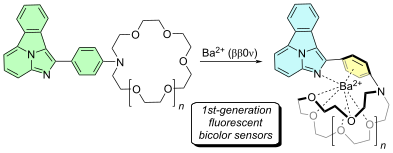
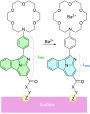
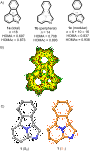
- rigid, with only small modifications on going from the ground state to the first single excited state (Figure 6). However, the presence of the two perchlorate anions results in additional coordination with Ba2+, thus resulting in larger values of the Ba–N distances, as well as of the average Ba–O and Ba





Photoredox-catalyzed arylation of isonitriles by diaryliodonium salts towards benzamides
Beilstein J. Org. Chem. 2025, 21, 1480–1488, doi:10.3762/bjoc.21.110
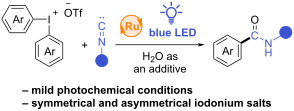
- Experiments, supplementary note 1). It is known that the counteranion of an iodonium salt could be a crucial factor for the reactivity pattern. Thus, we tested iodonium salts with different anions. Reactions with diphenyliodonium tetrafluoroborate 1a-BF4 (Table 1, entry 22) and tosylate 1a-TsO (Table 1, entry


Advances in nitrogen-containing helicenes: synthesis, chiroptical properties, and optoelectronic applications
Beilstein J. Org. Chem. 2025, 21, 1422–1453, doi:10.3762/bjoc.21.106
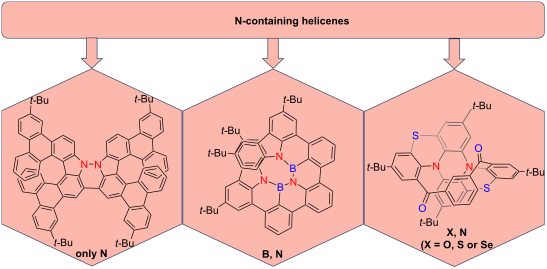
- | value of 1.6 × 10⁻³. In addition, both 29a and 29b demonstrate redox activity, undergoing reversible formation of radical anions, dianions, and radical cations. The radical cation 29b•+, in particular, exhibits a broad near-infrared (NIR) absorption band extending to 3000 nm, highlighting its potential

Recent advances in amidyl radical-mediated photocatalytic direct intermolecular hydrogen atom transfer
Beilstein J. Org. Chem. 2025, 21, 1306–1323, doi:10.3762/bjoc.21.100
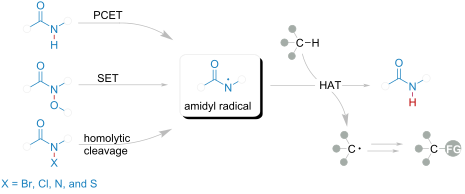
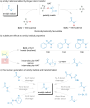
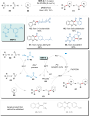
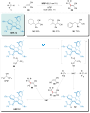
- to produce amidyl radicals and oxygen anions in the presence of photocatalysts activated by visible light. Two representative cases illustrating this approach were reported in 2023. Building upon the experiments conducted by Alexanian’s group, Yan’s group extended the applicability of carborane as a






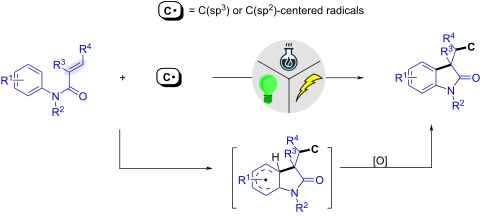
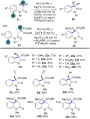
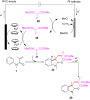
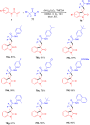
Recent advances in oxidative radical difunctionalization of N-arylacrylamides enabled by carbon radical reagents
Beilstein J. Org. Chem. 2025, 21, 1207–1271, doi:10.3762/bjoc.21.98














Gold extraction at the molecular level using α- and β-cyclodextrins
Beilstein J. Org. Chem. 2025, 21, 1116–1125, doi:10.3762/bjoc.21.89

- diffraction of single crystals (Figure 3), showing, for both 1:1 and 2:1 stoichiometries, cyanoaurate anions inside the host cavity and potassium cations interacting with hydroxy groups of adjacent cyclodextrins. The strong host–guest affinity and complex stability in the solution phase has been studied by
- . A common process of extraction of gold from e-waste is through acid leaching (typically with acqua regia), in which gold is dissolved in the form of tetrachloroaurate anions (AuCl4−). Subsequently, gold is precipitated upon conversion to its metallic form (Au0) using an affordable reducing agent
- saturated solution of β-CD and DBC at 0.1% (v/v) and stirred for five minutes to ensure maximal gold precipitation. Conversion of the [AuBr4]− anions trapped in the co-precipitate to gold metal was done by adding a reducing solution of N2H4·H2O. The process further allowed recycling β-CD from the solution