

Search results
Search for "analogue" in Full Text gives 622 result(s) in Beilstein Journal of Organic Chemistry. Showing first 200.
Retraction: α,ß-Didehydrosuberoylanilide hydroxamic acid (DDSAHA) as precursor and possible analogue of the anticancer drug SAHA
Beilstein J. Org. Chem. 2026, 22, 1086–1087, doi:10.3762/bjoc.22.86

Synthesis of functionalized, 13-alkyl-substituted coralyne derivatives and investigation of their interactions with duplex and abasic site-containing DNA
Beilstein J. Org. Chem. 2026, 22, 1057–1066, doi:10.3762/bjoc.22.84
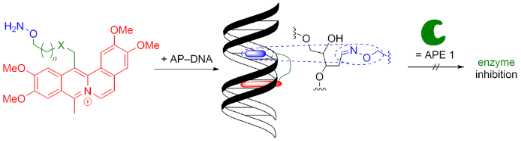
- ) were ordered from ATD BIO. Sequences were 5′-FAM-TCTG CCA XCA CTG CGT CGA CCT G-3′ and 5′-CAG GTC GAC GCA GTG YTG GCA GT-DAB-3′, where X is a lesion such as uracil, thymine glycol, 8-oxoA, AP-site analogue, inosine, hydroxymethyl cytosine and Y is the corresponding required complementary base. Proteins


Semisynthesis, characterisation, and antibacterial evaluation of a novel lecanoric acid-derived amide library
Beilstein J. Org. Chem. 2026, 22, 1023–1032, doi:10.3762/bjoc.22.81
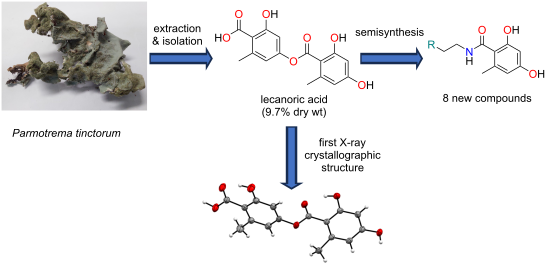
- evaluated for antibacterial activity against the human pathogen Pseudomonas aeruginosa using a biofilm inhibition assay. Of the new semisynthetics, amide analogue 12 showed the greatest planktonic cell growth inhibition (13% at 50 µM), whilst amide analogue 11 was the most active at inhibiting the formation
- ester carbonyl by the primary amine (i.e., isopentylamine) taking place, thus forming the desired amide analogue 6 along with orsellinic acid (4). The 1 h reaction was shown to produce the highest yield (i.e., 13%), generating 2.7 mg of the amide product 6 (Scheme 1) in high purity (>95%) following C18
- proven unsuccessful to date. These inseparable mixtures were deemed to account for the low yield obtained for the amide derivative 6 from each of the three trial reactions. Despite the low yield of the targeted amide analogue 6, the high purity and sufficient quantity for characterisation studies and


The role of spacer length and flexibility in peptide self-assembly
Beilstein J. Org. Chem. 2026, 22, 986–996, doi:10.3762/bjoc.22.77
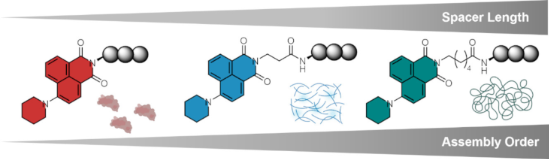
- flexibility and directional non-covalent interactions, thereby dictating assembly pathways and material properties. The results establish a correlation between spacer length and assembly propensity, with the longest spacer (C6) consistently promoting aggregation more effectively than the intermediate analogue


Novel macrocycles: from synthesis to supramolecular function
Beilstein J. Org. Chem. 2026, 22, 982–985, doi:10.3762/bjoc.22.76
- cucurbit[n]uril-like receptor functionalized with alkyl sulfate groups. The study compares the new host with a previously reported sulfonate-bearing analogue to evaluate how subtle modifications of the solubilizing ionic groups influence host–guest behavior. Although the introduction of sulfate groups
Cascade transformation of 2-(diazoacetyl)-2H-azirines to 2-aroyl-3-hydroxy-1H-pyrroles via condensation with aromatic aldehydes
Beilstein J. Org. Chem. 2026, 22, 897–904, doi:10.3762/bjoc.22.70
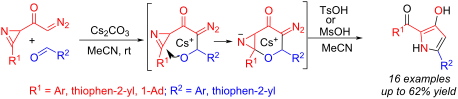
- ortho-protons of the 3-MeOC6H4 group and the 3-H, 6-H protons is explained by the rapid inversion of the aziridine nitrogen. According to calculations, the inversion barrier of the aziridine nitrogen in the phenyl analogue of compound 4b does not exceed 11.5 kcal/mol (see Figure S2 in the Supporting


Site-specific labelling of native peptides and proteins: chemical and enzymatic strategies
Beilstein J. Org. Chem. 2026, 22, 857–881, doi:10.3762/bjoc.22.67
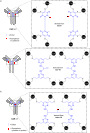
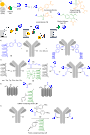
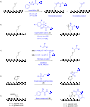
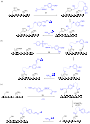
- ]. Other early examples include cysteine modification of ribonuclease A (RNase A) using iodoacetic acid [78]. Early enzyme engineering also explored single-atom modifications, converting subtilisin’s serine residue into a cysteine analogue through a three-step chemical sequence (sulfonylation → thioacetate
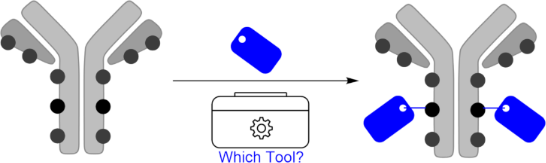
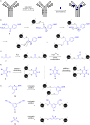
- serine residue into a cysteine analogue. Examples of small molecule reagents. Modifications of a–c) methionine by oxaziridine 22, hypervalent iodine 23, Michael acceptors (24a/b), d) histidine by thiophosphorodichoridate 25, e) aspartic and glutamic acid by diazo-containing compounds 26. Labelling of








The trans-influence in gold chemistry from a catalytic perspective
Beilstein J. Org. Chem. 2026, 22, 838–856, doi:10.3762/bjoc.22.66
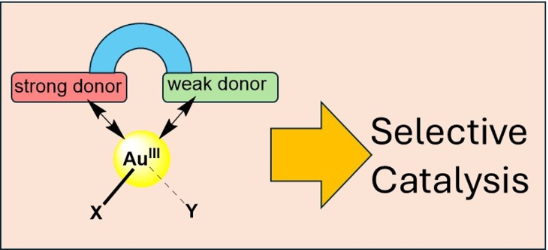
- optimised by DFT calculations [82]. They clearly fall into two categories: In the C^N and P^N compounds the allyl bonding is very asymmetrical, with a long and a short C–C bond and strong variations in Au–C bond distances, as expected for a σ,π-allyl, while in 27 and its methallyl analogue the bonding is


Halogenated azobenzene acrylates: from efficient solution photoswitching to stable solid-state photochromic materials
Beilstein J. Org. Chem. 2026, 22, 782–794, doi:10.3762/bjoc.22.60
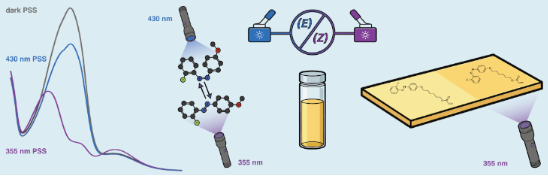
- normal conditions (20 °C, 101.325 kPa) with a Tg = −49 °C, monochloro analogue 1c is a crystalline solid with Tm = 33 °C. From this perspective, the chlorine atom is at the size boundary, thus the number of appended chlorine atoms most likely determines the degree of supramolecular organization, as
- analogue 1f, indicating an oxidation of the phenolic moiety is more difficult. As summarized in Table 2 and visualized in the energy level diagram (Figure 3), the electrochemical measurements point to the steady HOMO and LUMO energies and their differences ΔE = 3.05–3.09 eV. The experimental data are


Synthesis and biological evaluation of new brassinosteroid analogs with C-22 benzoate function
Beilstein J. Org. Chem. 2026, 22, 753–762, doi:10.3762/bjoc.22.57
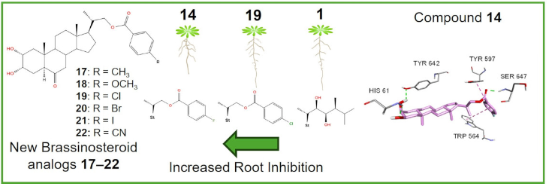
- highest relative accumulation in dBES1, are exhibited by analogs 12 and 19. On the other hand, analogue 19 forms the most stable complex in the active site. From these results it can be concluded that the efficiency of BR analogs to initiate the signaling process is not a determining factor in the final


Anti-invasive and cytotoxic evaluation of a (+)-pinoresinol-based semisynthetic library against glioblastoma
Beilstein J. Org. Chem. 2026, 22, 691–704, doi:10.3762/bjoc.22.54
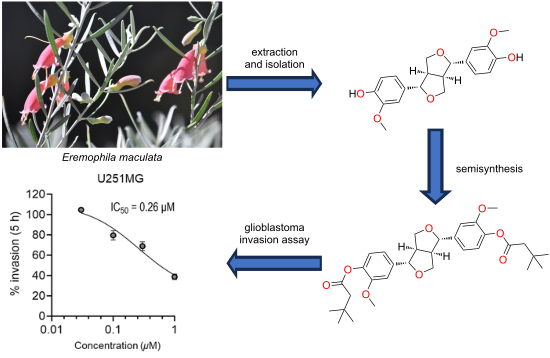
- ) showed some cytotoxicity. Transwell invasion assays on the library against U251MG cells showed that analogue 6 was the most active compound, as it reduced the invasion of the cells by ≈50%, with an IC50 value of 0.26 µM. Consequently, compound 6 was further tested in the pediatric cell line KNS42 and was



Using generative AI to transform peptide hits into small molecule leads
Beilstein J. Org. Chem. 2026, 22, 672–679, doi:10.3762/bjoc.22.51
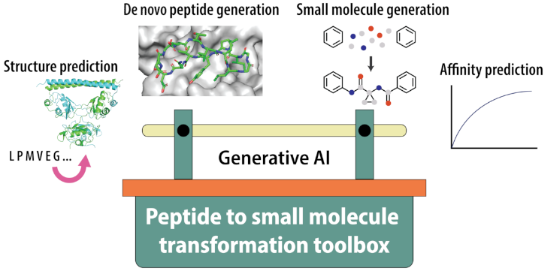
- drugs derived from native peptide substrates. A classic example is the ACE inhibitor captopril, an analogue of a snake venom peptide, the development of which has been cited as an early success story for structure-based rational drug design [12][13]. Despite the long history, there is still no


Photoorganocatalytic trifluoromethylation of (het)arenes in green conditions
Beilstein J. Org. Chem. 2026, 22, 662–671, doi:10.3762/bjoc.22.50
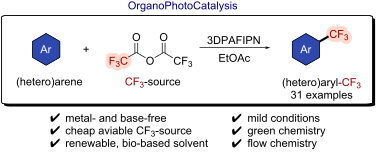
- trifluoromethylated product was high (74% for 13), whereas the para-substituted analogue provided only 18% yield (14). To further investigate the influence of substituent position on substrate reactivity, reactions with dialkylanisoles were examined. For meta-methylanisoles bearing an additional methyl group at the




Hydrogen production from formic acid catalyzed by NHC–Cu complexes
Beilstein J. Org. Chem. 2026, 22, 620–627, doi:10.3762/bjoc.22.48
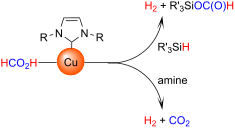
- intensively investigated [44][61]. Thus, the decomposition of a 1:1 HCO2H/NEt3 mixture in the presence of different NHC–Cu complexes was explored (Table 1). No conversion was achieved with [Cu(OH)(IPr)] (1a). To our delight, the reaction in the presence of its chloride analogue 1d led to 24% conversion after



Towards the targeted protein degradation of CK2: design and synthesis of CAM4066-based PROTACs
Beilstein J. Org. Chem. 2026, 22, 611–619, doi:10.3762/bjoc.22.47
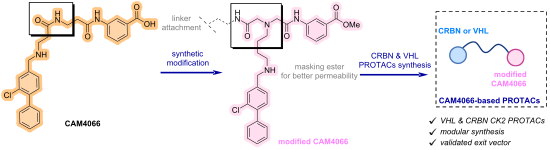
- conjugating a CAM4066-derived warhead to CRBN or VHL ligands, four VHL-recruiting PROTACs, were prepared using PEG and alkyl linkers, alongside two CRBN-recruiting analogues featuring constrained linkers. A ligand–linker analogue in which a linker is projected from the solvent-exposed region of CK2α retained
- conjugated CAM4066-derived ligands to both CRBN or VHL E3-ligase recruiters. We created VHL-recruiting PROTACs for CK2 using PEG and alkyl linkers, while the CRBN-recruiting analogues featured more constrained linkers. A ligand–linker analogue bearing a linker projected from the solvent-exposed region of the
- native framework while serving as a more accessible synthetic handle for downstream coupling chemistry. As 1 itself was known not to have any effect on cell viability while its uncharged methyl ester analogue did, the neutralised pro-drug analogue of the ATP-site binder was employed to prevent such

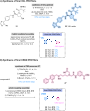
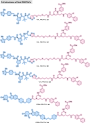
Synthesis of a HDAC inhibitor–nanogold probe for cryo-EM visualization in class I HDAC co-repressor complexes
Beilstein J. Org. Chem. 2026, 22, 480–485, doi:10.3762/bjoc.22.35
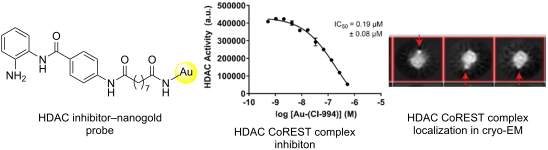
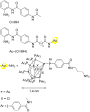
- , like other benzamide HDAC inhibitors, exhibits slow on/off binding kinetics, hence once bound to the HDAC within the complex it should not readily dissociate [16]. A crystal structure of HDAC2 bound to an analogue of CI-994 (PDB: 4LY1) revealed that the acetamide moiety is oriented outside the HDAC



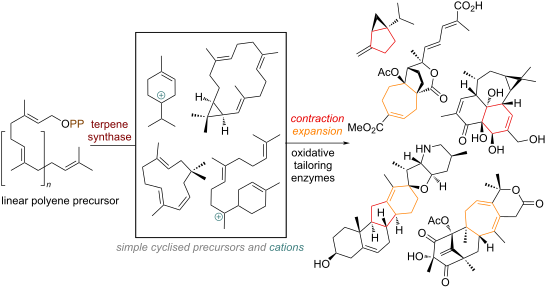
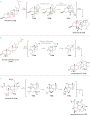
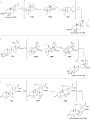
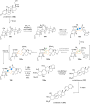
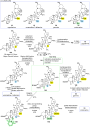
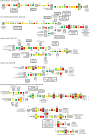
Ring contraction and ring expansion reactions in terpenoid biosynthesis and their application to total synthesis
Beilstein J. Org. Chem. 2026, 22, 289–343, doi:10.3762/bjoc.22.21






A mild and atom-efficient four-component cascade strategy for the construction of biologically relevant 4-hydroxyquinolin-2(1H)-one derivatives
Beilstein J. Org. Chem. 2026, 22, 244–256, doi:10.3762/bjoc.22.18
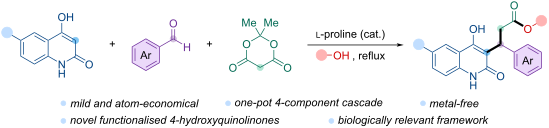
- -hydroxyquinoline scaffolds bearing both C6-halogen and γ-(3,4-dimethoxyphenyl)propanoic acid motifs. Existing approaches to such derivatives comprise typically multiple steps, are limited in scope, or require harsh reaction conditions, restricting their application in rapid analogue generation. The combination of
- (Scheme 4E). However, the Michael adducts obtained could not be effectively decarboxylated. To overcome this limitation, we proposed replacing the arylidene malonate with an analogue that allows easier decarboxylation. Meldrum’s acid derivatives, specifically 5-arylidene-2,2-dimethyl-1,3-dioxane-4,6-dione


Conformational analysis of difluoromethylornithine: factors influencing its gas-phase and bioactive conformations
Beilstein J. Org. Chem. 2026, 22, 237–243, doi:10.3762/bjoc.22.17
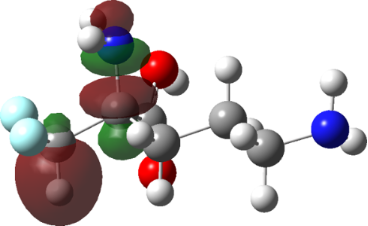
- Matheus P. Freitas Department of Chemistry, Institute of Natural Sciences, Federal University of Lavras, 37200-900, Lavras, MG, Brazil 10.3762/bjoc.22.17 Abstract Difluoromethylornithine (DFMO, eflornithine) is a fluorinated analogue of ornithine that serves both as an inhibitor of ornithine
- effect; hyperconjugation; Introduction Difluoromethylornithine (DFMO, in its racemic form, also known as eflornithine – Figure 1) is a fluorinated analogue of ornithine that has attracted considerable attention due to its dual relevance in medicine and structural chemistry. Clinically, DFMO has been




Asymmetric Mannich reaction of aromatic imines with malonates in the presence of multifunctional catalysts
Beilstein J. Org. Chem. 2026, 22, 151–157, doi:10.3762/bjoc.22.8
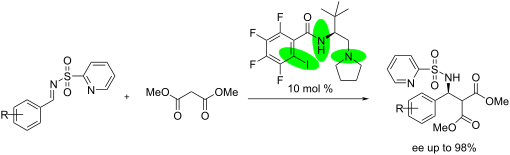
- conversion of the starting imine within 3 hours at rt and in 5 hours at −20 °C. Decrease of the temperature increases the enantiomeric purity of the product (from 27% ee up to 52% ee) (Table 1, entries 1–3). The corresponding H-analogue of catalyst A was less selective (18% ee) (Table 1, entries 4 and 5
- phenylalanine (catalyst G) were much less selective (Table 1, entries 11 and 12, respectively). To evaluate the role of potential halogen bonds, the corresponding hydrogen analogue of catalyst E was synthesized and used in the model reaction (Table 1, entry 10). The catalyst was still efficient but afforded the


Total synthesis of natural products based on hydrogenation of aromatic rings
Beilstein J. Org. Chem. 2026, 22, 88–122, doi:10.3762/bjoc.22.4
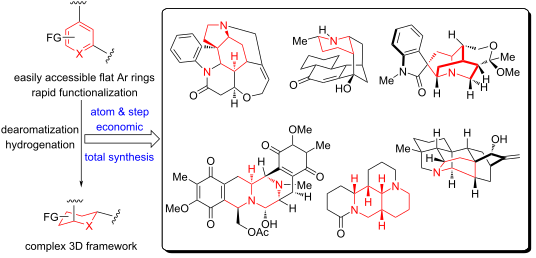
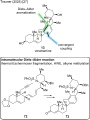
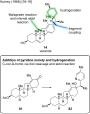
- hydrogenation of a pyridine precursor, whereas Mander’s strategy relied on an Eschenmoser fragmentation as well as a reductive amination (Scheme 17) [87]. Pyridine analogue 121 was converted to tetracyclic compound 123 via a 1,2-addition. A five-step transformation, including allylic hydroxy group transposition








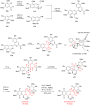


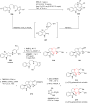

Recent advancements in the synthesis of Veratrum alkaloids
Beilstein J. Org. Chem. 2025, 21, 2657–2693, doi:10.3762/bjoc.21.206
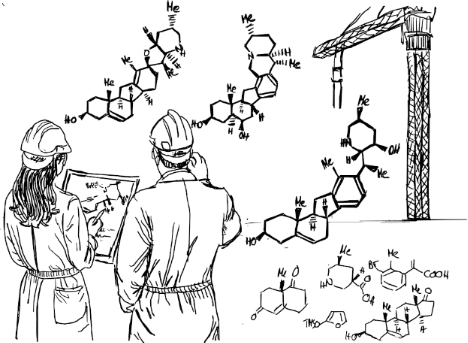
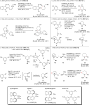
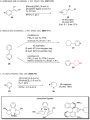
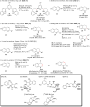
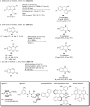
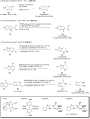
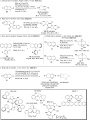
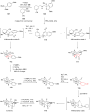
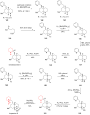
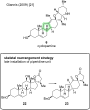
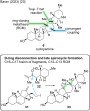
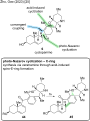
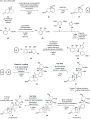
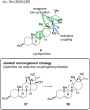
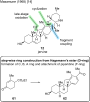
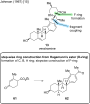
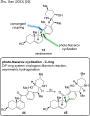
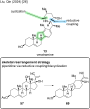
- , reduction of the lactam furnished cyclopamine (6) in 65% yield over two steps. The reported semisynthesis of the Liu/Qin group displays the shortest route to cyclopamine with 13 steps in the LLS, 15 steps in total and an overall yield of 3.6%. Jervine For the C11-oxidized analogue of cyclopamine, jervine


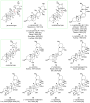














Synthesis of new tetra- and pentacyclic, methylenedioxy- and ethylenedioxy-substituted derivatives of the dibenzo[c,f][1,2]thiazepine ring system
Beilstein J. Org. Chem. 2025, 21, 2645–2656, doi:10.3762/bjoc.21.205
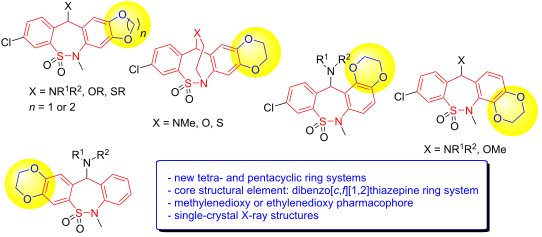
- ): reduction of 8 with NaBH4, followed by chlorination of alcohol 36 with SOCl2 and substitution of chloro derivative 37 with various amines resulted in compounds 38a–c. Tianeptine analogue 38d was obtained by hydrolysis of ester 38c. The synthesis of the new regioisomeric tetracyclic compounds containing the
- regioselectivity. Reduction of 51 with NaBH4 and subsequent chlorination of alcohol 52 with SOCl2 gave chloro derivative 53, which was treated with amines to afford compounds 54a–e. 7-Aminoheptanoic acid ester derivative 54e was hydrolyzed to tianeptine analogue 54f. Conclusion As continuation of our efforts to


Recent advances in total synthesis of illisimonin A
Beilstein J. Org. Chem. 2025, 21, 2571–2583, doi:10.3762/bjoc.21.199
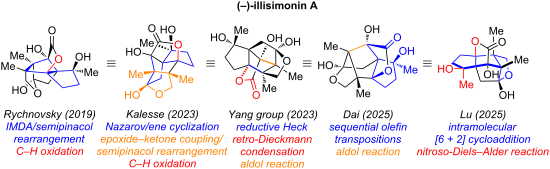
- deprotection of the cyclization precursor was essential, as the TES-protected analogue of 35 failed to deliver the desired spirocycle 38 under the Nazarov cyclization conditions. α-Oxidation of 38 with molecular oxygen afforded 39, which was then converted to 40 via formation of a chloromethyl silyl ether


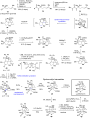


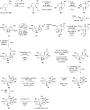


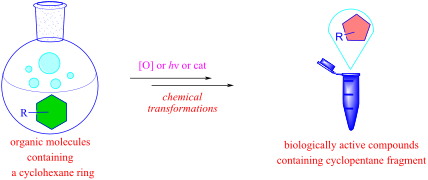
Transformation of the cyclohexane ring to the cyclopentane fragment of biologically active compounds
Beilstein J. Org. Chem. 2025, 21, 2416–2446, doi:10.3762/bjoc.21.185
- condensing abilities. Specific facial preferences are displayed as cholesterol interacts with different neighboring lipids and transmembrane proteins [33][34]. These biochemical interactions are poorly understood, so the synthesis of a «smoothed» cholesterol analogue provided an opportunity to experimentally
- of cyclopentane derivatives, promising for the synthesis of iridoids and compounds, that stimulate the formation of receptors that prevent platelet aggregation [75]. The derivatives of the Diels–Alder adduct of LG and piperylene, keto epoxide 146 and its analogue 152 lacking the spiro-fused